REVIEW · PRIVATE DRIVERS
Christian Rome with English Speaking driver
Book on Viator →Operated by Driverinrome · Bookable on Viator
Rome’s Christian stops are easier than you think. This private day pairs an English-speaking driver with tight logistics, so you can hop between major basilicas without losing half your morning in buses or taxis. I especially like the hotel pickup and drop-off, and the freedom to choose your own pace inside each church.
You’ll also get the kind of practical context that makes the art and relics click, because you’re not stuck reading signs in the dark. My only caution: the driver can’t act as a licensed inside guide, so deep explanations inside the churches won’t be constant. Also, the catacombs have an extra ticket fee, so watch for that in your budget.
In This Review
- Key Things I’d Book This For
- Price and Logistics: A Private Day That Actually Fits Rome
- The Big Win: English Commentary Plus the Freedom to Wander
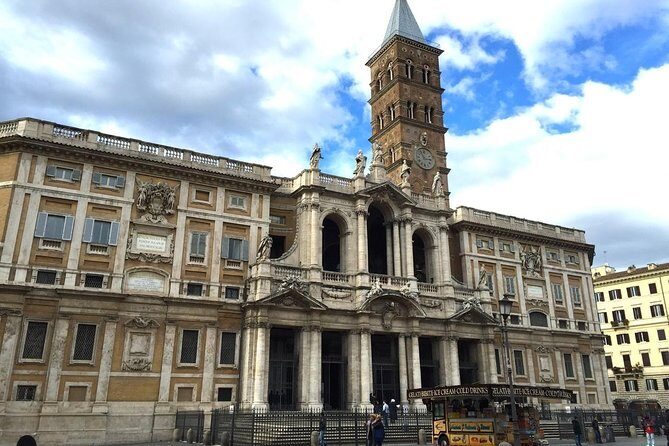
- Stop 1: Basilica di Santa Maria Maggiore and the Marian Details That Feel Personal
- Stop 2: Arcibasilica di San Giovanni in Laterano (St. John Lateran) and the Cathedral of Rome
- Stop 3: Scala Sancta (Holy Stairs) and the Power of a 28-Step Relic
- Stop 4: Basilica di Santa Croce in Gerusalemme and the Idea of Jerusalem in Rome
- Stop 5: Chiesa del Domine Quo Vadis and a Short Stop on the Appian Way
- Stop 6: Catacombe di San Callisto—€8 Ticket, Included Guided Visit
- Stop 7: Basilica Papale di San Paolo Fuori le Mura and the Scale of St. Paul’s Tomb
- Pacing: How to Spend Your 6 Hours Without Feeling Rushed
- Who Should Book This Private Christian Rome Tour
- Should You Book This Tour?
- FAQ
- Will I be picked up from my hotel?
- Is this tour only offered in English?
- How long is the tour?
- How many people are in a group?
- Are there entrance fees for the churches?
- How much do the catacombs cost?
- Is lunch included?
- Can churches be restricted on Sundays?
- What if I need to cancel?
Key Things I’d Book This For
- Hotel pickup means less Rome-wrangling, more praying, looking, and wandering.
- A full day centered on the Papal and pilgrim sites many Catholic travelers plan for in Rome.
- English-speaking drivers can handle the route and timing smoothly, including smart order changes.
- Most basilica entrances are free, but the catacombs cost about €8 with an included guided visit.
- You can set your own time at each stop, instead of being rushed by a big group.
Price and Logistics: A Private Day That Actually Fits Rome
This is priced at $509.07 per group (up to 3 people) for about 6 hours. The value math changes fast depending on how full your group is. If you can bring two travel companions, you’re effectively sharing the transportation cost, which can be a win in Rome where parking and curb-hunting are not your friends.
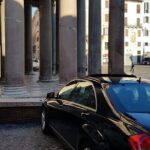
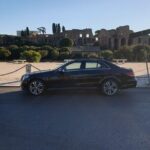
The car matters here. You’ll ride in an air-conditioned sedan or minivan with round-trip transport from your hotel. That means you avoid long walks between far-flung Christian sites, and you get out right near the entrances—useful if you’re traveling with kids, older relatives, or anyone who tires quickly.
One more thing to know before you go: you’ll get live commentary from inside the vehicle, but the driver isn’t a licensed guide, and Italian rules limit how much they can explain once you’re outside. So think of this as “expert driving plus helpful narration,” not a full guided tour with commentary at every step.
You can also read our reviews of more tours and experiences in Rome


The Big Win: English Commentary Plus the Freedom to Wander
The itinerary is built like a chain of major pilgrim destinations: short drives between stops, then your own time to walk, sit, look up, and read what interests you. That format is great when you want some structure early, but you don’t want to be herded.
A bonus from real-world experience: drivers named in bookings—like David and Daniele—are reported to speak excellent English, and they’re willing to tailor the day. One family noted that David adjusted timing to see the catacombs earlier when energy was higher, and recommended a local lunch spot that wasn’t a tourist trap.
Even if your driver is more reserved, you still get something useful: the narration inside the car helps you understand what you’re about to see. That turns a church visit from look-and-go into a story you can follow.
Stop 1: Basilica di Santa Maria Maggiore and the Marian Details That Feel Personal
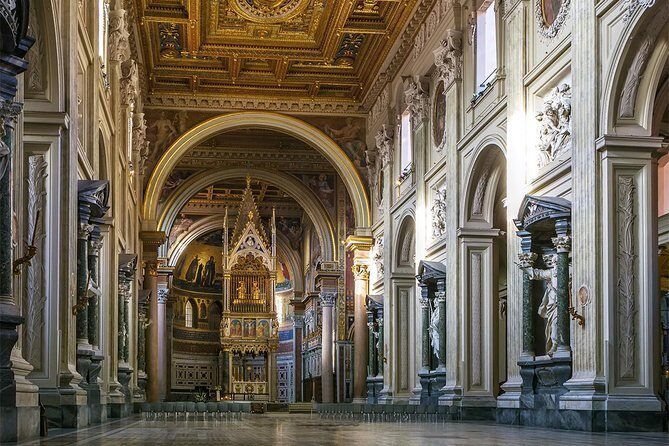
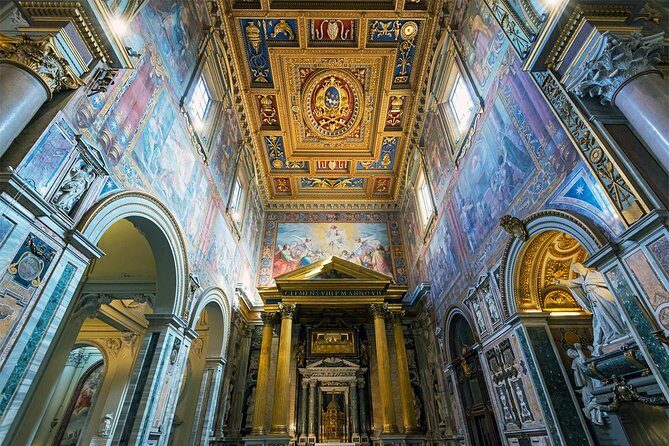
Basilica di Santa Maria Maggiore (St. Mary Major) is one of the four great basilicas, and this one is often described as especially precious. Built in 352 A.D. on the Esquiline Hill, it’s also the smallest of the four patriarchal basilicas—yet it packs in impressive art and symbolism.
Your visit time is about 40 minutes, and the entrance is free. Once inside, the standout features are the big visual anchors:
- 5th-century mosaics in the central nave
- Cosmatesque pavement, the patterned floor that makes your feet slow down
- A 15th-century gilt-wood coffered ceiling
- Numerous chapels funded over centuries by popes, cardinals, and religious confraternities
- The Holy Crib relic area (the “relic of the Holy Crib”)
What I like about starting here: it sets an emotional tone. This basilica doesn’t feel like a museum exhibit; it feels like a living devotional space that has kept meaning through major eras of Roman history.
Stop 2: Arcibasilica di San Giovanni in Laterano (St. John Lateran) and the Cathedral of Rome
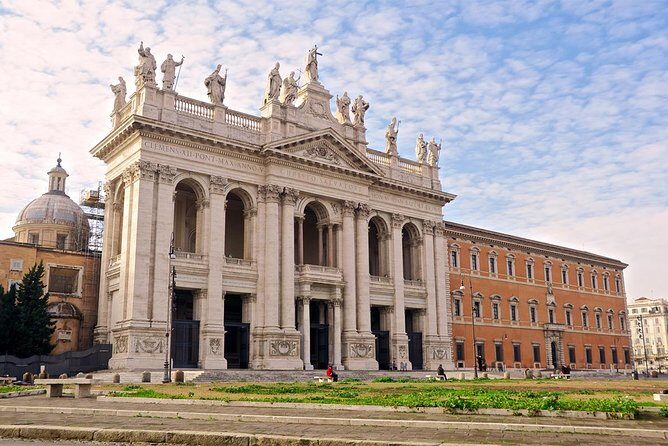
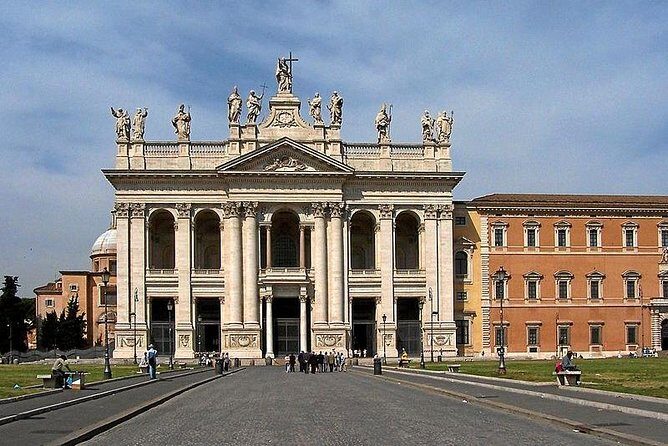
Next is the Arcibasilica di San Giovanni in Laterano, St. John Lateran, listed as the oldest and highest-ranking of the four major basilicas. Your time is also about 40 minutes, and it’s free to enter.
This stop connects the political and spiritual side of early Rome. The basilica was built by Emperor Constantine and served as a papal residence until 1307. Later, it was remade in the 17th century by Borromini, so you get layered eras instead of just one.
Look for the elements that make this place feel like the Cathedral of the City:
- Chapels with strong visual identities
- The relic of the table of the Last Supper
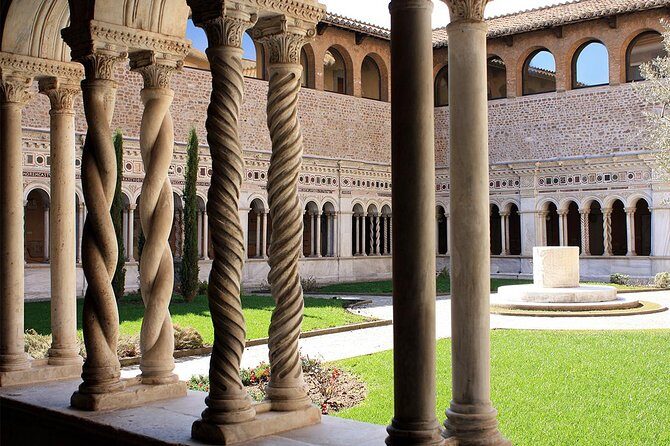
- A 13th-century cloister
- The Baptistry, associated with one of the Egyptian obelisks
- The Holy Stairs connection, which leads directly into the next stop
Practical note: the lateran complex can feel like you’re stepping into a deeper “church campus,” not a single isolated building. The driver helps you get from place to place quickly, then you can take in details at your own pace.
Stop 3: Scala Sancta (Holy Stairs) and the Power of a 28-Step Relic
The Scala Sancta, or Holy Stairs, are 28 white marble steps associated with Roman Catholic relic devotion. Your scheduled time is about 20 minutes, and entry is listed as free.
These steps sit in the Pontifical Sanctuary of the Holy Stairs on Holy See property near the Archbasilica of St. John Lateran. Traditionally, the steps connect to the Church of St. Lawrence in Palatio ad Sancta Sanctorum (called the Sancta Sanctorum), described as the personal chapel of early popes.
Here’s what makes this stop worth squeezing in: it’s physically small compared to the giant basilicas, but it carries huge emotional weight. Even if you’re not someone who plans to do the full devotional ritual, the setting and the story tend to make people slow down.






Stop 4: Basilica di Santa Croce in Gerusalemme and the Idea of Jerusalem in Rome
The Basilica di Santa Croce in Gerusalemme is one of Rome’s Seven Pilgrim Churches. Your visit time is about 30 minutes, and entry is free.
Tradition says the basilica was consecrated around 325 to house relics from the Passion of Jesus brought to Rome by Empress St. Helena. The “in Jerusalem” part matters: the floor was once covered with soil from Jerusalem, which gave the basilica its name in the sense that a piece of Jerusalem came to Rome through its foundation.
A useful way to think about this basilica: it turns distance into devotion. You’re not just seeing an old church; you’re seeing how pilgrims historically created a spiritual map of the Holy Land while staying in Rome.
Stop 5: Chiesa del Domine Quo Vadis and a Short Stop on the Appian Way
For a change of scenery, you’ll head toward the Old Appian Way, passing by Porta San Sebastiano. The stop is the tiny Chiesa del Domine Quo Vadis, with a scheduled time around 15 minutes, and entrance is listed as free.
This church is built on the spot where Peter is said to have encountered a vision of Christ while fleeing Nero’s persecution. The story centers on the question from Peter—Domine quo vadis (Lord, where are you going?)—and Christ’s answer that he was going to Rome to be crucified again.
Even though it’s brief, this stop adds contrast. After big basilicas and relic-focused sites, it feels quieter and more human-sized, like a pause in the day rather than another checklist item.
Stop 6: Catacombe di San Callisto—€8 Ticket, Included Guided Visit
Now for the one ticket you’ll pay separately: Catacombs of St. Callixtus. The schedule gives about 1 hour for this stop, and the admission is not included. You should expect to pay around €8 per person.
The key detail: that admission includes a guided tour with a local guide. And there’s a practical tip you’ll want to take seriously: the guide may not use a microphone, so staying close helps you actually hear what they’re saying.
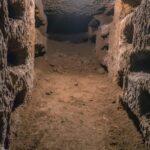
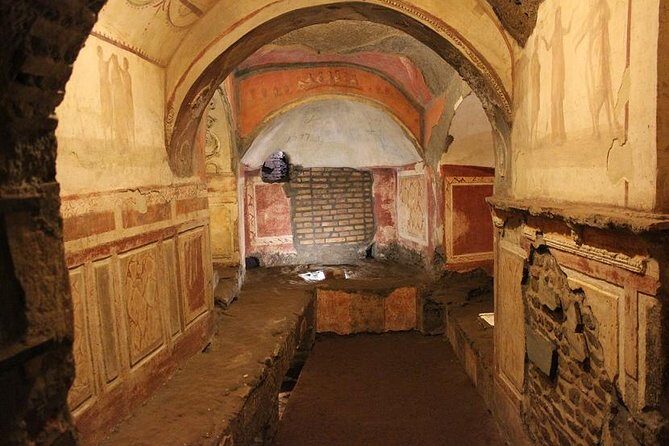
What to expect underground: a network of underground galleries and vaults used for burial and worship by early Christians. After Constantine, many bodies were moved to churches inside the city, but the catacombs still served as a sacred place. Later damage came from invaders, and the catacombs were eventually rediscovered.
I like this stop because it gives early Christianity a physical setting. You’re looking at how people lived, prayed, and remembered when Rome was far less comfortable for believers than it later became.
Stop 7: Basilica Papale di San Paolo Fuori le Mura and the Scale of St. Paul’s Tomb
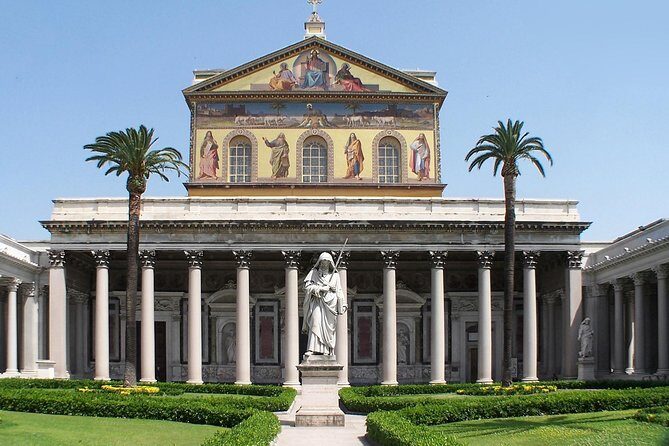
You end at Basilica Papale di San Paolo Fuori le Mura (St. Paul Outside the Walls). This is Rome’s second-largest church and it’s a major pilgrimage destination.
Your visit time is about 1 hour, and entry is listed as free. The basilica is traditionally tied to the burial site of the Apostle Paul, with a church structure connected to Constantine and consecration by Pope Silvester I in 394. It was destroyed by fire in 1823, then reconstructed using surviving elements and updated with mosaics.
Two things people usually find unforgettable here:
- The tomb area where pilgrims pray and visit
- The massive portico with 150 columns
This final stop feels like the “big breath” of the day. After many churches that reward your attention to specific details, St. Paul Outside the Walls gives you scale—space, mosaics, and a strong sense of why pilgrims kept returning.
Pacing: How to Spend Your 6 Hours Without Feeling Rushed
This tour is built for efficient movement, but your enjoyment depends on how you use your time at each stop. The schedule allocates short windows: 15 minutes for Domine Quo Vadis, 20 minutes for Holy Stairs, 30 minutes for Santa Croce in Gerusalemme, and 40 minutes for the big basilicas.
I recommend a simple strategy:
- Spend the first 5 minutes inside each basilica orienting yourself.
- Pick one or two details to focus on—mosaics, pavement, a chapel, a tomb area—so you don’t feel like you’re sprinting.
- Save the “full read everything” mindset for the stop that moves you most.
A useful reality check from past bookings: some families found they could easily linger longer in the churches, and one report even mentioned the day can stretch if you slow down. Still, you shouldn’t count on the itinerary running past the approximate 6-hour plan. So decide where you want extra time: usually it’s the basilica that hits hardest for you, plus the catacombs.
Who Should Book This Private Christian Rome Tour
This fits best if you want:
- A Christian-focused itinerary across multiple pilgrim churches (not just Vatican highlights)
- A day built around your pace, not the pace of a large group
- Comfortable transportation with door-to-door hotel pickup
- An English-friendly guide setup through narration in the car
It’s also a strong choice for families or multigenerational trips. One family described using the private setup to keep everyone comfortable, with smart timing adjustments and a lunch break recommended by the driver.
If you’re the type who wants a full licensed guide inside every site, this might feel incomplete. You won’t get that inside commentary level here because the driver can’t provide the same tour-guide role once you’re out of the vehicle. But for many people, the combination of narration-on-the-road plus time inside the churches works really well.
Should You Book This Tour?
Yes, if you want a practical, Christian-themed Rome day that minimizes transit stress and keeps you close to entrances. With up to 3 people per group, the price can feel fair when you share it, especially since most basilicas on the route are listed as free.
Book it especially if you care about the specific pilgrimage circuit: St. Mary Major, St. John Lateran, the Holy Stairs, Santa Croce in Gerusalemme, Domine Quo Vadis, St. Callixtus catacombs, and St. Paul Outside the Walls. You’ll see several of the sites in one shot, without turning your day into a map-puzzle.
FAQ
Will I be picked up from my hotel?
Yes. Hotel pickup and drop-off are included. You provide your centrally-located Rome hotel address for pickup.
Is this tour only offered in English?
Yes, the experience is offered in English.
How long is the tour?
The duration is about 6 hours.
How many people are in a group?
It’s a private service, up to 3 people per group.
Are there entrance fees for the churches?
Most listed stops have admission ticket access marked as free. The catacombs of St. Callixtus are not included.
How much do the catacombs cost?
You should expect to pay about €8 per person for the Catacombs of St. Callixtus. That admission includes a guided tour.
Is lunch included?
No. Lunch is not included.
Can churches be restricted on Sundays?
Yes. On Sundays, some churches have restrictions on the places you may be able to visit.
What if I need to cancel?
Free cancellation is available. You can cancel up to 24 hours in advance for a full refund, and cancellations within 24 hours aren’t refunded.