REVIEW · CATACOMBS TOURS
Catacombs, Appian, Aqueducts, in a Fiat500 with a local, Pick-up
Book on Viator →Bookable on Viator
Rome hits different beyond the walls.
This tour is a smooth way to get past the city center fast, then slow down for the big-ticket sights along the Via Appia Antica. I like the setup because you ride in a small Fiat 500 with a local, so the day feels personal and efficient, not like a bus drop-off shuffle. On the drive, Andrea’s local knowledge helps stitch the ruins into a story you can actually picture, not just a list of names.
The other thing I really like is the how, not just the what: you get a guided inside visit of Catacombe di San Callisto with an expert in a small group, and you also score a professional photo shoot using a Nikon D850. That means you’re not just photographing stones—you’re getting proper portraits in front of Rome’s most dramatic ancient settings. It’s a smart value add if you care about photos, couples, families, or anyone who hates the awkward stop-and-hope someone takes a decent shot.
One drawback to think about: the catacombs are enclosed underground spaces, and the tour is not recommended for claustrophobia. You should also plan on some walking at churches and catacombs, even though the overall pace is well managed for a 2 hours 45 minutes day.
In This Review
- Key things you’ll love on this Appian Way and Catacombs tour
- A Fiat 500 with pickup turns Rome sightseeing into a real outing
- From Circus Maximus area to the Tomb of the Scipios: learning Rome’s big geography
- Baths of Caracalla, then the Appian Way proper: why this drive matters
- The Arch of Drusus and the Aurelian Walls gate: big structures, clear takeaways
- Catacombe di San Callisto: the main event, with expert guidance
- Chiesa del Domine Quo Vadis: a short stop with a focused payoff
- The Appian Way’s mausoleum-turned-fortress: see it outside, choose inside
- Basilica San Sebastiano Fuori le Mura: where Bernini’s last sculpture fits
- Aqueducts on the same route: how the trip gets you out of the center
- Timing and pacing: what a 2 hours 45 minutes day feels like
- Price and value: why $161.56 can work better than a DIY day
- Who this tour suits best (and who should skip it)
- Should you book this Catacombs and Appian Way tour?
- FAQ
- What’s included in the tour price?
- Is hotel pickup available?
- How long is the tour?
- Do I need to buy tickets for the catacombs and church stops?
- What language is the guide/photographer?
- What’s the cancellation policy?
Key things you’ll love on this Appian Way and Catacombs tour
- Hotel pickup + Fiat 500 comfort to escape Rome traffic and crowds quickly
- Guided 45 minutes inside Catacombe di San Callisto with admission included
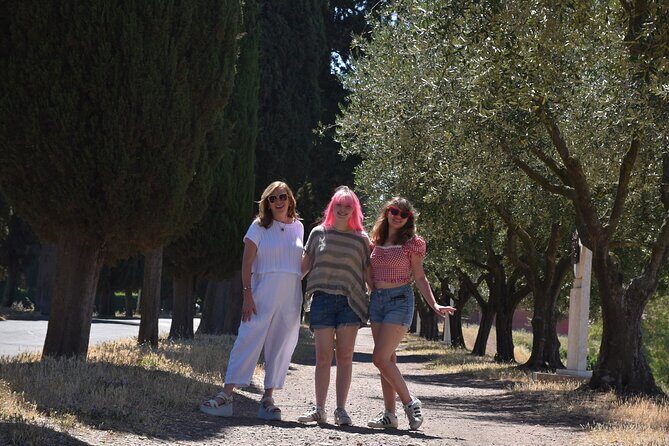
- Nikon D850 photo shoot with a professional local photographer
- Appian Way drive-by classics like Baths of Caracalla, Arch of Drusus, and the Aurelian Walls gate
- Footprint church stop at Chiesa del Domine Quo Vadis with admission included
A Fiat 500 with pickup turns Rome sightseeing into a real outing
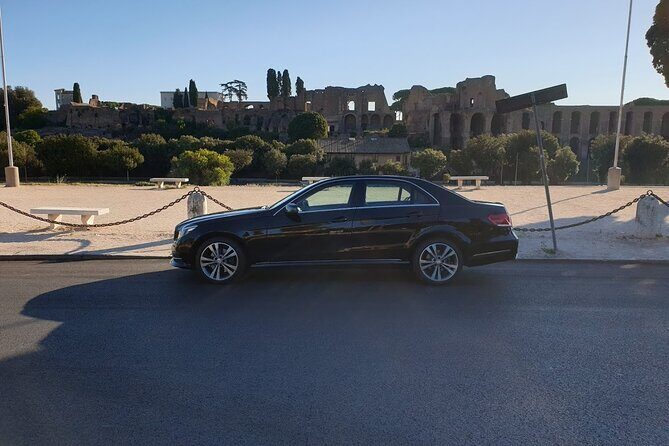
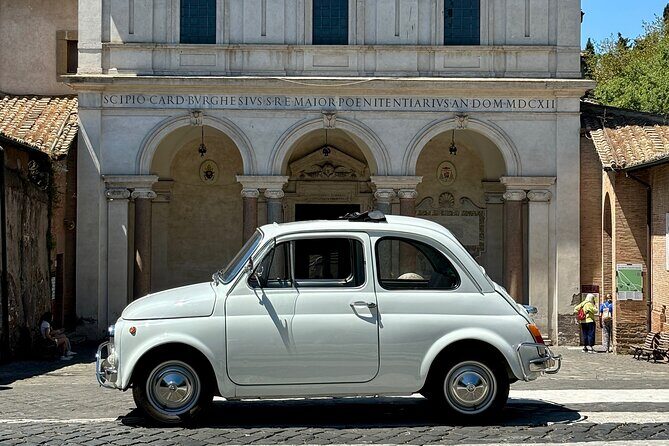
Rome can be great. Rome can also be exhausting. This experience is designed to fix that right away with pickup from your hotel (or as close as possible) and a ride in a Fiat 500 instead of a big, rigid tour bus. That matters because the Appian Way and the outlying monuments aren’t “one street away” from the center. Getting out efficiently sets the tone for the whole day.
Because it’s private for your group only, you also get more control over the rhythm. You’re not watching a guide at the front while you try to keep up. And because you have an English-speaking local photographer/guide, you’re not stuck with silent sightseeing gaps.
Also, the tour uses a mobile ticket, which cuts down on fumbling with printed documents. It’s a small thing, but small things add up when you’re juggling multiple stops.
If you’re thinking, Is this just a drive? It’s not. The sightseeing is broken into real, timed stops—especially the catacombs—so you’re not stuck with “look, then go.”
You can also read our reviews of more tours and experiences in Rome.



From Circus Maximus area to the Tomb of the Scipios: learning Rome’s big geography
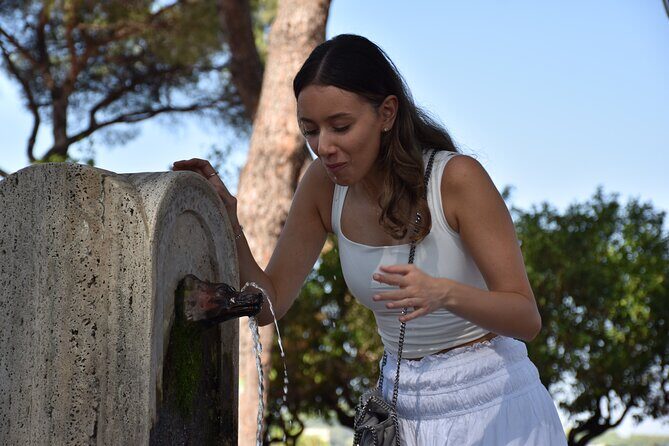
The day begins at Via del Circo Massimo, 5, a starting point that already signals you’re starting with the ancient scale of Rome. You’re near the area connected to the largest stadium of the Roman era—though only a few remains are visible today. That’s a good first lesson: Rome’s past doesn’t come back as a museum recreation. It comes back as fragments, which your guide helps you interpret.
Right after you get moving along the route that hugs the Appian Way, you’ll reach the tomb of the Scipios. This is tied to one of the most ancient and prestigious Roman families. I like this kind of stop because it gives you a name and a social context. It turns the roadside “old stuff” into something you can actually hold onto: who mattered here, and why.
If you’ve ever felt lost on Roman monuments—where everything is old and everything looks similar—this early sequencing helps. You’re getting a mental map before the day gets dramatic.
Baths of Caracalla, then the Appian Way proper: why this drive matters
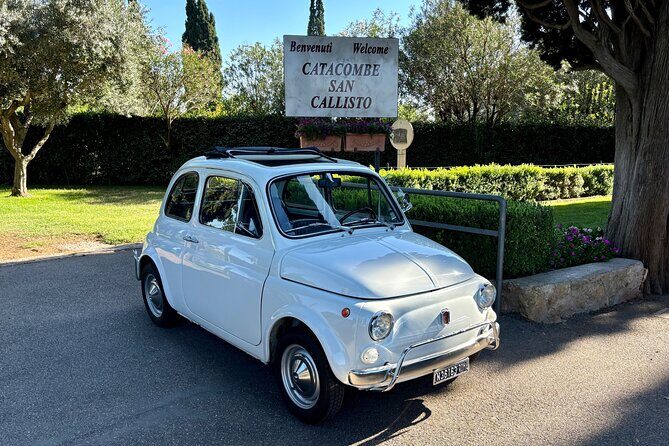
After those early pieces, the route runs along what’s often described as an archaeological walk—basically, a corridor where major ruins line up along the path. On the right, you’ll encounter the enormous complex of the Baths of Caracalla. Even if you’re not a hardcore architecture person, you can feel the ambition. These weren’t “a place to wash.” They were a statement about power, leisure, and Roman engineering.
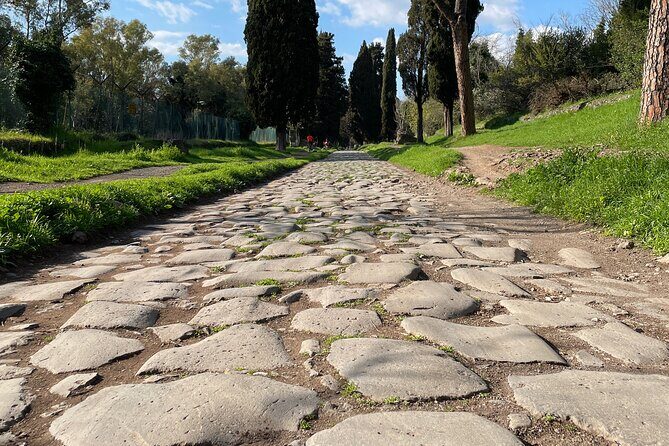
Then you reach Via Appia Antica, the famous road itself. The Appian Way is important because it’s more than a scenic route. It represents how Romans connected the empire: durable roads, monuments along the way, and a landscape that collected meaning over centuries.
A nice touch is that you don’t just see the start of the road and move on. You keep building the sequence: the tomb area, the road symbolism, the big monuments. It’s a way to understand why the Appian Way is such a repeat target for writers, guides, and historians.
The Arch of Drusus and the Aurelian Walls gate: big structures, clear takeaways
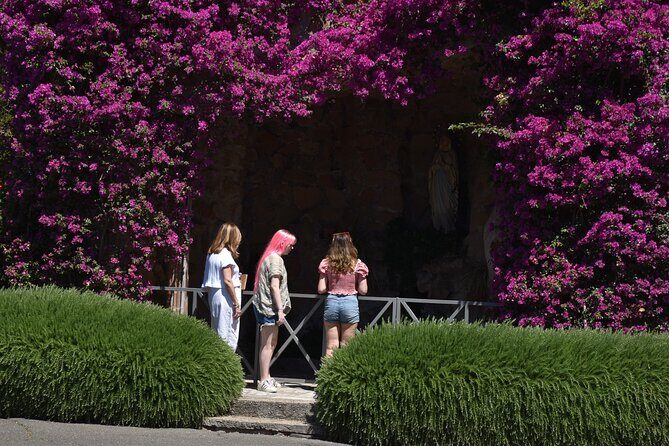
Later, you pass under the Arch of Drusus, an imposing Roman monument. Arches can be tricky on tours because you might feel like you’re just under a piece of old stone. Here, the value is that it’s part of a chain of sights along the way—your guide helps link what you’re seeing to why it belonged there.
A few meters after the Arch of Drusus, you’ll spot one of the most famous access gates of Rome, part of the Aurelian walls. This is a stop that often pays off even for people who think they won’t “care about city walls.” City walls are defense, sure—but they also reveal the city’s boundaries and how Rome organized movement and control.
This is where the tour earns its “beyond the center” promise. You’re not just jumping between isolated landmarks. You’re traveling through layers of Rome’s planning.
Catacombe di San Callisto: the main event, with expert guidance
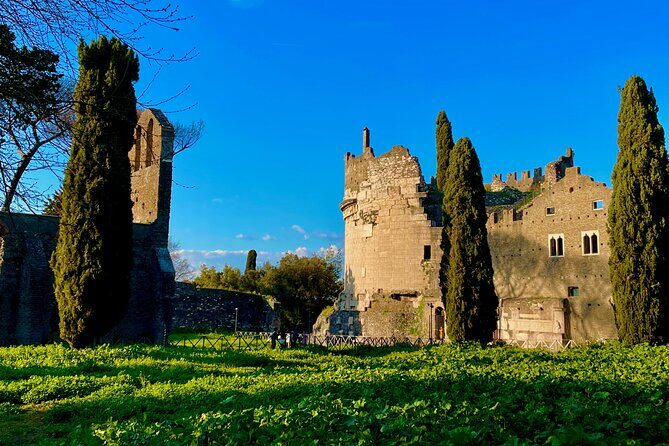
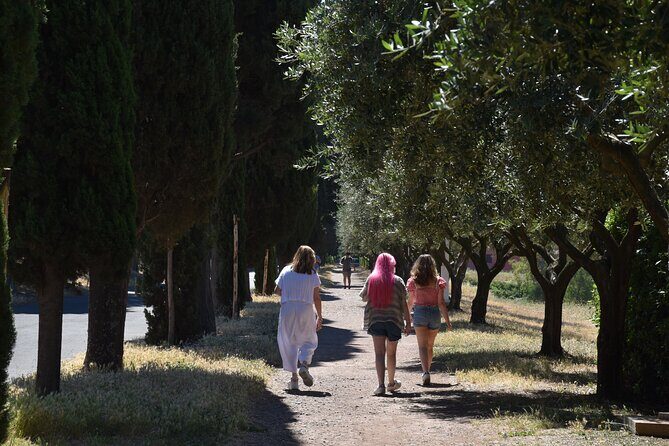
Your most important stop is Catacombe di San Callisto, and it’s set up as the heart of the experience. Once you arrive, you get something pleasantly surprising: olive trees, cypress-lined roads, and green meadows. It can feel like Tuscany for a moment—then you head into the underground world.
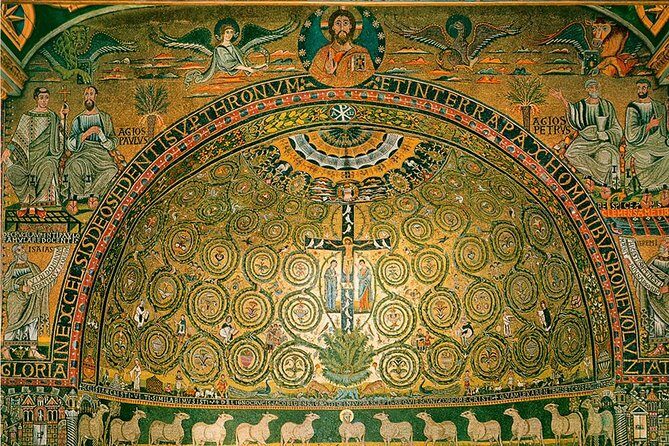
The guided portion lasts 45 minutes, and admission is included. You’ll be accompanied by an expert guide on a small group tour inside the catacombs. That detail matters. Catacombs are easy to rush through on your own, and you can miss the meaning of what you’re looking at. Here, the guide keeps you oriented so you’re not staring at corridors wondering what’s important.
Practical note: this is the one segment where you should be most honest with yourself. If claustrophobia is on your list of travel issues, skip this tour. The listing is clear on that for a reason.
Also consider timing. Catacombs can slow down your pace even when you’re moving efficiently. If you like a day that stays structured and doesn’t feel like you’re waiting around, this stop is built to work within the total 2 hours 45 minutes.



Chiesa del Domine Quo Vadis: a short stop with a focused payoff

After the catacombs, the tour moves to Chiesa del Domine Quo Vadis. This is an iconic church connected to the footprint tradition. You’ll spend about 15 minutes here, and admission is included.
This stop works well because it provides contrast. Catacombs are underground and ancient; this church is an in-between moment—religious, symbolic, and quick. It’s also a nice way to reset before the Appian Way monument stop later.
Keep expectations realistic. This isn’t a long worship visit. It’s more like a guided “you’re here for a reason” stop, and the time box keeps the whole day feeling balanced.
The Appian Way’s mausoleum-turned-fortress: see it outside, choose inside
Next comes the symbol of the Appian Way—first a mausoleum, later transformed by the Caetani family into a castrum. You’ll have an outside visit planned.
Here’s the best part for many people: you can enter independently to visit the mausoleum if you want, but it requires a ticket. That structure gives you control. If you’re feeling monument fatigue, you can stay with the outside viewpoint and move on. If you’re craving more depth, you have the option to go in.
One practical tip: if you’re the type who always wants to maximize time inside, decide early. The tour keeps moving, so don’t assume you’ll change your mind at the last second.
Basilica San Sebastiano Fuori le Mura: where Bernini’s last sculpture fits
The final major stop is Basilica San Sebastiano Fuori le Mura, one of the seven basilicas traditionally tied to jubilee pilgrimages. The church is built over the catacombs of San Sebastiano, and it houses the last sculpture by Bernini.
You’ll have about 15 minutes here, and admission is free. I like free entries like this on a tour because it reduces the number of decisions you need to make during the day. You don’t need to weigh whether another ticket is worth it.
Also, the Bernini connection is a strong payoff. It helps you connect different Roman eras in one place: the older catacombs beneath, and then the later artistic moment above. Even in a short time window, it gives your brain a satisfying “then and now” click.
Aqueducts on the same route: how the trip gets you out of the center
The title promises aqueducts, and the experience line up with that goal. The ride through the Appian Way countryside setup is exactly what makes aqueduct viewing feel different from a quick photo from a city sidewalk.
You’re leaving the dense core and moving into a landscape where the ruins make more sense. An aqueduct isn’t just a bunch of arches—it’s infrastructure. Watching it in the context of the road and the broader archaeological surroundings makes the whole system feel more real.
That’s also why this tour works as a “get beyond the city centre” option. You’re not only seeing monuments—you’re changing your view of Rome.
Timing and pacing: what a 2 hours 45 minutes day feels like
At about 2 hours 45 minutes, this is a compact but not rushed tour. The structure is built around a clear main event (Catacombs of San Callisto) and then a chain of meaningful short stops.
Here’s the pacing logic as you’ll likely experience it:
- Quick orientation and early monuments as you head out
- A big, guided underground segment (45 minutes)
- Short, high-signal stops afterward (mostly 15 minutes each)
- Photo shoot moments that add value without taking over the whole day
Because it’s private for your group, you can also take a breath when you need it. It’s not a marathon.
If you’re worried about logistics, the end returns back to the meeting point (your hotel pickup is handled at the start). And the tour is near public transportation, which is reassuring if your plans change.
Price and value: why $161.56 can work better than a DIY day
The price is $161.56 per person, which sounds like a “special activity” rather than a casual add-on. The key is what you get bundled.
Included items you’re paying for here:
- Private tour with a dedicated local (your group only)
- Hotel pickup and drop-off (or closest possible point)
- Professional photo shoot with a Nikon D850 and professional lenses
- English-speaking local photographer/guide
- Entrance ticket with guided tour included for key stops
And importantly, the information says every cost is included, so you’re not constantly double-checking what’s paid and what’s not.
When does it feel like great value?
- If you want a guided catacombs entry (not just looking at entrances)
- If you want high-quality photos without finding a random stranger with a phone
- If you’d otherwise pay for transport and tickets separately
- If you’re short on time and want to see multiple out-of-center sites in one day
When might it feel pricey? If you’re the kind of traveler who prefers total freedom, wandering slowly, and skipping structured indoor visits. This tour is designed around set stops and set timing.
Who this tour suits best (and who should skip it)
This is a strong match if you:
- Want to see the Appian Way and major roadside monuments without stress
- Care about catacombs with context from a guide
- Like the idea of getting real photos during the day
- Prefer small-group or guided segments over solo puzzle-solving
You should think twice if:
- You have claustrophobia
- You need very long, unstructured time inside each site (the day is tight)
As for mobility, the info says most travelers can participate, which is a helpful baseline. Just remember that you’ll still be in and around churches and catacomb areas where walking is part of the experience.
Should you book this Catacombs and Appian Way tour?
If you’re looking for one outing that turns Rome from crowds into countryside ruins—this is a smart pick. The combination of pickup, the Fiat 500 ride, and a real guided catacombs visit makes it feel like more than a sightseeing checklist. Add the Nikon D850 photo shoot, and you’re also taking home something you can actually use.
My advice: book it if you want structure and story, and you’re comfortable with underground spaces. Skip it if claustrophobia is a concern.
One last nudge: if you care about photos, mention it on the day so the photographer knows the vibe you want. This kind of tour gives you great backdrops; the best results come when you guide the shoot.
FAQ
What’s included in the tour price?
The tour includes a private tour with a dedicated local, pickup and drop-off, an English-speaking local photographer/guide, a professional photo shoot (Nikon D850 and professional lenses), and entrance tickets with guided tour included for key stops. The information also notes that every cost is included.
Is hotel pickup available?
Yes. Pickup is offered at your hotel, or at the closest possible point.
How long is the tour?
The duration is about 2 hours 45 minutes.
Do I need to buy tickets for the catacombs and church stops?
Admission tickets are included for the Catacombe di San Callisto stop (with a guided visit) and for Chiesa del Domine Quo Vadis. The Basilica San Sebastiano Fuori le Mura entry is free as listed. The Appian Way mausoleum/castrum can be entered independently for those who want, and that optional entry requires a ticket.
What language is the guide/photographer?
The tour is offered with an English-speaking local photographer and guide.
What’s the cancellation policy?
You can cancel for free up to 24 hours in advance for a full refund. If you cancel less than 24 hours before the start time, the amount paid won’t be refunded.