REVIEW · CASTEL GANDOLFO
Castel Gandolfo: Vatican Observatory experience
Book on GetYourGuide →Operated by TOURISTATION · Bookable on GetYourGuide
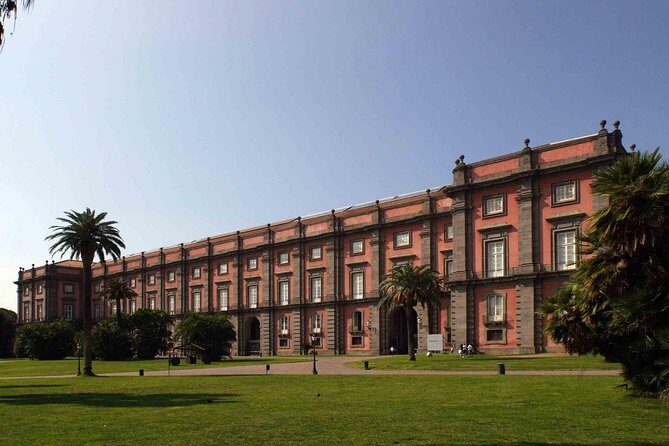
Stargazing meets a royal summer palace. This short visit pairs the Papal Palace of Castel Gandolfo with the Vatican Observatory’s two functioning astronomical domes, opened to visitors after decades. I love that it’s not just a museum stop. You get a sense of how serious astronomy was done here—plus killer views.
Two things I also like: the panoramic terrace from the third floor, and the way the visit is focused enough to feel complete in just an hour. One heads-up: it’s built around stairs and heights. If you have vertigo or limited mobility, this experience can be a poor fit.
In This Review
- Key Highlights You’ll Care About
- Castel Gandolfo, the Papal Palace, and Why This Observatory Exists Here
- Your 1-Hour Route: Palace Entrance, Two Domes, and the Terrace Climb
- Major Dome vs. Minor Dome: The Astronomy You Can Actually See
- The major dome (8.5 meters)
- The minor dome (8 meters)
- Why dome access feels special
- Climb the Spiral Staircase to the Third Floor Terrace
- The Jesuit-Led Vatican Observatory Story That Adds Meaning
- Price and Value: Is $17 Worth 1 Hour?
- Timing, Meeting Point, and What to Expect When You Arrive
- What to Bring (and What to Skip)
- Who This Works Best For
- Should You Book the Vatican Observatory at Castel Gandolfo?
- FAQ
- How long does the Castel Gandolfo Vatican Observatory visit last?
- What is included in the ticket?
- Is transportation from Rome included?
- Are meals or drinks included?
- Is a guided tour or audioguide included?
- Where do I meet for the experience?
- What should I bring?
- Is this visit suitable for children?
- Is it wheelchair accessible?
- What should I know if I have vertigo?
Key Highlights You’ll Care About
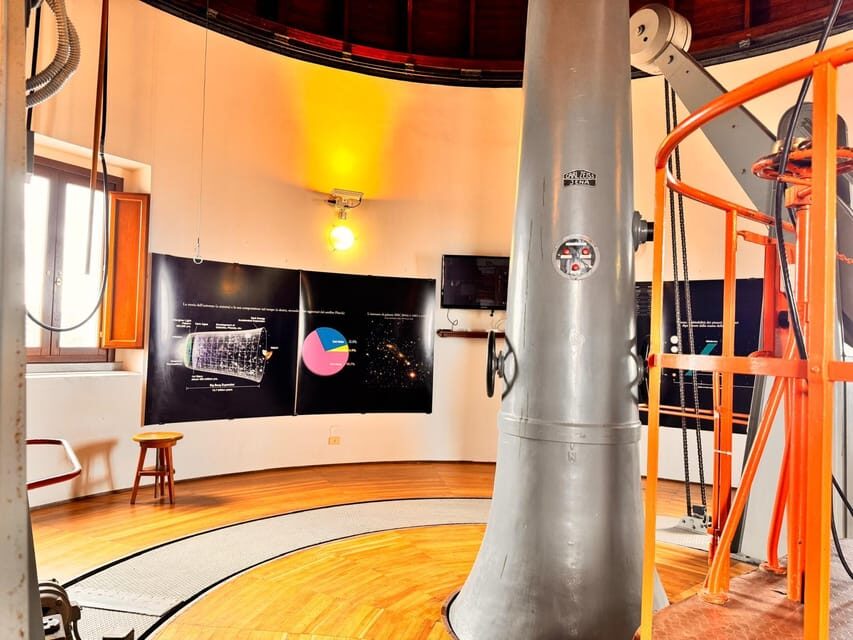
- Two functioning observatory domes: major dome (8.5m) and minor dome (8m), both used for real observing and sky work
- A major viewpoint payoff: Lake Albano views from the Papal Palace terrace after the climb
- Stairs are part of the plan: a spiral staircase takes you to the third floor
- You’ll see the tools behind the science: a visual telescope and a Double Astrograph for photographic surveys
- A 1930s Vatican Observatory story: moved and refounded in 1935 due to light pollution
- Short duration, efficient pacing: you can fit it into a Rome-area day without losing the whole day
Castel Gandolfo, the Papal Palace, and Why This Observatory Exists Here
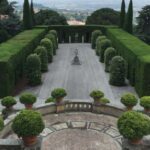
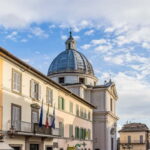
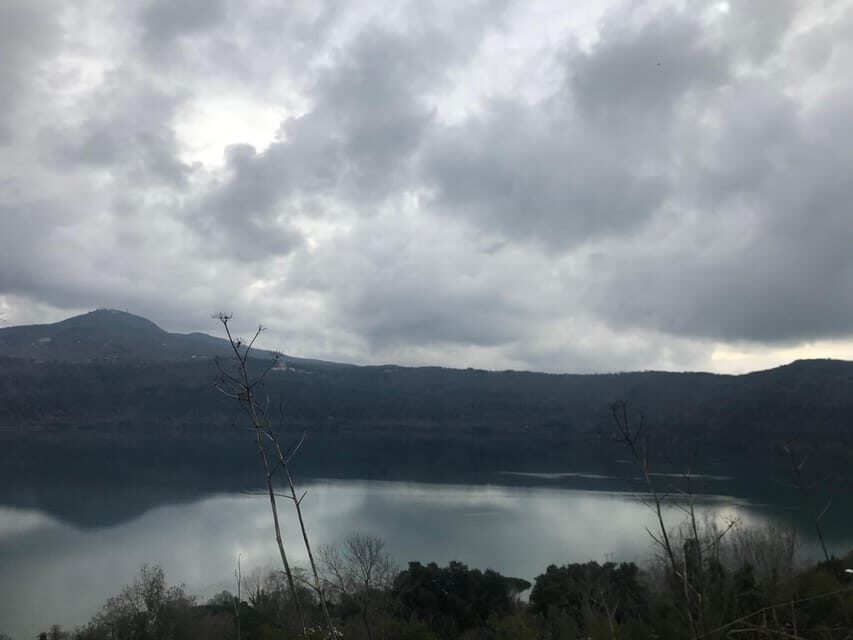
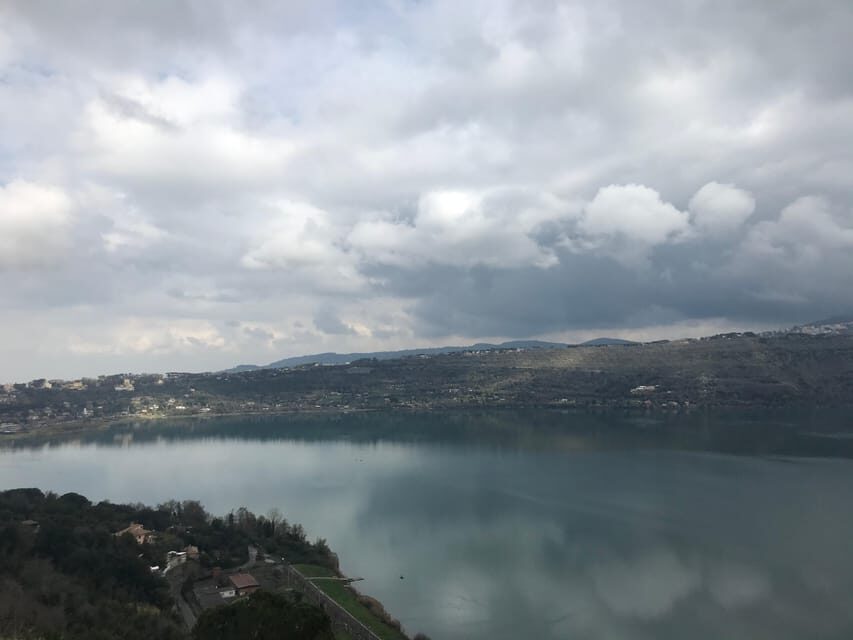
Castel Gandolfo sits just 24 kilometers from Rome, and it makes sense that the Pope’s summer residence would be placed here. The town is tied to a quieter, more panoramic kind of living—open air, big skies, and wide views over Lake Albano.
What makes this stop extra interesting is that the observatory part isn’t random. The Vatican Observatory’s work had to move because city light interferes with astronomy. In 1935, Pope Pius XI inaugurated the observatory’s new headquarters here, when the Vatican Observatory moved from a villa in the Vatican Gardens. The reason was practical: light pollution.
That context matters for you when you’re standing in the palace and looking outward. You’re not just touring pretty rooms. You’re seeing a site designed for working with the night sky—and for doing it from a place where you can actually observe it.
You can also read our reviews of more tours and experiences in Castel Gandolfo.
Your 1-Hour Route: Palace Entrance, Two Domes, and the Terrace Climb
This experience is built to be tight and efficient. It’s about 1 hour, and you’ll start at the main entrance of the Papal Palace in Castel Gandolfo. Plan to arrive about 20 minutes before your scheduled time so you can show your reservation voucher and avoid last-minute stress.
From there, the visit flows in a sensible order:
- You’ll visit the major dome and minor dome of the Vatican Observatory.
- You’ll then access the palace’s third floor via a spiral staircase.
- The third floor leads you to the highest point of the panoramic terrace, where you can take in Lake Albano.
Because there’s no long guided-program format here, your time goes toward the most memorable parts: the working observatory spaces and the view. If you want a slow, lingering pace, you might feel rushed. If you want a compact dose of Vatican astronomy and scenic rewards, the timing is one of its strengths.
Also, note what you’re getting versus what you’re not. A guided tour and audioguide are not included. You’ll be met by a host/greeter, with language support, but the experience is more like structured access to specific spaces than a full narration-heavy tour.
Major Dome vs. Minor Dome: The Astronomy You Can Actually See
The big draw is that you’re not only hearing about the Vatican Observatory. You’re shown two observatory domes that are described as perfectly functioning for astronomy.
The major dome (8.5 meters)
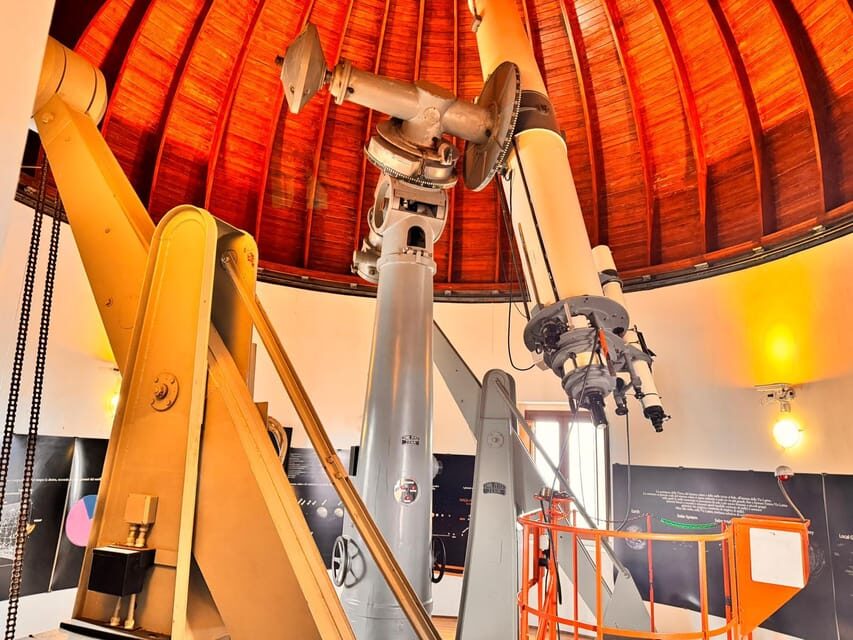
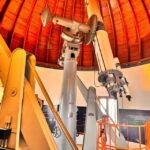
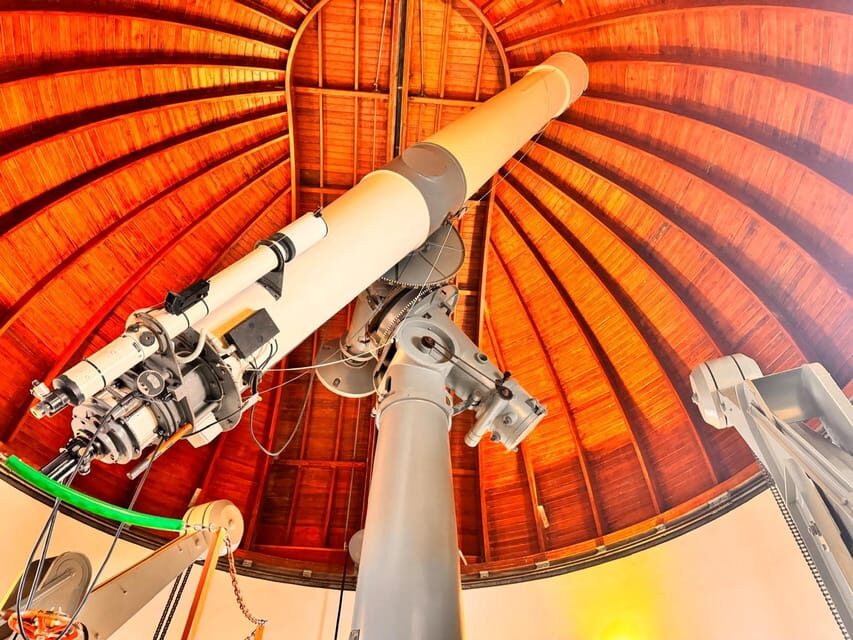
The major dome is about 8.5 meters in diameter and is equipped with a Visual Telescope. This setup is aimed at observing stars and planets. In plain terms: this is where visual observing makes sense, where you’re meant to understand the sky through direct observation rather than only through images.
For you, that means the visit isn’t only about history as decoration. You get a feel for how the telescope would be used and what it was built to do.
The minor dome (8 meters)
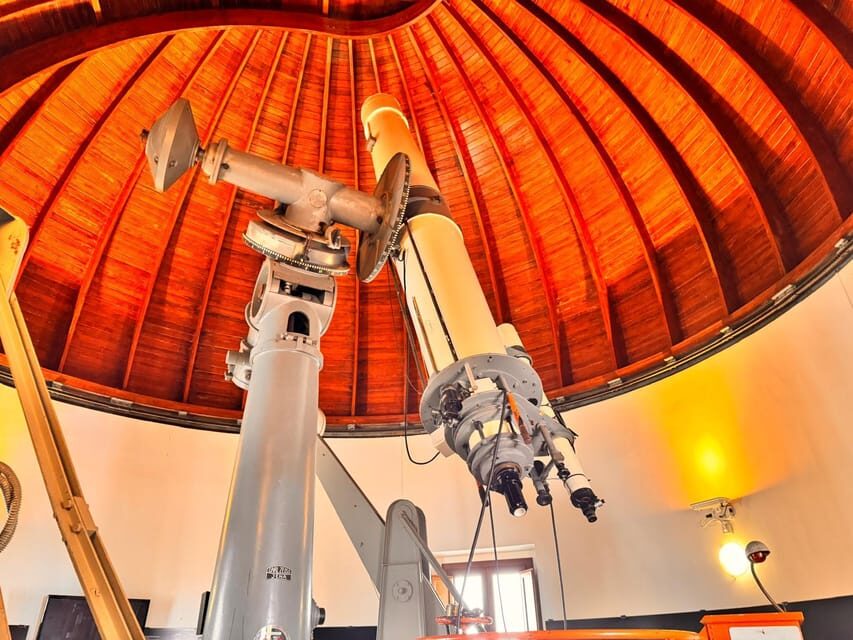
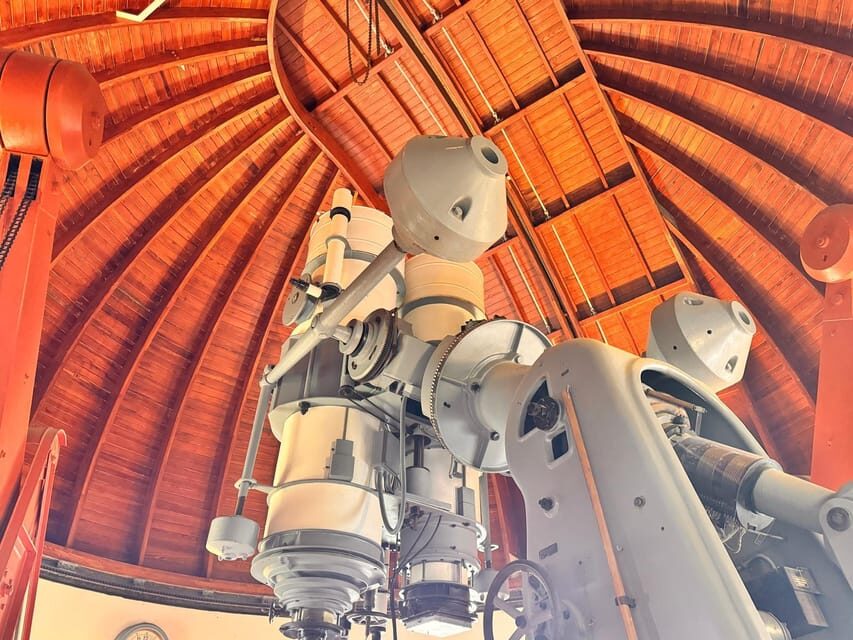
The minor dome, with an 8-meter diameter, has the Double Astrograph. This instrument is used for photographic surveys of the sky and for mapping the position of stars.
Even if you don’t care about astrophotography, this is a cool contrast. The two domes represent two different ways of doing sky work: one for visual observing, and one designed for systematic photographic data. Seeing both in one visit helps you understand why astronomy needs different tools for different questions.
Why dome access feels special
You might be tempted to think observatories are always locked up behind science-only doors. Here, the visit is timed around access to the domes opening after a long stretch—so it’s one of those opportunities that feels purposeful. You’re getting access to spaces that are usually off-limits.
Climb the Spiral Staircase to the Third Floor Terrace
Here’s the moment that turns a science visit into a true Castel Gandolfo memory: the climb and the view.
After the domes, you’ll go up the spiral staircase to the third floor of the Papal Palace. It’s the highest point of the panoramic terrace. When you reach it, you’re positioned for big, open sightlines over Lake Albano.
A few practical points so you can enjoy it:
- Wear comfortable shoes. You’ll be moving through a palace setting that isn’t made for slippery soles.
- Bring a camera if you want to capture the view. The terrace is exactly the kind of place where photos look good even if you’re not a photographer.
- Warm clothing helps. The advice is to come prepared for cooler conditions, which can happen in the Lazio hills even when Rome feels mild.
One more thing: if you have vertigo, skip this. The experience isn’t listed as suitable for people with vertigo, and that’s not the place for bravery. Better to save your comfort for a terrace where you can fully relax.
The Jesuit-Led Vatican Observatory Story That Adds Meaning
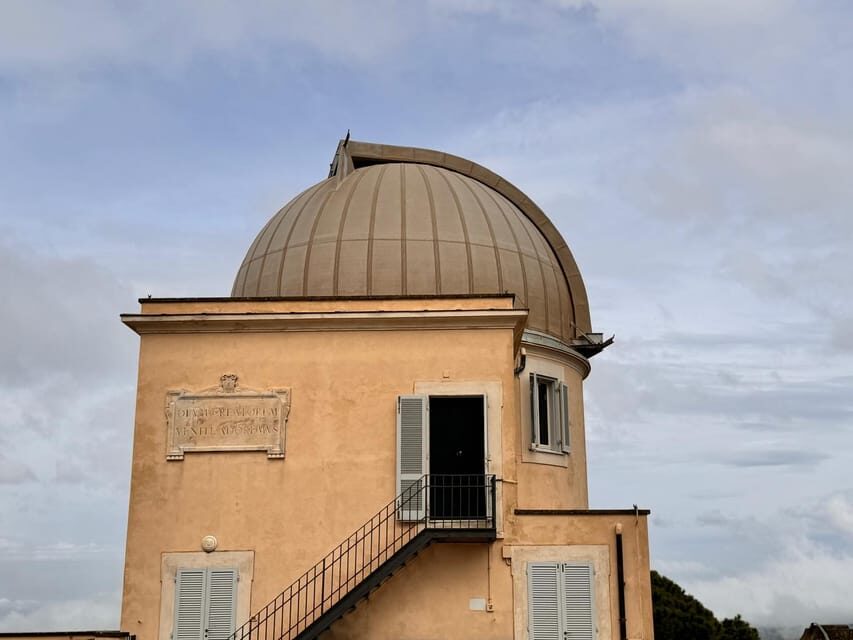
Stand in these domes and it becomes easier to understand what the Vatican Observatory was trying to do. It wasn’t only about having telescopes. It was about building a whole scientific setup and training people to use it.
In 1935, the observatory’s headquarters were refounded and entrusted to the Jesuits. Along with that transfer came major equipment upgrades: the site was equipped with three new telescopes and an astrophysical laboratory for spectrochemical analysis.
That detail matters because it shows the observatory wasn’t just about looking. It also supported study work—using spectrochemical techniques to analyze what’s happening with celestial objects. You don’t need a chemistry degree to appreciate the concept. You just need to remember that astronomy often depends on what light tells you.
The information you’re likely to hear also includes work on variable stars during those early years. That’s a perfect example of why this site location mattered. If you’re studying changing stars, you need reliable observing conditions and a place where the sky isn’t smothered by urban lights.
Even with no long lecture included, the site’s story gives you something to connect to as you move between domes and terrace.
Price and Value: Is $17 Worth 1 Hour?
At $17 per person for a 1-hour visit, this is one of those Vatican-area experiences that can feel either like a bargain or like it depends on expectations.
Here’s the value argument:
- You’re getting access to both observatory domes, including a visual telescope setup and a Double Astrograph setting.
- You’re also getting the Papal Palace terrace and the third-floor access that ties the science to a major scenic payoff.
- It’s designed to be efficient. You’re not paying for a half-day commitment.
Here’s the realistic caution:
- A guided tour and audioguide are not included, so the visit is more about structured access than in-depth storytelling at every step.
- You should assume the timing is tight. If you want slow pacing and lots of stops, you might find the hour a little quick.
For many people, that’s exactly the point: you want high-impact access without swallowing your entire day.
Timing, Meeting Point, and What to Expect When You Arrive
You’ll meet at Castel Gandolfo’s main entrance of the Papal Palace. On the day of your visit, you’ll show your reservation voucher to the reception staff 20 minutes before your scheduled time.
The description also promises skip the ticket line, which helps if you’re trying to keep the rest of your day on track. Since Castel Gandolfo is a 24-kilometer trip from Rome, arriving calmly matters. This is one of those places where running late can turn a neat visit into a stressed one fast.
Language-wise, the host/greeter supports English, French, Spanish, Italian, and German. That’s helpful if you want at least basic explanation while you move through the spaces.
What to Bring (and What to Skip)
This experience gives you a short list, and it’s a smart one.
Bring:
- Comfortable shoes for palace stairs and movement
- Warm clothing, since you may feel cooler during the visit and on the terrace
- Camera for the Lake Albano panorama
Skip:
- Any plan that depends on wheelchair access. This isn’t suitable for wheelchair users.
- Plans that assume this is safe for people with vertigo. It’s not listed as suitable.
- Plans that include young kids. It’s not permitted for children under 7 for safety reasons.
Who This Works Best For
This is a strong match if you like at least one of these:
- Astronomy as a real place of work, not just a science lecture
- Architectural interest in a palace setting tied to a living Vatican story
- Short, high-impact experiences from the Rome area
- You want the blend of science + terrace views in a single visit
It might not be your best choice if you:
- Need a fully wheelchair-accessible plan
- Have vertigo and feel unsafe around heights
- Expect a long guided narrative with an audioguide and extended pacing
Should You Book the Vatican Observatory at Castel Gandolfo?
Book it if you want a compact, meaningful stop that combines working observatory domes with a genuine scenic reward over Lake Albano. The fact that you can access both the major and minor observatories—plus the third-floor terrace—makes the experience feel “worth your time,” especially when you’re comparing it to longer tours with fewer high-impact moments.
Skip it if stairs and heights could be a problem for you, or if you strongly prefer slow, heavily guided experiences. This is an efficient visit. It’s designed to get you in, get you out, and leave you with something you can picture clearly: the domes, the science tools, and that view from the palace terrace.
FAQ
How long does the Castel Gandolfo Vatican Observatory visit last?
It lasts about 1 hour.
What is included in the ticket?
You get access to the major and minor astronomical domes, the third floor of the Papal Palace, and the panoramic terrace view of Lake Albano.
Is transportation from Rome included?
No. Transportation to Castel Gandolfo is not included.
Are meals or drinks included?
No, meals and drinks are not included.
Is a guided tour or audioguide included?
No. A guided tour and an audioguide are not included.
Where do I meet for the experience?
You meet at Castel Gandolfo, at the main entrance of the Papal Palace.
What should I bring?
Bring comfortable shoes, warm clothing, and a camera.
Is this visit suitable for children?
No. The activity is not permitted for children under 7 years old.
Is it wheelchair accessible?
No. It is not suitable for wheelchair users.
What should I know if I have vertigo?
It is not suitable for people with vertigo due to safety reasons.