REVIEW · ROME
Caravaggio Rome Tour: With Exclusive Access to Top Restoration Lab
Book on Viator →Operated by RomaExperience Tours · Bookable on Viator
Caravaggio gets more real after you see it restored. This is a Rome walk with a rare backstage payoff: exclusive access to a top restoration lab run by all-female artisans, tied directly to works you’ll study in major churches. I love the way you get to compare what you see in the churches with what the restorers show in the lab, and I love the human scale of the work—seeing the care behind the paint. One thing to consider: this tour is priced like a specialty experience, so it’s best when you’re genuinely into art restoration, not just famous names.
You’ll start at Piazza di Sant’Agostino at 4:00 pm and end near Piazza del Gesù, close to Largo Argentina. In one past booking, the planning was handled by Elisa from Roma Experience Tours, and a guide named Susanna delivered clear, strong English explanations of the paintings and their context. If you’re expecting a quick highlights loop, the restoration lab portion is the heart of this show—plan to slow down.
In This Review
- Key things I’d circle before you book
- Why Caravaggio looks different after a restoration workshop
- Basilica S. Agostino: St Mary of the Pilgrims in sacred silence
- Church of St. Louis of the French: the St. Matthew cycle and its emotional punch
- Roma Experience Tours restoration lab: where you learn what preservation really costs
- The aperitif: conservation talk, in human scale
- Pantheon moment: a quick reminder of Rome’s long memory
- Price and what you’re really paying for ($1,241.53)
- Timing, meeting points, and keeping it easy on yourself
- Who should choose this Caravaggio Rome tour
- Should you book this tour?
- FAQ
- How long is the Caravaggio Rome tour?
- Where does the tour start and end?
- What’s the start time?
- Which stops are included?
- Are admissions included?
- Is there food or drink included?
- Is this tour private?
- Are children allowed?
- Final note
Key things I’d circle before you book
- Exclusive behind-the-scenes access to a restoration workshop tied to the Caravaggio works you’ll see
- All-female restoration lab experience, with artisans showing the techniques used to preserve the paintings
- Two church stops that spotlight Caravaggio at full intensity: Sant’Agostino and the Church of St. Louis of the French
- Three Caravaggio paintings restored by the lab (including a newly restored work mentioned as Madonna of Loreto)
- A relaxed complimentary aperitif at the end with master artisans
- Private tour setup so it’s just your group, not a big mixed crowd
Why Caravaggio looks different after a restoration workshop
Caravaggio is famous for drama: sharp light, intense faces, and the kind of realism that makes you feel like you’re standing too close. What most normal tours miss is the next chapter—the part where time attacks the paint and paper, and professionals fight back.
That’s where this tour pays off. You’re not only looking at Caravaggio paintings. You’re also seeing how restoration changes what you can understand. Even if you don’t know art conservation terms, you’ll grasp the goal fast: recover legibility, stabilize what’s fragile, and respect the original.
I also like that the lab access isn’t just a photo-op. You meet the people doing the work, and you get the sense that preservation is slow, technical, and careful. It’s a different kind of “wow” than a museum crowd line, and it fits Rome well. You’re learning how these works survive in the real world, not just how they look in ideal lighting.
You can also read our reviews of more tours and experiences in Rome.



Basilica S. Agostino: St Mary of the Pilgrims in sacred silence
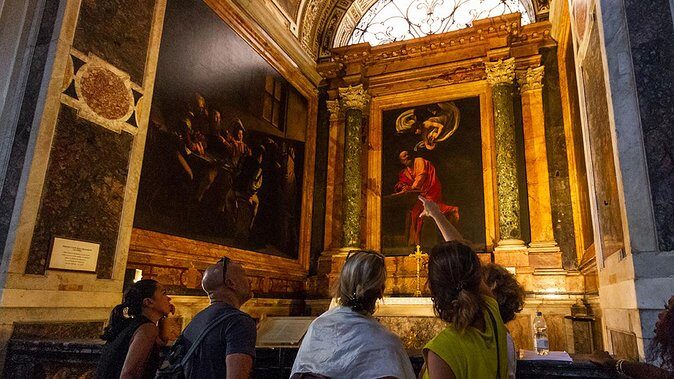
Your tour begins in the area of Piazza di Sant’Agostino with a visit to Basilica S. Agostino. Here you stand before Caravaggio’s painting of St Mary of the pilgrims, a work described as especially beloved by Romans and admired by visitors.
This stop is strong for two reasons. First, it’s a direct, up-close encounter with Caravaggio in a church setting where the mood is less “tourist-mode” and more devotional. Second, the tour connects this church piece to the restoration lab you’ll visit later—so you’re not just staring at a masterpiece. You’re gathering visual clues you can revisit.
A practical consideration: churches can mean dimmer light and harder viewing angles, especially if other visitors fill the space. Go in ready to spend a little time adjusting where you stand. If you want the full effect, pay attention to facial expression and the way light hits clothing—those are the kinds of details restorers often focus on when they talk technique.
Church of St. Louis of the French: the St. Matthew cycle and its emotional punch
Next you head to the Church of St. Louis of the French. This is where Caravaggio’s drama really turns the volume up through the series from the life of St. Matthew. The description you’ll hear emphasizes how elements like age, youth, poetry, and pity seem to dance together inside these scenes.
Why this stop matters: you’re seeing Caravaggio as narrative theater. The St. Matthew works aren’t just portraits. They’re staged emotion—faces, hands, and gestures arranged to make you read the story quickly. When you’re in a place like this, you feel the paintings working on you in the same way they were meant to. That’s harder to get in a museum, where you often view art at a distance and with less atmosphere.
One drawback to plan for: with many churches, your time is limited by the schedule and the number of people moving through. This stop is scheduled at about 45 minutes, so you’ll want to arrive mentally ready to focus, not linger like you would on a self-guided visit.
Roma Experience Tours restoration lab: where you learn what preservation really costs
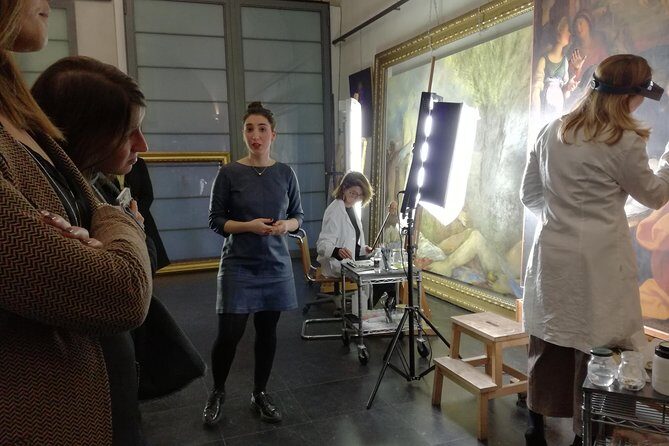
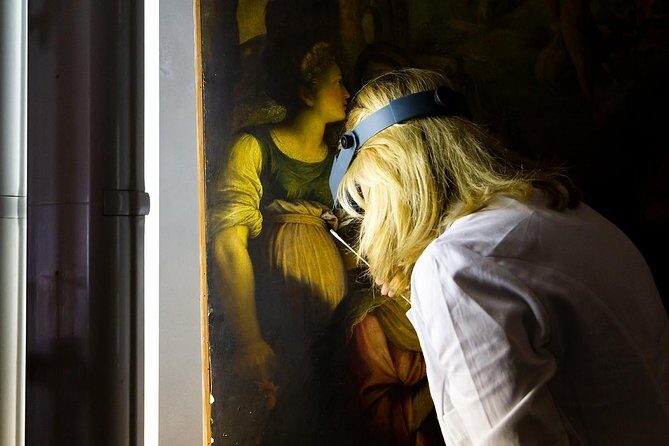
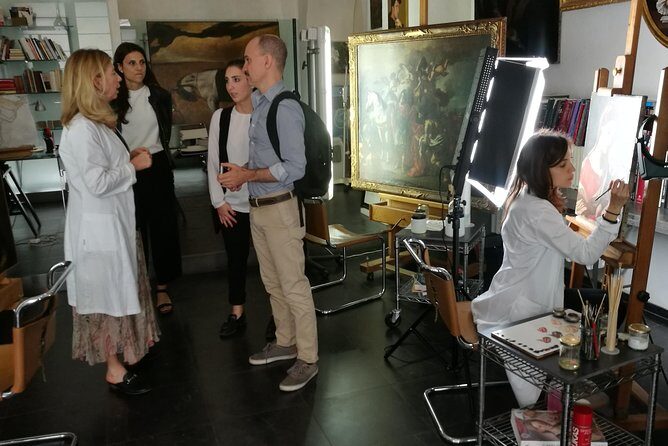
The center of the experience is the Roma Experience Tours stop and the VIP visit to the restoration lab. This is the moment that turns a normal Caravaggio tour into something people remember for a long time.
Here’s what makes it different:
- You get exclusive access to the workshop.
- You meet the master artisan/scientists who restored three Caravaggio paintings.
- You see how the team approaches fragile surfaces and old materials.
- You’re specifically told that the lab restored a work named Madonna of Loreto.
Even if you’re not a conservation nerd, you’ll probably leave with a new respect for the process. Restoration is not just cleaning. It’s assessment, stabilization, and careful choices about what to reveal and what to leave alone. This is why the lab portion is the best “value” ingredient in the whole tour: it teaches you how to look again.
A small heads-up: the lab is a workshop environment. You’ll likely be close enough to see tools or work surfaces, but you should still expect a controlled pace and rules from the team to protect the process. This is normal for conservation spaces, and it’s part of the respect-first vibe.
The aperitif: conservation talk, in human scale
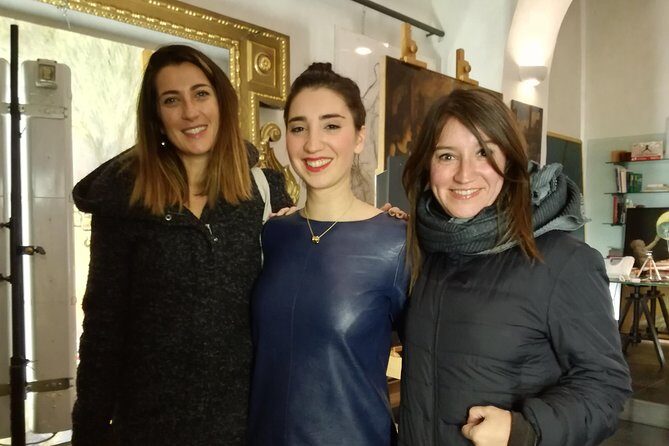
To finish, the tour includes a complimentary aperitif where expert artisans explain the techniques used to preserve these 16th-century treasures. This part matters more than it sounds.
In the churches, you’re absorbing images. In the lab, you’re absorbing methods. The aperitif bridges the two. You get time to ask questions and connect the practical steps to the visual results you saw earlier. It also keeps the mood lighter after technical discussion. In Rome, food and a small drink often make the art-learning stick.
If you tend to get tired on art tours, this is a smart way to end. You’re not just walking back; you’re getting closure with people who live in the details.



Pantheon moment: a quick reminder of Rome’s long memory
The tour description also calls out a stop connected to the Pantheon, described as the world’s best-preserved Roman temple. If it’s included in your specific route time window, treat it as a short reset.
You’ll be coming from a conversation about the survival of old paint. Seeing a structure known for long preservation creates a nice, logical contrast. One place protects stone across centuries. Another protects images across centuries. Different materials, same theme: time is real, but care is real too.
If your schedule is tight, don’t assume you’ll get a full Pantheon experience. Plan for a brief stop if it appears.
Price and what you’re really paying for ($1,241.53)
At $1,241.53 per person, this isn’t a casual budget choice. So you should ask: what’s the value that justifies that price?
Here’s the honest breakdown of what you’re buying:
- Private tour style for your group (not mixed into a mass crowd).
- Exclusive lab access, including meeting the people doing conservation.
- Entrance included for the church stops.
- An aperitif included at the end.
- A guide who explains the paintings with enough clarity that you actually understand what restoration changes.
If you’re the type who loves art but gets bored fast by repetition, you may not feel the value. This tour works best when you want a story that goes beyond “look at the painting.” You want the why behind it—how masterpieces are protected, what’s hard about preserving them, and how that affects how you see them today.
In other words: you’re paying for access and depth. Not for more photos.
Timing, meeting points, and keeping it easy on yourself
This tour runs about 2 hours 30 minutes. It starts at 4:00 pm, with the first two stops scheduled at around 45 minutes each and the lab portion lasting around 1 hour 30 minutes.
That timing matters. Late afternoon in Rome is often better for walking and less harsh than peak midday heat. Also, the evening start gives you a full day to do other things, then finish with something that feels like a special event.
Meeting and end points are clear:
- Start: Piazza di Sant’Agostino, 00186 Roma
- End: Piazza del Gesù, 00186 Roma, near Largo Argentina
One more practical note: it’s near public transportation, and there’s no hotel pickup. You’ll want to be on time at the meeting square so you don’t stress your group.
Who should choose this Caravaggio Rome tour
This is a great fit if:
- You’re interested in how art is preserved, not just where it hangs.
- You enjoy Caravaggio enough to follow him across multiple churches and then into the workshop world.
- You like a small-group feel with an expert guide and direct access to artisans.
It’s less ideal if:
- You mainly want a fast hit of famous sights.
- You’re not curious about restoration and you’d rather spend your time in galleries or larger museums.
One detail that helps the experience for many people: past bookings describe it as planning that feels tailor made, at least for some groups. Since this is a private tour/activity, you may have more flexibility in how you want to experience it, as long as it fits the schedule and the lab’s rules.
Should you book this tour?
Book it if you want Caravaggio plus the part most people skip: the conservation world behind the scenes. The most praised aspects here are clear—exclusive restoration access, friendly staff who explain what they do, and strong guidance like the English explanations shared by Susanna in one experience. Add in the complimentary aperitif, and you end with a relaxed, human finish rather than just standing in front of art and leaving.
Skip it and pick a standard Caravaggio walking tour only if you’re not especially interested in restoration. In that case, the price and workshop focus may feel like more than you need.
If you’re even mildly curious about how paintings survive and what restorers change (and what they don’t), this is one of those Rome experiences that teaches you how to look for years after.
FAQ
How long is the Caravaggio Rome tour?
It’s approximately 2 hours 30 minutes.
Where does the tour start and end?
You start at Piazza di Sant’Agostino, 00186 Roma, and end at Piazza del Gesù, 00186 Roma (near Largo Argentina).
What’s the start time?
The start time is 4:00 pm.
Which stops are included?
You visit Basilica S. Agostino and the Church of St. Louis of the French, then the Roma Experience Tours restoration lab, and the tour description also notes a stop related to the Pantheon.
Are admissions included?
Admission tickets are included for the first two church stops, and the lab portion lists admission as free.
Is there food or drink included?
Yes. A complimentary aperitif is included at the tour’s close.
Is this tour private?
Yes. It’s described as private, meaning only your group participates.
Are children allowed?
Children must be accompanied by an adult.
Final note
If Caravaggio is your priority and restoration sounds like your kind of behind-the-scenes magic, this is a smart splurge in Rome. If you want quick sightseeing without the workshop focus, you’ll probably be happier with something simpler.