REVIEW · VATICAN TOURS
Best of the Vatican: Fast Track Highlights
Book on GetYourGuide →Operated by ItaliaTours · Bookable on GetYourGuide
Rome’s art in two and a half hours. The Best of the Vatican Fast Track Highlights tour helps you skip long ticket lines and go straight into the Vatican Museums and the Sistine Chapel, guided by a passionate art historian who knows how to keep the chaos under control. The whole point is smart: hit the big artistic targets first, before the day swallows your time.
I especially like the way the guide builds momentum. You’re taken through key rooms like the Rooms of Raphael, plus ancient Greek and Roman sculptures in the Belvedere Courtyard, and the Gallery of Maps, so the Renaissance masterpieces make sense instead of feeling random. The other big win is time: the shorter format leaves you with more room for real Roman wandering afterward. The main catch? St. Peter’s Basilica access can be restricted on Wednesday mornings due to the weekly papal audience, so plan your schedule carefully.
In This Review
- Key points at a glance
- Entering the Vatican Museums with fast-track momentum
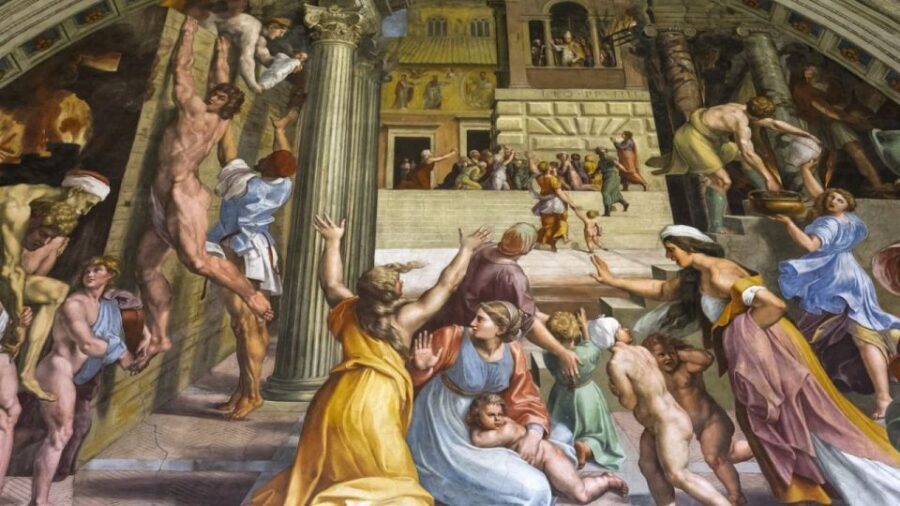
- Vatican Museums highlights: Raphael rooms, Belvedere Courtyard, and Maps Gallery
- The Rooms of Raphael: art that teaches you how to look
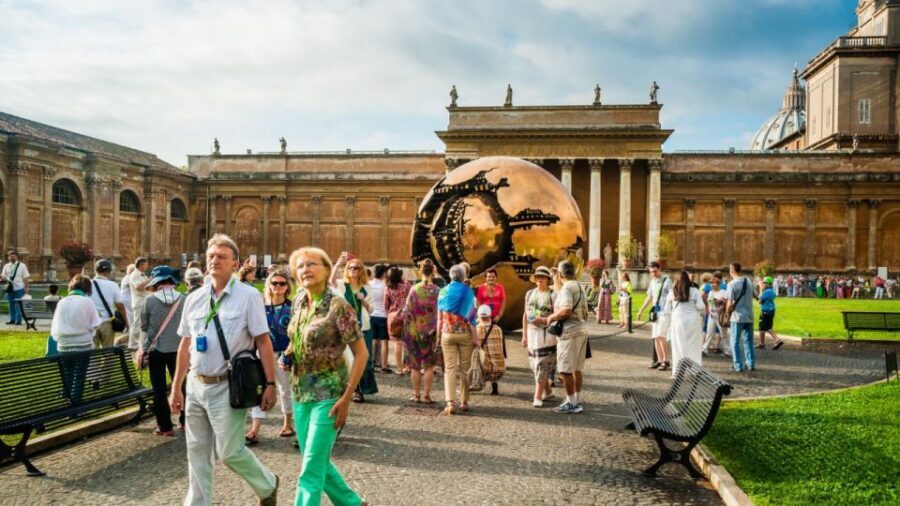
- Belvedere Courtyard: ancient Greece and Rome in the spotlight
- Gallery of Maps: where geography becomes a political story
- Sistine Chapel in focused time: what to notice and what matters
- Myth vs. fact: separating the Hollywood version
- How to use your minutes wisely
- St. Peter’s Basilica after the chapel: priority access and real constraints
- The big day-specific catch: Wednesday mornings
- Jubilee 2025 restrictions and booking window
- How to make 30 minutes count
- The pace: why the highlights tour works (and when it doesn’t)
- Meet your guide: art historians who guide your eyes
- Dress code, security lines, and other must-know rules
- Is this tour worth the money? The value math that matters
- Who should book this fast-track Vatican highlights tour
- Should you book Best of the Vatican Fast Track Highlights?
Key points at a glance
- Skip-the-line entry so you spend your energy looking at art, not inching forward in queues
- Sistine Chapel focus with time to actually look up, not just pass through
- Raphael and ancient Rome context that helps the Vatican feel connected, not like separate exhibits
- Optional St. Peter’s Basilica priority access after the chapel, when your ticket day allows it
- Fast, controlled pace that keeps groups moving while still stopping for important moments
Entering the Vatican Museums with fast-track momentum
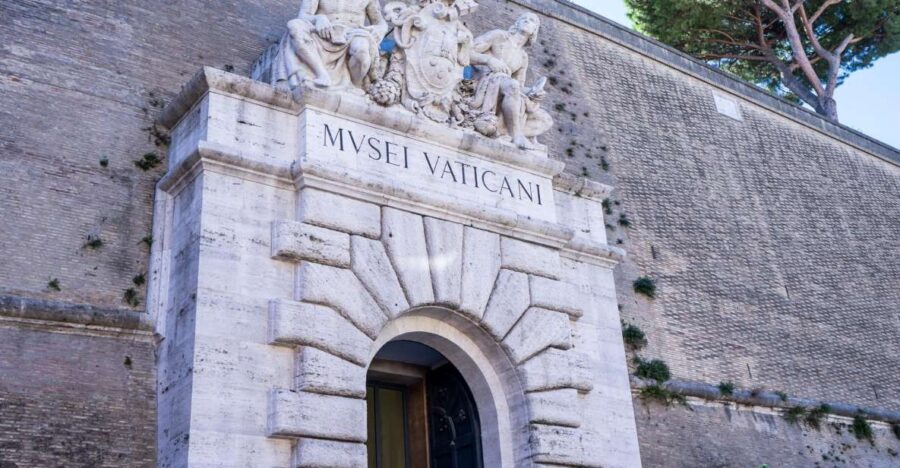
This tour starts with an easy, obvious goal: meet at Via Sebastiano Veniero 19, just steps from the Vatican Museums entrance, and arrive about 15 minutes early. You’ll check in inside the ItaliaPass–ItaliaTours lounge, then your guide brings you into the museum flow with skip-the-line entry.
Once you’re inside, you feel the difference right away. The Vatican Museums are huge—your guide is planning a route so you don’t waste time fighting the crowd or duplicating paths. You’re basically buying a map and a pace-setter for a place that can otherwise feel like a maze with no exit sign.
Also, expect that “fast-track” still includes airport-style security. In high season, security waits can reach up to 30 minutes, so don’t treat the skip-the-line as a guarantee that you’ll breeze through everything. Still, getting through security and then being steered past the ticket crush is a big time saver.
One more practical note from how this tour runs: they use audio equipment (ear pieces). One review flagged that some ear pieces were heavy and fell off, with the reminder that you can ask for a different type before the tour starts. If audio clarity matters to you, speak up early.
You can also read our reviews of more tours and experiences in Rome.



Vatican Museums highlights: Raphael rooms, Belvedere Courtyard, and Maps Gallery
The heart of this experience is the “highlights first” approach to a museum complex that can overwhelm even confident visitors. The guided portion is about 2 hours in the Vatican Museums, and the strategy is to hit the works that create the strongest “aha” moments.
The Rooms of Raphael: art that teaches you how to look
The tour places strong emphasis on the Rooms of Raphael, which is exactly where many first-time visitors need help. These rooms can feel like you’re looking at paintings because they’re famous. Your guide helps you notice what makes them meaningful—how the Renaissance artists borrowed ideas, symbols, and storytelling methods that weren’t created in a vacuum.
Think of it like this: without context, you might admire technique. With context, you start recognizing themes and purpose. That turns the museum from a photo op into something that feels like a living argument about art, power, and belief.
Belvedere Courtyard: ancient Greece and Rome in the spotlight
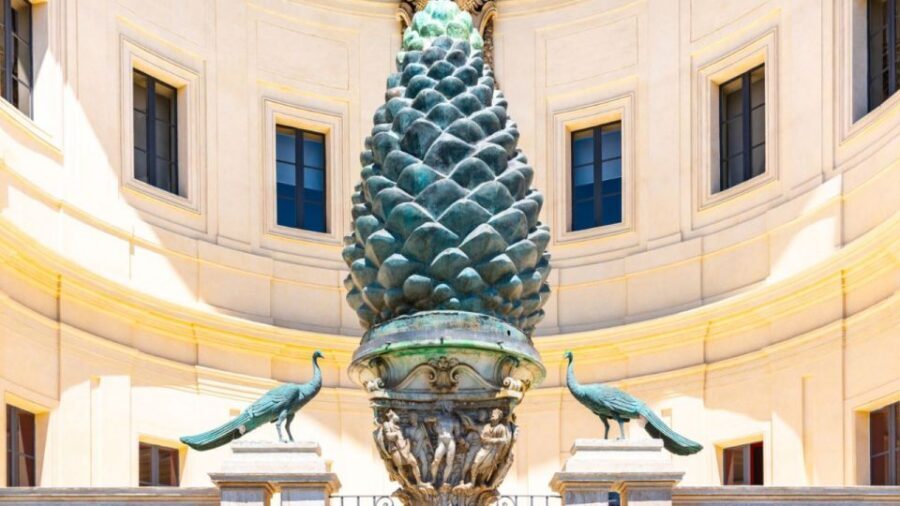
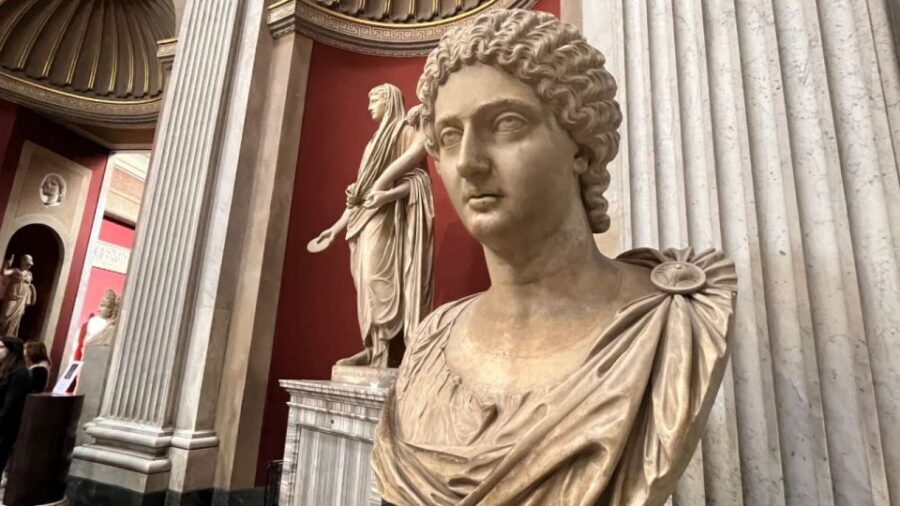
Another key stop is the Belvedere Courtyard, with ancient Greek and Roman pieces. The tour framing is practical: it explains how these ancient works played a role in inspiring later Renaissance creativity. This matters because the Vatican isn’t just a “collection of old things.” It’s also a timeline of ideas—how people reused form, meaning, and prestige.
You’ll also get guided explanation of major works from the ancient period, not just a quick point-and-shoot moment. This is one of the reasons the pace works: the guide isn’t trying to cover everything in 1,200-plus galleries, they’re guiding you to the few stops that make the rest click.
Gallery of Maps: where geography becomes a political story
The Gallery of Maps is another highlight built into this route. It sounds specific, but it’s exactly the kind of detail that makes a guided “best of” tour valuable. Maps inside a museum can easily become visual clutter on your own. With a guide, you get the why behind the images—how geography, ambition, and identity show up in art.
This kind of stop is also where you learn museum navigation skills. You start seeing what the guide means when they say we’re staying on track for the ultimate prize.



Sistine Chapel in focused time: what to notice and what matters
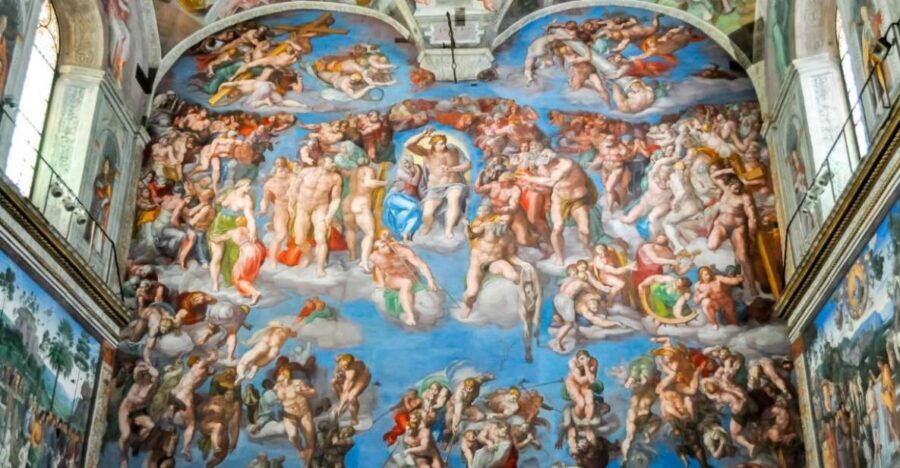
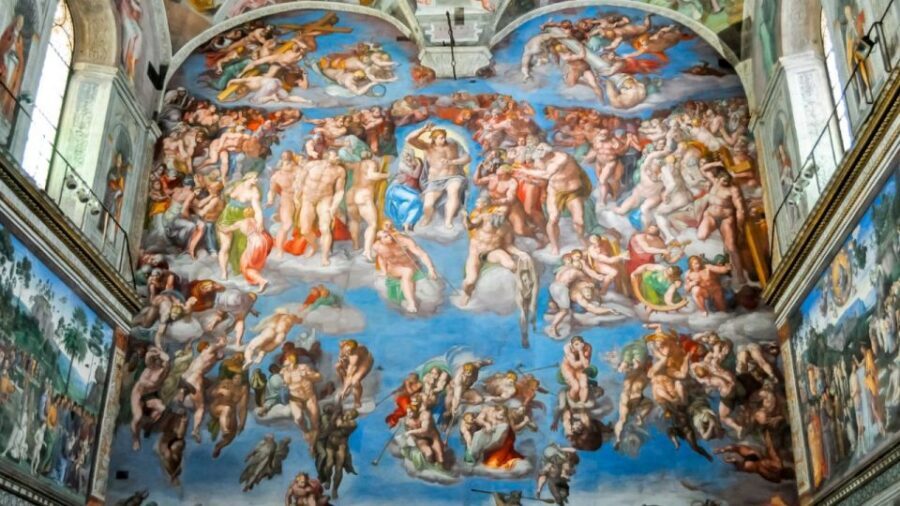
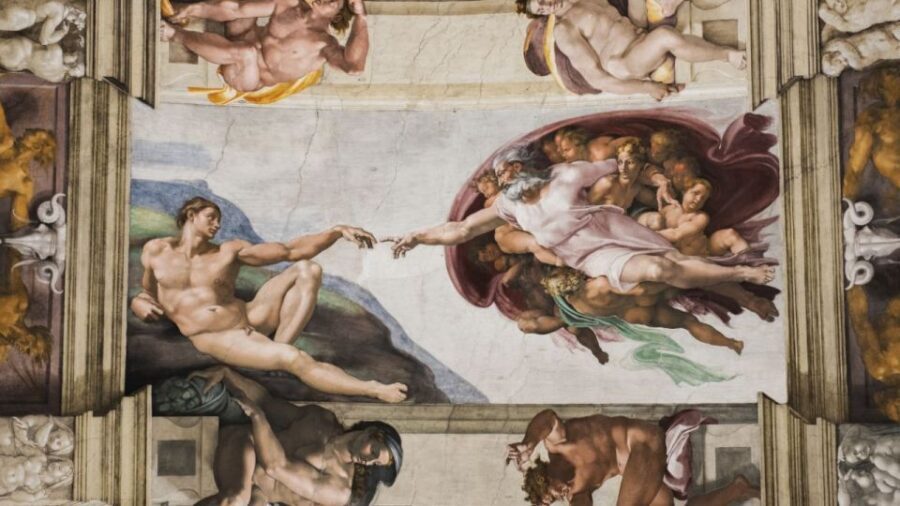
The Sistine Chapel portion is about 30 minutes of guided time, which is the right amount for this particular room. The chapel is famous, yes. But that also creates pressure: people often rush because they’re worried they’ll miss something.
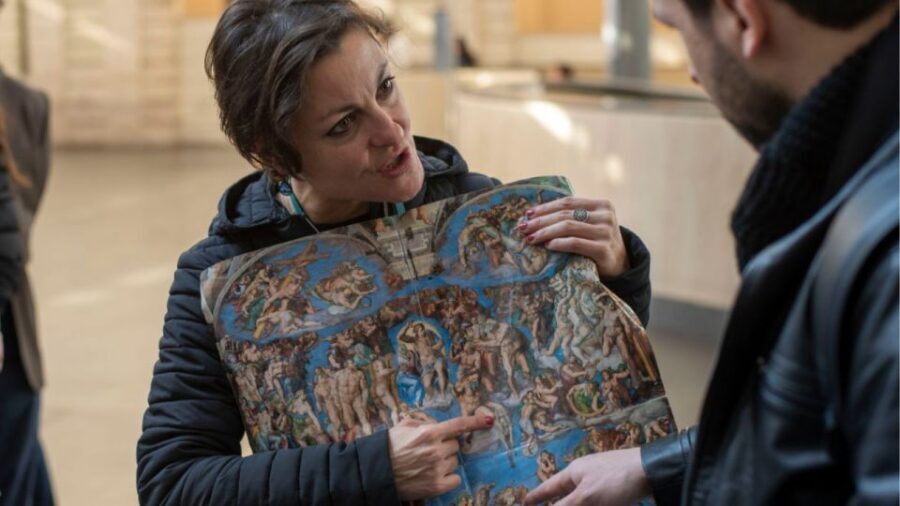
Here, the guide’s job is to slow you down without letting the group fall behind. You’ll get commissioning and creation context, then hear the story of Michelangelo Buonarroti—the ceiling work was done in a way that demanded extreme physical effort. The tour notes that Michelangelo considered himself a sculptor, not a painter, yet he spent countless years painting frescoes on a ceiling about 44 feet high.
Myth vs. fact: separating the Hollywood version
One of the most useful pieces of this tour is how it treats popular myths. Your guide helps you discern between myth, fact, and the version that often gets repeated in pop culture about Michelangelo and that ceiling.
They also cover the physical and psychological damage inflicted on the artist, which adds weight to what you’re seeing. You start looking at the ceiling not only as an artwork, but as evidence of a human cost. That turns “wow” into something longer-lasting.
How to use your minutes wisely
When you’re in the chapel, don’t try to absorb every scene equally. Use the guided framework: follow what your guide points out, then choose one or two areas to re-check when you find yourself drifting. Even with limited time, this lets you leave with a real memory, not just a blur of ceiling figures.
St. Peter’s Basilica after the chapel: priority access and real constraints
After the Sistine Chapel, the tour gives you a decision point. The experience describes choosing whether to take advantage of priority access to St. Peter’s Basilica or to remain inside the museums longer on your own.
In the scheduled outline, you also have about 30 minutes self-guided at St. Peter’s Basilica, finishing at Piazza San Pietro. That timing is short by design; it keeps the overall day manageable and preserves the fast-track advantage.
The big day-specific catch: Wednesday mornings
St. Peter’s Basilica access is not possible on Wednesday morning during the weekly papal audience. That can force you to forfeit the Basilica portion of a skip-the-line style ticket and either wait for the general entry line or purchase another option. This is worth repeating because it’s not a minor inconvenience; it can change the value of the day.
Jubilee 2025 restrictions and booking window
The tour also warns that special events tied to Jubilee 2025 may restrict access to St. Peter’s Basilica. It also states that direct Basilica access is possible only if you book at least 72 hours in advance. If you’re within that window, you’re more likely to get the intended experience. If not, you may need to enter through the main square instead.
Practical takeaway: before you build your Rome itinerary around “Basilica after the Sistine,” check your day of the week and your booking timeline.
How to make 30 minutes count
Because your time inside is limited, go with a simple plan. Pick a first goal (the main interior area) and a second goal (a place you want to see up close), then move. If you try to see everything at once, you’ll end up doing the fastest possible version of everything.
The pace: why the highlights tour works (and when it doesn’t)
This tour is built for speed with structure. The Vatican Museums are massive, and even with the guided route, you won’t have time to stop and study every section. Your guide keeps the group moving with short breaks to look at important parts, which helps you enjoy the art instead of fighting the crowd.
A key strength shown in the run of experiences is that guides handle crowd flow well. Some guide styles emphasized humor and keeping everyone together—useful when you’re surrounded by thousands of people and the only thing worse than a slow line is a group that can’t find each other.
But there’s a tradeoff. If you want to linger for long reads of labels and take deep notes on every gallery, this might feel like information overload. The format favors the big hits, not an unhurried museum day.
Meet your guide: art historians who guide your eyes
The guides listed across the experiences show a pattern: strong storytelling and good group management. People specifically praised guides like Erita, Chiara, Nadya, Massimo, Paolo, Sandra, and Marianne for explaining key points clearly and keeping groups on track.
Even small details matter for comfort. One review mentioned the guide keeping the group in shade and air conditioning as much as possible—this isn’t “luxury,” it’s smart physiology when you’re moving fast through stone buildings.
And the humor shows up too. Several people mentioned a fun, engaging style that works well for families and even distractible teens. That’s a real benefit if you’ve done a museum tour where kids are bored in minute 12. Here, the structure helps.
Dress code, security lines, and other must-know rules
You do need to plan around practical restrictions. The tour lists a dress requirement: no shorts, no short skirts, and no sleeveless shirts. This is the kind of rule that’s easy to ignore until you’re already at the door, so pack accordingly.
Also, the tour rules say no weapons or sharp objects. It sounds obvious, but security screening is strict enough that it’s worth remembering.
Then there’s the security checkpoint. All visitors must pass through airport-style security, and during peak season you might wait up to 30 minutes. That can change your expectations for how early you need to be there.
One more no-nonsense detail: the tour states it’s not possible to participate using a wheelchair, scooter, or other aid. It says to contact the operator to ask about customized options for mobility challenges. If mobility access is part of your planning, ask before booking so you don’t end up with a surprise.
Is this tour worth the money? The value math that matters
You’re paying for two things: time saved and help interpreting the art.
At the Vatican, time is usually the first currency you run out of. Skip-the-line access to the Vatican Museums and the Sistine Chapel is a huge part of why this tour has strong value. Without a guide, it’s easy to waste the morning in queues, then rush the most famous room like you’re trying to beat the day.
The other value is the guide’s selection. This isn’t trying to tour every hallway. It targets the Rooms of Raphael, ancient pieces in the Belvedere Courtyard, the Gallery of Maps, and then aims you directly toward the Sistine Chapel. That’s a smart choice for most first-timers and for anyone who wants a highlight route without turning Rome into an exhausting indoor slog.
The short tour is also part of the cost-benefit. You get to see the big Vatican hits in about 2.5 hours, which often makes it easier to add the Colosseum, a neighborhood walk, or a relaxed dinner plan later.
Who should book this fast-track Vatican highlights tour
This is a great fit if you want the Vatican’s most important art without losing half your day to lines. It’s especially appealing if you’re traveling with teens or kids who can handle a structured route but won’t survive hours of aimless gallery wandering.
It also works well for first-timers who don’t want to research the Vatican’s rooms before arriving. The guide’s framing does that job for you: Renaissance art, ancient influence, and what to pay attention to in the Sistine Chapel.
If you’re the type who loves slow museum time—hours in one room, long label reading, sketching, and deep study—this format might feel too fast. In that case, you might want a longer, more flexible Vatican plan instead.
Should you book Best of the Vatican Fast Track Highlights?
I’d book it if your priority is simple: see the Vatican Museums’ key moments and make it to the Sistine Chapel with energy left. The skip-the-line approach is the main value driver, and the guided selection makes the Sistine Chapel feel more meaningful than just seeing a famous ceiling.
I’d think twice or plan around it if your visit is on Wednesday morning, because Basilica access can be blocked for the papal audience. Also double-check the booking lead time for direct Basilica access, since the tour notes that direct entry requires booking at least 72 hours in advance.
Bottom line: this is a well-structured “highlights” way to experience the Vatican, built for people who want big art plus time back for Rome. If that’s your goal, you’ll likely feel like you made the most of a short window.