REVIEW · ROME
Aqueduct Park RunningTour
Book on Viator →Operated by ArcheoRunning · Bookable on Viator
Aqueducts, but make it a run.
This early session swaps Rome’s busiest streets for the Parco degli Acquedotti inside the Appia Antica Regional Park, where you get views of seven Roman aqueducts while you move at a relaxed, non-race pace. I really like how the format blends sport and culture in a way that feels doable, even if you are not a runner.
The guide in this experience is often Isa, and her explanations can turn stones and ruins into stories you can actually picture. One thing to consider: the tour starts at 7:00 am, and it runs only with good weather, so you’ll want to be ready for an early wake-up and a quick weather check.
In This Review
- Key highlights you will care about
- Parco degli Acquedotti is the whole point
- Starting at Via Lemonia: how the morning flow works
- What you will see: seven aqueducts in a green 240-hectare park
- How the experience stays fun: not a race, just purposeful movement
- Isa’s storytelling: making ruins and infrastructure feel human
- Pace, shoes, and comfort: make it easy on yourself
- Private for your group: how that changes the value
- Price vs. what you get: is it worth $127.21?
- Who this tour fits best (and who might skip it)
- Weather and timing: the one real drawback to plan around
- Should you book the Aqueduct Park RunningTour?
- FAQ
- Where is the meeting point for the Aqueduct Park RunningTour?
- What time does the tour start?
- How long is the tour?
- Is this running tour a race?
- Can most people participate, and are service animals allowed?
- What happens if it is canceled due to weather, or if I cancel my booking?
Key highlights you will care about
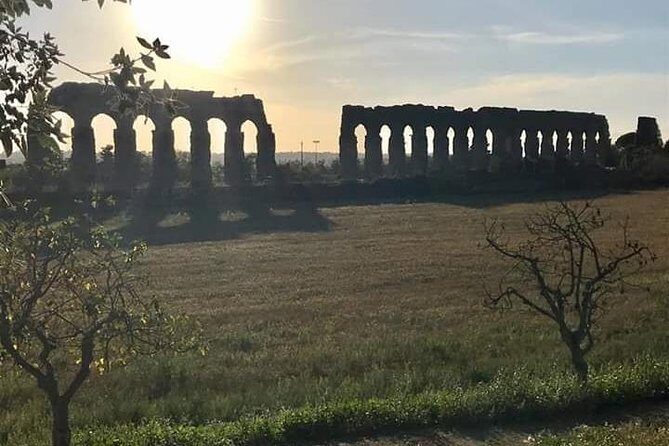
- Parco degli Acquedotti + Appia Antica: a big green area (240 hectares) with major Roman aqueducts
- Seven aqueducts in one outing: you get multiple viewpoints without jumping all over Rome
- Not a race, more like movement with context: you can go at an easy pace as you learn
- Guide Isa leads the stories: explanations that focus on what you are seeing, not just dates
- Early start works well here: you get the park before the day really heats up
Parco degli Acquedotti is the whole point
If you want Rome, but not the usual crowd-and-tram experience, this is a smart match. The setting is Parco degli Acquedotti, a park tucked within the Appia Antica Regional Park. That matters because the vibe changes fast once you step out of the urban rush.
The park covers 240 hectares, so you get space to breathe. You are not just looking at a monument from one angle; you’re in an area where the aqueducts shape the scenery around you. And because this is a running tour, you experience it as a route, with motion that naturally leads you from one view to the next.
What makes it feel special is the combination of scale and focus. Aqueducts can be impressive in photos. Here, they feel even more real because you see how they cut through the park and frame the walking paths. You also get the sense that you are standing in a landscape that once served a city’s daily needs.
You can also read our reviews of more tours and experiences in Rome.



Starting at Via Lemonia: how the morning flow works
The meeting point is Via Lemonia, 273, 00174 Roma RM, Italy. The start time is 7:00 am, and the tour ends back at the same meeting point, so you are not forced into complicated transport planning.
Because it is near public transportation, you can usually reach the start area without a big taxi mission. That is a real value in Rome, where timing can get messy. A one-hour format also helps: you get your culture + movement hit without losing a half-day.
The early start is not just for convenience. In a park like this, the morning light and cooler temperatures make a difference, especially for photos and for comfort during the run. If you hate mornings, this is where your personal preference decides. If you like quiet streets and a calmer start, you’ll probably enjoy it.
Also, you’ll have a mobile ticket, which keeps everything simple on arrival.
What you will see: seven aqueducts in a green 240-hectare park
This tour is built around one big theme: the aqueducts that supplied ancient Rome. The park lets you admire seven grandiose Roman aqueducts that once fed the city. Seeing multiple aqueducts is the key advantage here. It means you can compare structures and designs while staying in a single area.
Expect the route to focus on viewpoints and sightlines rather than fast running. This matters because you are there to look closely and learn while moving. When a guide points out specific features, the motion helps your brain connect the parts. Instead of memorizing from a plaque, you can build a mental map of where things sit relative to the paths.
One bonus from the way the experience is described: it tends to feel calm and away from the busiest parts of Rome. You get a sense of everyday life nearby too, which makes the ruins feel less like a movie set and more like something you share with the real neighborhood around it. You should also plan on taking photos. The setting is made for it: long stone lines, park views, and angles that look dramatic even without filters.
How the experience stays fun: not a race, just purposeful movement
This is where the experience becomes beginner-friendly. It is not a race. That means you can keep an easy jog pace, a fast walk, or a mix. The goal is sport plus culture, not competition.
For first-time running-tour people, the non-race structure is a big deal. You get to focus on breathing and noticing what you are seeing, not on speed or stamina. It also makes the tour more forgiving if you are coming off jet lag or you just don’t feel like a workout that morning.
The guide style also matters. Isa’s explanations are described as turning up “cool places” and showing details that can be easy to miss when you are walking solo. In other words, you’re not just running through open space; you’re getting narrative threads that make the park feel clearer and more meaningful.
In one account tied to this experience, there is also mention of learning history while running along the Tiber and talking about bridges. That suggests the route can include nearby scenic stretches beyond the immediate aqueduct viewing areas. Either way, the consistent theme is interpretation while you move.
Isa’s storytelling: making ruins and infrastructure feel human
Aqueducts are engineering, yes. But a good guide makes them human. Isa’s approach, based on the accounts tied to this experience, centers on helping you understand what you are looking at and why it mattered.
You’ll likely hear stories that connect the structures to the daily function of ancient Rome: how water moved through the city. And because you’re in a park built around these remains, the explanations land better than they would in a museum. You can see the scale and picture how the system worked across long distances.
There’s also a social side to the guidance. One reviewer specifically calls out Isa as fun and energetic, with a lot of enthusiasm. That fits the overall style of ArcheoRunning: sport first, then culture woven in so you’re not forced into long lectures.
Another detail that comes through is the emphasis on places that feel like they are hiding in plain sight. In a city like Rome, this is a gift. A guide helps you notice edges, sightlines, and structural cues that you might otherwise overlook.



Pace, shoes, and comfort: make it easy on yourself
Since it’s a one-hour session, you don’t need to overthink it—but you should plan for the basics.
- Wear comfortable running shoes or supportive walking shoes. A park surface can be uneven in places.
- Dress for morning temperature swings. Rome can feel pleasant early, then warm up faster than you expect.
- Bring water. Even if the workout is easy, you’ll be moving in open air.
Because it is described as most people can participate, you don’t need a training background. Still, be honest with yourself about your comfort level. If you have any mobility limitations, the park environment is something to consider, and you can also ask the provider about what pace options are available.
One more practical note: service animals are allowed. If you’re traveling with one, this kind of confirmation-friendly policy helps you book with less uncertainty.
Private for your group: how that changes the value
This is listed as a private tour/activity, meaning only your group participates. That setup changes the experience in small but important ways.
First, it tends to make the pacing more flexible. When a guide isn’t balancing multiple groups, you’re more likely to get explanations at a speed that works for you. Second, it’s easier to ask questions. If something about aqueduct construction or Roman water systems catches your curiosity, you can steer the conversation.
For solo travelers, a private experience can be a cost decision. For couples and small groups, it often feels like the sweet spot: you get expert attention and a tailored feel without needing to negotiate your way through crowded tour logistics.
Price vs. what you get: is it worth $127.21?
At $127.21 per person for about one hour, this isn’t a budget activity. But it also isn’t trying to replace a day of sightseeing. It is a targeted experience: aqueducts, park setting, and a guide who layers context onto movement.
Here’s how to think about value:
- You are paying for a guide-led route in a specific Roman landscape (Parco degli Acquedotti and Appia Antica).
- You’re paying for time you don’t have to plan. Aqueduct areas can be spread out, and it’s easy to miss what connects the views.
- You get a format that reduces friction. You’re not choosing between a workout and a historical walk. You get both in one tidy block.
If you love hands-on learning that feels physical, the price can make sense. If you mainly want big-ticket monuments like Colosseum-scale landmarks, you may find this too niche. But if your priority is a calmer, greener Rome where Roman engineering is the star, you’ll probably see the value immediately.
Who this tour fits best (and who might skip it)
This is a great match for you if you want:
- a morning activity that feels quieter than the city center
- an easy-to-join way to mix movement and Roman context
- outdoor sightseeing with photo-friendly views
It may not be your best choice if:
- you hate early starts and can’t do 7:00 am
- you only want iconic indoor sites with minimal walking
- you prefer a fast pace (since this is explicitly not a race)
The upside is that because it is built for beginners and flexibility, you’re not stuck with a high-pressure “fitness class in Rome” vibe. You’re there to enjoy the route.
Weather and timing: the one real drawback to plan around
The experience requires good weather. If it’s canceled due to poor conditions, you’re offered a different date or a full refund. That’s the simple part.
The practical part: check the forecast the night before and the morning of. If Rome throws rain or heavy clouds your way, your plans for the day might need a rethink. That said, parks can still look beautiful after mild weather—so the key is not just “weather exists,” but whether it’s good enough for the provider to run safely.
Also remember you’ll be outside. Bring a light layer for the early hour, even if you think it will be warm later.
Should you book the Aqueduct Park RunningTour?
I think you should book this if you want a different Rome. Not the same old monument circuit. You’re trading crowds for open space, and you’re seeing Roman engineering in a way that feels personal because you experience it as a route through the park.
It’s also a strong choice if you like guided detail. Isa’s explanations are repeatedly described as a highlight—connecting what you see to stories and helping you notice “pearls” of detail along the way. And since the tour is private and not a race, it’s a low-stress format that still gives you something memorable.
If early mornings and outdoor movement aren’t your thing, you might prefer a later, slower aqueduct walk instead. But if you can do 7:00 am, this is a fun, practical way to see a side of Rome most people skip.
FAQ
Where is the meeting point for the Aqueduct Park RunningTour?
You meet at Via Lemonia, 273, 00174 Roma RM, Italy. The activity ends back at the same meeting point.
What time does the tour start?
The tour starts at 7:00 am.
How long is the tour?
The duration is approximately 1 hour.
Is this running tour a race?
No. It is described as not a race, with the focus on fun, sport, and culture.
Can most people participate, and are service animals allowed?
Yes. Most travelers can participate, and service animals are allowed.
What happens if it is canceled due to weather, or if I cancel my booking?
The experience requires good weather. If it’s canceled due to poor weather, you’ll be offered a different date or a full refund. You can cancel up to 24 hours in advance for a full refund.