REVIEW · NAPLES
Amalfi Coast Tour: Positano, Amalfi & Ravello from Naples
Book on Viator →Operated by IAMME IA! - Gray Line Amalfi Coast · Bookable on Viator
Amalfi Coast day trips are magic. This one strings together Positano, Amalfi, and Ravello with an air-conditioned ride plus a live local guide, so you get the wow factor without driving. I especially like the free time in each town (you can wander on your own instead of being herded), and I like the way the day is run with smart logistics that keep moving without feeling chaotic. One thing to keep in mind: this is a packed day with stairs and uphills, so it’s not the easiest choice if you have mobility limits.
The guides matter here. People have praised guides such as Roberto, Angie, Lucio, and Luna for mixing practical walking directions with history and even fun pop-culture references while you’re traveling. You’ll often feel like you’re traveling with a friend who knows exactly where the best viewpoints and meeting spots are.
Finally, it’s good value for the money if you want first-rate coast scenery plus a taste of three towns. Just don’t expect full, slow exploration of each place like you’d get with an overnight plan.
In This Review
- Key things that make this tour work
- Price and logistics: what you’re really paying for
- Getting started in Naples: the smart meeting point
- Coast viewpoints and Sirenusas: quick stops with real payoff
- Positano: the 90 minutes that set your expectations
- Amalfi: boat ride (seasonal) plus real town time
- Ravello: the hill town that rewards patience
- Winter option: Arsenal visit instead of boat transfer
- Walking, stairs, and the real mobility check
- Guides and driving: why this route feels easier than it looks
- What to budget for once you’re there
- Small-group reality: timing is tight, so plan your priorities
- Who should book this Amalfi Coast tour
- Should you book this Naples-to-Amalfi day trip?
- FAQ
- How long is the Amalfi Coast tour from Naples?
- Is the tour offered in English?
- How big is the group?
- Does the tour include the boat transfer from Positano to Amalfi?
- Is lunch included?
- Are tickets included for church interiors and Villa Rufolo?
Key things that make this tour work

- Small group size (21 or fewer) helps the guide manage meeting points and timing.
- Three classic towns in one day means you can compare Positano, Amalfi, and Ravello fast.
- Seasonal Positano-to-Amalfi boat ride can add variety if weather cooperates.
- Short guided moments plus real free time lets you steer the day once you arrive.
- Several top sights have optional paid entries (like churches and Villa Rufolo) so you control your budget.
- This is driver-and-road heavy; the route is curvy and steep, and safe handling is part of the experience.
Price and logistics: what you’re really paying for
At about $131.81 per person for an 8–9 hour outing, you’re not just buying sightseeing. You’re buying transportation that handles the steep coast roads for you, plus a guide on board with live commentary and local context. That matters on the Amalfi Coast, where renting a car (and then finding parking) can turn your day into a second job.
This tour also gives you “town time,” not just photo stops. You get around 1.5 hours in Positano, 2 hours in Amalfi, and about 1 hour in Ravello (with additional guided time in the historic center). That’s the balance: enough time to feel the place, not enough time to do everything—so you’ll want to choose priorities before you go.
Most entrances are not included. Places like parts of the Positano church complex, the Duomo di Sant’Andrea inside, and Villa Rufolo typically require separate tickets. The value is strongest if you’re happy to pick and choose what you enter.
You can also read our reviews of more tours and experiences in Naples.



Getting started in Naples: the smart meeting point
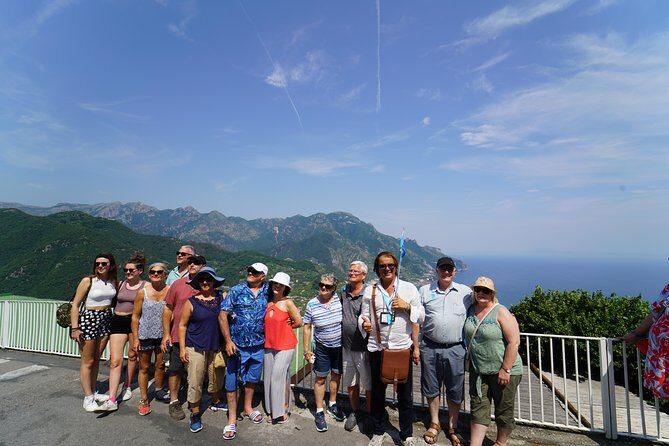
You meet at Starhotels Terminus, Piazza Giuseppe Garibaldi 91, Naples. It’s a central spot and (per the tour notes) near public transportation, which helps if you’re coming from somewhere else in the city. The tour ends back at the same meeting point, so you’re not trying to reconstruct your day at the end while everyone’s tired and hungry.
Once you’re on the bus, the guide’s job is to give you wayfinding. That includes when to be back, where the easiest meeting points are in each town, and what to focus on during the free time. In good guided days, this turns an “8-hour tour” into something that feels organized rather than rushed.
Coast viewpoints and Sirenusas: quick stops with real payoff

Before you settle into the towns, you travel along the Amalfi Coast’s 50-kilometer stretch with cliffy shoreline views. There’s also a stop for the Sirenusas (Gallos), a small archipelago off the coast between Capri and the Positano area. The key here is simple: you get to see the islands and understand where you are relative to the bigger island of Capri and the mainland.
These early stops are usually short, but they set the tone. You’ll start to recognize the coastline shape and the way the villages cling to the cliffs.
Positano: the 90 minutes that set your expectations
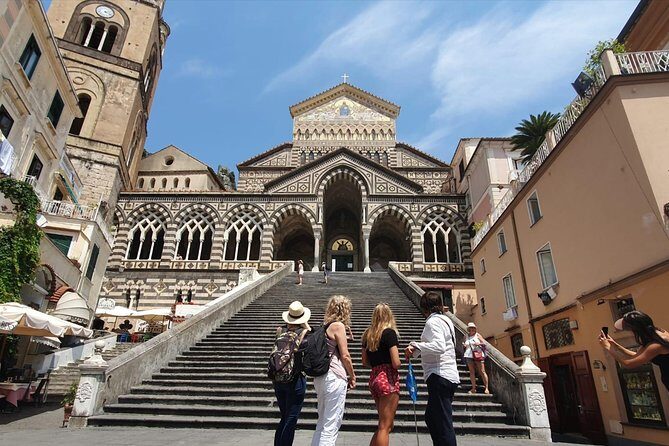
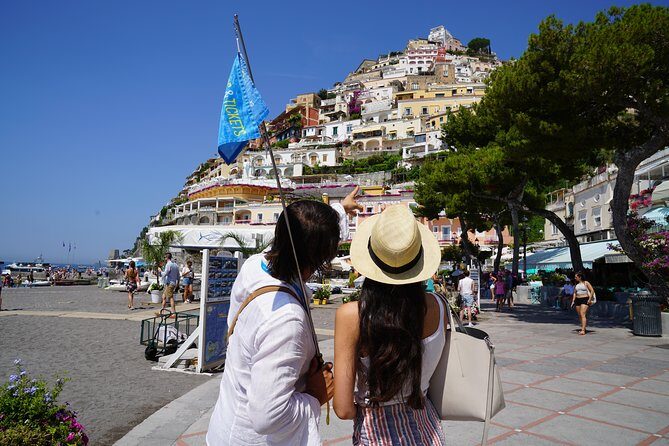
Positano is the postcard version of itself: steep streets, pastel buildings, and that famous pebbly beach below. You’ll get about 1 hour 30 minutes of free time to choose your pace—shops, a coffee, a slow walk to a viewpoint, or just people-watching with sea views.
The big church highlight is Chiesa di Santa Maria Assunta e Cripta Medievale. You’ll have a short stop near the church area, and the exterior is worth it even if you don’t go inside. If you do want to enter the church/crypt complex, note that it’s typically a not-included ticket.
A useful practical tip from how this day usually plays: some parts of Positano feel like they’re “downstairs” and others are “uphill.” In one common scenario, the bus takes you to a lower area first, and you’ll realize the best shopping streets and interesting corners can be higher up. If you have limited time, I’d rather you spend your 90 minutes intentionally: start with one viewpoint loop, then do a short shopping snack run, then head back to meet the group.
Amalfi: boat ride (seasonal) plus real town time
You’ll reach Amalfi from Positano either by a boat transfer or, in the off-season, by traveling without it. In the warm months (April to October), you may do a boat ride of about 25 minutes sailing along the coast. The catch: it’s “not in case of bad weather,” so have Plan B patience.
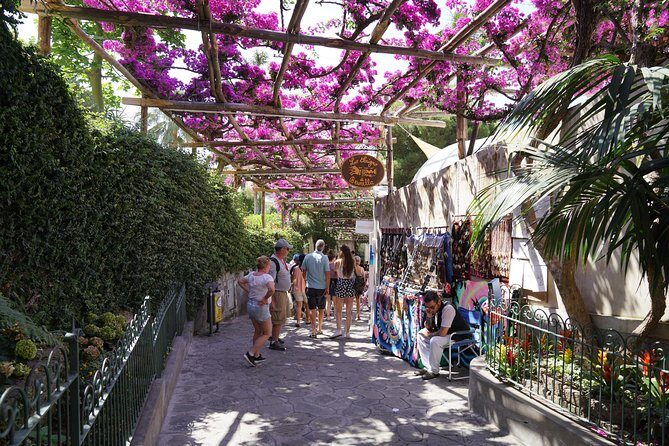
Once in Amalfi, you get about 2 hours. This is one of the more satisfying chunks of the day because Amalfi feels more “city-like” than the other two stops. The main anchor is the Cathedral (Duomo) of Saint Andrew. You’ll spend time in the cathedral square area and around the historic center.
If you want an extra culture stop near the Duomo, there’s a small museum next to the cathedral that one guide mentioned in a common way: the Diocesan Museum of Amalfi (often noted at around €4 in real-world visits). It’s a good use of time if you like art details and smaller collections rather than only grand monuments.
Food note: lunch is not included. Many people handle this by grabbing something quick near the square or by eating as soon as their free time begins. One practical “save time” idea: if you sit down for a full, slow meal, it can chew through your Amalfi minutes fast. If you care about doing the extra optional things (like museum visits or another short excursion), plan a lighter lunch.
Some days also add an optional extra boat experience from Amalfi. That’s not automatic, but if you hear the option and you want more sea time, it can be a fun add-on as long as you don’t sacrifice your meeting window.



Ravello: the hill town that rewards patience
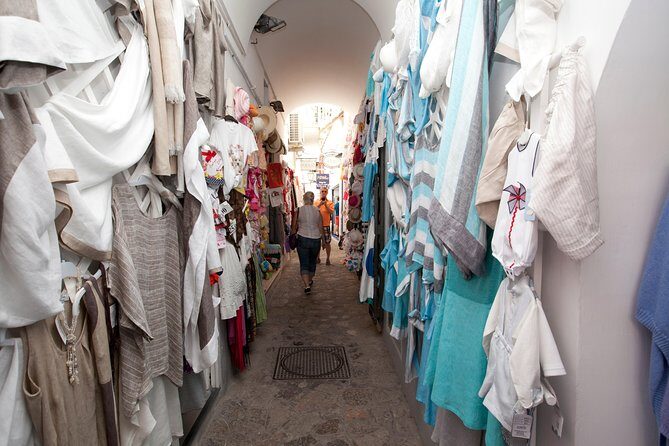
Ravello is different. It’s higher up, quieter in feel, and much more about views and atmosphere. You’ll get about 1 hour to explore, plus a guided walk/stop that includes the historical city center square and surrounding streets, with a total guided window that helps you orient quickly.
The star sight is Villa Rufolo. Your tour time includes a chance to visit it, but entry tickets are not included. The terrace views over the sea are the big reason people go. There’s also a neat cultural note: the place is associated with Richard Wagner, who spent time there and drew inspiration for his work Parsifal.
Time is the trade-off here. One recurring theme in discussions of this kind of day is that Ravello can feel like it ends just when you’re getting comfortable. If Ravello is your priority, I’d go in ready to buy the Villa Rufolo ticket quickly and spend your time moving between viewpoints rather than trying to do every lane and shop.
Winter option: Arsenal visit instead of boat transfer

In November to March, the boat transfer between Positano and Amalfi typically isn’t offered. In exchange, you get a visit to the Arsenal of the Amalfi Republic. That swap matters because it keeps the day from turning into only road time and walking stops. If you’re traveling in the cooler months, this is one of the reasons the tour still makes sense.
In short: season changes the “sea part” of the day, but it doesn’t remove the history angle.
Walking, stairs, and the real mobility check
This tour is doable for many people, but you need to respect the terrain. Positano and Ravello are built for feet, not wheeled comfort. You’ll be dealing with stairs and uphill walks, especially around churches and historic streets.
Even when the bus gets you close, you still have to walk. If you’ve had knee surgery or similar mobility limits, this is the part to plan for rather than hope will be “not too bad.” I’ve found the most helpful approach is to treat the day like sightseeing with breaks, not like a marathon with a bathroom stop. Comfortable shoes, water, and a slow pace are your friends.
Guides and driving: why this route feels easier than it looks
On the Amalfi Coast, roads are narrow and curves are constant. A lot of the quality of the day comes from the driver’s confidence and comfort in traffic and turns. In multiple accounts, the drivers were praised for safe handling of the steep, winding road.
The other half is the guide. People have highlighted guides like Roberto, Angie, Lucio, and Luna for clear communication and smart logistics. That’s not fluff. Good guiding means you’re not guessing where to go, and you’re not losing time trying to catch up after a coffee break.
If your guide includes pop-culture anecdotes in the narration, that’s actually helpful. It keeps the ride from feeling like a long transfer and helps you remember what you see when you arrive.
What to budget for once you’re there
Here’s the practical money picture based on what’s not included. You may want to pay for:
- Church interiors/crypts in Positano (the Santa Maria Assunta complex)
- The Duomo inside in Amalfi (if you choose to enter)
- Villa Rufolo in Ravello
You’ll also pay for lunch because it’s not included. If you want to add optional experiences (like an extra boat activity in Amalfi), budget more cash for that too.
If you’d like a simple strategy: carry small bills, decide early whether you’re paying for inside visits, and don’t count on museum or church entry times to be flexible if the day runs behind schedule.
Small-group reality: timing is tight, so plan your priorities
This tour moves in a way that gives you highlights without turning into a long vacation. The result is that some indoor moments may be limited, depending on pacing and how quickly the group regroups.
So I’d treat it like this: pick one “must enter” sight (for many people, Villa Rufolo is the favorite) and let the rest be optional if time allows. That way you don’t feel like you missed something every time the group moves to the next stop.
Also, don’t assume every stop will feel the same. Positano is tighter and more vertical; Amalfi has the cathedral square energy; Ravello is view time and slow wandering.
Who should book this Amalfi Coast tour
Book it if you:
- Want a first-timer-friendly way to see three signature towns in one day from Naples.
- Like the mix of guided moments plus free time.
- Want the coast scenery without driving yourself.
- Appreciate guides who give clear meeting instructions and add context to what you’re seeing.
Pass or consider alternatives if you:
- Need long, relaxed time in each town. This is more “highlights with breathing room” than “full immersion.”
- Have serious mobility limits due to stairs and uphill terrain.
- Are on a tight schedule tied to cruise ship departure times. This tour is noted as not suitable for cruise passengers, and that’s a big deal.
Should you book this Naples-to-Amalfi day trip?
I think it’s a strong choice if you’re short on time in Naples and you want the Amalfi Coast hits without the headache of coordinating transport. The small-group size, the live guide commentary, and the fact that you’re not just stuck photographing from the roadside make it feel like a day worth paying for.
Book it especially if Ravello or Villa Rufolo is on your list, because the tour builds in a real chance to reach it and make the visit count. Just go in with realistic expectations: this is a packed day on steep streets, so wear shoes for walking and decide in advance what you want to pay to enter.
FAQ
How long is the Amalfi Coast tour from Naples?
It runs about 8 to 9 hours.
Is the tour offered in English?
Yes, it’s offered in English.
How big is the group?
It’s a small group with a maximum of 21 travelers.
Does the tour include the boat transfer from Positano to Amalfi?
From April to October, the Positano to Amalfi boat transfer is included if weather allows. From November to March, there is no boat transportation.
Is lunch included?
No, lunch is not included.
Are tickets included for church interiors and Villa Rufolo?
Some sights require tickets you buy separately. The tour notes that entries for places like Santa Maria Assunta e Cripta Medievale, Duomo di Sant’Andrea, and Villa Rufolo are not included. Your guide can help with tickets when possible.