REVIEW · NAPLES
Walking-tour of Naples hystorical Centre
Book on GetYourGuide →Operated by GRAND TOURS ITALY · Bookable on GetYourGuide
Naples history is right there under your feet. This walking tour strings together nearly 2,000 years of Greek, Roman, French, Austrian, Spanish, and Italian layers in just a few blocks, with stops that feel connected instead of random. I love how the route links major monuments to local character, and I especially like the focus on San Gregorio Armeno, the street made for nativity scenes.
The one possible drawback is that the tour is mostly about sight-based history—so if you’re hoping for a long list of food tastings, manage expectations.
A well-run guide helps you read the city fast: what you’re seeing, why it matters, and how the old Naples story flows from square to square. Plan for a solid walking effort in central Naples, with churches and narrow streets doing most of the work.
In This Review
- Key highlights worth your attention
- Why Naples’ UNESCO core makes this walk special
- Piazza Dante to Port’Alba: where the tour finds its footing
- Piazza Bellini and the Greek walls of Neapolis
- Via dei Tribunali: Pulcinella and purgatory secrets
- San Gregorio Armeno: the street of cribs and living craftsmanship
- Santa Chiara Monumental Complex: Gothic style in southern Italy
- Piazza del Gesù Nuovo: the Jesuit finish you can’t miss
- Price and walking pace: is $55 good value?
- Getting there and meeting your guide without stress
- Who this tour fits best
- Should you book this Naples historical-centre walking tour
- FAQ
- How long is the Walking-tour of Naples historical Centre?
- How much does it cost?
- Where does the tour start?
- Where can I meet the guide?
- Are the start times different for English and Spanish?
- What are the main stops on the route?
- What languages are available?
- Is the tour wheelchair accessible?
- Is there radio equipment during the tour?
- What is the cancellation policy?
Key highlights worth your attention
- San Gregorio Armeno cribs street and the workshop culture behind the nativity scenes
- Greek walls at Piazza Bellini showing Neapolis history in plain sight
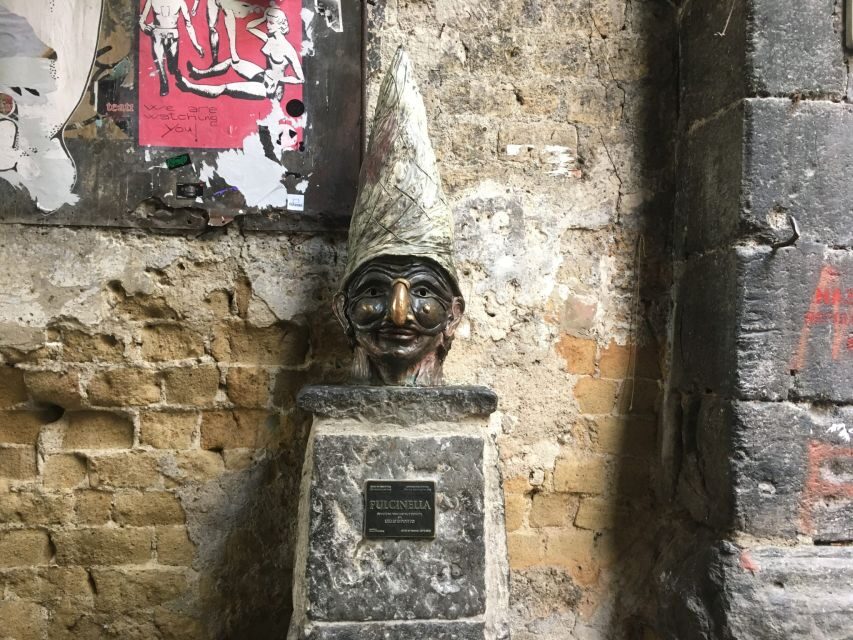
- Pulcinella and the church of the souls in purgatory with its mysterious crypt
- Santa Chiara Monumental Complex and southern Italy Gothic architecture
- Piazza del Gesù Nuovo for the Jesuit church façade and the grand ending
Why Naples’ UNESCO core makes this walk special
Naples’ historic centre isn’t one neat era. It’s more like stacked notes from different centuries, written on top of each other. That’s exactly why a guided walk works so well here: you can’t get the full story from a map.
This route takes you through a UNESCO heritage area recognized in 1995. The key idea is simple: Greek and Roman foundations, later European influences, and then the Naples you know today all sit close together. When you connect those dots on foot, the city starts to feel logical, not chaotic.
You’ll also spend the time with an English- or Spanish-speaking guide who explains legends and folklore, not just dates. That matters in Naples, where a statue, a nickname, or a church detail can carry the meaning.
You can also read our reviews of more walking tours in Naples


Piazza Dante to Port’Alba: where the tour finds its footing
You start in Piazza Dante, and the guide looks easy to spot: an open white umbrella under the Dante statue in the middle of the square. That small detail is worth noting, because you’re meeting in a busy central area where wandering can waste time.
From there, the plan includes a look at the Convitto Nazionale designed by architect Vanvitelli. Even if you’re not an architecture nerd, this is a nice way to ground yourself. It gives you a sense of how “official” Naples looks alongside the older, more winding streets.
Then you enter the historic centre through Port’Alba. This is where the walk changes mood: wider squares shrink into older streets, and the city starts behaving like the compact old core it is. If you like moving from landmark to landmark without breaks, this is a good opening.
Piazza Bellini and the Greek walls of Neapolis
Piazza Bellini is one of those stops that feels like a plot twist. You’re in a lively Naples square, and the guide points out ancient Greek walls of the city of Neapolis still visible here.
That’s a big deal. You don’t have to imagine what used to be underground or far away. You’re looking at real remnants that help explain why Naples became such a long-running crossroads.
This part of the tour is ideal if you enjoy “slow reveals.” You’ll understand the logic of the old city grid better, because the Greek walls become a reference point for everything that comes after. The guide’s job is to keep you from missing the meaning while you’re busy taking photos.
Via dei Tribunali: Pulcinella and purgatory secrets
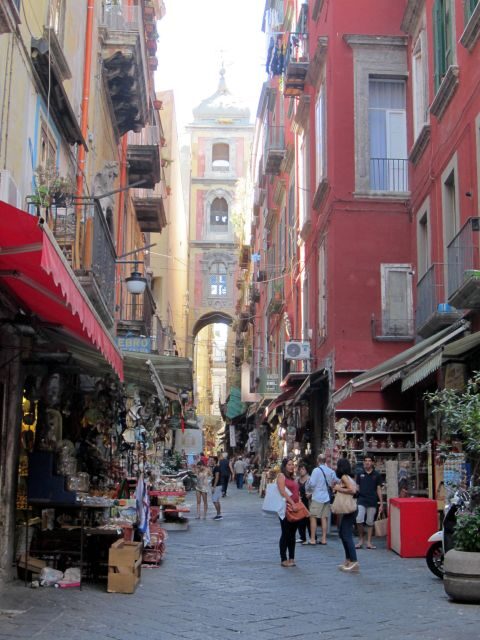
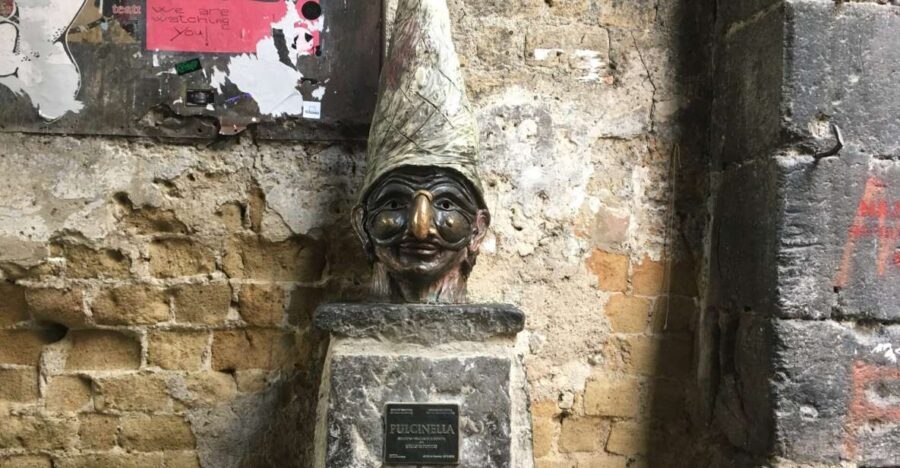
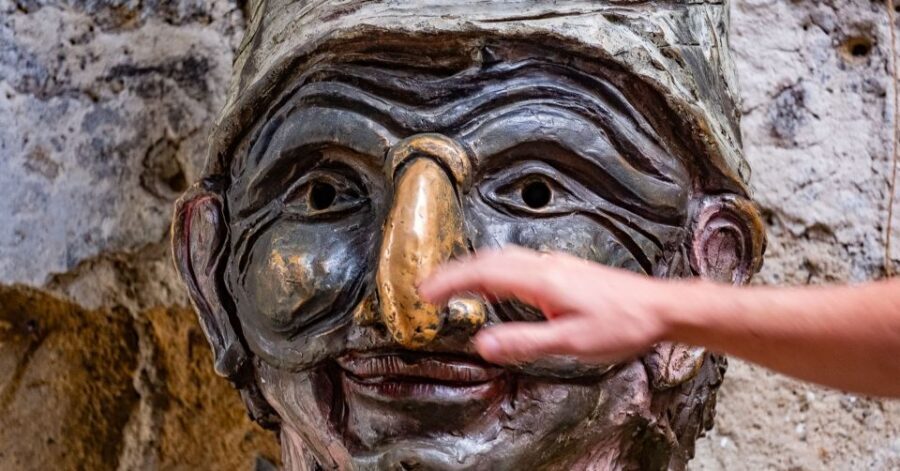
Via dei Tribunali is where Naples culture gets its dramatic flair. The tour includes the famous statue of Pulcinella, a character closely tied to Neapolitan folklore. If you’ve heard the name before, you’ll get more context here, and if you haven’t, you’ll come away knowing why Pulcinella belongs in the story.
Next comes the church of the souls in purgatory, described as hiding a mysterious crypt. Even without going into every detail, the idea sets expectations: you’re not just walking by beautiful façades. You’re walking through places that Neapolitans associate with spiritual belief and local legend.
This stop works well because it mixes three things in one: street life, symbolic character (Pulcinella), and religious architecture tied to a specific theme. It’s the kind of Naples moment that makes the city feel personal, not museum-like.
Practical note: churches and crypt areas can mean cooler indoor temperatures and sometimes dimmer lighting. Wear something comfortable, and keep your phone brightness in check for photos.
San Gregorio Armeno: the street of cribs and living craftsmanship
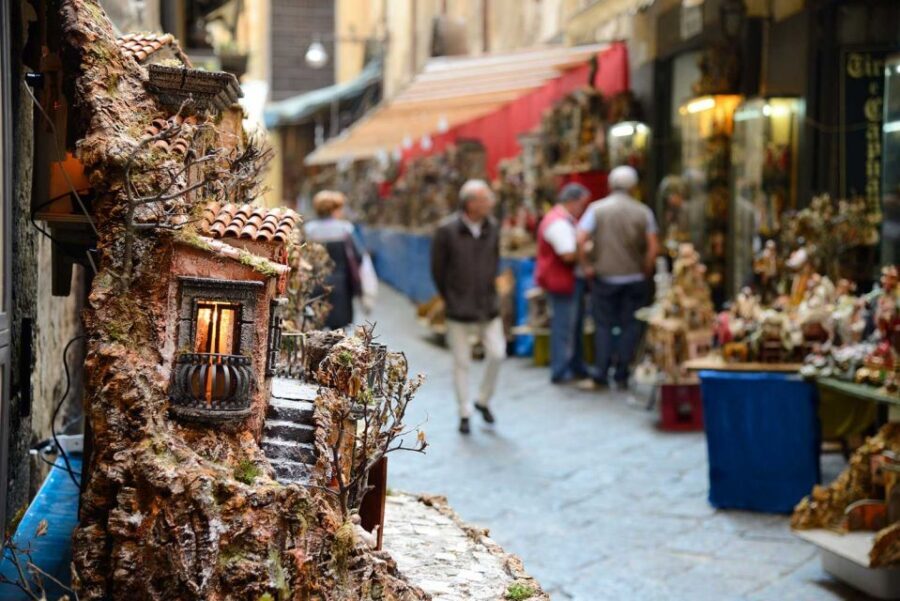
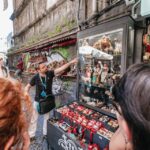
If you want one signature highlight, it’s San Gregorio Armeno. The tour calls it the street of cribs, and you’ll see why—local artisans’ workshops create nativity scenes that are part craft, part cultural expression.
This is more than a photo stop. The guide’s explanations help you see how nativity scenes function in Naples as a tradition with deep roots. You’ll learn how the street became associated with these displays and what makes the scene-making culture distinctive.
What I like about this portion is the pacing. After the heavier historical references earlier on, this feels tactile. You’re looking at objects people make and update, so the city feels alive in the present tense, not only preserved in stone.
If you’re shopping, this is where you’ll naturally drift toward workshops and display windows. Even if you don’t buy anything, it’s one of the best places in the old centre to slow down and really look.


Santa Chiara Monumental Complex: Gothic style in southern Italy

Santa Chiara Monumental Complex is a major church stop on the route, and the guide frames it as a strong example of Gothic style in southern Italy. That phrasing matters, because Gothic architecture often gets associated with northern Europe in people’s heads. Here, you’ll get a different regional flavor.
This is also a good moment to shift from street-level curiosity to monument-scale focus. The city’s earlier beats were about older layers and local legend. Santa Chiara gives you a sense of how Naples also expressed power and devotion through architecture.
Expect a guided visit that helps you notice details you might otherwise skip. If you like to understand what you’re looking at—style, purpose, and how the structure fits the city—this stop delivers.
If you’re sensitive to crowds, go with the mindset that this is a popular landmark. Keep your space, stay close to the guide, and you’ll avoid getting stuck at bottlenecks.
Piazza del Gesù Nuovo: the Jesuit finish you can’t miss
You end in Piazza del Gesù Nuovo, where the church of the same name anchors the square. The Jesuits built the church in the 15th century, and the façade gives Naples that cinematic “step back and look” feeling.
Finishing here makes sense for two reasons. First, it’s a high-impact visual capstone after churches and historic streets. Second, Piazza del Gesù Nuovo feels like a natural place to keep exploring on your own after the tour ends.
If you’re the type who likes to keep your bearings, ending in a big, recognizable square is smart. You won’t feel abandoned at a random corner. You’ll have options for food, restrooms, and onward travel from a central location.
Price and walking pace: is $55 good value?
The price is $55 per person for a total duration of 2.5 hours, with a guided tour time listed at 2 hours 15. That’s a useful difference: it signals a structured walk with a bit of buffer for transitions.
Value-wise, you’re paying for:
- A live guide in English or Spanish
- A route that hits multiple major historic and cultural anchors
- Radio support if there are more participants, which helps the guide keep you together
For a city where it’s easy to get lost in the details, $55 can be a solid deal if you’re interested in meaning, not just movement. The guide’s explanations of legends and local traditions (Pulcinella, purgatory themes, and the crib culture on San Gregorio Armeno) are the part that transforms the stops from sightseeing into understanding.
The one caution is that the highlights are sight- and story-based. The tour references early pizzerias in the historical centre, but it’s not framed as a full pizza-tasting experience. You’ll likely see and learn about historical points connected to first pizzerias rather than sit down for multiple meals.
Also, with a 4.4 rating from only a small number of reviews, you’re not looking at a massive data set. If your personal style is very structured itineraries with minimal walking, consider whether you’ll enjoy a nonstop old-centre loop.
Getting there and meeting your guide without stress
Timing matters on this tour. The English tour starts at 10:45 a.m., and the Spanish tour starts at 11 a.m. You’ll want to arrive at least 10 minutes early so you can find the meeting point calmly.
Your meeting point is Piazza Dante, and again: the guide is waiting under the Dante statue with an open white umbrella. That’s one of the easiest meeting cues you’ll find in Naples central areas.
The tour is described as wheelchair accessible, and it’s listed as a private group. That combination usually helps with comfort and pacing. Still, keep in mind that historic centres can mean uneven sidewalks and tight streets, so wear supportive shoes.
Who this tour fits best
This tour is a great match if you:
- Like walking tours with strong stop-to-story connections
- Want to see major historic landmarks in a short time
- Enjoy local folklore as much as architecture
- Plan to spend the rest of your day in the old centre and want a good mental map
It’s less ideal if you:
- Want a long, food-heavy itinerary
- Prefer fewer churches or shorter stops
- Dislike structured routes and would rather wander freely without guidance
Should you book this Naples historical-centre walking tour
I’d book it if your goal is to understand Naples quickly and authentically, without spending half your vacation trying to figure out what each street corner means. The route connects the Greek layer at Piazza Bellini, folklore via Pulcinella, and the artisan tradition of San Gregorio Armeno, then finishes with Santa Chiara and Piazza del Gesù Nuovo.
If you want a relaxed day with minimal walking, you might prefer something slower. But for a 2.5-hour guided hit of UNESCO-listed central Naples, this one makes sense—especially if you’re excited to see how old stories keep living in the modern streets.
FAQ
How long is the Walking-tour of Naples historical Centre?
The tour lasts about 2.5 hours, with a guided tour time of 2 hours 15.
How much does it cost?
It costs $55 per person.
Where does the tour start?
It starts in Piazza Dante.
Where can I meet the guide?
The guide waits under the Dante statue in the middle of Piazza Dante, holding an open white umbrella.
Are the start times different for English and Spanish?
Yes. English starts at 10:45 a.m. and Spanish starts at 11 a.m.
What are the main stops on the route?
Key stops include Piazza Bellini, Via dei Tribunali, Via San Gregorio Armeno, Santa Chiara Monumental Complex, and Piazza del Gesù Nuovo.
What languages are available?
The live tour guide is available in English and Spanish.
Is the tour wheelchair accessible?
Yes, it is listed as wheelchair accessible.
Is there radio equipment during the tour?
A radio is included in case of a large number of participants.
What is the cancellation policy?
You can cancel up to 24 hours in advance for a full refund.