REVIEW · NAPLES
Walking Tour of Herculaneum with Local Guide
Book on Viator →Operated by Worldtours · Bookable on Viator
Herculaneum hits fast, and it stays manageable. This is a short guided walking tour built around the site’s biggest highlights, with prebooked entry so you can step in without wasting time at the gate. You also get an English-speaking local guide to connect the buildings to how people actually lived.
I love how efficient the route feels. In about two hours, you move through major stops that show daily life from food and leisure to patrician villas and stunning mosaics. I also like that your ticket is part of the deal, so you’re not juggling separate bookings while you’re on vacation.
One thing to consider: language can be a sticking point. The tour is offered in English, and there can be situations where other languages aren’t available depending on group size, so check before you assume you’ll get a specific language.
In This Review
- Key highlights to look for
- Why Herculaneum feels different (and often beats the stress)
- Price and what you actually get for the $48.16
- The 2-hour walk: how the route keeps your attention
- Salone della Barca di Ercolano: the ancient boat you can’t fake
- Antiquarium di Ercolano: turning ruins into real objects
- Casa dei Cervi: a patrician villa that helps you read the house
- Casa del Rilievo di Telefo: patrician elegance in small details
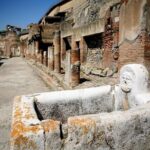
- Grande Taberna: Roman fast food, ancient edition
- Vestibolo della Palestra: gymnasium and swimming pool
- Partem Domus lignea (Casa del Tramezzo di Legno): wood that survives
- Terme Del Foro: thermal baths and Roman routine
- Casa di Nettuno e Anfitrite: a mosaic worth pacing for
- Group size, timing, and pacing (what it feels like in real life)
- Language reality check (and how to avoid a disappointment)
- How to prepare so the tour feels smooth
- Who this tour is best for
- Should you book this Herculaneum walking tour?
- FAQ
- How long is the Walking Tour of Herculaneum?
- Is the Herculaneum entry ticket included?
- What language is the tour offered in?
- Where does the tour meet and start?
- What is the tour maximum group size?
- Does the tour run in bad weather?
Key highlights to look for
- Prebooked Herculaneum entry to save time and start smoothly at the Ticket Office
- A tight 2-hour loop through top houses, baths, and a boat-display room
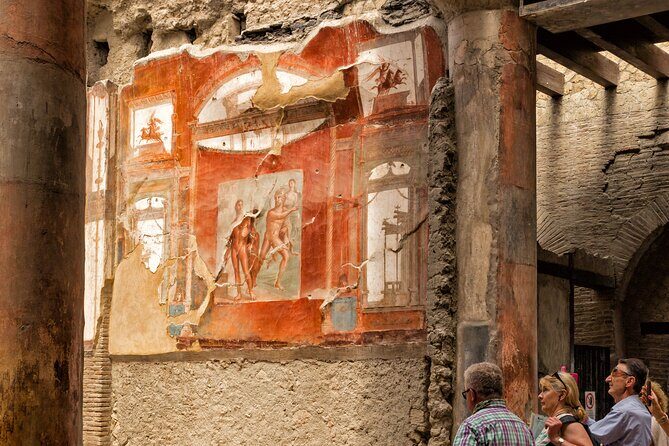
- Preserved detail you can see up close, including wooden structures and fine mosaics
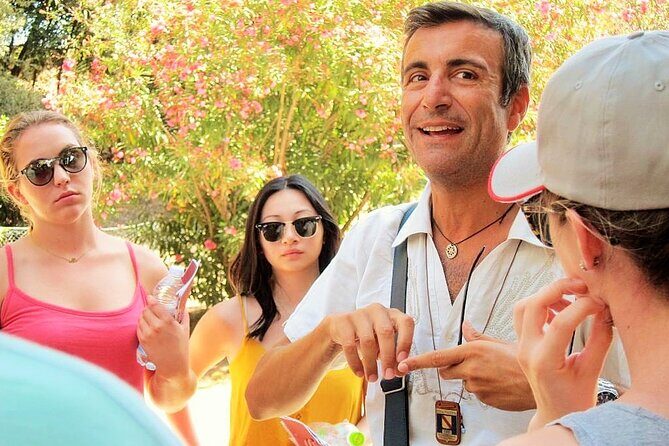
- Licensed local guide in English to explain what you’re looking at as you walk
- Small-group experience (max 20) that helps you keep your place on the route
Why Herculaneum feels different (and often beats the stress)
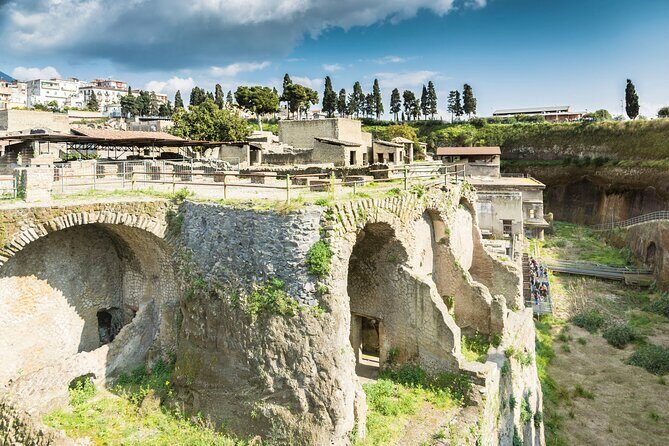
If you’ve done Pompeii, you may notice a pattern: big crowds, lots of walking, and a feeling that you’re constantly sprinting to keep up. Herculaneum is a different kind of experience. It’s smaller, and the preservation can make the past feel immediate. You’re not just looking at stone walls; you’re seeing rooms that still carry the shape of real life.
This tour helps you experience that faster. The pacing is built for a vacation schedule, not an all-day archaeology marathon. And because the guide stays with you, you spend less time trying to figure out what matters most when you’re standing in front of multiple doorways and shaded corridors.
You can also read our reviews of more walking tours in Naples



Price and what you actually get for the $48.16
At $48.16 per person for an approximately 2-hour tour, the value comes from three things that are bundled together:
- Herculaneum admission is included, which can be the biggest standalone cost for your visit.
- You’re paying for an expert licensed guide, not just access to the site.
- The tour is a walking route inside the archaeological area, so you benefit from interpretation while you’re moving.
Is it a bargain? It’s not the cheapest way to get in. But for a short visit, bundled pricing usually wins. You don’t burn time making your own plan, and you don’t lose momentum to ticket lines or guesswork at each stop.
The 2-hour walk: how the route keeps your attention
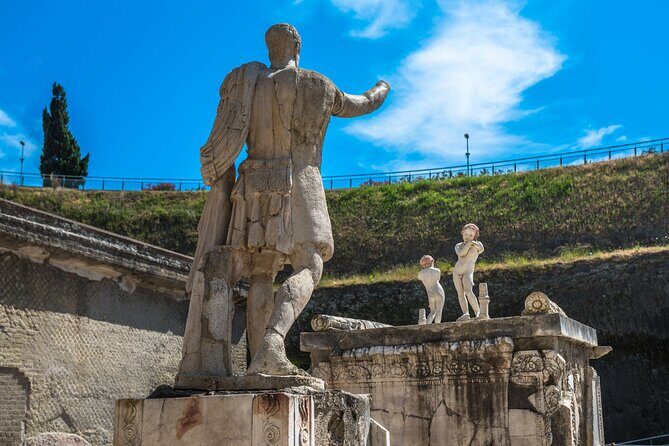
The tour is designed like a series of “meaning moments.” Instead of random photo stops, you get a sequence that builds understanding:
1) a preserved Roman boat display,
2) a museum space for finds,
3) patrician villas with standout features,
4) everyday spaces like a fast-food counter and a gym/swimming area,
5) wooden architecture fragments,
6) thermal baths,
7) and finally a major mosaic in a house.
Expect short stays at each stop—think quick guided context plus enough time to look closely. If you like to linger on your own, you’ll want to take notes or snap photos during the guided window, then plan any extra time on your own for later.
Salone della Barca di Ercolano: the ancient boat you can’t fake
Your first major stop is the Salone della Barca di Ercolano, a small museum where an ancient Roman boat is displayed in excellent condition. This is one of those places where the guide’s pacing matters. You’re not just staring at objects—you’re learning what this kind of find means for trade, daily movement, and the port-life that supported Roman towns.
What I like about this start: it sets the tone fast. Before you even walk through rooms and walls, you’re reminded that Herculaneum wasn’t a museum town—it was a functioning place with transport and work.
Watch for: the room is small, so if you’re prone to drifting off, focus early. This is the kind of stop where good questions help you get more out of the experience.
Antiquarium di Ercolano: turning ruins into real objects
Next comes the Antiquarium di Ercolano, where you see furnishings, furniture pieces, and jewels recovered during excavations. This stop is practical in a very specific way: it gives your eyes a reference point. When you later look at a room in a patrician villa, your brain can attach what you’ve already seen in the museum.
I love that this kind of museum stop breaks the confusion that can happen inside archaeological sites. Without it, ruins can feel like disconnected walls. With it, they start to feel like homes.
Possible drawback: museum stops can feel like a “pause” compared with walking outside. Still, for Herculaneum, that pause is a gift.
You can also read our reviews of more guided tours in Naples


Casa dei Cervi: a patrician villa that helps you read the house
At Casa dei Cervi, you’re in one of the best-preserved buildings at the site. Patrician villas matter because they show the gap between ordinary spaces and wealth. Here, you can better understand layout—how rooms connect, how daily life likely moved through the building, and what features were worth preserving.
With a guide, you’ll get help identifying what’s most important to notice instead of trying to interpret everything at once. These are the moments where you start seeing patterns: what’s decorative, what’s structural, and what tells you the social role of a room.
Keep in mind: your guided time here is brief, so if a specific room catches your attention, make sure you look closely right away.
Casa del Rilievo di Telefo: patrician elegance in small details
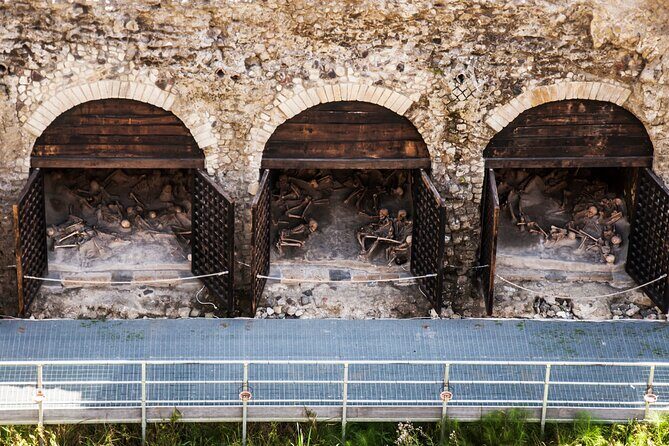
Then you move to the Casa del Rilievo di Telefo, another ancient patrician villa. The standout feature here is the relief element linked with Telephus, which is the kind of detail that can be easy to miss when you’re rushing for the next stop.
This is one of those places where the guide earns their fee. They’ll steer your eyes to what you should be looking at and explain why the feature matters in context.
If you love art and iconography: don’t treat this like a quick photo stop. You’ll get more out of it if you slow down for a few minutes.
Grande Taberna: Roman fast food, ancient edition
The Grande Taberna is a fun pivot into everyday life. This is where the site shows a kind of Roman fast-food vibe—an ancient space for quick meals and goods rather than long, formal dining.
Even if you’re not a food-history person, this stop helps anchor the rest of what you see. You start realizing Herculaneum wasn’t only about villas and luxury. People worked, ate, shopped, and moved through spaces built for routine needs.
Practical tip: if you’re the type who always wonders where people actually ate, this is your stop. Take a breath, look around, and let your imagination do the rest.
Vestibolo della Palestra: gymnasium and swimming pool
The Vestibolo della Palestra brings you into the sports-and-leisure side of Roman life, including a gymnasium and swimming pool area. These spaces tell you something people often forget: leisure wasn’t passive. It had structure, routine, and architecture.
A guide helps here because the purpose of spaces can be unclear from a distance. With someone pointing out the layout and function, you’ll feel like you’re reading a map rather than staring at stones.
Watch for: the stop is short, so if you’re curious, ask one focused question and then keep moving.
Partem Domus lignea (Casa del Tramezzo di Legno): wood that survives
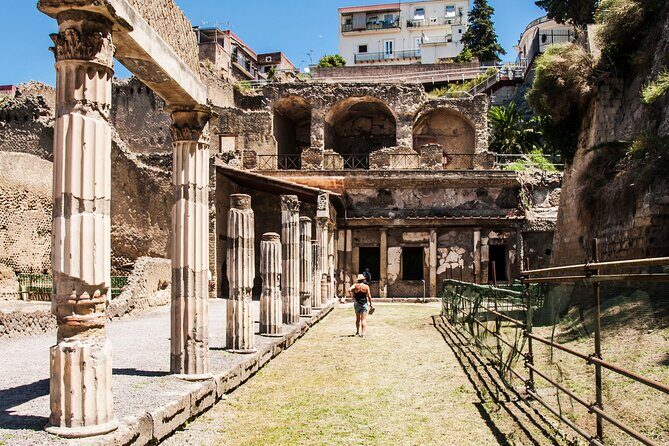
One of the most striking stops is Partem Domus lignea – Casa del Tramezzo di Legno, where you can see preserved wooden doors and beams. Yes, wood. In a volcanic burial site, wood surviving long enough to be preserved at this level is the kind of thing that makes you stop and actually process time.
This is also a mental reset. Up to this point, you may be trained by other ruins to expect mostly stone outlines. Here you get evidence that buildings weren’t just outlines; they had real materials that made rooms functional.
Why it matters for your visit: wooden elements help you understand scale and usability. It’s easier to picture the space as someone’s daily environment.
Terme Del Foro: thermal baths and Roman routine
Then you hit Terme Del Foro, the thermal baths. Baths are a big deal in Roman culture. They were social spaces, places to wash and relax, and a rhythm many people likely built into their day.
With a guided visit, you don’t just learn that they were important—you learn what you’re looking at. Baths have multiple zones and functions, and that structure can be hard to interpret alone.
Possible drawback: the baths stop can feel visually similar to other stone interiors at first glance. Give it a minute with the guide’s direction and it will click.
Casa di Nettuno e Anfitrite: a mosaic worth pacing for
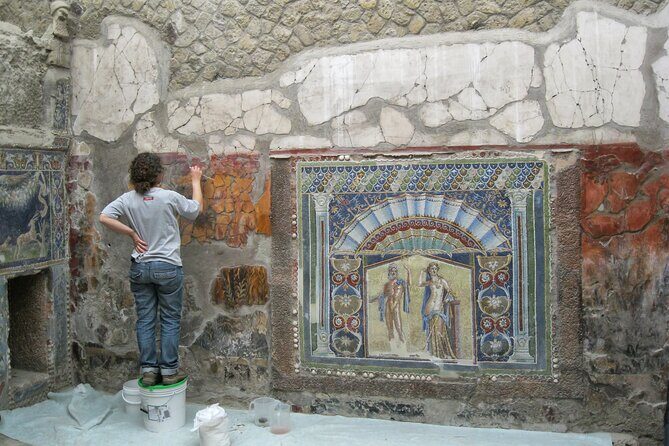
Your final highlight is Casa di Nettuno e Anfitrite, known for one of the most beautiful mosaics in the excavations. This is the kind of image you want your brain to store. Mosaics work best when you look at them as more than decoration: they’re storytelling, status, and craftsmanship all in one.
This stop often lands well because the tour has built up your understanding. Earlier, you saw museum objects and villa features. Now you see a signature artwork tied to a home’s identity.
Tip: stand where you can see the mosaic clearly without blocking it for others, and let your eyes track the details before you move on.
Group size, timing, and pacing (what it feels like in real life)
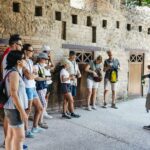
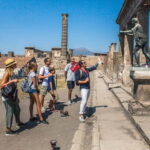
This runs with a maximum of 20 people, which is a sweet spot for a walking tour inside an archaeological site. Big groups can turn guides into announcers. Smaller groups keep it human and make it easier to hear explanations while you walk.
The start time is 2:00 pm, and the tour ends back at the meeting point at the Herculaneum Ticket Office, 80056 Ercolano. That matters because you don’t have to build extra logistics into your afternoon—especially useful if you’re also seeing Naples before or after.
Also, plan for moderate physical fitness. It’s a walk inside a site, not a full hike, but you should be comfortable moving through uneven ancient terrain and standing for short guided moments.
Language reality check (and how to avoid a disappointment)
The tour is offered in English, and the information notes it can be bilingual. One review highlighted a mismatch when Spanish was expected, with the group ending up in English for much of the time. That’s rare, but it’s a reminder: don’t assume your preferred language is guaranteed unless it’s clearly confirmed for your group.
If you’re counting on English only, you’re in good shape. If you’re planning around another language, double-check details at booking and keep your expectations flexible.
How to prepare so the tour feels smooth
This is a short experience, so small prep steps matter.
- Wear comfortable walking shoes with good grip. Roman sites can be uneven underfoot.
- Dress for all-weather operation. It runs in all weather, so pack a light layer and something for rain if storms are in the forecast.
- Bring a phone-charger mindset even though the ticket is mobile. You’ll likely use your phone for maps or photos at each stop.
- If you care about photos, shoot quickly during guided moments, then take a little extra time if you spot something you want to return to.
Who this tour is best for
This works well if you want a high-impact Herculaneum experience in limited vacation time. It’s ideal for:
- people who have done Pompeii but want a sharper contrast,
- visitors who prefer guided context over wandering alone,
- anyone who appreciates a curated route through villas, baths, and mosaics,
- and those who don’t want a half-day or full-day commitment.
If you’re the type who loves long, self-directed wandering and reading every plaque, you might feel slightly rushed. In that case, treat this as your “core highlights” visit and leave time for a second pass later.
Should you book this Herculaneum walking tour?
I’d book it if you want value without stress: entry ticket included, licensed guidance, and a route that covers the site’s most important stops in about two hours. The structure matters here. It turns Herculaneum from scattered ruins into a sequence of everyday Roman life—from transport and museum finds to villas, food, leisure, baths, and a standout mosaic.
Skip it or rethink if language is non-negotiable for you. Since English is the stated offering and bilingual situations can vary, it pays to confirm. Also, if you can’t handle even moderate walking inside historic uneven ground, look for a less mobile-focused option.
FAQ
How long is the Walking Tour of Herculaneum?
The tour is about 2 hours.
Is the Herculaneum entry ticket included?
Yes. Admission to Herculaneum is included.
What language is the tour offered in?
The tour is offered in English. The information also notes it can be bilingual.
Where does the tour meet and start?
It starts at the Herculaneum Ticket Office, 80056 Ercolano, Metropolitan City of Naples, Italy.
What is the tour maximum group size?
The tour has a maximum of 20 travelers.
Does the tour run in bad weather?
Yes, it operates in all weather conditions. You should dress appropriately. If canceled due to poor weather, you’ll be offered another date or a full refund.