REVIEW · NAPLES
Visit to the Lapis Water Museum in Spanish
Book on Viator →Operated by GRAND TOURS ITALY · Bookable on Viator
Naples has layers, and this tour goes under them fast. I love the mix of ancient water engineering and today’s story-telling, and I also love the 35-meter descent into the deep city. One thing to watch: it’s a focused, history-and-underground experience in Spanish, so if you’re expecting a quick, kid-breezy stop, you may need to think twice.
You’ll start above ground in Piazza Dante and end back at the Lapis Museum, with a small group (up to 20). The big payoff is seeing how Greco-Roman Naples handled water, then how later Naples adapted the same underground spaces for shelter.
In This Review
- Key things to know before you go
- Lapis Museum dell’Acqua Napoli: the water story beneath Naples
- Piazza Dante start: easy meeting point, small-group pace
- From Santa Maria de la Pietra Sagrada down 35 meters
- Greco-Roman aqueducts and cisterns: what water systems actually looked like
- The prince’s pool and the WWII shelter layer
- Guide storytelling in Spanish: what it adds (and when it can be a limitation)
- Price and value: what $46.34 buys you in Naples
- Timing, planning, and who this tour suits best
- Should you book the Lapis Water Museum tour?
- FAQ
- FAQ
- Where is the tour meeting point?
- How long is the tour?
- What language is the tour conducted in?
- How much does it cost?
- Is the admission ticket included?
- How many people are in each group?
- How far down does the tour go?
- Is the Lapis Museum tour accessible?
- What is the cancellation policy?
- What happens if the tour is canceled due to low demand?
Key things to know before you go
- Spanish guided tour with an in-person guide and a structured route
- 35-meter descent to the deepest underground areas tied to ancient Neapolis
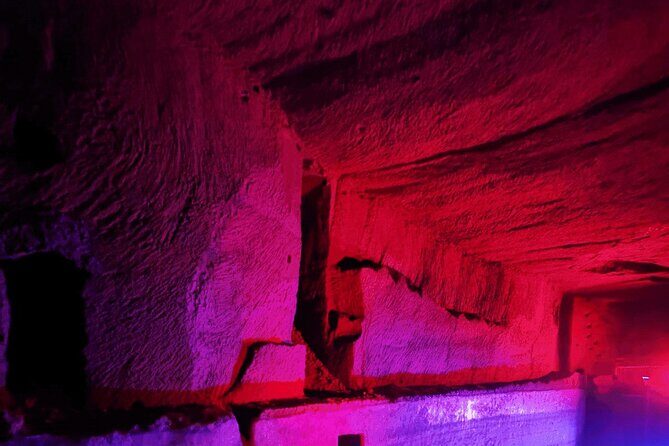
- Greco-Roman aqueduct and cisterns brought back to life in the WATER MUSEUM project
- The prince’s pool and the largest underground refuge areas connected to WWII
- Small group size (max 20), usually booked about a month ahead on average
- Admission ticket included, so you’re not juggling extra entry steps
Lapis Museum dell’Acqua Napoli: the water story beneath Naples
If you like Naples in the way it really exists—messy, layered, and stubbornly alive—this is one of the best “go below street level” options. The Lapis Water Museum is built around a simple idea: Greco-Roman Naples was obsessed with water, and the underground still holds the physical proof.
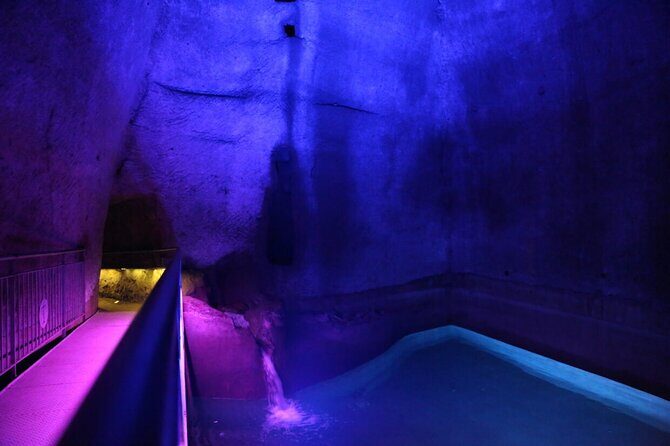
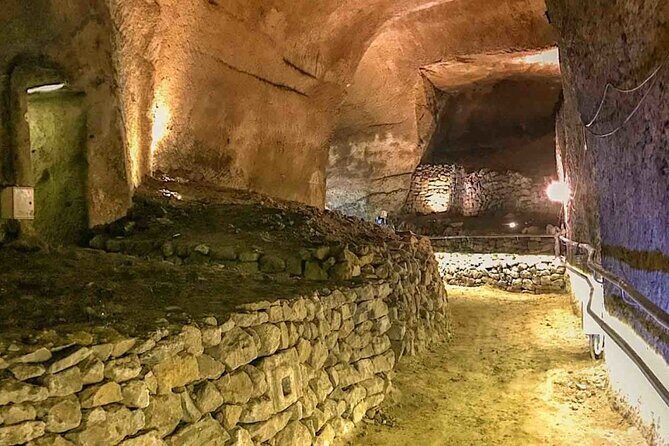
The museum project was launched in 2021 to bring ancient water cisterns back to life. The neat part is that it’s not just old stones in a dark room. You’ll see recreated streams and cistern areas that help you understand what the system likely did and why it mattered so much to a city that never stopped growing.
And yes, it’s located in a place you can miss if you’re only skimming the surface. This is the Naples that most visitors never get to experience, because the best views are literally underground.
You can also read our reviews of more museum experiences in Naples



Piazza Dante start: easy meeting point, small-group pace
Your tour begins at Piazza Dante, right by the city’s energy but convenient enough to meet on time. The meeting spot is listed as Piazza Dante, then you’ll walk together to the museum area at Piazzetta Pietrasanta 17.
The tour runs about 1 hour 15 minutes, which is long enough to feel like you got something real without hijacking half your day. The group size is capped at 20 travelers, so you’re not stuck behind a crowd or fighting for the guide’s attention.
Also, this is near public transportation. That matters in Naples, because the best plans usually include at least one backup route, and transit helps you stay flexible.
From Santa Maria de la Pietra Sagrada down 35 meters
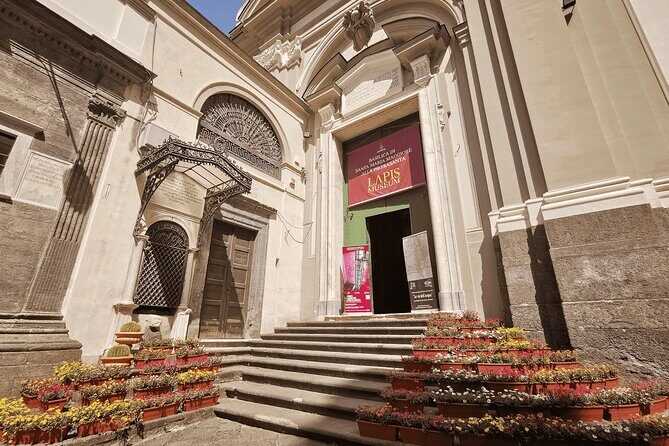
The first stop sets the tone: you visit the Basilica of Santa Maria de la Pietra Sagrada (the Pietrasanta complex). This is more than a quick exterior glance. The architectural complex is described as Greco-Roman in origin, and it ties into the early settlement story of the city.
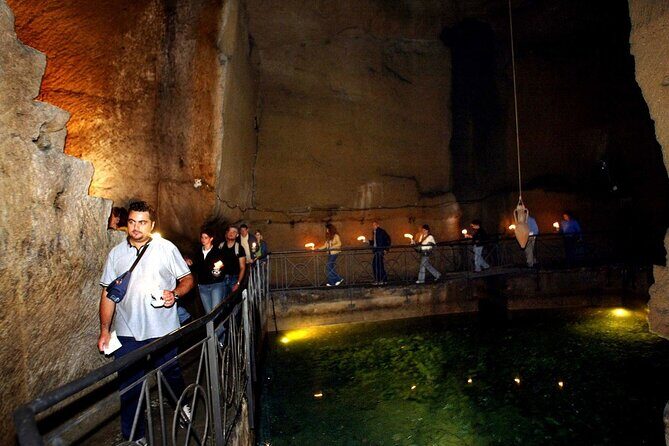
The tour then moves downward—35 meters—to the deepest parts of the city. That number is a big deal. It’s not “downstairs in the basement.” It’s deep enough that the space itself helps you understand how separate underground life was from life above.
From a practical view, this descent affects comfort. Plan for slightly cooler air underground, and wear shoes that handle uneven ground. If you’re sensitive to stairs and tight spaces, you’ll still find the experience marketed as suitable for everyone, including people with disabilities—but you’ll want to go in with realistic expectations about a historic underground environment.
Greco-Roman aqueducts and cisterns: what water systems actually looked like
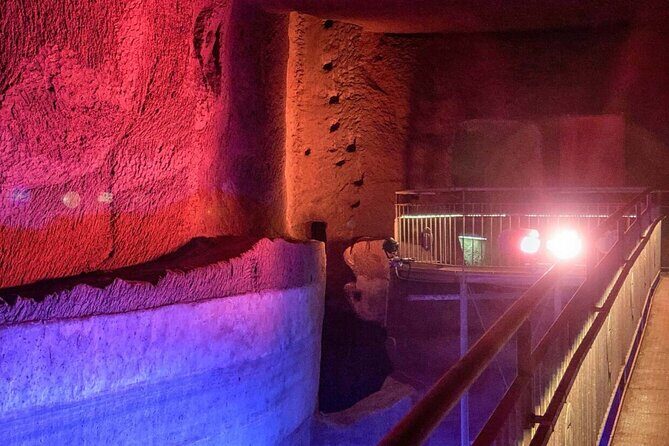
Once you reach the underground area, the tour focuses on Naples as a working city, not just a pretty one. You’ll admire the Greek and Roman aqueduct of ancient Neapolis and then move to the ancient cisterns.
This is where the WATER MUSEUM concept matters. The project wasn’t just about preserving the underground. It was about making the water story readable. Recreated streams and cistern features help connect the physical structures you’re seeing to the function they served centuries ago.
If you’ve ever wondered why people built so much infrastructure before modern plumbing, this is your answer in stone and water channels. Naples needed to store and move water safely, and the underground was part of the solution.
The prince’s pool and the WWII shelter layer
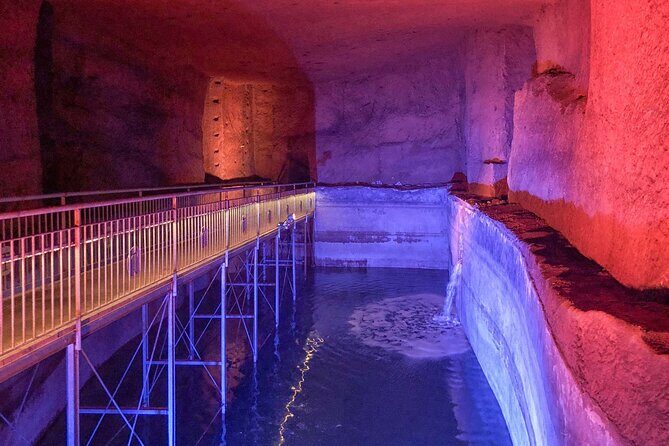
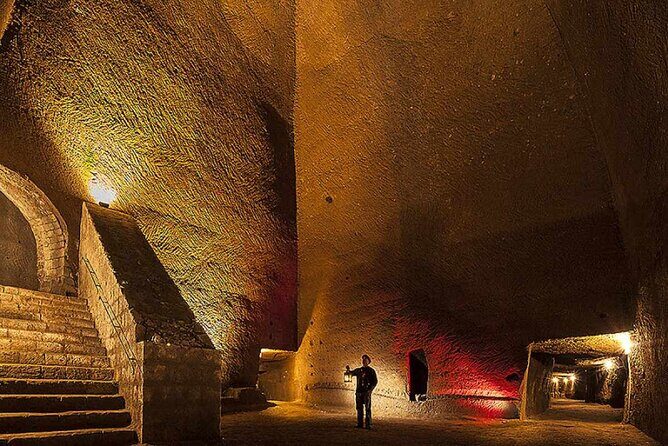
One of the most compelling parts of the route is how it transitions from ancient engineering to later survival. You’ll see the so-called prince’s pool, described as the largest underground pool area in Naples. Even if you don’t know the technical terms, the scale comes through.
Then comes the second layer: the underground space also served as a shelter during the Second World War. That historical switch changes how you read the same chambers. You’re no longer just looking at infrastructure; you’re seeing a place where people hid when danger was real and immediate.
In the guided experience, films and story elements are used to help you get the emotional logic of the space—how it would have felt to live through those moments underground. That matters because this museum is not only about structures. It’s about why humans chose these spaces and how the same underground networks served different needs across time.





Guide storytelling in Spanish: what it adds (and when it can be a limitation)
The tour is offered in Spanish. That’s a major practical factor. If you’re comfortable with Spanish, you’ll get more out of the explanations around the aqueducts, cisterns, and the shelter history.
If Spanish is limited, you can still enjoy the visible parts—church complex, aqueduct lines, cistern chambers, and the recreated water elements—but you’ll miss some of the connective tissue. This is one of those experiences where the language really does change the experience from “cool visit” to “understanding why it mattered.”
A couple of notes from real-world experience also point to expectations: if you’re bringing very young children, the underground and the story-focused pacing may not feel like the best fit. The museum has a reputation for being engaging, but if your goal is hands-on, high-energy entertainment for toddlers, you may end up wanting a different kind of outing.
Price and value: what $46.34 buys you in Naples
The price is listed at $46.34 per person, and the tour includes the admission ticket. For a 1 hour 15 minute guided visit that takes you into a special underground setting with a small group limit, that price is easier to justify than generic city sightseeing.
Here’s how I’d frame the value:
- You’re paying for a guided narrative, not just entry.
- You’re getting access to underground areas tied to ancient aqueduct systems and cisterns.
- You’re also getting the WWII shelter interpretation layer, plus film-based storytelling.
It’s not a bargain attraction in the way a public church can be. But it is a focused, high-context experience in a part of Naples most visitors never see. If your day includes only one “under the city” stop, this is the kind of stop that earns its spot.
Timing, planning, and who this tour suits best
This tour is usually booked about 35 days in advance on average, so if your dates are fixed, I’d plan ahead. You’ll likely have an easier time picking your preferred time slot when you book earlier rather than later.
As for who it suits:
- You’ll enjoy it if you like Naples beyond the postcard and you don’t mind an underground setting.
- You’ll enjoy it if you want context that connects architecture, water systems, and real human survival stories.
- It’s also marketed as suitable for people with disabilities, which is a big plus for accessibility-minded planning—just keep in mind you’re going underground in a historic complex.
If you’re short on time and still want a meaningful Naples layer, this is a smart choice. It’s not trying to do five things at once. It’s trying to explain one major theme—water and the underground—and do it well in about 75 minutes.
Should you book the Lapis Water Museum tour?
Book it if you want Naples in layers: Greco-Roman water systems, then the later WWII shelter use of the same underground space. The combination of aqueducts, cistern areas, and the prince’s pool makes it feel like a real “aha” experience, not just a dark hallway tour.
Skip or rethink it if:
- You need English-only explanations and won’t follow Spanish well.
- You’re traveling with very young children who need nonstop action.
- You’re hunting for a casual, flexible stop rather than a structured guided route.
One more practical tip: make sure you’re booking the Spanish-guided tour of the Lapis Water Museum specifically. There have been mix-ups in the real world between the museum itself and other similarly named offerings, and you don’t want to show up expecting one thing and get another.
FAQ
FAQ
Where is the tour meeting point?
You meet at Piazza Dante at your chosen time. From there the group walks to the Lapis Museum area.
How long is the tour?
The guided visit lasts about 1 hour 15 minutes.
What language is the tour conducted in?
The guided tour is conducted in Spanish.
How much does it cost?
The price is $46.34 per person.
Is the admission ticket included?
Yes. The tour includes the admission ticket.
How many people are in each group?
The tour has a maximum of 20 travelers.
How far down does the tour go?
You descend 35 meters to reach the deepest underground areas.
Is the Lapis Museum tour accessible?
It’s stated as suitable for everyone, including people with disabilities, though it’s still an underground historic environment.
What is the cancellation policy?
You can cancel for a full refund up to 24 hours before the experience starts.
What happens if the tour is canceled due to low demand?
If it’s canceled because the minimum number of travelers isn’t met, you’ll be offered a different date/experience or a full refund.