REVIEW · NAPLES
Vesuvius – Herculaneum – Pompeii Excavations Tour
Book on GetYourGuide →Operated by Ncc Napoli Mutotravel · Bookable on GetYourGuide
Some days in Campania feel like stepping sideways into the past. This one-day Vesuvius – Herculaneum – Pompeii tour strings together the story of 79 AD from the mountain to the towns—without making you bounce around on your own.
I especially like the way you start with Vesuvius for the big-picture views, then move into the excavations where the details hit harder. I also like that you get round-trip transportation in a Mercedes with a professional driver (Luigi and Antonio are both mentioned in feedback), which matters on roads that can feel tight once you’re out in the hills. The one drawback to plan for: admission tickets are excluded, so your final cost depends on what you buy at each site.
You’re picked up at the Port of Naples, then you spend the day visiting three world-famous places: Vesuvius, Herculaneum, and Pompeii. The pacing is built to cover a lot in eight hours, but you’ll still want to budget time for walking and security/entry lines once you’re at the sites.
In This Review
- Key takeaways before you go
- A one-day Roman disaster route from Naples (and why it works)
- From the Port of Naples to the Vesuvius area in a Mercedes
- Vesuvius: the climb and the view over Pompeii and the Bay of Naples
- Herculaneum excavations: preserved houses instead of scattered ruins
- Pompeii excavations: the basilica, baths, temples, oven, and Theatre
- Why the order of Vesuvius → Herculaneum → Pompeii helps you understand 79 AD
- Tickets, cost, and what the $95 price really means
- Comfort and timing: how this eight-hour day feels in real life
- Who should book this Vesuvius–Herculaneum–Pompeii tour
- Should you book this tour or plan it yourself?
- FAQ
- FAQ
- How much does the Vesuvius–Herculaneum–Pompeii tour cost?
- How long is the tour?
- Where is the pickup in Naples?
- What do I visit during the day?
- Is the price with admission tickets included?
- What’s included in the tour price?
- What vehicle do you use?
- Is there free cancellation?
Key takeaways before you go
- Vesuvius first: get the panoramic view over Pompeii and the Bay of Naples before you see the ruins
- Herculaneum is different: you walk a city that was spectacularly preserved under the eruption’s aftermath
- Pompeii highlights with context: the tour focuses on major areas like the basilica, baths, temples, oven, and the Theatre
- A pro driver matters here: feedback calls out skilled handling on narrow roads
- Admissions not included: you’ll need to add site entry tickets to the tour price
A one-day Roman disaster route from Naples (and why it works)
This is a classic Campania loop, but the best part is how it’s ordered. You don’t just hop between ruins. You’re guided through a cause-and-effect chain: the eruption (Vesuvius), what it did to a nearby town (Herculaneum), then what survived to be excavated later (Pompeii).
That sequence helps your brain organize what you’re seeing. From above, you understand why those towns were in the blast zone. Then, on the ground, the evidence feels less like random stones and more like a real place with real routines.
Also, the tour is structured for people who want the big hits without stress. You get round-trip transportation and bottled water, and you’re not left to figure out how to get from Naples to three separate sites in one day.
You can also read our reviews of more tours and experiences in Naples.


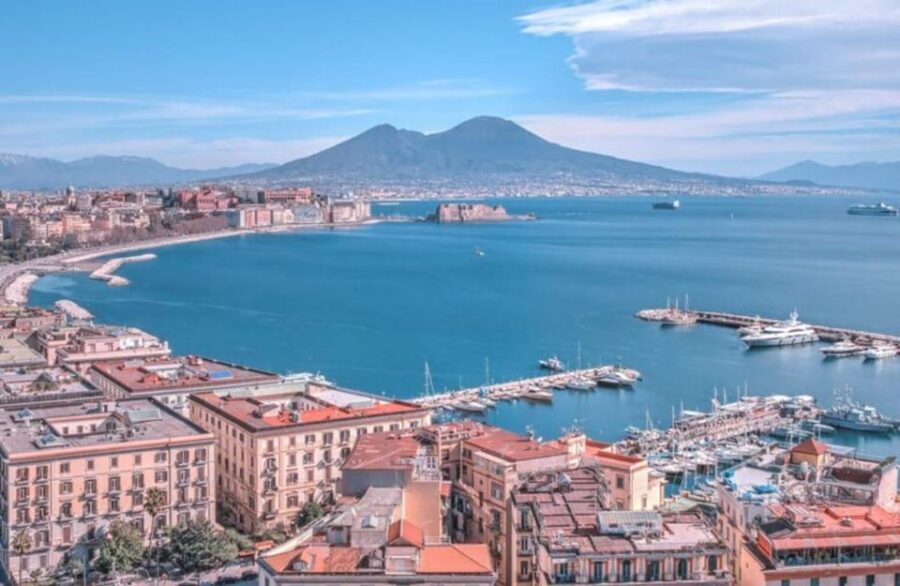
From the Port of Naples to the Vesuvius area in a Mercedes
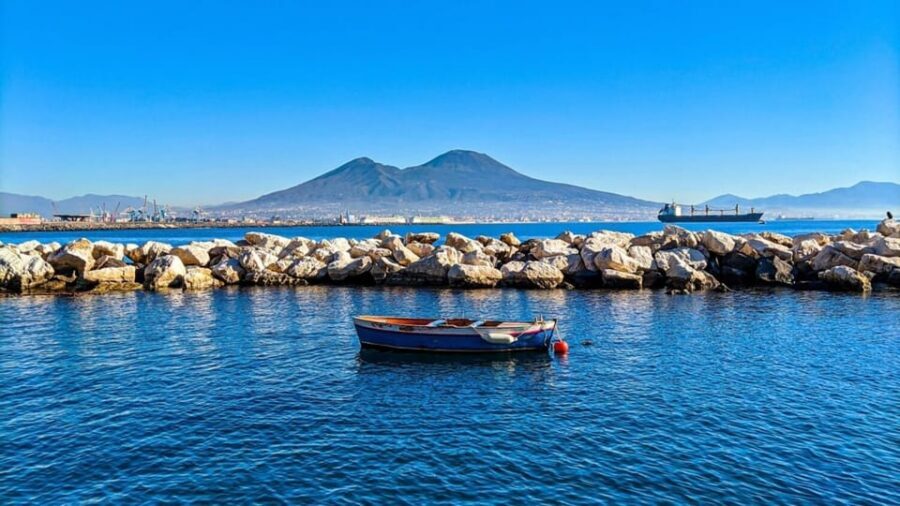
Your day starts with a chauffeur holding a Mutotravel sign and you’ll be in a Mercedes with a professional driver. Pickup is included at the Port of Naples: outside the cruise terminal, near the main exit, where staff wait with a banner with the client name from your reservation.
Why this matters: if you’re arriving by cruise, you know how chaotic getting to the “right bus stop” can be. Here, you meet in a known location, and you’re transferred from there. It’s a simple setup that reduces the odds of a late start caused by confusion over routes or parking.
The driving quality is a recurring bright spot in feedback. People specifically note drivers who are comfortable with narrow roads and know how to keep things moving safely. That makes a difference because this area isn’t flat and open like a highway system—you’re dealing with winding approaches and tight turns.
Vesuvius: the climb and the view over Pompeii and the Bay of Naples
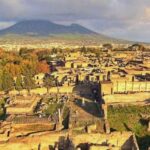
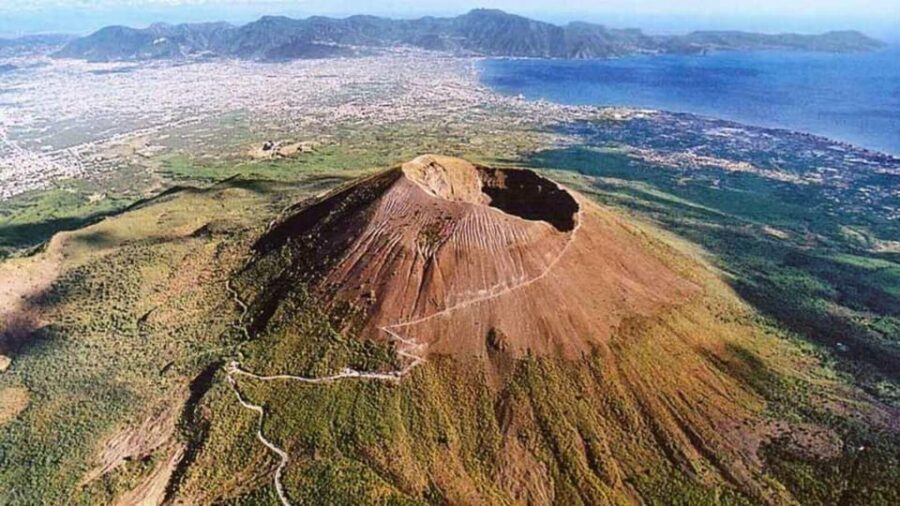
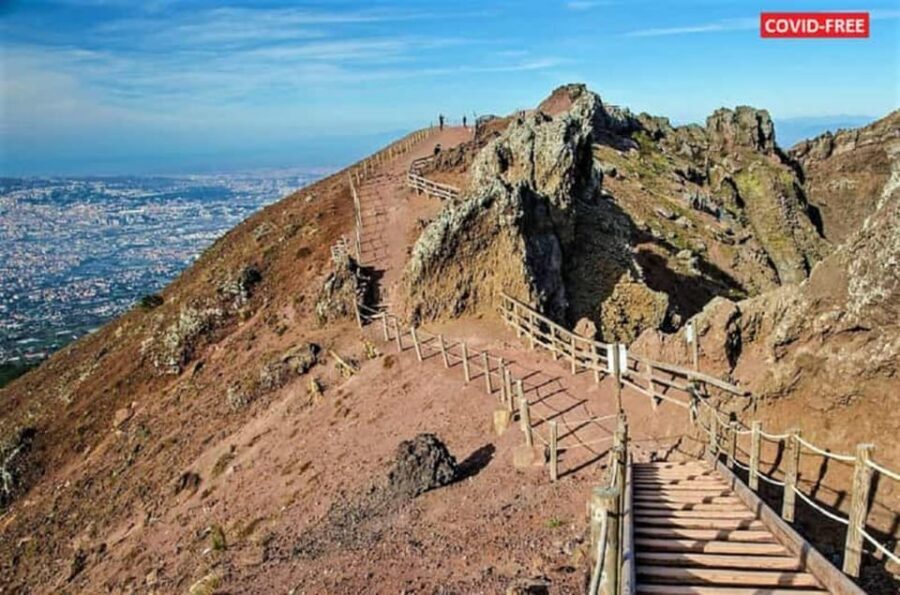
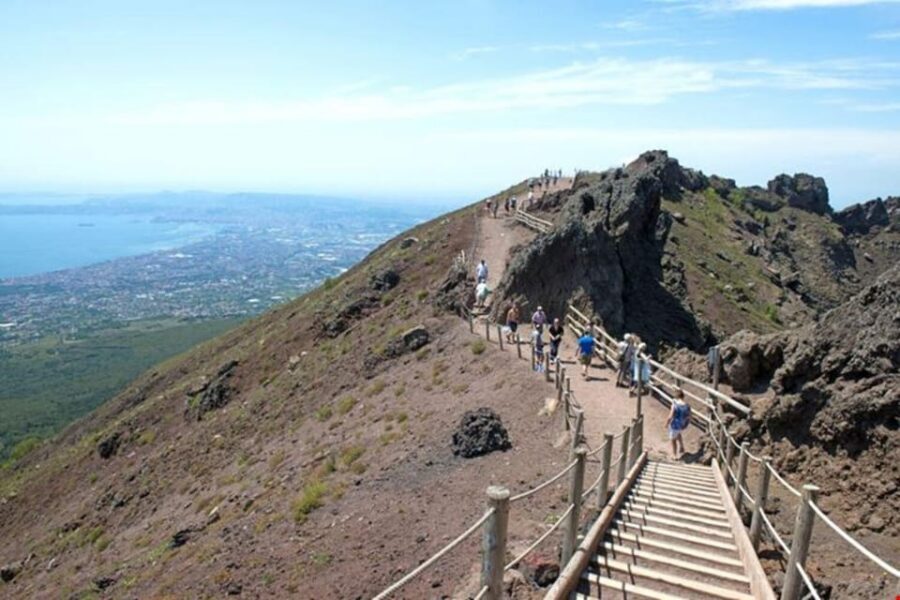
Vesuvius is where the day turns from sightseeing into understanding. You go up the mountain and get panoramic views over Pompeii and the Bay of Naples from above. Even when you’ve seen pictures before, this kind of height changes how the whole eruption story feels.
Expect to spend real time walking and climbing as you make your way toward the viewpoint. The tour describes the option to climb to the top of the mountain, and the view is a major reason people choose this stop. Bring a practical mindset: you’re there for the perspective, not just a quick photo.
One important consideration: since admissions are excluded, you should confirm what you need to purchase for Vesuvius on your own (based on the site entry rules at the time). Also, plan for the reality that mountain conditions can change visibility and comfort—so dress in layers, and don’t rely on one sunny weather assumption.
Herculaneum excavations: preserved houses instead of scattered ruins
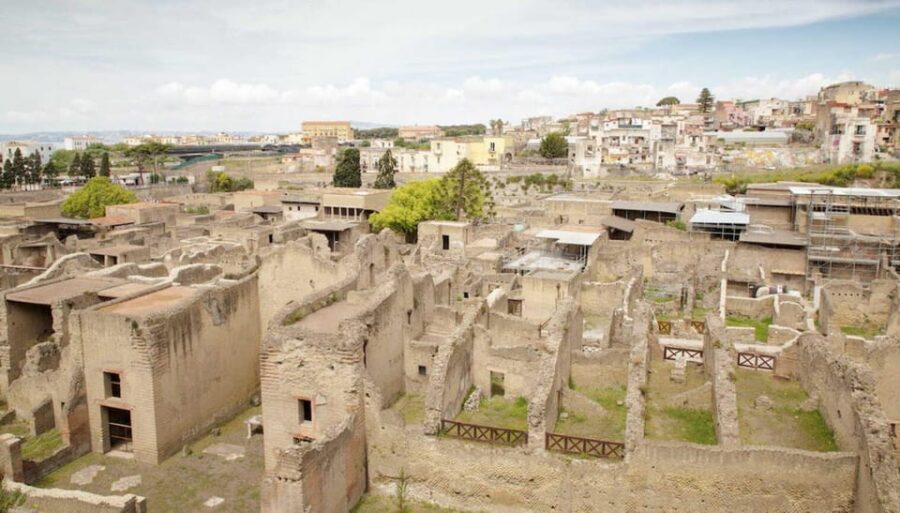
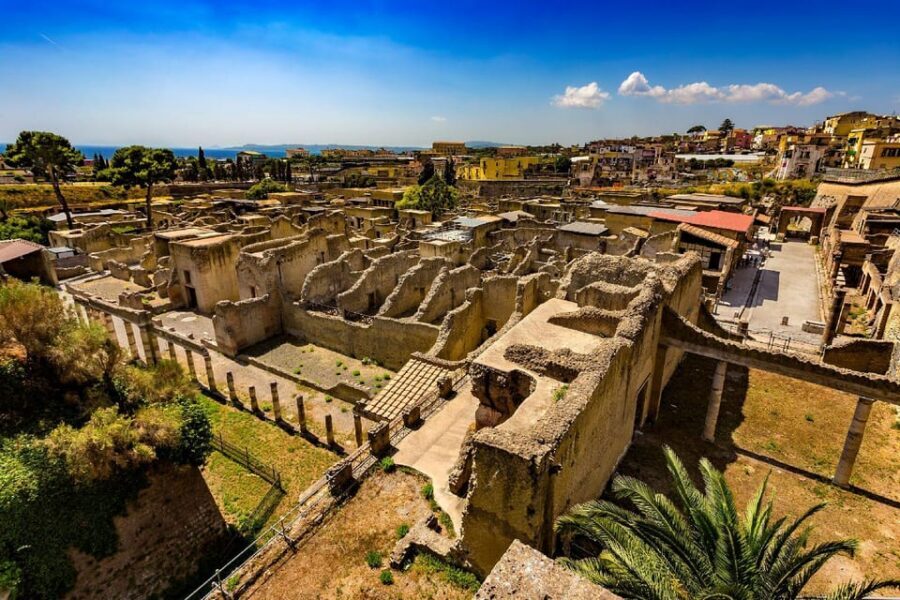
After the big view, you move to the excavations of Herculaneum. This stop is special because Herculaneum is described as spectacularly preserved from the ashes of the eruption. That’s the difference you’ll feel as you walk: you’re not only seeing damage—you’re seeing how the city held together for much longer, in archaeological terms, because the covering helped protect materials.
The tour takes you around the ancient city and focuses on the destruction caused by the eruption of 79 AD. You’ll get a walk-through feel rather than a “look then leave” approach, which is exactly what makes Herculaneum memorable for many people.
Here’s the practical angle: preserved sites can mean you’ll see more structure and more detail, so plan to slow down. If you rush through Herculaneum, you lose some of the reason it’s worth the trip in the first place. Take your time with the layout as you move between areas—think about how people lived there before the eruption turned streets into an artifact.
Pompeii excavations: the basilica, baths, temples, oven, and Theatre
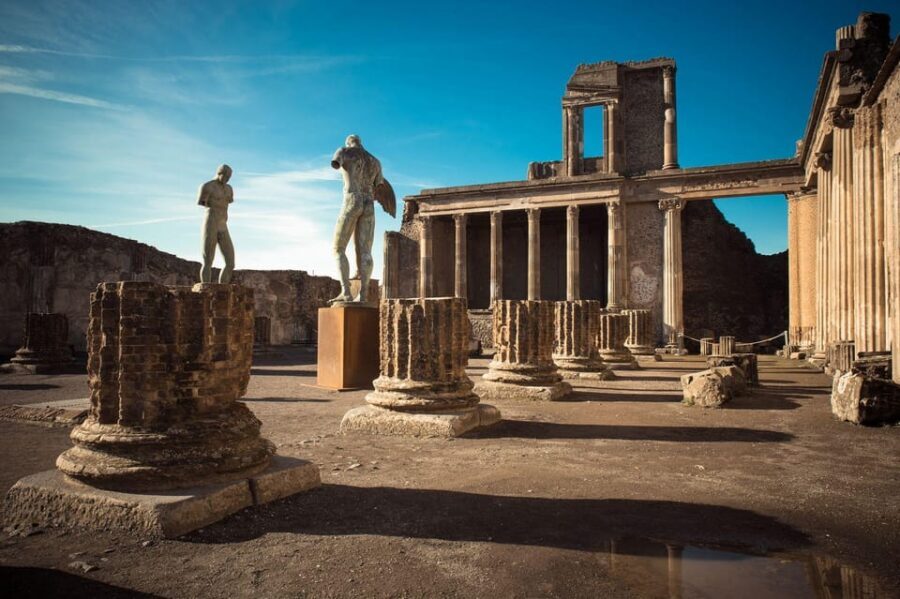
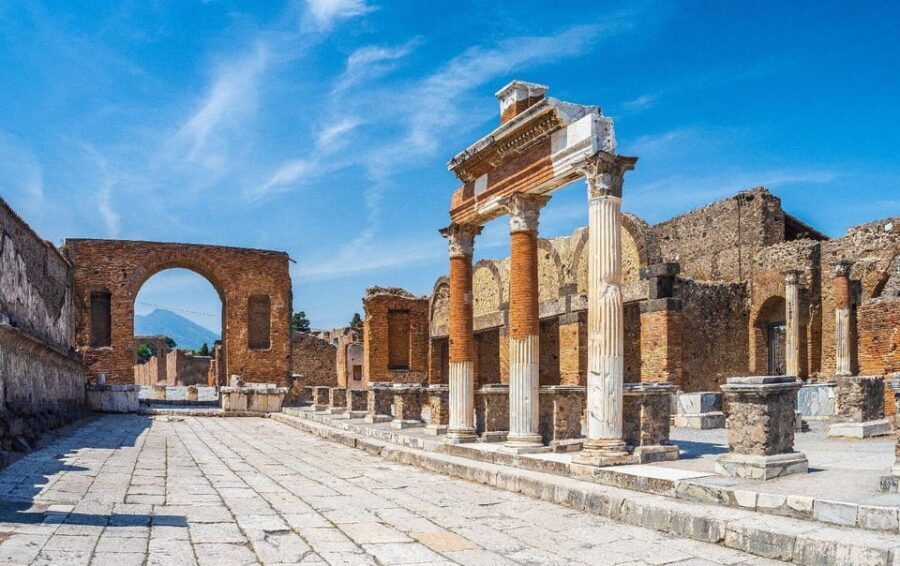
Pompeii is the final stop, and it’s where the tour’s guided style matters most. You’ll visit the archaeological site and see major highlights including the basilica (described as the economic and legal center), baths, temples, the oven, and the great Theater.
That list is useful because it’s not random. Those places cover everyday life and civic life:
- The basilica links to business and law—how people resolved problems and conducted transactions.
- The baths reflect daily routines and social time.
- The temples connect to religion and public identity.
- The oven hints at the practical work of feeding a city.
- The Theatre shows entertainment and public gatherings.
What makes this tour feel more complete is that you’re not walking as a solo tourist with a map. You get interesting anecdotes from an archaeological guide about the people who lived in Pompeii. That kind of storytelling helps you interpret what otherwise looks like stone blocks and doorways.
One thing to consider: Pompeii is large. Even with a guided route, you’ll still be doing walking and standing. Wear comfortable shoes and plan your pace. If you’re someone who gets tired fast, this is the point where you’ll feel it—so keep your hydration going and take short pauses when you need them.


Why the order of Vesuvius → Herculaneum → Pompeii helps you understand 79 AD
Some tours throw you into ruins first. This one does it in a smarter sequence.
- Vesuvius gives you scale. You see the geography that made the eruption catastrophic for nearby towns.
- Herculaneum gives you preservation. The site feels like a place that was protected under ash, so the story reads more clearly.
- Pompeii gives you variety. You get civic spaces, daily-life structures, and public entertainment in one big archaeological setting.
That structure means you don’t just collect stops. You build a mental model: cause, effect, aftermath. And because you’re seeing the mountain view before you enter the ruins, Pompeii’s layout and density make more sense when you’re walking through it.
It also helps you keep your attention. By the time you reach Pompeii, the buildings stop feeling like a checklist and start feeling like evidence of human routines—work, leisure, worship, and decision-making.
Tickets, cost, and what the $95 price really means
The tour price is listed at $95.00 per person for an eight-hour day (starting times vary based on availability). Round-trip transportation and bottled water are included.
The key financial detail: all admissions are excluded. That means your total day cost isn’t just the tour price. You’ll need to add entry tickets for the sites as required.
So how is $95 a fair value? Here’s the practical way to look at it:
- You’re paying for a single organized day that connects three major locations from Naples.
- You’re not paying extra for the hassle of figuring out timing, transport, and transfers between sites.
- You’re getting a pro driver and a comfortable vehicle (Mercedes) plus bottled water.
If you were to piece this together yourself, you’d likely spend money on transport anyway, and you’d still need to manage the logistics of three entrances and timing. In that sense, the tour price is mainly covering coordination and transportation—while you handle entry tickets separately.
Comfort and timing: how this eight-hour day feels in real life
The day is scheduled for 8 hours, which is enough time to see the main highlights of all three sites without it feeling like a full multi-day research trip. That’s exactly why it works for many visitors: you get depth in the big moments without needing hotel nights.
Comfort details that matter:
- Round-trip transportation from Naples
- Bottled water included
- A professional driver handling local roads (with feedback specifically praising skilled driving in narrow roads)
- The vehicle is described as spotless in feedback
You should still plan for walking. Even with transport handled for you, the day includes climbs and site walking—especially on the mountain and around the excavations. This is a good idea for people who are comfortable covering several hours of walking with breaks.
Who should book this Vesuvius–Herculaneum–Pompeii tour
This is a strong fit if you want a one-day sampler that still has structure and meaning. I’d point you toward it if:
- You’re visiting Naples and want the classic Campania “big three” without stress.
- You like context: the eruption story, then how it changed two towns.
- You enjoy archaeology more when someone explains what you’re looking at (the guide shares anecdotes about the people of Pompeii).
- You prefer organized pickup and return over self-planning transportation between sites.
It might be less ideal if you’re very sensitive to walking on uneven or archaeological ground, or if you’re trying to keep a strict budget that can’t stretch to admission tickets on top of the tour.
Should you book this tour or plan it yourself?
If your priority is a smooth day with minimal logistics and you’re okay adding admission tickets separately, I’d say this is a smart booking. The best reason is simple: the day is built to make sense as a story, not just as a checklist of ruins.
Book it if you value convenient Naples pickup, a professional driver, and guided highlights at Pompeii and Herculaneum. Consider planning your own trip only if you’re an independent transport planner who already knows exactly how you’ll handle Vesuvius timing and site entry on the same day.
FAQ
FAQ
How much does the Vesuvius–Herculaneum–Pompeii tour cost?
It’s listed at $95.00 per person.
How long is the tour?
The duration is 8 hours.
Where is the pickup in Naples?
Pickup is included at the Port of Naples, outside the Cruise Terminal near the main exit.
What do I visit during the day?
You visit Vesuvius, the excavations of Herculaneum, and the archaeological site of Pompeii.
Is the price with admission tickets included?
No. All admissions are excluded.
What’s included in the tour price?
Round trip transportation and bottled water are included.
What vehicle do you use?
A Mercedes vehicle is used, with a professional driver and a chauffeur who will be waiting with a Mutotravel sign.
Is there free cancellation?
Yes. Free cancellation is offered up to 24 hours in advance for a full refund.