REVIEW · TREVI FOUNTAIN
Rome at Twilight Tour Among the Piazzas and Fountains
Book on GetYourGuide →Operated by Through Eternity Tours · Bookable on GetYourGuide
Rome glows at walking speed. This twilight tour strings together Renaissance and Baroque Rome with the kind of guided context that turns famous sights into something you actually remember. I particularly like starting in Piazza Navona, then getting the Imperial-Rome wow-factor at the Pantheon.
There’s also a real payoff in the end scenes: the Trevi Fountain moment of Baroque theater and the Spanish Steps area, where you hear how art, religion, and daily life got stitched together. The main thing to consider is the walking: it’s a 2.5-hour stroll with steps and uneven surfaces, so come ready with comfortable shoes.
In This Review
- Key reasons this twilight Rome walk works so well
- A 2.5-hour “Rome at dusk” plan that actually fits your day
- Piazza Navona: the “drawing room” you start in
- Pantheon: Imperial Rome’s power in 30 minutes
- Sunday special: you won’t enter, but you still get the explanation
- Temple of Hadrian: a quick guided moment with serious presence
- Trevi Fountain: the Baroque theater moment
- A quick tip for enjoying Trevi without fighting the crowd
- Spanish Steps and the Barcaccia story that connects two worlds
- What the pacing feels like (and what to wear)
- Price and value: what $100.82 buys you in Rome
- Jubilee restoration notes: how to handle “things might change”
- Who this twilight tour is best for
- Should you book this Rome at Twilight tour?
- FAQ
- Where does the tour start?
- Where does the tour end?
- How long is the tour?
- Is this tour in English?
- How big is the group?
- Do you enter the Pantheon?
- Are headsets provided?
- Is food or drink included?
- What should I bring?
- Is the tour wheelchair accessible?
- What’s the cancellation policy?
- Can I reserve and pay later?
Key reasons this twilight Rome walk works so well
- Small group (max 10) keeps the pace human and the Q&A practical
- Expert storytelling links each piazza to what was going on in the city then
- Headsets for groups of 6+ help you hear clearly outdoors
- Pantheon viewing rules: Sundays skip entry, but you still get the best exterior explanation
- Trevi + Spanish Steps are timed for atmosphere, not just sightseeing
A 2.5-hour “Rome at dusk” plan that actually fits your day
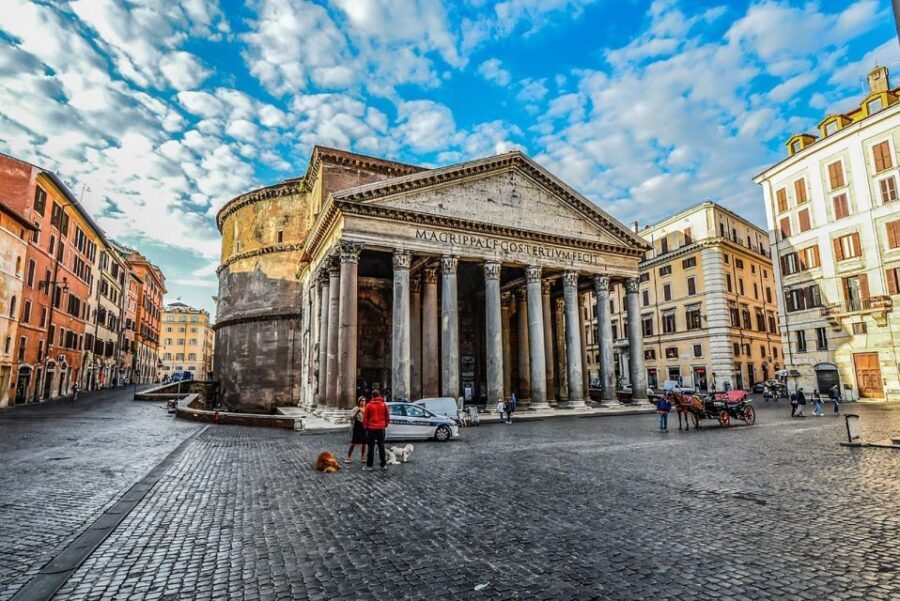
If you’ve only got one evening in Rome (or you just don’t want to spend half a day on one site), this walking tour is a strong fit. You cover a cluster of central classics—piazzas, fountains, and big-name architecture—without needing to think about transport or logistics.
The format is simple: you meet in Piazza Navona, then walk in short chunks from one major stop to the next. Each location gets a guided segment, and the in-between walking is short enough that you can stay present instead of just shuffling along.
And you’re doing it in the right light. Twilight gives you softer crowds and better mood. These places were meant to be seen in a public square setting, and at night they start to feel like a stage.
Piazza Navona: the “drawing room” you start in
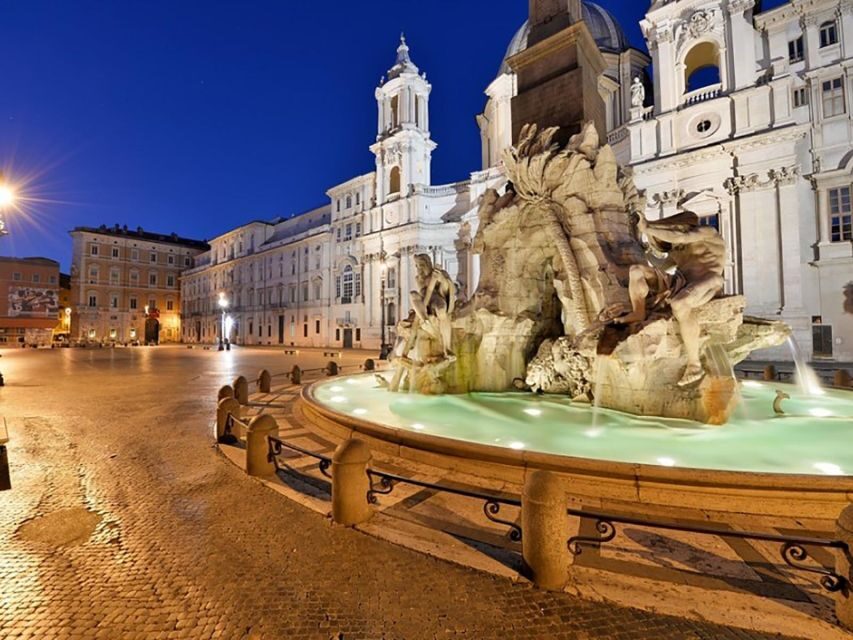
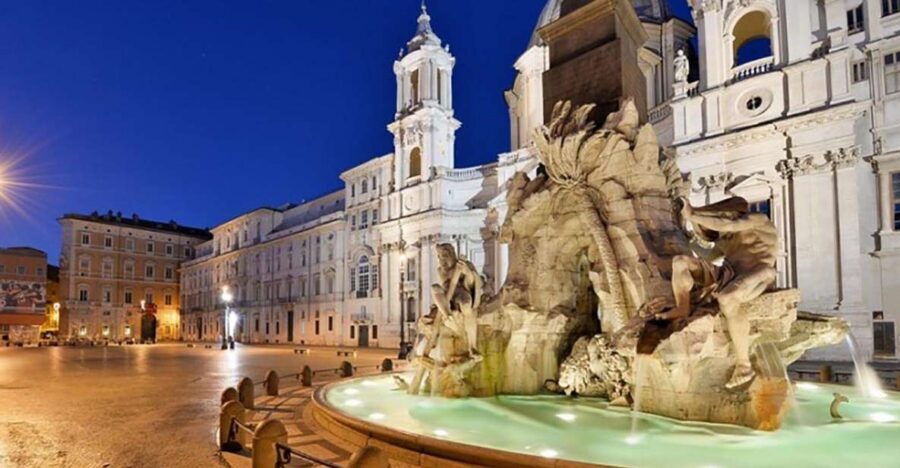
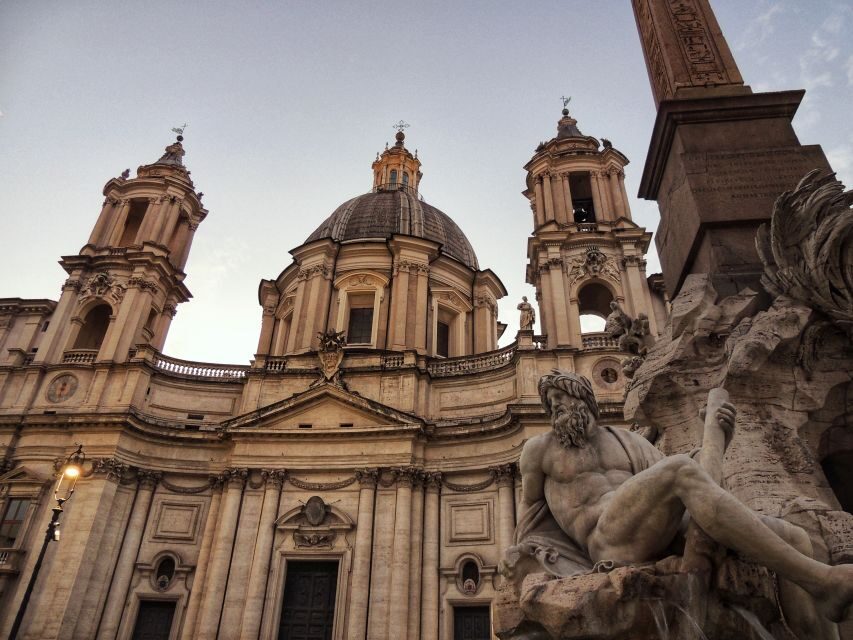
Your tour kicks off in Piazza Navona at the meeting point outside the toy store Al Sogno (look for the Through Eternity sign/flag). Expect a lively square even before the tour starts. The good news is that you’re starting where the action already is—no scrambling to get your bearings.
You’ll get a guided walk and explanation here (about 25 minutes). Piazza Navona’s layout matters: it’s long and distinctive, and it’s been part of Rome’s urban fabric for nearly 2,000 years. That long shape isn’t just trivia. It helps you understand why fountains and buildings feel like they were designed to “work” in the space.
What I like about starting here is that you’re not jumping straight into one monument. You’re learning the city’s stage first—then the tour sends you to the backdrops.
Practical note: because this is a walking tour in a very pedestrian center, you’ll want to keep an eye on uneven stone and step edges. It’s not dangerous, but you should walk like you’re in a museum outside.
Pantheon: Imperial Rome’s power in 30 minutes
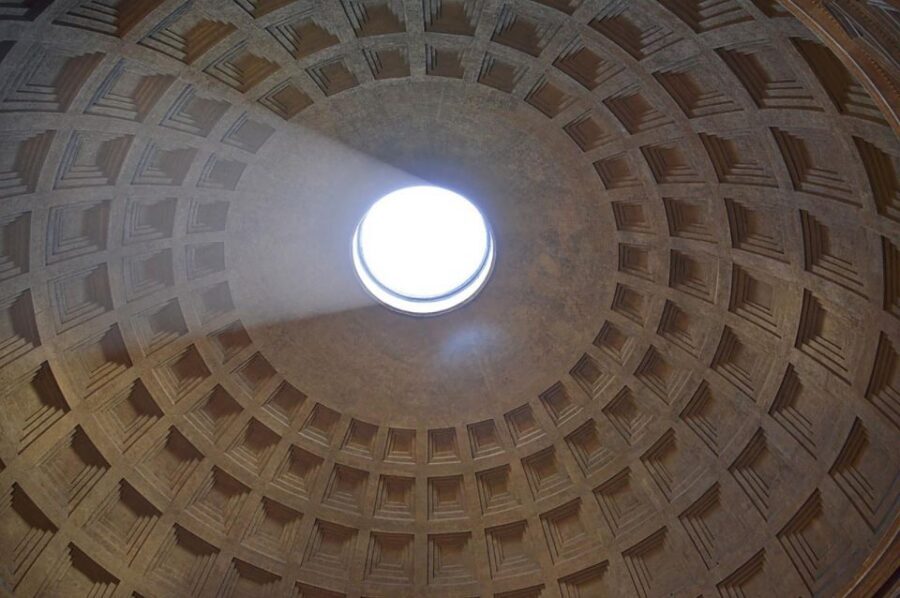
Next comes the Pantheon, guided for about 30 minutes. This is one of those stops where you get to watch your brain switch gears from “photo time” to “design time.”
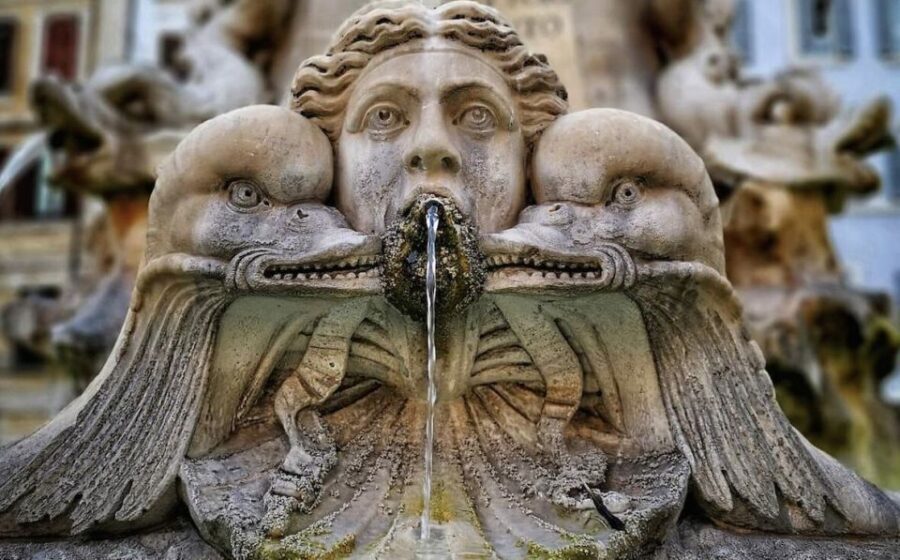
The Pantheon part of the story is all about grandeur and engineering ideas from Imperial Rome—how different influences and cultures blend into one building that feels both strong and poetic. There’s also a fun, widely repeated bit you’ll hear: Michelangelo considered it to be the work of angels. Even if you don’t care about artistic legends, that line helps explain why people still talk about this place like it’s magic.
You’ll also hear about the people connected to the building: the tombs of Raphael (who died in 1520) and Vittorio Emanuele, the first king of Italy (died 1878). Those names bring the space closer to “real life,” not just ancient stones.
Sunday special: you won’t enter, but you still get the explanation
On Sunday evening tours, the group does not enter the Pantheon because it’s closed. You’ll still pass by Piazza della Rotonda (where it sits) and you’ll get the exterior explanation, so you’re not left staring at a closed door with nothing to hear.
If you’re planning a Sunday, this is worth knowing up front. For most people, the exterior-plus-story approach still lands well, but if you’re specifically hunting for interior time, you may want a different day.
Temple of Hadrian: a quick guided moment with serious presence
Between big-ticket stops, there’s a guided visit at the Temple of Hadrian (about 25 minutes). The tour keeps moving, but this isn’t a “drive-by.” You’ll have enough time to absorb what the building is trying to communicate.
Because the provided info doesn’t spell out extra details here, I’ll keep this honest: the value of this stop is that it’s guided, so you’re not just looking at ruins and guessing. You get context while you can still see the structures clearly.
This stop also helps balance the itinerary. After the Pantheon’s dome-and-scale focus, Temple of Hadrian shifts you toward another slice of Rome’s monumental language.
Trevi Fountain: the Baroque theater moment
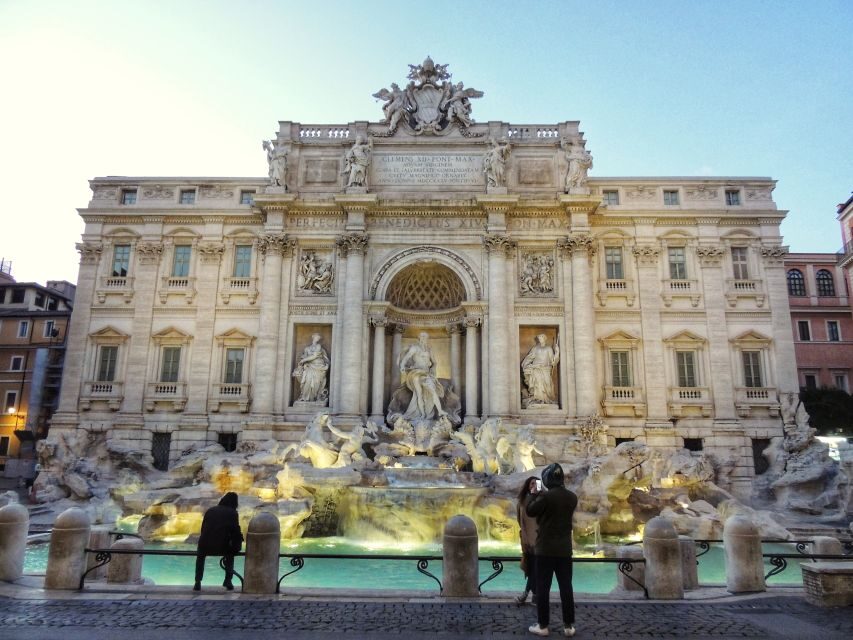
Then it’s on to the Trevi Fountain (about 25 minutes guided). This is where the tour leans into the emotional stuff: the Trevi is described as theatrical architecture, and you’ll see why once you look at it as more than a postcard.
You’ll learn the core design idea: the fountain’s main structure is built like a triumphal arch, borrowing inspiration from classical examples such as the Arch of Constantine. That’s a big deal. It means the fountain isn’t just decorative water—it’s a monument framing an idea of Roman power and celebration.
Even when you know the basics, it helps to hear the explanation while standing there. Twilight makes it feel more cinematic, and the sound of water in a crowded square turns into a kind of soundtrack for the story.
A quick tip for enjoying Trevi without fighting the crowd
This is a famous stop, so plan for foot-traffic pressure. If you want photos, be ready to shoot quickly, then step back to keep listening. The tour time is short enough that you’ll get more from alternating between viewing and hearing than from trying to linger at one spot for too long.
Spanish Steps and the Barcaccia story that connects two worlds
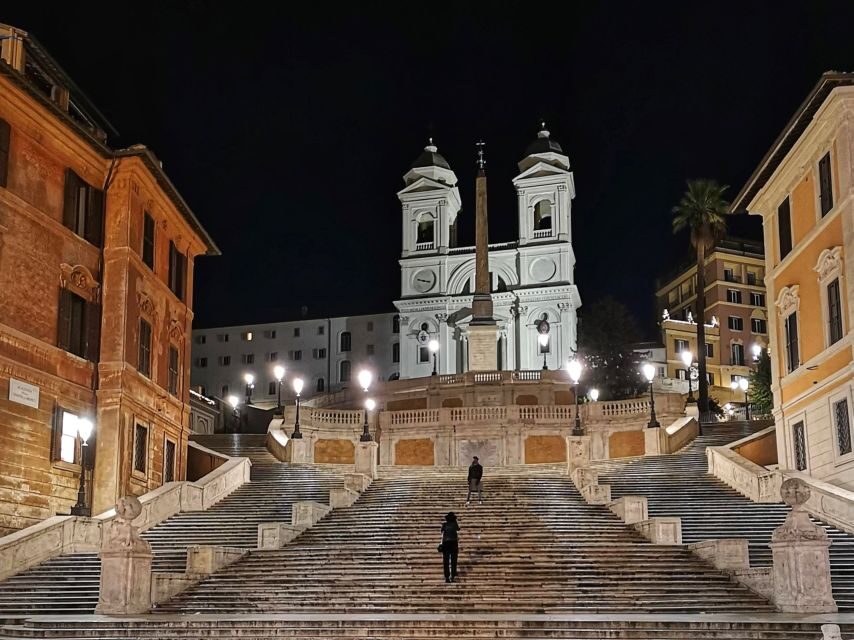
The last major piece is Piazza di Spagna, home of the Spanish Steps (guided about 25 minutes). Your tour finishes here, so you’ll leave with an easy place to grab a snack or keep wandering on your own.
This part is heavy on story, especially around what you see above the steps. You’ll learn about the church of Trinita’ dei Monti, which towers over the square. Then the tour shifts to the art-and-politics angle: you’ll hear why Gianlorenzo Bernini (as a young man) and his father—both sculptors—were linked to the unusual subject of a boat in the fountain of the Barcaccia.
That boat detail matters because it gives you a different way to read Baroque art. It’s not always about ideal beauty. Sometimes it’s about symbolism, messaging, and turning everyday realities into public meaning.
And then there’s the steps themselves. The tour explains the social significance: the stairway helped unite two areas that had been separated by a cliff face for centuries. In other words, this wasn’t only a pretty design. It was built to change how people moved through the city.
What the pacing feels like (and what to wear)
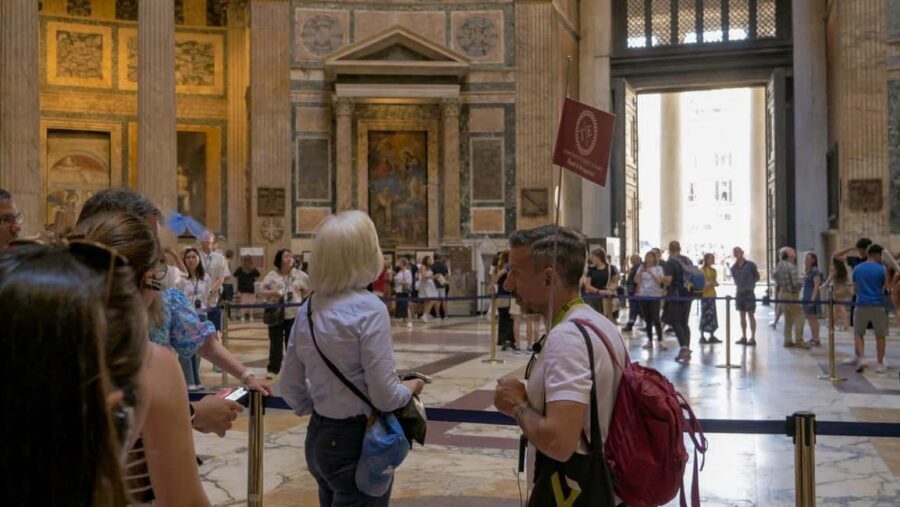
This is a small-group, guided walking tour lasting about 2.5 hours. The group limit is 10 participants, which usually keeps the experience from turning into a long conga line. You’ll also get headsets if there are 6 or more people, which helps you hear the guide over square noise.
The walking is the real factor. The info is clear: there are steps and uneven walkways, and it’s not suitable for wheelchair users. If you have mobility concerns, you should tell the provider ahead of time so they can accommodate you as best they can.
For what to pack: bring comfortable shoes and water. Twilight can still mean warm pavement, and you’ll walk enough that plain sightseeing sandals can turn into a bad idea fast.
Price and value: what $100.82 buys you in Rome
At $100.82 per person for about 2.5 hours, you’re paying for three things: a live English guide, structured time at major landmarks, and small-group pacing.
You’re not paying for entry fees here as part of the package details. Also, you don’t get food or drink included, so you’ll want to plan an after-tour gelato moment or dinner nearby.
So does the price make sense? It does if you want:
- guided context at several top sites in one evening
- a smaller group experience instead of a huge bus-style tour
- help hearing stories clearly (headsets for larger groups)
- a smooth route that ends where you want to continue (Spanish Steps area)
If you’re the type who enjoys wandering independently and you already know the Roman basics, this might feel like you’re paying for narration. But if you want Rome with explanations while you’re still looking at the buildings, the value is solid.
Jubilee restoration notes: how to handle “things might change”
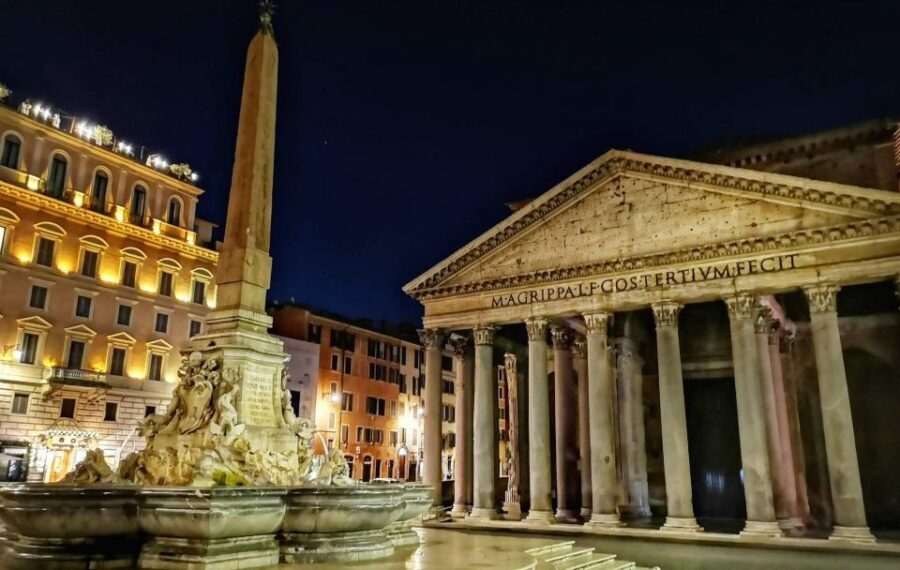
One detail you should take seriously before you go: due to the Jubilee, some monuments may be under restoration. The tour notes that you may get messages about potential changes.
This is a normal reality in Rome. Stones are working, scaffolds appear, and access can shift. The practical takeaway: don’t build your whole night around one exact photo angle. Treat it like a guided route with flexible viewing.
Also, Pantheon access follows strict rules on Sunday (no entry). The tour still builds the experience so you get the key story even if entry isn’t possible.
Who this twilight tour is best for
This tour is a great match if you:
- want a first introduction to central Rome without over-planning
- like art history stories you can connect to what you’re seeing
- enjoy evening atmosphere—piazzas and fountains feel made for night
- want an organized route with a small group and a guide who keeps the pace lively
It’s less ideal if you:
- need wheelchair-friendly access (it’s not suitable)
- hate walking for a couple of hours on uneven surfaces
Should you book this Rome at Twilight tour?
I’d book it if you want a high-value evening: major sights in a tight loop, guided explanations that make the places more than “that thing you’ve seen online,” and a finish near a classic area for continuing your night.
Skip it (or choose another format) if you’re very mobility-limited or if you specifically need Pantheon interior access on a Sunday. Otherwise, this is the kind of tour that helps you enjoy Rome with your eyes open instead of just ticking boxes.
FAQ
Where does the tour start?
You meet your guide in Piazza Navona, in front of the toy store Al Sogno, with a Through Eternity sign or flag.
Where does the tour end?
The tour finishes at Piazza di Spagna (Piazza di Spagna, 23), near the Spanish Steps.
How long is the tour?
The tour runs about 2.5 hours.
Is this tour in English?
Yes, the live tour guide provides the tour in English.
How big is the group?
The tour is limited to a small group, with a maximum of 10 participants.
Do you enter the Pantheon?
On Sundays, the Pantheon is closed to the tour and the group does not enter. If closed for unexpected reasons, you’ll still pass Piazza della Rotonda and get an exterior explanation.
Are headsets provided?
Headsets are provided for groups of 6 or more.
Is food or drink included?
No. Food and drinks are not included.
What should I bring?
Bring comfortable shoes and water.
Is the tour wheelchair accessible?
No, it’s not suitable for wheelchair users. If you have mobility concerns, you should inform the activity provider so they can try to accommodate.
What’s the cancellation policy?
You can cancel up to 24 hours in advance for a full refund.
Can I reserve and pay later?
Yes, you can reserve now and pay later.