REVIEW · NAPLES
Private Tour: Pompeii Half-Day Trip from Naples
Book on Viator →Operated by Project Napoli Service · Bookable on Viator
Pompeii feels impossibly close. This private half-day trip is built around round-trip private transport and a guided walk through the parts of the ruined city that make the 79 AD eruption so haunting, including the volcanic “freeze-frame” of everyday life. I like that you’re not wandering blind: you’ll hit major stops like the Forum, the thermal baths, the Lupanare brothel, and the House of Vetti, with guides such as Erica, Sofia, and Francesca known for explaining what you’re seeing in plain English.
The biggest thing I like is practical context. You’ll hear how Pompeii’s streets worked (including stepping-stone blocks over messy, often-flooded areas), what the Forum meant politically, and how the ash preserved details like victim casts. One caution: the schedule can feel tight, and the Pompeii entrance fee is extra—plan on €20 per person on top of the tour price.
In This Review
- Key highlights worth your attention
- Why Pompeii from Naples works so well in half a day
- Private pickup and the drive: how the logistics feel on the ground
- Pompeii entrance and that guided 2-hour window
- Porta Marina, theater, and streets that explain how the city worked
- The Forum: politics, crowds, and the city’s power center
- Temple of Apollo, Macellum market, and the Roman food economy
- House of Vetti and frescoes: when art tells you what people valued
- Thermal baths and the Lupanare: Roman routine, Roman reality
- Victim casts and the emotional impact of being too late
- Transport-only option: when it makes sense to skip the guide
- Price and value: what $129.76 really buys you
- Timing and the risk of feeling rushed
- Who should book this Pompeii half-day tour
- Should you book it or pass?
- FAQ
- Is Pompeii entrance included in the tour price?
- How long is the tour?
- Where does pickup happen?
- Does the tour include round-trip transportation?
- Do I get a private guide?
- Is a transport-only option available?
- Are tours offered in the morning and afternoon?
- What language is the guide available in?
- What’s included and what’s not included?
- Is this suitable for most travelers?
Key highlights worth your attention
- Private pickup from Naples, train station, or the cruise terminal, with a driver holding a name sign for easier rendezvous
- A guided 2-hour Pompeii walk focused on the top sites rather than letting you get lost in the scale
- The Pompeii essentials in one loop: Porta Marina, theater, Forum, Temple of Apollo, Macellum market, weighing scales
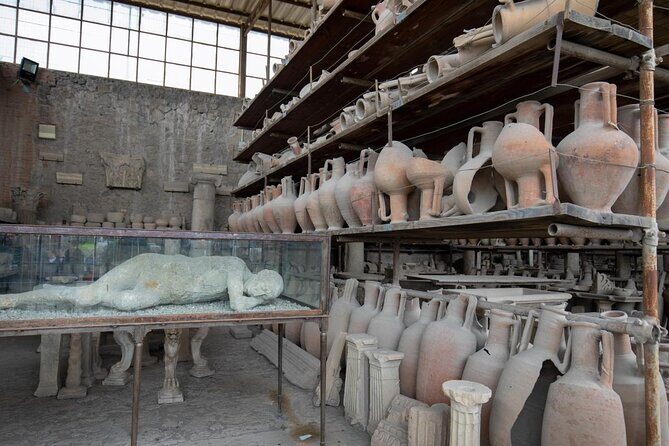
- Sensory, emotional stops like the victims’ casts and the ash-preserved street scenes
- Roman daily life through real venues: thermal baths, House of Vetti frescoes, and even the Lupanare
- Transport-only option for independent explorers, with the driver waiting while you explore for about two hours
Why Pompeii from Naples works so well in half a day
Pompeii is big, and it’s easy to lose time if you arrive without a plan. This half-day format helps you see the core highlights without burning an entire day on logistics. You also avoid the common first-timer problem: standing in front of ruins and not knowing what matters most.
The ride itself is part of the value. Pompeii is about 30 miles (48 km) from Naples, so you spend your energy where it counts—inside the archaeological park—rather than on a long day-trip drive. Then you get some breathing room after the guided portion to wander at your own pace.
You’ll also notice something subtle about the way this tour is structured: it’s not only about famous names. It’s about how Pompeii functioned—politics, food, bathing, entertainment, and commerce—so the ruins don’t stay as a list. If you’re the type who likes your history with street-level meaning, this works.
You can also read our reviews of more private tours in Naples



Private pickup and the drive: how the logistics feel on the ground
You can start from your Naples hotel, Naples Central Station, or the Naples cruise terminal, depending on your departure option. A driver handles the Naples-to-Pompeii transfer in a private vehicle, and you meet your guide at the entrance.
This is where private tours shine: fewer moving parts. In practice, good communication matters. Some groups reported smooth meetups where the driver coordinated directly with the guide right at the car, including quick help for mobility needs. Others hit a rough spot when pickup coordination wasn’t aligned and it cost time inside Pompeii—so keep your phone charged and your location info ready.
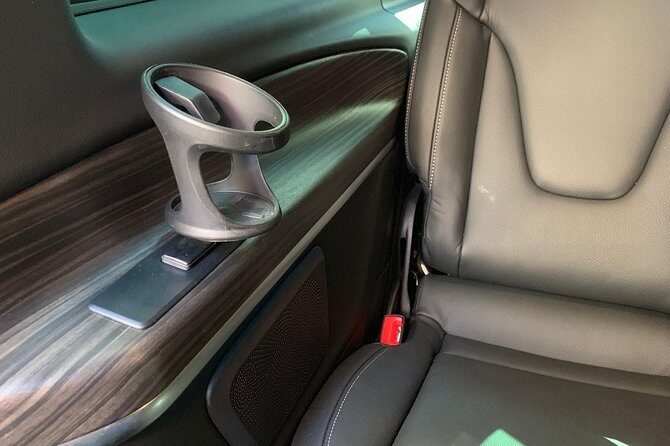
Comfort varies by vehicle and driver. One comment complained about a rough ride and another praised punctual, friendly drivers (including names like Luis and Jean Franc). If you’re sensitive to road conditions, you’ll want to bring a small water bottle and wear shoes with solid traction—Pompeii itself is uneven, and the park doesn’t care how tired you are.
Pompeii entrance and that guided 2-hour window
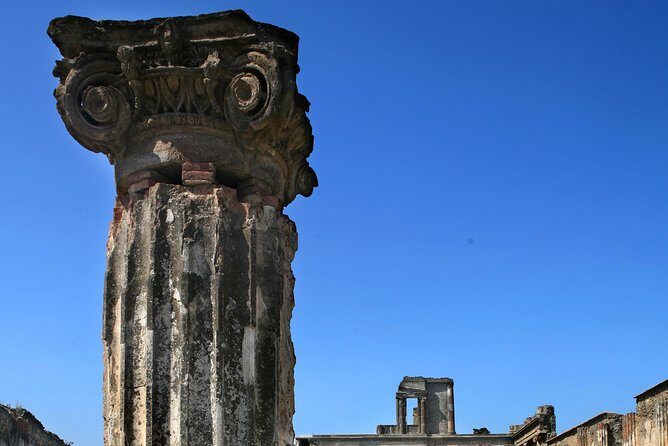
Once you reach the Archaeological Park of Pompeii, your guide sets the tone fast. The tour’s core experience is about a 2-hour guided visit, which is long enough to see the headline sites and connect them into a story, but short enough to stay realistic.
That pacing is important because Pompeii is overwhelming if you treat it like a museum maze. With a guide, you’re guided through meaningful highlights such as the city walls and the Porta Marina gate (the harbor entry), the theater, the Forum, and key public spaces. The guide also helps you understand why the layout feels “basalt-y” and irregular—Pompeii’s streets can be slick and uneven, and the park preserves what time left behind.
A good guide also manages your expectations about what you’ll see. You’re not getting a complete map of the city; you’re getting the best segment that most closely represents Roman daily life at the moment the ash fell.
Porta Marina, theater, and streets that explain how the city worked
Early on, you’ll get the city’s context before the big interior stops. Seeing the city walls and Porta Marina helps you picture Pompeii as a functioning port city rather than just a field of ruins. Then the walk moves into the entertainment and public-life zones—starting with the theater where performances were regularly held.
After that, you’ll get your first sense of the physical realities of Pompeii. Guides often point out basalt-laden streets and squares and the stepping-stone blocks that helped people cross areas that were often flooded or full of sewage. That small detail changes how you feel about the whole place: this wasn’t a clean, postcard city. It was lived-in, messy, and very human.
One of my favorite parts of this approach is the way it shifts your attention from big monuments to everyday infrastructure. When you understand how people navigated the streets, later stops like markets and weighing scales land better.
The Forum: politics, crowds, and the city’s power center
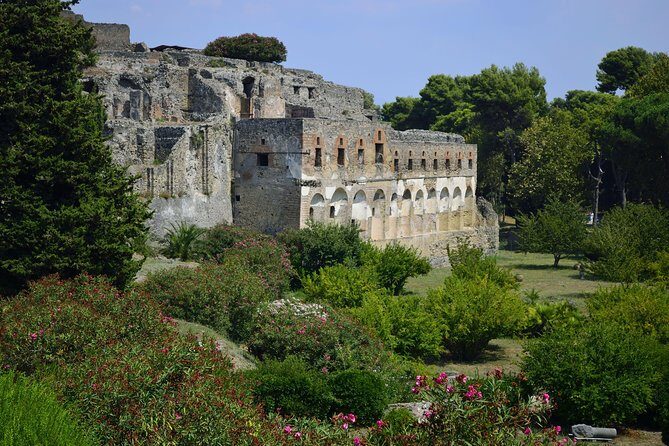
The Forum is one of those stops where a guide makes or breaks the experience. It’s the center of civic life—where political matters played out and where the city’s “public business” happened. When you walk it with a guide, you don’t just see stones; you learn what the Forum was used for and how it fit into Roman life.
This is also where you start to feel the tragedy of the eruption more clearly. Pompeii wasn’t abandoned in a dramatic finale you can neatly point at. It was interrupted in real time. Your guide ties the eruption story (Mt. Vesuvius erupting in August 79 AD and burying around 20,000 people under ash and pumice) to the layout of streets and civic spaces, so it feels like the city stopped mid-routine.
If your guide is strong at interpretation, the Forum becomes a shortcut to understanding the whole city. You’ll be able to connect the dots between markets, bathing, homes, and entertainment.
You can also read our reviews of more tours and experiences in Naples




Temple of Apollo, Macellum market, and the Roman food economy
As you continue, the route typically hits a cluster of “how people fed themselves” stops. You may see the Temple of Apollo, the Macellum market (the food market), and public weighing scales. Even if you’re not a food-history person, these spots help you grasp how daily life ran on real systems.
The Macellum and weighing scales are especially useful because they show commerce at ground level. It’s the opposite of abstract history. You’re looking at the infrastructure of buying and selling—the places where people would have planned meals, traded goods, and measured what they were getting.
You may also hear about what amounts to Roman fast-food-style behavior, including a spot described with large vases used for storing food. These are the details that keep Pompeii from becoming only a tragedy tour.
If you’re the kind of visitor who likes to photograph “the weird stuff,” bring your camera—but pace yourself. Heat and crowds can drain attention faster than you expect.
House of Vetti and frescoes: when art tells you what people valued
One of the most frequently praised stops on this route is the House of Vetti. The big value here is that you get to see how elite Romans lived—especially through frescoes that show what the homeowners wanted to display.
This is not just about pretty paintings. Frescoes in Pompeii can reflect status, beliefs, and the personality of the household. When your guide points out what you’re looking at, the house stops being a pretty room you pass through and becomes evidence of everyday taste and social signals.
House stops can also be a helpful change of pace from outdoor streets. Pompeii’s open areas can feel like an endless walk in bright sun. In contrast, rooms and painted walls give you something to focus on at eye level.
This is a great segment for questions. If you’re traveling with teens, art lovers, or anyone who gets restless with pure architecture, the House of Vetti can bring them back into the story.
Thermal baths and the Lupanare: Roman routine, Roman reality
Pompeii isn’t sanitized, and that’s part of why it’s unforgettable. You’ll have stops connected to Roman leisure and social life, including thermal baths and the Lupanare brothel.
The thermal baths are valuable because they show a routine that wasn’t just about hygiene. Bathing was a social act—part conversation, part public time. The ruins still make it possible to understand the physical process of bathing, even if you can’t fully “experience” it the way Romans did.
Then you may visit the Lupanare, an old brothel often mentioned for how it reflects real human behavior in a Roman city. Even if you find it uncomfortable, it gives the tour a grounded feel. This wasn’t a curated city. It had everything a city has—pleasure, work, commerce, and the complicated stuff people try to ignore.
If your guide is strong at pacing, these stops won’t feel like random add-ons. They’ll feel like pieces of the same puzzle.
Victim casts and the emotional impact of being too late
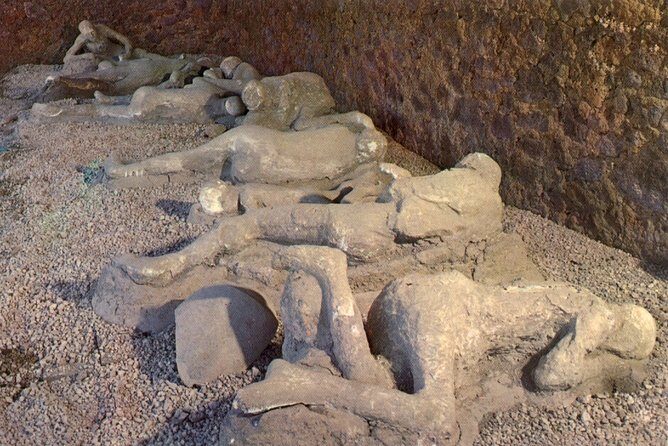
One of Pompeii’s most striking features is the casts of victims—people who were frozen by the volcanic eruption. This isn’t a “fun photo stop.” It’s heavy, and it lands hardest when a guide explains what it represents without rushing past it.
The emotional impact matters because it reframes everything else you’ve seen. Before the casts, Pompeii can feel like architecture and street plans. After, you understand the human cost behind those stones.
I also like that this tour is built to include that moment during a half-day plan. It means you don’t forget what makes Pompeii important just because you saw a market or a theater. The city’s beauty and its violence sit side by side.
Transport-only option: when it makes sense to skip the guide
Not everyone wants a guided walk through every highlight. If you prefer to explore on your own, there’s a transport-only option: private round-trip transport from Naples, a couple of hours in Pompeii, and then return. You can also add an audio guide for extra cost.
This can be a smart choice if:
- You already know Pompeii well and want freedom to choose your own path.
- Your group prefers quieter exploration without a timed schedule.
- You want to build in extra stops for water, souvenirs, or slower photo sessions.
The tradeoff is clarity. Without a guide, you may understand where things are, but you might miss the “why” behind them—especially for places like the Forum or weighing scales. Some people feel they got less value when only transportation was delivered without strong interpretive help, so if you choose transport-only, make sure you have a plan for what you want to prioritize inside.
Price and value: what $129.76 really buys you
At $129.76 per person, you’re paying for a private package: pickup and drop-off, private vehicle transport, and the guide only if you choose the driver + guide option. Pompeii admission is extra—€20 per person—and food and drinks aren’t included.
So the value question comes down to two things: how efficiently the tour uses your time, and how good the guide is at interpretation. Many people felt the private format was worth it because it avoids long waits and cuts through confusion fast. Others felt the experience wasn’t great value when it felt rushed, when pickup coordination caused lost time, or when the vehicle ride wasn’t comfortable.
If you’re comparing costs, don’t ignore what you’re not paying for: you’re not organizing transport yourself, and you’re not hiring a guide for the whole half-day. But you should also be realistic about the extra €20 entrance fee and possible time pressure.
My practical advice: treat this as a “best-of Pompeii with guardrails” experience. If that’s what you want, it can feel like good value. If you want a slow, detailed, unhurried exploration, you may feel constrained by a timed structure.
Timing and the risk of feeling rushed
A half-day tour can be perfect—or it can feel like a sprint. Some people finished about an hour early or felt the pace was too fast, wishing for more time to buy water or look at souvenirs. Others said the timing felt right, especially in summer.
The key thing is to plan your expectations. Pompeii can swallow time. Even with a guide, it’s easy to underestimate how long you’ll linger at emotionally powerful areas like the victim casts or the most photo-friendly frescoed rooms.
If you’re the type who needs breaks, add some flexibility to your day. Wear comfortable clothes, bring water, and plan for sun. And if you’re on a cruise schedule, keep buffer time in mind because any delay outside the park can compress your on-site experience.
Who should book this Pompeii half-day tour
This tour is a strong fit if you want:
- A structured, highlight-focused walk in a 2-hour guided visit
- Private transport from central Naples (including cruise or station pick-up)
- Clear context that connects the Forum, markets, baths, houses, and the eruption story
It’s also a good option for families and mixed-age groups, where a guide can keep the pace moving and answer questions as you go. Several guides named here—like Margarita, Paula, and Mula—were described as fun, engaging, and able to match different ages and needs.
If you strongly prefer full independence, the transport-only option might suit you better. And if you want to add Vesuvius or spend much longer at Pompeii than a half-day, you’ll probably outgrow this format.
Should you book it or pass?
I’d book this private half-day if your priority is seeing the essential Pompeii sites with a guide and not spending your day solving logistics. The price feels more reasonable when you value time savings, a structured route, and interpretive context—especially if you’d otherwise stand at the entrance wondering where to start.
I’d hesitate if you hate tight schedules, dislike paying extra for admission, or want long free roaming time with no guide. The occasional complaints about rushed pace, late or mismatched pickup, and limited on-site time are real considerations—so if you book, keep your meeting plan tight, your phone ready, and your expectations aligned with a half-day format.
FAQ
Is Pompeii entrance included in the tour price?
No. The Pompeii Archaeological Park entrance fee is €20.00 per person, and it’s not included in the tour price.
How long is the tour?
It’s listed as about 4 hours total, with a guided visit of around 2 hours inside the Pompeii site.
Where does pickup happen?
You can be picked up from your Naples accommodation, Naples Central Station, or the Naples cruise terminal. You choose your pickup point when booking.
Does the tour include round-trip transportation?
Yes. The experience offers pickup and drop-off with transport by private vehicle.
Do I get a private guide?
You get a private guide if you select the driver and guide option. The tour is private, so only your group participates.
Is a transport-only option available?
Yes. There’s a transport-only option with private round-trip transportation from Naples, where the driver waits while you explore for about a couple of hours. An audio guide is available for an additional cost.
Are tours offered in the morning and afternoon?
Yes. You can choose either a morning or afternoon tour.
What language is the guide available in?
The tour is offered in English.
What’s included and what’s not included?
Included: pickup/drop-off, private vehicle transport, and a private guide if you choose that option. Not included: food and drinks, and the Pompeii entrance fee.
Is this suitable for most travelers?
The experience states that most travelers can participate. A document ID picture is required for tour purpose, and service animals are allowed.