REVIEW · NAPLES
Private Pompeii Tour With Guide and Transfer Included
Book on Viator →Operated by Naples bay tour · Bookable on Viator
Pompeii feels unreal, even with the crowd. This private tour from Naples is built for an efficient, no-stress visit, with pickup and a licensed guide walking you through key streets and standout buildings. You’ll see how Romans shopped, ate, bathed, gambled on games, and lived in homes that were instantly frozen by the 79 AD eruption.
Two things I really like: you get the full Pompeii experience without worrying about logistics, and the focus stays on places that explain daily life fast. The private format also means you can ask questions and move at a human pace instead of being herded. One thing to consider: at $358.86 per person, it’s not the cheapest way into Pompeii, so it makes the most sense when you want comfort and time-saving.
In This Review
- Key highlights to look for
- Getting to Pompeii smoothly from Naples Bay
- Why private guide time changes Pompeii
- Macellum: Pompeii’s main food market (and the real economy behind it)
- Granai del Foro: grain warehouses and the haunting cast displays
- Anfiteatro Romano: the oldest surviving amphitheater feel
- Foro de Pompeya: the central square that ran the city
- Terme del Foro: the Forum Baths and what Romans did for fun
- Lupanar: the frescoed building that shows a darker side
- Casa del Fauno: elite living, the dancing faun, and the Alexander Mosaic
- Price and value: $358.86 per person, and what you’re really buying
- How long you’ll be on your feet
- Small service details that matter in the real world
- Who this Pompeii private tour fits best
- Should you book this Pompeii private tour?
- FAQ
- How long is the Pompeii private tour?
- What’s included in the price?
- Where does the tour start and end?
- Does the tour include hotel pickup?
- Are Pompeii admission tickets included?
- Can I cancel and get a full refund?
Key highlights to look for
- Pickup plus private transport: you’re not piecing together buses while everyone else is sweating.
- A 2-hour guided walk through the most meaningful parts of the site.
- Forum-area stops (square and baths) that show everyday Roman routines.
- Big-picture context at smaller sites like the food market and grain warehouses.
- Top Pompeii interiors like the Lupanar frescoes and Casa del Fauno mosaics.
Getting to Pompeii smoothly from Naples Bay

If your only Pompeii plan is show up and hope, you’ll burn time before you even start seeing anything. This experience starts with pickup offered in the Naples area and uses private transport, so you’re traveling like a small group rather than a queue.
The timing is built around a total duration of about 4 hours. You’ll spend part of that on the ride, then settle into the ruins with a guide for roughly 2 hours of focused walking. It’s a solid length for Pompeii because it gives you enough time to understand what you’re looking at, without turning the visit into an endurance test.
One small practical note: the meeting point is Molo Beverello. Even with pickup offered, the activity ends back at the meeting point, so plan on that as your end anchor.
You can also read our reviews of more guided tours in Naples


Why private guide time changes Pompeii
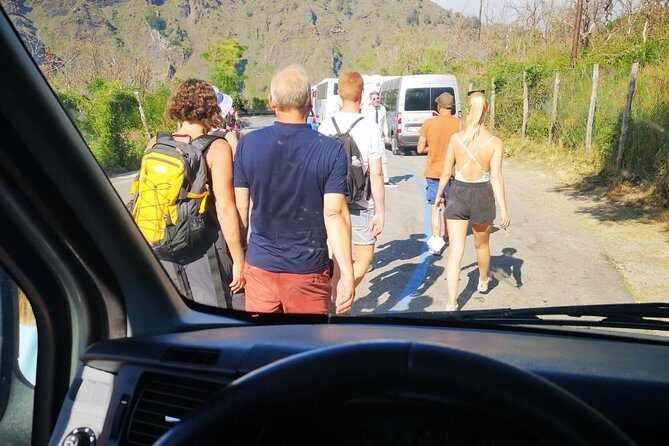
Pompeii is famous, which means it can also feel overwhelming. The trick is knowing what you’re seeing and why it mattered to Romans. That’s where a guide matters—especially in a place like Pompeii where one street can be entertainment, commerce, and politics all at once.
This tour is explicitly private, meaning only your group participates. That matters for comfort and control. If you want to slow down at a detail in a mosaic or ask what a building functioned as, you can do it without losing the rest of the day to a waiting crowd.
A guide also helps you read the site fast. Pompeii isn’t set up like a museum with neat labels every step of the way. Instead, the buildings form a patchwork, so having someone connect the dots—food market to grain stores, forum to baths, amphitheater to public life—makes the whole town click.
Macellum: Pompeii’s main food market (and the real economy behind it)
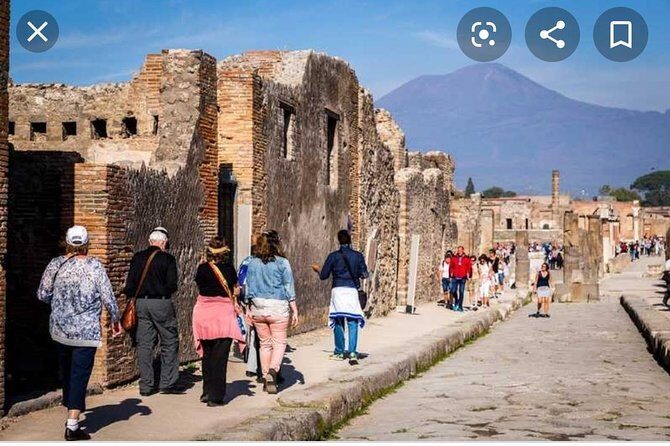
Your first stop is the Macellum, Pompeii’s main food market. This is one of those places where you start to understand the city as a working machine, not just a dramatic ruin.
Meat and fish were sold here, and the market layout tells you how commerce ran day to day. Your guide will explain how the space worked and what businesses did there, which helps you picture the noise and routine that would have filled these streets.
Why I think this stop is a smart start: it anchors the visit in something universal—food—and then uses that to explain trade and the city’s economy. It’s also a good momentum-builder because it feels concrete early on. You’re not waiting until the middle of the tour to get the “how did people live here?” answer.
The only consideration is simple: markets can be visually busy, so if you’re sensitive to crowds, come ready to focus on small details as you move through.
Granai del Foro: grain warehouses and the haunting cast displays
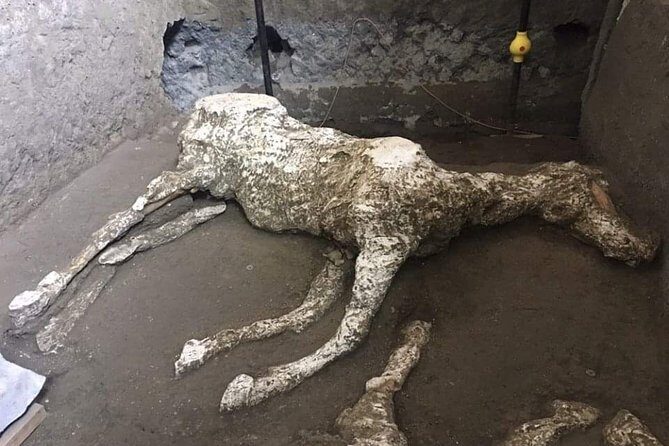
Next up are the Granai del Foro, ancient warehouses where grain and supplies were stored. This is the kind of place that makes Pompeii feel practical. A town can only function if its food chain and storage system work, and these buildings were part of that backbone.
Today, the warehouses are also used for displays, including casts of victims of the eruption and other archaeological finds. That combination—storage for everyday survival alongside the evidence of catastrophe—creates a stark contrast your guide can help you process.
This stop is short, about 10 minutes, so it’s not designed to leave you in a mood for an hour. Instead, it gives you an emotional and historical frame that makes the rest of the walk hit harder.
If you’re visiting with kids or anyone who gets overwhelmed by heavy topics, tell your guide upfront. You can still learn a lot without spending too long on the most difficult parts.
Anfiteatro Romano: the oldest surviving amphitheater feel
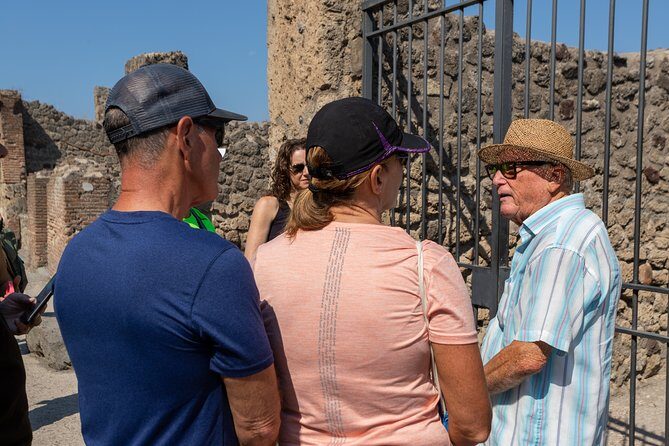
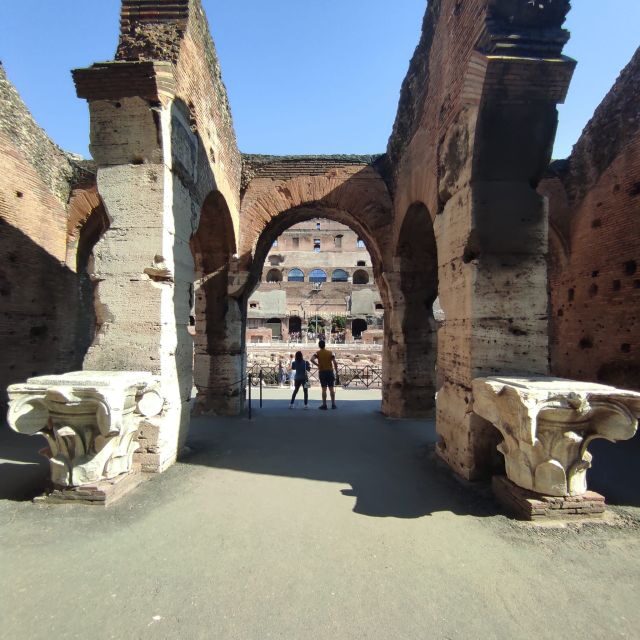
Then you’ll head to the Anfiteatro Romano, an amphitheater built in 70 BC. The standout detail here is that it’s described as the oldest surviving Roman amphitheater, which gives this stop extra weight right away.
From this spot, you can connect entertainment to public life. Gladiatorial games weren’t just spectacle; they were part of how Romans gathered, competed, and reinforced social order. Your guide will cover that, plus how entertainment fit into daily rhythm and civic identity.
This is another quick stop at about 10 minutes, so think of it as a “get the meaning, not just the photo” moment. If you’re a person who loves architecture and Roman engineering, you may want an extra minute or two just looking across the structure as you absorb the scale.
You can also read our reviews of more private tours in Naples






Foro de Pompeya: the central square that ran the city
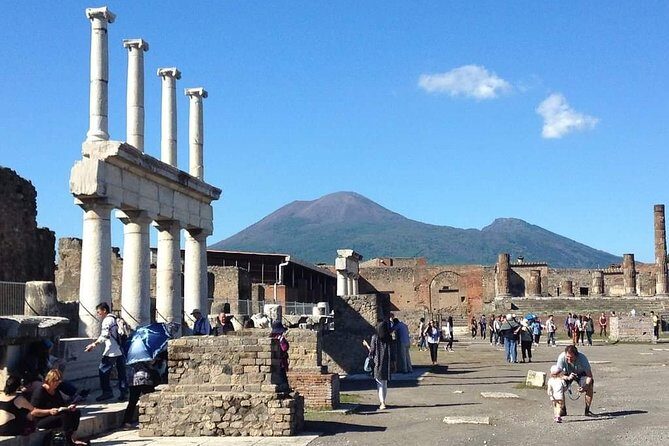
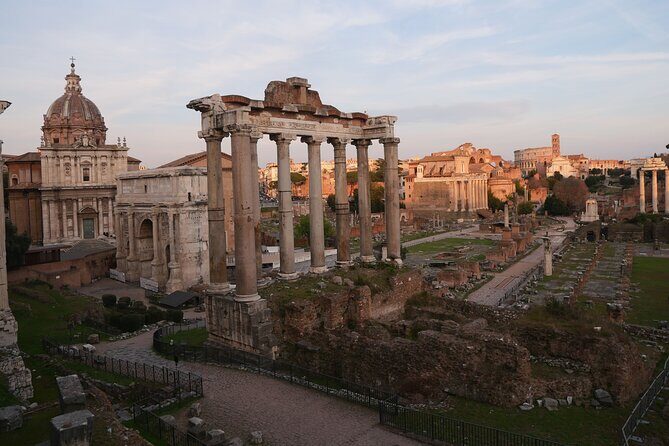
After entertainment, you shift to governance and everyday activity at the Foro de Pompeya—the forum, or central square. This is where temples, administrative buildings, and markets sat close together, which is why the forum feels like the city’s control room.
You’ll walk through a space that was both public stage and practical workplace. Here’s where Roman life felt official: announcements, commerce, and religious symbolism all in one place. With a guide, you’ll learn how the forum shaped what people believed and how they organized themselves.
This is your longer stop at about 20 minutes. That extra time is helpful because the forum is visually layered. There are multiple functions going on, so slowing down for a guided explanation pays off.
One drawback to expect at any Pompeii forum stop: uneven ground and lots of walking. Wear solid shoes, and don’t plan to do this in sandals.
Terme del Foro: the Forum Baths and what Romans did for fun
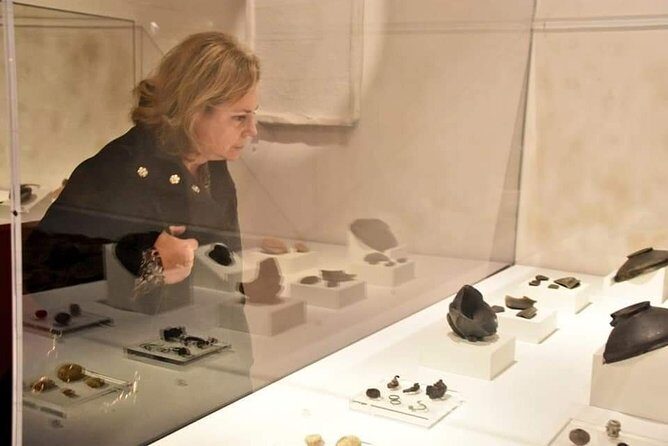
Right near the forum, you’ll visit the Terme del Foro, the Forum Baths. Roman baths weren’t just about washing. They were social space, relaxation space, and a place to keep relationships running.
What makes this stop especially good is the variety: changing rooms, heated pools, and decorative frescoes. Your guide will help connect these spaces to how people spent time. That’s the trick with Pompeii: the ruins aren’t only about big events. They’re about routines.
There’s a big advantage to seeing these baths after the forum. First you understand the city’s public center, then you see how people loosened up nearby. It makes Roman life feel whole instead of compartmentalized.
This is a 10-minute stop, so if you love details in frescoes and tiled surfaces, keep your eyes moving. You’ll probably want to come back later on your own for longer viewing.
Lupanar: the frescoed building that shows a darker side
Then comes one of Pompeii’s most discussed buildings: the Lupanar. It’s known as one of the best-preserved and is especially famous for its vivid fresco cycle.
This is where you’ll see how Pompeii doesn’t just preserve the ideal Roman world. It preserves the messy, human world too. The fresco themes have been described as possibly connected to Dionysian rites, and your guide can frame what that might mean in the context of Roman culture.
This stop is also about 10 minutes. That’s enough time to understand why the Lupanar matters without turning it into an uncomfortable slog.
If you’re sensitive to explicit imagery, you may want to tell your guide what you prefer. You can still learn the building’s function and symbolism without focusing on the most graphic scenes.
Casa del Fauno: elite living, the dancing faun, and the Alexander Mosaic
For the final major stop, you’ll visit Casa del Fauno, known for two big draws: the statue of the dancing faun and the Alexander Mosaic. This is Pompeii as luxury and status.
A normal Pompeii visit can feel like you’re mostly outside, looking at streets and walls. Casa del Fauno gives you a different perspective because it shows how the elite lived—how they displayed wealth through art, design, and monumental pieces.
This stop is another quick one at about 10 minutes, so you’ll get the meaning behind the landmarks rather than a slow wander. That’s still worth it if your goal is to see the key stuff and walk away with a coherent understanding of Pompeii’s social layers.
One practical thought: if mosaics are your thing, plan to linger a bit after your guided time ends. Even with a private tour, Pompeii’s best reward comes from personal re-looking.
Price and value: $358.86 per person, and what you’re really buying
Let’s talk money without pretending it’s no big deal. At $358.86 per person, this isn’t a budget tour. You’re paying for private transport, private guides, pickup, and Pompeii tickets bundled in.
So is it value? I think it can be, if your priorities are time and clarity. Pompeii is popular and logistics can be a headache. Buying a package like this can save you the hassle of figuring out transport, ticket timing, and entry windows while also giving you guide time to interpret what you’re seeing.
Also, since it’s private, you can tailor your pacing within the overall schedule. That’s a real upgrade if you’re traveling with family members with different interests or you just don’t want the stress of staying on someone else’s timetable.
The negative angle is simply the math: if you’re fine with self-guided wandering and you have no problem managing ticketing and travel between Naples and Pompeii, you might find a cheaper option. This one makes more sense when you want a guided, structured experience without the planning work.
How long you’ll be on your feet
The tour is about 4 hours total, and Pompeii is mostly walking on uneven stone. Even if each stop is short, you’re moving through a large site.
If you’re going with kids, older relatives, or anyone who tires easily, this format can still work because the stops are broken up and guided. But you’ll want to keep the pace realistic. If you know you’ll need frequent breaks, bring that up in the moment so the guide can adjust.
Comfort tips I’d follow: wear supportive shoes, keep water handy, and bring sun protection. You can’t control Pompeii’s outdoor exposure, so plan for it.
Small service details that matter in the real world
One of the best parts of this experience is the way the provider communicates and keeps things moving. There’s also an emphasis on punctuality and friendly, helpful guidance in the service style described.
That’s not a tiny thing. In a place like Pompeii, a late start can cascade into stress, shorter time in each stop, and less energy for the parts you care about most.
If you want to make the experience smooth, do two simple things:
- confirm pickup timing and your exact meeting details near Molo Beverello
- carry your mobile ticket info so entry isn’t slowed down
Who this Pompeii private tour fits best
This is a strong choice for couples, families, and culture-minded visitors who want a guided walk through the best core sites without turning it into a full-day marathon.
It also works well if you like a tour that gives you context and a clear sequence. Starting with market and warehouses, then moving to entertainment, the forum, baths, and elite homes gives you a “Roman life” storyline instead of random highlights.
If you’re traveling with someone who prefers structure, the private guide format helps. If you’re the kind of person who enjoys asking questions and doesn’t want to rush past details, you’ll likely feel at ease here.
Should you book this Pompeii private tour?
Book it if you want pickup, tickets, and a guided route that helps you understand what you’re seeing, not just where to stand for photos. The $358.86 per person price is easier to justify when you value time-saving logistics and you want a guide to connect the dots from food markets to baths to elite art.
Skip it—or think hard before booking—if your goal is low-cost freedom and you’re comfortable handling transport and entry on your own. Also, if you know you’ll want lots of unstructured time inside the site, you might prefer a longer plan.
FAQ
How long is the Pompeii private tour?
It runs for about 4 hours total, with approximately 2 hours of guided time at Pompeii.
What’s included in the price?
The tour includes private transport, a private licensed guide, pickup offered, and Pompeii tickets (with a mobile ticket).
Where does the tour start and end?
The meeting point is Molo Beverello, Naples. The activity ends back at the meeting point.
Does the tour include hotel pickup?
Pickup at your accommodation is offered, but the activity meeting point is listed at Molo Beverello.
Are Pompeii admission tickets included?
Yes. Pompeii tickets are included.
Can I cancel and get a full refund?
Yes. You can cancel for a full refund up to 24 hours in advance of the experience’s start time. If you cancel less than 24 hours before, the amount paid is not refunded.