REVIEW · NAPLES
Private Herculaneum Tour – Top Experience with Local Guide
Book on Viator →Operated by Leisure Italy · Bookable on Viator
Ancient streets, with a human scale.
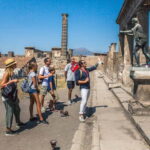
This private tour makes Herculaneum feel less like a pile of ruins and more like a town you could actually wander—especially because the site is better preserved than Pompeii. I love the way a private local guide connects everyday details (shops, bathhouses, and even carbonized wooden objects) into clear stories, and I also like that you get a calmer pace than big group days at high-volume attractions. One thing to consider: you’ll do moderate walking across uneven archaeological surfaces, so comfy shoes matter.
What really sticks with me is the quality of the guiding. Reviews highlight people like Fabrizio and Paulo, plus a friendly guide who kept things on schedule and answered questions without rushing. And because it’s private, your group sets the tempo—perfect when you want time to stare at a mosaic or read an inscription instead of marching past it.
In This Review
- Key Points Worth Knowing
- Why Herculaneum Feels Different From Pompeii
- Private Guide Pacing and the Ercolano Meeting Point
- Parco Acheologico Di Ercolano: Frescoes, Shops, Baths, and Wooden Life
- Boat Pavilion and Antiquarium: The Town’s Last Hours, Explained
- Boat Pavilion
- Antiquarium
- The Ancient Beach and Boat Houses: A Scene That Doesn’t Feel Distant
- Casa dei Cervi and Casa di Nettuno e Anfitrite: Waterfront Wealth Up Close
- Casa dei Cervi
- Casa di Nettuno e Anfitrite
- Palestra and Women’s Baths: How Social Life Worked in Roman Spaces
- Palestra
- Women’s Baths
- Ad Cucumas and the Bicentenario House: Street Life, Commerce, and Written Records
- Ad Cucumas
- Casa del Bicentenario
- Sacello degli Augustali and Casa del Tramezzo di Legno: Power and Privacy
- Sacello degli Augustali
- Casa del Tramezzo di Legno
- Casa dello Scheletro: When the Tour Becomes Personal
- Optional Cantina del Vesuvio Lunch: Terroir and Terrestrial Views
- Price, Duration, and Who This Tour Fits Best
- Duration range
- Best fit
- Considerations
- Should You Book This Private Herculaneum Tour?
- FAQ
- How long is the Private Herculaneum Tour?
- Is the tour private?
- Does the price include admission?
- Is pickup available?
- Where do we meet for the walking tour option?
- Is the tour offered in English?
- How much walking should I expect?
- Can kids enter for free?
- Are service animals allowed?
- What’s the cancellation window?
Key Points Worth Knowing
- Private guide attention: you get real explanations tied to the rooms and objects, not just a route.
- Herculaneum’s preservation: frescoes, wooden elements, mosaics, and carbonized remains make the past feel physical.
- Maritime section that hits hard: the Boat Pavilion and waterfront areas show the eruption’s impact on daily sea life.
- Museum-first orientation: the Antiquarium helps you recognize what you’ll see before you step into the open air.
- Optional Vesuvius winery time: add a relaxed vineyard lunch and tasting with scenic Bay of Naples views.
- Small-group feel, no crowd pressure: multiple reviews call out the ability to take your time when conditions were less packed.
Why Herculaneum Feels Different From Pompeii
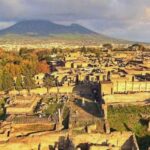
Herculaneum is often described in comparison to Pompeii, but here’s the practical way to think about it: Pompeii can feel like a whole city taken apart at once. Herculaneum feels like a town frozen mid-life, with details that survived in a way you don’t always get elsewhere.
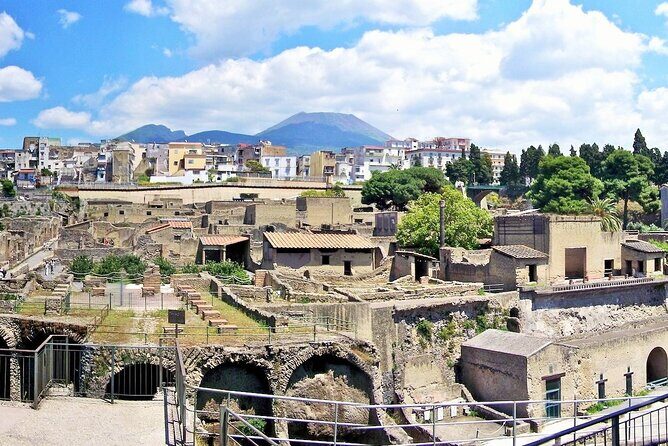
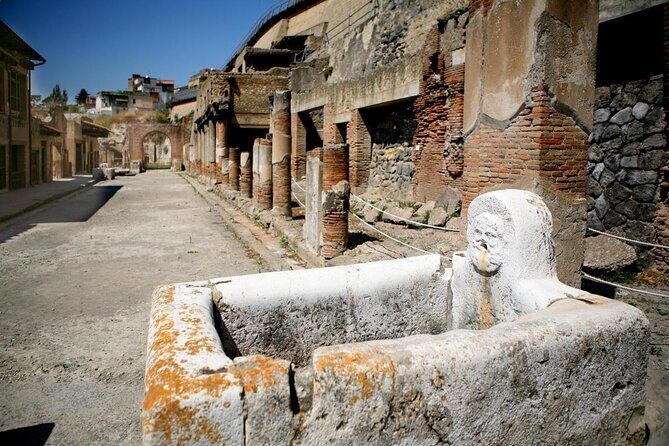
That difference is the whole point of this tour. You’ll walk through Roman streets and spaces where you can still make out everyday rhythms—frescoed walls, mosaics, bathhouse features, and household layouts. And because the town is smaller and better preserved, you’re not forced into a rushed, highlight-only checklist.
I also like that this tour is built around emotional and scientific storytelling side-by-side. You’ll move from elegant homes to industrial waterfront remains to museum objects, so the day doesn’t feel like one long, uniform lesson. It feels like you’re meeting different sides of the same community.
You can also read our reviews of more guided tours in Naples


Private Guide Pacing and the Ercolano Meeting Point
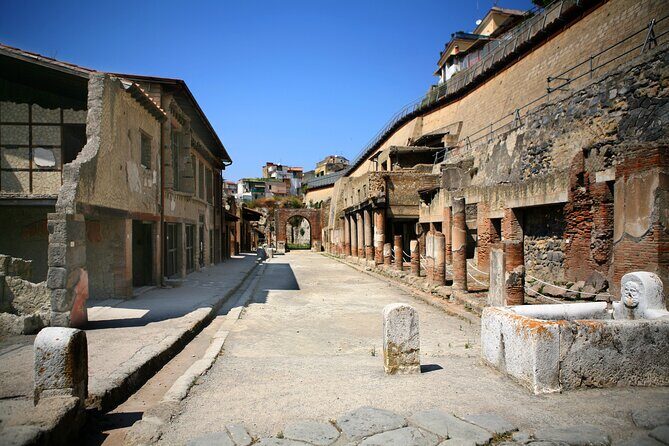
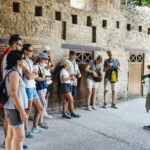
This is a private tour, meaning it’s just your group. That matters more than you might think. In archaeology, the best moments are often the slow moments: a guide pointing out how a wall system worked, a recovered object that changes your understanding of daily life, or a room layout that explains social behavior.
Starting point: Archaeological Park of Herculaneum, Corso Resina, 187, 80056 Ercolano NA, Italy.
Ending point: back at the same meeting point.
You have two main ways to do it:
- If you choose the walking tour only option, you meet your guide at the archaeological site.
- If you choose the option that includes private transportation, the provider says pickup is flexible anywhere in Naples or Sorrento.
From the reviews, one theme comes up again and again: guides kept things professional and on time, and they gave enough space to absorb what you were seeing. If you’re the type who likes to ask questions—How did this room function? Why is this structure shaped this way?—a private guide is the difference between seeing and really understanding.
Parco Acheologico Di Ercolano: Frescoes, Shops, Baths, and Wooden Life
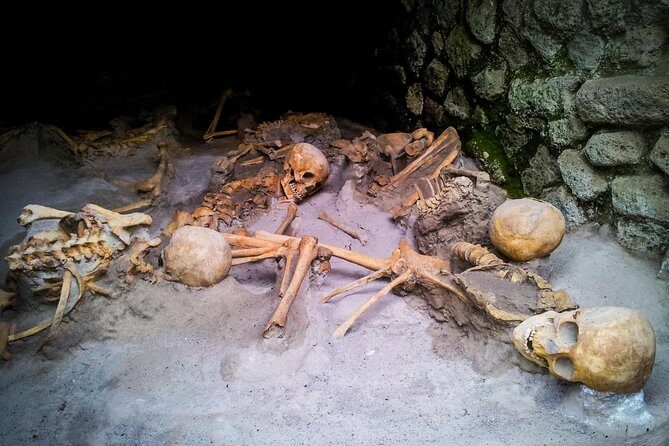
Your first stop centers on the core archaeological experience at Parco Acheologico Di Ercolano. This is where you get the feeling that the town still has edges: colorful frescoes, mosaics, shops, bathhouses, and household areas. It’s not just about big sights; it’s about the texture of daily life.
What makes this section so valuable is that your guide isn’t only pointing at what’s there now. They help you interpret what those spaces meant back then—wine merchants and fishermen, wealthy families overlooking the sea, and the kind of routines that repeat across cultures and centuries.
You’ll also notice something that makes Herculaneum special: the evidence often includes carbonized remains, including wooden elements that help explain architecture and waterfront activity. Instead of thinking of Roman life as stone-and-statues only, you start seeing it as fully lived—furniture, wood structures, and objects that survived the eruption in unusual ways.
How long here: the admission-ticket portion for the main park time is listed at about 2 hours (though the full day can run longer depending on the optional add-on and your pace).
Possible drawback: because the site is outdoors and involves moderate walking, you’ll want to plan for a comfortable pace. If your group is sensitive to steps, uneven ground, or sustained walking, it helps to ask your guide to build in short pauses.
Boat Pavilion and Antiquarium: The Town’s Last Hours, Explained
After the initial park orientation, the tour adds two stops that do something different: they connect the eruption’s science to human-scale details.
Boat Pavilion
At the Boat Pavilion, you’ll see carbonized remains of ancient boats and waterfront structures, preserved under volcanic debris. Your guide frames them as evidence of the town’s dependence on the sea—fishermen, merchants, and officials who used this shoreline for trade and transport.
This stop works because it’s both emotional and specific. You’re not just told that people suffered; you’re shown material proof of what the waterfront looked like and how it functioned.
You can also read our reviews of more private tours in Naples




Antiquarium
Next comes the Antiquarium, a small museum that helps you get your bearings fast. You’ll see original artifacts like statues, inscriptions, household objects, and personal belongings. The guide helps connect these to the rooms and structures outside, so your time in the open archaeological park feels less random.
One reason this stop is so helpful: it gives you context for what you’ll see in the ruins. Instead of encountering a house fragment and wondering what your eye should pick up first, you’ll already have a mental checklist your guide builds with you.
Why this order matters: museum-first then ruins lets the site “click.” You start recognizing themes—wealth, daily life, civic identity, and trade—before you’re surrounded by it.
The Ancient Beach and Boat Houses: A Scene That Doesn’t Feel Distant
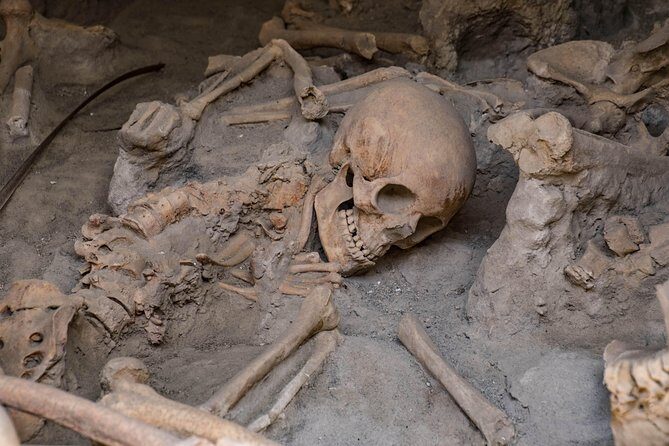
One of the most sobering areas is the ancient beach, where your guide leads you to a part of Herculaneum tied to the town’s final hours. Here, archaeologists uncovered skeletons of hundreds of people who gathered at the water’s edge, hoping for rescue.
Seeing remains in situ is the key phrase here. It turns a historical event into a human one—families, trapped at the shoreline, caught between desperation and the sea they depended on.
If you’re hoping for only light and lovely sightseeing, you might find this section heavy. But if you want a tour that respects what happened and explains it honestly, this is the heart of why Herculaneum is so unforgettable.
Casa dei Cervi and Casa di Nettuno e Anfitrite: Waterfront Wealth Up Close
Now for the “how did they live like this?” portion of the day.
Casa dei Cervi
At Casa dei Cervi, you’ll enter one of Herculaneum’s elegant waterfront homes. Your guide highlights marble floors, a colonnaded garden, and rooms that once held fine frescoes. You’ll get a sense of a wealthy lifestyle—sea views, terrace life, and social visibility.
The house’s modern name comes from marble statues of stags being attacked by hunting dogs, found in the garden and displayed separately. Even if you’re not a big art person, this is exactly the type of detail your guide can turn into a story about taste, status, and leisure.
Casa di Nettuno e Anfitrite
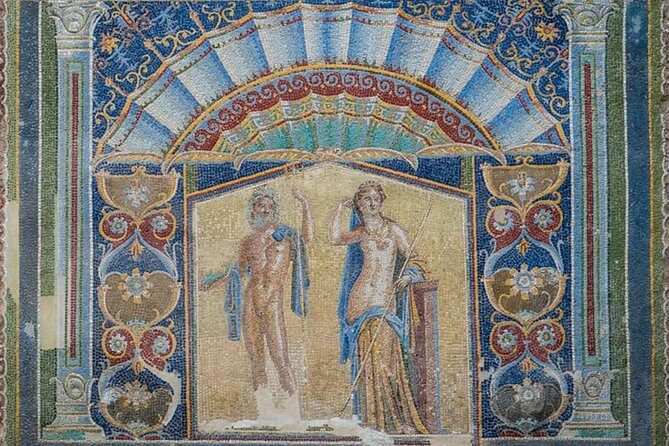
Then you shift to Casa di Nettuno e Anfitrite, where the star is a wall mosaic showing Neptune and Amphitrite. The guide draws attention to the blue-and-gold shimmer of tiny glass tesserae and places it within a larger decorative program tied to sea imagery.
This stop also shows how art and daily life blended: a private dining room and a richly decorated nymphaeum suggest hosting and impressing guests. You’ll also be directed to water channels and decorative details that make the house feel engineered for comfort and display.
Palestra and Women’s Baths: How Social Life Worked in Roman Spaces
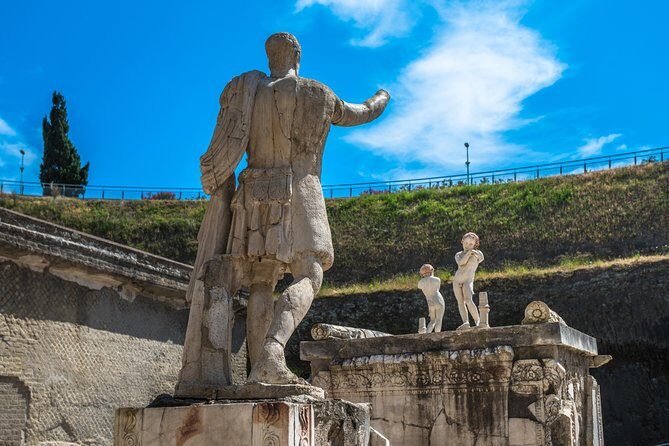
Herculaneum isn’t just about houses and tragedy. It also shows how people trained, chatted, relaxed, and showed identity.
Palestra
At the Palestra, your guide introduces it as a Roman sports and social club. You’ll see the open courtyard framed by porticoes and a scale that signals importance. The guide helps decode what the space meant: training, exercise, gatherings, and civic identity—not just workouts.
Women’s Baths
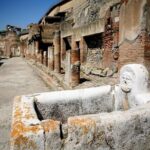
Then you’ll visit the Women’s Baths, where you can literally see Roman engineering doing its job. Expect to move through changing-room areas and into heated spaces. The details include hollow floors and wall pipes that carried hot air to warm rooms, plus marble benches and mosaic floors.
What makes this stop memorable is the tone your guide sets. It’s not just cleanliness. The baths look like a place for conversation and relaxation, with marine-themed decoration and refined patterns echoing everyday social life under vaulted ceilings.
Ad Cucumas and the Bicentenario House: Street Life, Commerce, and Written Records
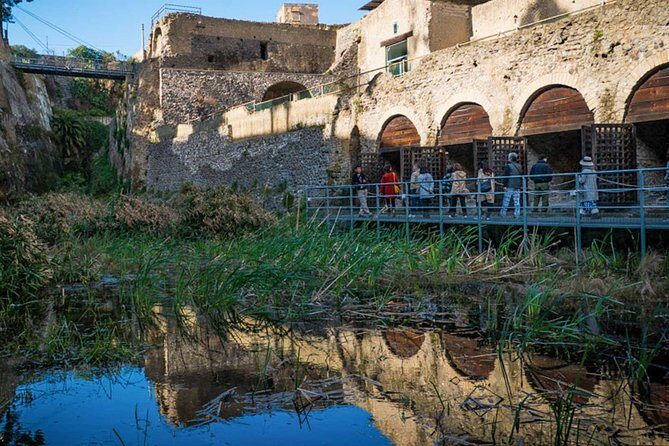
This section brings the tour closer to how a living town functions.
Ad Cucumas
Ad Cucumas is an ancient advertisement painted onto a tavern wall promoting wine by the jug. It even lists prices for different quantities. The fact that the text is still legible after two millennia makes it hit differently.
This stop gives you permission to notice street commerce in a way that archaeology often hides. Romans weren’t only building temples and villas. They sold, negotiated, and pulled customers in with signage.
Casa del Bicentenario
Casa del Bicentenario is one of the impressive townhouses, with vivid wall paintings, wooden partitions, and marble thresholds. There’s also a small shrine with delicate frescoes tied to domestic religion.
A particularly interesting detail here: excavations yielded carbonized wooden writing tablets connected to property and inheritance disputes. That’s rare evidence of the private legal side of Roman life, and your guide ties these household-level legal traces back to how the city functioned socially and administratively.
Sacello degli Augustali and Casa del Tramezzo di Legno: Power and Privacy
Two stops that feel very different, but both explain how Roman life had rules you could see in architecture.
Sacello degli Augustali
Sacello degli Augustali adds a political and religious layer. This small temple-like building was dedicated to the imperial cult, where local elites honored the emperor as a living symbol of Rome’s power. Fresco fragments connect Hercules with members of the imperial family.
Your guide helps you see what this means: Herculaneum wasn’t isolated. Local life had direct connections to the larger Roman system, and loyalty plus status were part of how people belonged.
Casa del Tramezzo di Legno
Casa del Tramezzo di Legno stands out because it preserves a wooden partition wall—carbonized and preserved almost like a fossil. This folding screen once separated reception from more private quarters.
That’s a huge storytelling tool. It gives you a physical explanation for privacy, hospitality, and social choreography: where guests were welcomed, where business happened, and where family life retreated.
You’re not just looking at rooms. You’re reading how people moved and who could see what.
Casa dello Scheletro: When the Tour Becomes Personal
Casa dello Scheletro, the House of the Skeleton, is the stop that tends to linger.
Inside, you encounter skeletal remains of a resident discovered there. That stark reality cuts through the beauty of mosaics and frescoes. Your guide helps you connect bones to surrounding architectural details like room divisions and decorative flooring—so you understand this wasn’t a set piece. It was a lived-in home interrupted.
If you want a tour that’s respectful and human, this is the moment that delivers it. It also gives the whole day an emotional ending that feels honest, not theatrical.
Optional Cantina del Vesuvio Lunch: Terroir and Terrestrial Views
If you want to break up the archaeological intensity with something lighter, the tour offers an optional add-on at Cantina del Vesuvio, a family-run winery set on Vesuvius’s slopes.
You’ll stroll through the vineyards with an enologist who explains how volcanic soils shape grape cultivation and native varietals used to produce the region’s Lacryma Christi wine. Then there’s a relaxed lunch and tasting, pairing local dishes with the estate’s bottles.
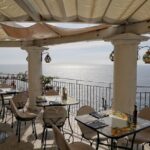
From the terrace, you get sweeping views across the Bay of Naples to the summit of Vesuvius. This is a great match for the day’s theme: how the same landscape that caused destruction later shaped farming and tradition.
Time: about 1 hour 30 minutes for the winery/lunch portion, and admission ticket inclusion is listed for the overall experience package for that section.
Price, Duration, and Who This Tour Fits Best
The price listed is $142.82 per person. At first glance, it’s not cheap. But here’s the value logic: this is a private guide experience focused on a site where interpretation really matters, and the tour includes an admission ticket for the Herculaneum portion. It’s also structured with optional transportation and an optional winery time, so you can scale your day.
Duration range
The tour is listed at 2 to 6 hours (approx.). In practice, that range usually reflects how long you spend in the park versus how much you add on with pickup/transportation pacing and the vineyard lunch option.
Best fit
This is a strong choice if you:
- want a more personal interpretation than a standard group tour
- care about daily life details (homes, baths, workshops, street commerce)
- want a calmer alternative to Pompeii’s crowd energy
- enjoy asking questions and staying longer in the most interesting rooms
Considerations
It involves moderate walking. Wear comfortable shoes. Also, the day can include emotionally heavy sections at the beach and boat-house areas, so bring the right mindset.
Should You Book This Private Herculaneum Tour?
Yes, if your priority is understanding Herculaneum as a living town, not just ticking off major ruins. This tour’s best advantage is how it uses a guide to connect tiny, human-scale objects—wooden partitions, waterfront artifacts, inscriptions, household items—into a coherent picture.
I’d especially book it if you’re the type who finds Pompeii too broad or too crowded. Herculaneum rewards slower attention, and private guiding is what lets you take that attention without feeling stuck.
If you want zero walking and a purely relaxed day, you might look for something shorter. But for most people who can handle moderate steps and uneven surfaces, this is one of the best ways to experience Herculaneum with real context.
FAQ
How long is the Private Herculaneum Tour?
It runs about 2 to 6 hours, depending on how much of the experience you include.
Is the tour private?
Yes. It is listed as a private tour/activity, meaning only your group participates.
Does the price include admission?
Admission tickets are included for the Herculaneum portion, and the winery add-on also lists admission ticket included.
Is pickup available?
Yes. There’s an option that includes private transportation with flexible pickup anywhere in Naples or Sorrento.
Where do we meet for the walking tour option?
If you choose the walking tour only option, you meet your guide at the archaeological site of Herculaneum.
Is the tour offered in English?
Yes, it’s offered in English.
How much walking should I expect?
The tour involves a moderate amount of walking. Comfortable shoes are recommended.
Can kids enter for free?
Yes. People under 18 with a valid ID enter for free.
Are service animals allowed?
Yes, service animals are allowed.
What’s the cancellation window?
You can cancel for a full refund up to 24 hours in advance. If you cancel less than 24 hours before the start time, the amount paid is not refunded.
If you want, tell me your travel dates and whether you’d add the winery lunch. I can suggest how to time it so the day doesn’t feel rushed.