REVIEW · NAPLES
Pompeii Vesuvius Wine Farm Tour
Book on Viator →Operated by city & tour soc coop arl · Bookable on Viator
Three stops, one volcanic story.
This Pompeii–Vesuvius–wine day tour is interesting because it stacks three very different kinds of experiences into one efficient route: walking through Pompeii’s streets, climbing up to the crater edge, and then slowing down with a wine tasting in the area around Vesuvius. I really like the private Mercedes pickup with air-conditioning, because it turns a long day into something you can actually enjoy. I also like that the tour handles the painful parts—tolls, parking, fuel, and taxes—so you’re not stuck doing logistics on your holiday.
There is one trade-off to think about: admission tickets are not included, and the driver does not escort you inside Pompeii or Vesuvius. That means you’ll need to manage ticket entry times yourself and bring your required ID.
In This Review
- Key highlights that matter
- Naples to Pompeii: how the private drive actually helps
- Pompeii Archaeological Park: what you should plan to see first
- Vesuvius National Park hike: getting to the crater edge
- Wine tasting in the Vesuvius area: slow down and make it count
- Mercedes comfort and included costs: where this tour earns its price
- Who should book (and who should rethink it)
- Quick day-trip logic: timing from Rome (if you’re doing it that way)
- Is the guide style right for you? (Driver only means more independence)
- Should you book this Pompeii, Vesuvius, and wine farm tour?
- FAQ
- How long is the Pompeii Vesuvius Wine Farm Tour?
- What is included in the price?
- Are admission tickets included?
- Do I need identification for Pompeii?
- How hard is the Vesuvius hike?
- Is there a guide with you inside Pompeii and Vesuvius?
Key highlights that matter
- Private Mercedes with a dedicated driver: comfortable, fast, and built for a long day
- Pompeii at your pace: you can focus on the Forum, House of the Vettii, amphitheater, and more
- Crater Trail hike (30–40 minutes): strenuous but doable for most people, with huge payoff at the top
- Active crater views: fumaroles and mineral-colored volcanic ground are part of the experience
- Wine tasting in Vesuvius National Park: a calmer finish after the walks
Naples to Pompeii: how the private drive actually helps
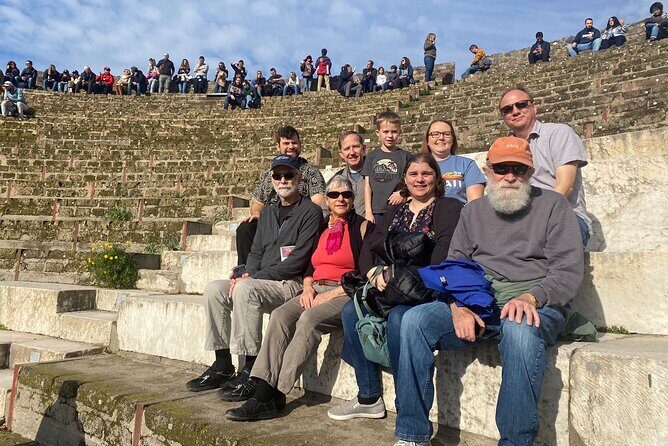
If you’re basing yourself in Naples, the toughest part of a day like this is often time and stress, not interest. This tour uses a private transportation setup: you ride in a Mercedes with a dedicated English-speaking driver and get live onboard commentary during the journey. That matters because the ride isn’t just “getting there.” You’re moving through landscapes and history while you’re still fresh, not exhausted from hunting buses, figuring out parking, or waiting in lines.
The vehicle is air-conditioned, and that’s not a small detail in southern Italy. Also, the tour includes the “extras” that usually add up—all tolls, parking fees, petrol (gas), and taxes—so you won’t get surprised mid-day by separate charges.
One small practical note: it’s a private tour, so it runs only for your group. That typically means fewer delays, and it also gives the driver flexibility. In one past trip, the driver GianLuca even adjusted the order of the day so the group could climb Vesuvius earlier.
You can also read our reviews of more wine tours in Naples


Pompeii Archaeological Park: what you should plan to see first

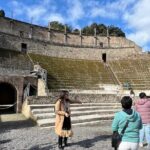
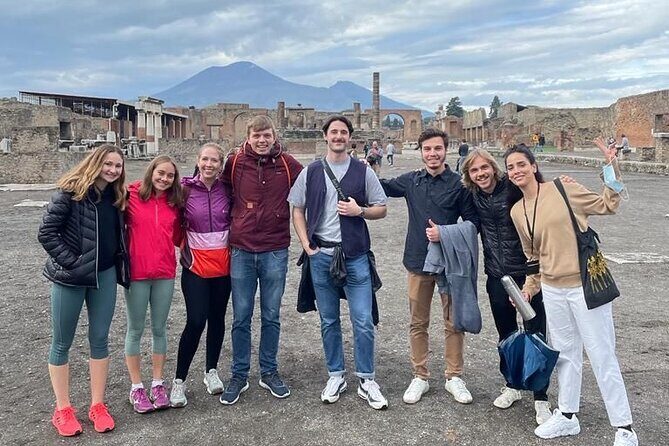
Pompeii is one of those places where the scale can feel unreal at first. The good news here is that you’re not rushed by a group guide herding you every few minutes. You’ll spend about two hours in Pompeii at your leisure, and you’ll have time to target the highlights you care about.
Here are the big stops you’ll want to prioritize:
Pompeii Forum
This is the political, economic, and religious heart of the city. It’s a smart starting point because so many other streets and buildings connect back to this center. You’ll also spot major landmarks around it, including the Temple of Jupiter and the Basilica. The Forum helps you understand Pompeii beyond individual ruins—it gives you orientation.
House of the Vettii
If you love interiors and decoration, this is one of the strongest choices. It’s known for preserved frescoes and luxurious decoration, and seeing something like this helps you picture daily life in a way that open-air stone ruins alone can’t do.
Pompeii Amphitheater
This amphitheater dates to 70 BC, and it’s where gladiator fights took place. Even if you don’t care about Roman entertainment, it’s a great visual lesson in how public spaces worked: crowds, entrances, sightlines, and the city’s social rhythm.
Lupanar
This is an ancient brothel, and the mention of erotic frescoes is exactly why it stands out. It’s not everyone’s favorite subject, but it’s also why Pompeii feels real: it shows the city’s everyday messiness, not just its official buildings.
Stabian Baths
Public baths were a major part of Roman life, and the Stabian Baths include hot and cold bathing areas and pool spaces. This is also a good “break” stop because you’re walking through rooms and courtyards rather than only moving down long streets.
Teatro Grande (and theater area)
You’ll also have time around the main theater area, which adds another layer to how Pompeii functioned culturally.
Two practical tips that can save you real time:
1) Tickets and entry timing are on you. The admission fee is not included, and you must coordinate your entrance time in Pompeii before buying tickets.
2) Bring your ID. An identity card is required to enter the site.
Vesuvius National Park hike: getting to the crater edge

After Pompeii, you switch gears from ancient streets to active geology. Vesuvius is one of the rare places where the scenery feels both dramatic and intimate—your whole day becomes about elevation.
The hike is on the Crater Trail, and it typically takes 30–40 minutes. It’s described as strenuous but accessible to all, which is exactly the kind of language that helps you plan. If you can handle a steady climb with breaks, you’re likely fine. If you have mobility issues or you get winded easily, you might want to reconsider the hike or plan a slower pace (you’ll also want appropriate footwear).
Along the way, the views start showing up early: Naples, and on clearer days you may see the Amalfi Coast and even the islands of Capri and Ischia. The top is the payoff. At the crater edge, you can observe the active crater and see fumaroles—those escaping gases from the volcanic system. The volcanic soil can change color depending on mineral composition, which is a neat detail because it signals how active and varied the ground really is.
You’ll also spend about two hours in the Vesuvius National Park area overall, which gives you time to climb, catch your breath, and take in the Gulf of Naples panorama without feeling glued to your watch.
Weather matters here. The tour operates in all weather conditions, so dress for wind and changing temps. The “smart casual” dress code is a baseline, but on Vesuvius you’ll feel layers and shoes more than you’ll feel outfits.
Wine tasting in the Vesuvius area: slow down and make it count

The last act is the wine farm tasting, set in a winery in or around Vesuvius National Park. You’ll appreciate this stop if you like travel days that don’t end with another museum task. After walking Pompeii and climbing Vesuvius, a tasting is a chance to sit, breathe, and talk with someone who knows what grows here.
The big thing I’d point out: lunch at the wine farm isn’t included. That doesn’t mean you’ll go hungry, but it does mean you should plan for food costs separately. If you’re the type who needs a solid meal to enjoy wine, consider bringing a snack earlier in the day or budget for an on-site lunch option.
Because the tasting is the final highlight, it’s also where you can get the most practical value. You’ll usually leave with a better sense of what the local vineyards focus on, and how the volcanic environment can influence the character of the wines. Even if you’re not a “wine person,” the setting alone is worth it—Vesuvius views plus a glass in your hand tends to reframe the whole day.
Mercedes comfort and included costs: where this tour earns its price
At $254.50 per person for about 8 hours, you’re paying for private transport plus the time savings of not dealing with driving, parking, and fuel. You’re also paying for the small comforts that matter when your day is packed: air-conditioned Mercedes, live commentary while you ride, and a driver who stays with you for the transfer segments.
Here’s how I think about value with a tour like this:
- You’re not paying separate fees for the logistics of getting from Naples to Pompeii and up to Vesuvius. The tour includes the tolls, parking, fuel, and taxes.
- You’re buying convenience around timing and movement, which is often the real cost of “cheap” group options.
- You still get personal control where it counts: Pompeii is at your leisure, and the hike is independent once you start walking.
You do pay for some “you’ll handle it” tasks: admission fees aren’t included, and there’s no guide escort inside the sites. If you love having someone explain every detail of Roman architecture, you might consider the optional Pompeii tour guide mentioned as an add-on. If you’re more of a read-and-look type, you can still have an excellent day with your own pace.
You can also read our reviews of more tours and experiences in Naples


Who should book (and who should rethink it)
This tour is best for people who want a one-day hit of Pompeii plus Vesuvius, without the headache of driving and parking. If you like structure but still want freedom inside the sites, it fits nicely.
You’ll probably love it if:
- you want a private day trip rather than squeezing into shared groups
- you can handle a 30–40 minute uphill hike at a strenuous pace (with breaks as needed)
- you prefer to move through big sights efficiently, then relax with wine at the end
You might rethink it if:
- you rely on step-by-step guided escort inside Pompeii (the driver does not guide you during visits)
- you don’t want to manage admission tickets and required ID yourself
- you’re very sensitive to long walking times and steep terrain around the crater trail
The tour is described as suitable for most travelers, and that usually means the hike isn’t a technical climb. Still, Vesuvius is uphill and can be demanding on tired legs after Pompeii.
Quick day-trip logic: timing from Rome (if you’re doing it that way)
If you’re coming from Rome, the operator suggests taking the Freccia Rossa Fast Train from Rome Termini at 7:35 am to Naples Centrale at 8:45 am, then getting picked up directly at the Naples train station. At the end of the day, you drive back to Naples in time to catch a train back to Rome (they suggest one departing around 6:30 pm).
That’s useful because it tells you the day is designed to be paced like a true round trip, not a leisurely scatter day. If trains are tight on your side, double-check your exact times and aim for buffer.
Is the guide style right for you? (Driver only means more independence)
One detail that changes the feel of the day: the driver provides live onboard commentary during the drive, but you don’t have a guide escort inside the attractions. That means you get flexibility, but you also take responsibility for your own on-site navigation and interpretation.
For Pompeii, this often comes down to what you want. If you want someone to point out what to notice in each section, you might prefer adding a Pompeii archaeological tour guide. If you’re happy using your own pace and focusing on the key highlights (Forum, House of the Vettii, amphitheater, and baths), you’ll do fine.
For Vesuvius, the hike is more about the walk and the views, so the lack of an escort guide is usually less of an issue. For wine tasting, you’ll likely talk with winery staff directly in a relaxed setting.
Should you book this Pompeii, Vesuvius, and wine farm tour?
Book it if you want a high-peak day: Pompeii’s main anchors, a real crater hike, and a calm wine tasting finish—without the stress of driving. The included transport costs and the air-conditioned private ride are a big part of the value at this price point.
Maybe skip it (or add a Pompeii guide) if you strongly prefer fully guided site interpretation, because the driver stays as your driver, not your museum guide. Also be sure you’re comfortable managing admission tickets and bringing required ID.
If you’re excited by the idea of going from Roman streets to an active volcanic view in one day—and ending with wine—this tour has a great flow.
FAQ
How long is the Pompeii Vesuvius Wine Farm Tour?
It’s listed as about 8 hours. The Pompeii stop is around 2 hours, and the Vesuvius National Park time is also about 2 hours, with driving and the rest of the day filling out the schedule.
What is included in the price?
The tour includes private transportation, live onboard commentary, an air-conditioned vehicle, and all tolls, parking fees, petrol (gas), and taxes. Admission fees and lunch at the wine farm are not included.
Are admission tickets included?
No. Admission fees for Pompeii Archaeological Park and Vesuvius National Park are not included, and you’ll need to coordinate the Pompeii office entrance time before buying tickets.
Do I need identification for Pompeii?
Yes. An identity card is required to enter the Pompeii site, so bring your ID with you on the tour day.
How hard is the Vesuvius hike?
The Crater Trail climb takes about 30 to 40 minutes. It’s described as strenuous but accessible to all, so you should be prepared for an uphill walk.
Is there a guide with you inside Pompeii and Vesuvius?
No. The driver is provided, but there’s no guide escort during visits to the attractions. A Pompeii archaeological tour guide is optional.