REVIEW · NAPLES
Pompeii ruins and the city of Naples with private transportation
Book on Viator →Operated by Askos Tours · Bookable on Viator
Pompeii feels personal when someone explains it. This private day combines skip-the-line Pompeii entry with a guide who turns stones into daily life, plus a focused Naples walk that you can actually do in one day. I also love the private transportation part: you spend less time figuring out trains or parking and more time seeing. The one thing to watch is that the details around Pompeii admission and lunch cost don’t fully match in the provided info, so I’d confirm what you’re meant to pay on the day.
What makes this tour especially good is the human touch. In one example, Julia (an archaeologist who has worked at Pompeii and has led tours for about a decade) brings the 79 AD story to the level of people, routines, and social rules, not just dates. Your day is built for moderate walking and steady viewing, with comfort tips for shoes and hot-weather basics—because Pompeii doesn’t care about your schedule.
In This Review
- Key moments worth planning for
- Private minivan pickup: your day starts without stress
- Porta Marina entry and Pompeii at guided pace
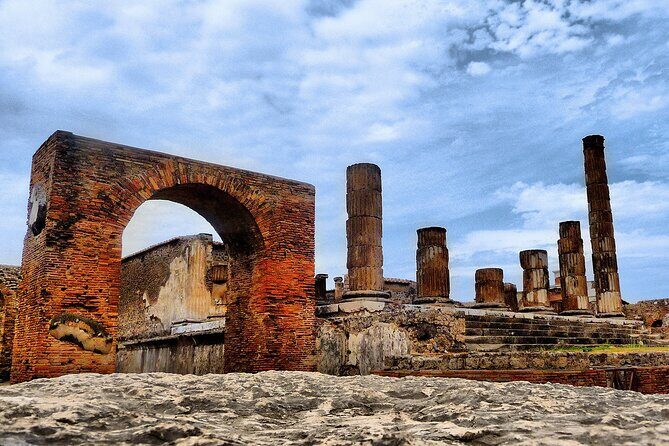
- Inside Pompeii: forum, baths, brothel, and famous houses
- From Pompeii to Naples: panoramic time and a lunch stop
- Centro Storico highlights: Gesù Nuovo, Santa Chiara, and Spaccanapoli
- Duomo di Napoli and Sansevero Chapel Museum: faith and art in one day
- Price and value: what $605 buys you
- Practical tips for a comfortable 7-hour day
- Should you book this Naples and Pompeii private tour?
- FAQ
- How long is the Naples and Pompeii private tour?
- Where can the driver pick me up?
- Is there skip-the-line entry for Pompeii?
- Is lunch included?
- What language is the tour guide?
- Are children allowed on this tour?
Key moments worth planning for
- Skip-the-line Pompeii entry at Porta Marina: You enter from the main entrance called Porta Marina, saving time so you can focus on the ruins.
- A guided Pompeii route that hits the city’s “everyday” spots: baths, the forum area, major houses, and theaters.
- Naples Centro Storico in a tight loop: Baroque façades, Gothic church contrast, and Spaccanapoli on a walk-through route.
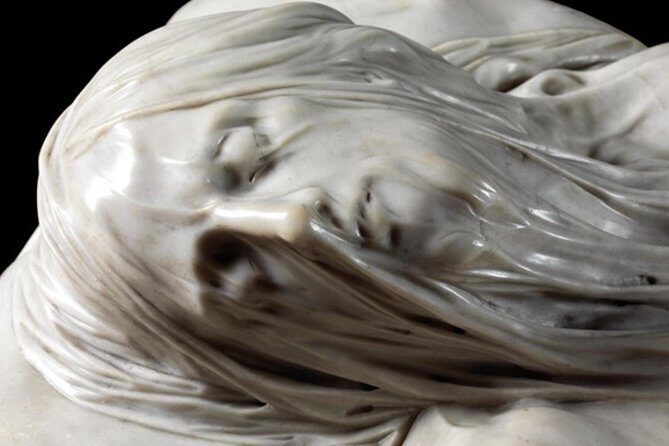
- Sansevero Chapel Museum stop: You’ll have time for the famed Veiled Christ.
- Private minivan logistics: Pickup from ports in Campania, hotels, or other accommodations keeps your timing sane.
Private minivan pickup: your day starts without stress
This is one of those tours where the transport plan matters as much as the sights. You’re picked up by a driver with a name sign, and pickup can happen at any port in Campania, your hotel, or other accommodation. That’s a big deal if you’re arriving by cruise or if you just want to stop thinking about logistics the moment you step outside.
The vehicle is a modern minivan, and the tour runs for about 7 hours total. You’ll also have a driver plus guidance and assistance from a professional guide for the whole day. Translation: you’re not just watching a slideshow through headphones. You’re moving between places with someone handling timing and narration while you focus on seeing.
It’s also a good format for pacing. Pompeii is dense, Naples is busy, and you’ll be on your feet for multiple short visits. This tour’s structure breaks the day into bite-size stops, so you’re not stuck in one place for ages while others wait behind you. For this kind of day, that “small stop, explain, move on” rhythm is what keeps it from becoming exhausting.
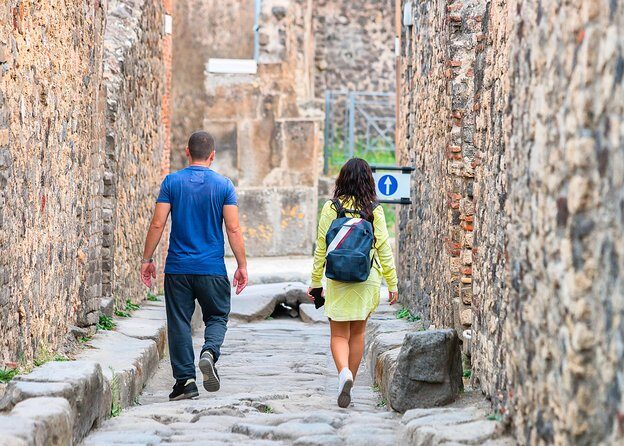
Practical note: the tour asks for moderate physical fitness and suggests comfortable shoes, plus summer essentials like hat, sunscreen, and water. That’s not just boilerplate—Pompeii’s surfaces can be uneven, and Naples streets add their own flavor of cobbles and slopes.
You can also read our reviews of more city tours in Naples


Porta Marina entry and Pompeii at guided pace
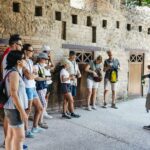
Pompeii is famous. That can be a problem, because it’s easy to show up and just feel wowed for five minutes—then mentally drift. The guide is the antidote. One guide example is Julia, an archaeologist who has worked at Pompeii and led tours for years. Her specialty isn’t just pointing at walls; it’s helping you picture what these spaces meant to real people.
The other major time-saver is skip-the-line admission. Instead of losing the best part of your day to queue anxiety, you get to enter from the main entrance called Porta Marina. That matters because Pompeii is most rewarding when you’re there early enough to keep your attention sharp.
Right away, you get into a “read the city” mode. The stops are designed like a map. You move from sheltered civic-commercial spaces to market/storage areas, then into the forum and main street, and later to baths, entertainment, and wealthy homes. You’ll also hear about daily life and social norms—things like how public spaces were used and how different parts of town connected.
Also, be aware of a small information mismatch in the details you were given: one part says Pompeii admission ticket isn’t included, while the package details list Pompeii admission fees as included. It’s usually a straightforward matter once you have your confirmation, but I’d still double-check before you go so you’re not hunting for a payment at the gate.
Inside Pompeii: forum, baths, brothel, and famous houses
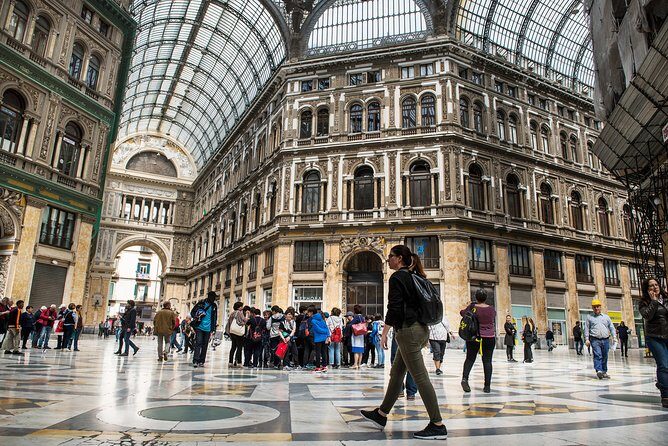
The Pompeii portion is where you’ll feel the most value per minute. This route hits spots that cover major sides of Roman life: public gatherings, water and health, entertainment, status, and even the darker corners.
Here’s how the main sequence plays out:
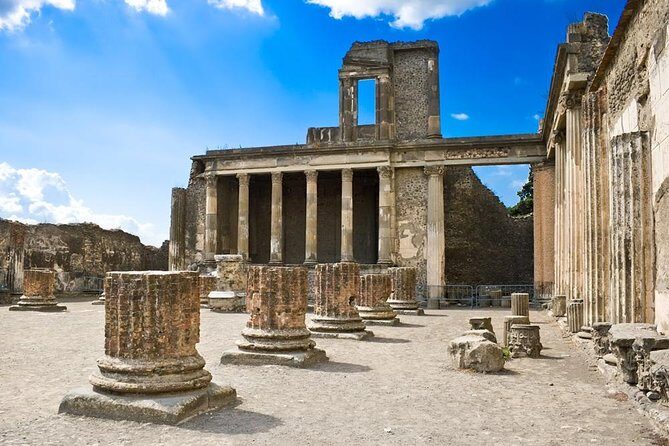
Basilica (open portico concept, merchants and activity)
You’ll spend about 15 minutes at the basilica area—described as an open portico that gave shelter to merchants and other activities. That description is important. It reframes what you’re seeing from architecture-only to “this is where people traded, negotiated, and waited.”
Granai del Foro (storage, marble tables, fountain basins, and casts)
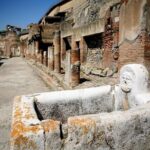
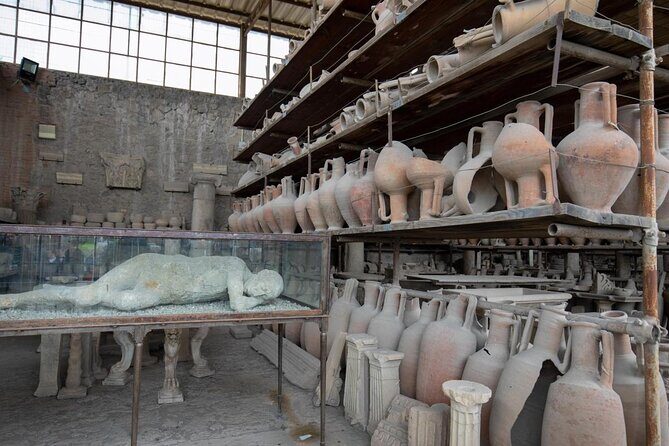
Another short stop (around 15 minutes) takes you to the granaries of the forum. You’ll see marble tables and baths for fountains that adorned entrances to houses, plus casts of victims of the eruption and even a dog and a tree. Even if you’re not usually into museum-style exhibits, this kind of detail helps you feel the human scale of the site.
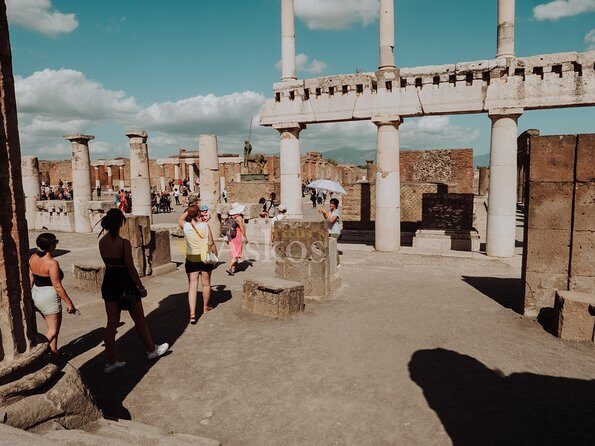
Forum (main square viewpoint)
Then you’ll look at the main square, the forum, for about 10 minutes. It’s brief by design, but the forum is the anchor. Once you understand it as the civic heart, the rest of Pompeii makes more sense.
Walk through the main street
You’ll also walk through the main street (no exact minute count listed, but it’s part of the guided flow). This is one of those moments where you start to understand streetscape and movement—where people walked and how neighborhoods felt connected.
Stabian Baths (Terme Stabiane, oldest thermal complex)
Next comes the Stabian Baths, roughly 15 minutes. These baths sit in a wide area and are described as representing the oldest thermal complex in Pompeii. Baths were not just about washing. They were social spaces, routines, and community time. Seeing a large thermal complex in context makes it easier to imagine the day-to-day rhythm.
Lupanar (Pompeii’s famous brothel)
Another 15-minute stop is the Lupanar, the most famous brothel in the ruined Roman city of Pompeii. It’s a tough subject, but it’s also part of why Pompeii feels real. You’ll see how entertainment and commerce overlapped with social life.
Casa del Fauno (House of Faun, one of the biggest private residences)
You’ll spend about 15 minutes at the Casa del Fauno. It’s noted as one of the largest and most impressive private residences in Pompeii. This is where the tour shifts from public and shared spaces to the private world of wealth.
Casa del Menandro (rich architecture and decoration)
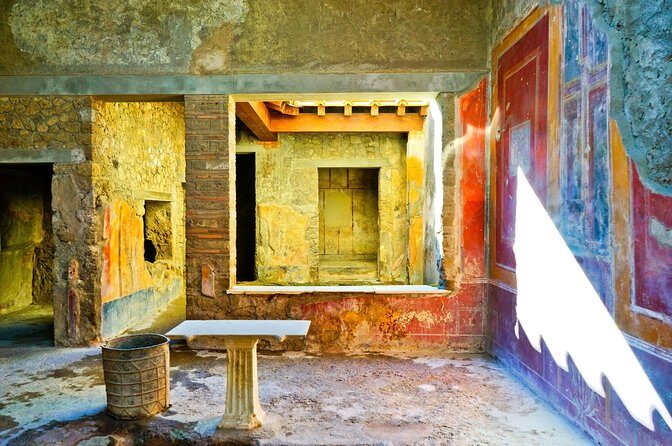
Another roughly 15 minutes at the Casa del Menandro, described as one of the richest and most magnificent homes in Pompeii for architecture, decoration, and contents. If you like when guides explain how wealth showed up in daily life—courtyards, layout, and details—this stop is a big payoff.
Teatro Piccolo and Teatro Grande
You’ll also look at the so-called Teatro Piccolo, and then visit the Teatro Grande (about 10 minutes). The Teatro Grande is described as the most important theater in Pompeii. Even in a short visit, it’s easier to connect this to Roman public culture when you’ve already walked the forum and main street.
The overall benefit here is clarity. You’re not bouncing randomly. You’re seeing how Pompeii’s city layout created different kinds of experiences—work, worship and shelter, storage, social life, and status.
From Pompeii to Naples: panoramic time and a lunch stop
After Pompeii, you’ll head back toward Naples by private vehicle. The plan includes a transfer to Naples and a panoramic tour of the monumental quarter and the seaside. That is a smart sequence, because it changes your mental gear: Pompeii is ruins and detail, while Naples feels like living city energy.
You’ll also stop for about 1 hour for lunch in a traditional pizzeria in the historic center. Here’s the practical catch: lunch itself is listed as not included in the price. So treat this as time to eat and reset, not a free meal.
In my opinion, that lunch stop is still worth keeping in the itinerary. One-hour meals in an intense day like this can be the difference between happily continuing and feeling wrecked by mid-afternoon. It also gives you a taste of a normal Naples rhythm: you’re not just doing museums and churches, you’re eating where people actually go.
Centro Storico highlights: Gesù Nuovo, Santa Chiara, and Spaccanapoli
Once you get into the historic center, the tour becomes very walk-focused. You’ll pass through areas where architecture does a lot of the talking, and the guide helps you connect what you see to what the city has been doing over centuries.
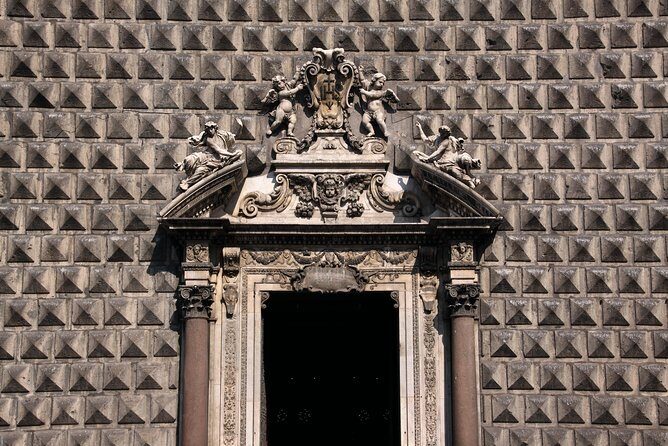
Piazza del Gesù Nuovo (Baroque church experience)
You’ll spend about 20 minutes at Piazza del Gesù Nuovo, focusing on the church of Gesù Nuovo. The description is very specific: a Baroque example with a unique façade using diamond-shaped ashlar, plus beautiful interiors in marble. This is one of those stops where you’ll get more from the guide’s pointing than from just staring, especially if you’ve never studied Baroque before.
Complesso Monumentale di Santa Chiara
Next is about 20 minutes at Santa Chiara. It’s described as one of Naples’ most beautiful and beloved churches, in a walled, citadel-like complex. The key detail: it’s described as a rare example of the city’s austere Gothic history, and a pleasant contrast to the many churches that were heavily ornamented during the Baroque era. Translation: you get variety instead of seeing the same style back-to-back.
Spaccanapoli (the spine street)
You’ll also walk along Spaccanapoli, about 20 minutes. The name is explained as meaning Naples splitter, because the street seems to divide the city when viewed from above. It’s a practical stop too. Spaccanapoli is like a backbone street, and walking it helps you understand the historic center’s scale without needing maps every five minutes.
If you like cities that reward you for walking, this part is a good match. If you’re the kind of traveler who wants only one or two big-ticket sights, you might feel slightly rushed—but the stop lengths are short enough to keep you from feeling trapped.
You can also read our reviews of more private tours in Naples






Duomo di Napoli and Sansevero Chapel Museum: faith and art in one day
The tour continues with more landmark-weight stops, mostly in the “eyes-on” category.
Duomo di Napoli (14th-century French Gothic, San Gennaro)
You’ll visit the Duomo di Napoli for about 20 minutes. It’s described as a 14th century French Gothic church built by the Angevins and seat of the Naples Archdiocese. The stop also includes notes about the crypt and the chapel of San Gennaro, plus the festival where a blood liquefaction ceremony happens three times a year. Even if you’re not there on festival days, this detail helps you understand why the Duomo matters beyond architecture.
Basilica di San Lorenzo Maggiore (near Via San Gregorio Armeno)
About 15 minutes at San Lorenzo Maggiore. The description says its history is complex and that it’s one of the most fascinating churches near Via San Gregorio Armeno. The point here isn’t length; it’s that the guide gives you a sense of layers rather than just a quick look.
Museo Cappella Sansevero (Veiled Christ)
Finally, you’ll head to the Museo Cappella Sansevero for about the time set aside on the day (it’s listed as a stop, with emphasis on the museum and its masterpieces). The big name you’ll associate with this place is the Veiled Christ. The tour description calls the chapel museum a jewel of the world’s artistic heritage. Even if you’ve seen photos before, seeing it in person tends to feel more believable than an image ever will.
Price and value: what $605 buys you
At $605.07 per person, you’re paying for convenience, a private format, and a guided route that spans two major destinations. That’s not a cheap day, so it helps to judge value based on what you avoid:
- You’re avoiding long lines at Pompeii thanks to skip-the-line admission.
- You’re not coordinating trains or hiring multiple transport pieces.
- You have a guide for the full duration, including commentary that helps you connect the stops into one story.
The private aspect matters here. Pompeii can be overwhelming, and Naples on foot can feel chaotic. A guide can tighten your focus so you don’t waste time figuring out what matters.
Also, the tour is offered in English and includes confirmation at booking, with a mobile ticket. Children must be accompanied by an adult, and service animals are allowed.
If you’re traveling as a couple, friends, or a small group who likes structured days, this price starts to make more sense. If you’re a solo budget traveler who enjoys piecing things together, you might find cheaper options—but you’d be trading away the time-savings and the guided explanations that make Pompeii click.
Practical tips for a comfortable 7-hour day
A day like this is won or lost before you even reach Pompeii. Here are the details from the tour plan that will actually help you:
- Wear comfortable shoes. You’re walking through multiple Pompeii zones and then through Naples streets and church areas.
- Bring water, sunscreen, and a hat in summer. Pompeii plus Naples sun can be a lot.
- Plan for short stops. Most Pompeii viewing segments are 10–15 minutes. That’s great for attention, but you’ll want to pace yourself and not get stuck photographing one doorway for 45 minutes.
- Be ready for layers of culture. You’ll move from ruins to Baroque façades, then Gothic contrast, then major art in the Sansevero chapel. It’s a full menu.
- Confirm what’s included for Pompeii admission. The package notes Pompeii admission fees are included, while the first stop description says admission ticket not included. Your booking confirmation should clarify.
- Lunch is on you. The tour includes time for a traditional pizzeria lunch stop, but lunch is listed as not included.
If you do these basics, the day feels like a smooth guided sprint—not a stressful race.
Should you book this Naples and Pompeii private tour?
Book it if you want a one-day combo that doesn’t require you to manage transport, lines, and a messy itinerary on your own. You’ll especially like it if you care about Pompeii as more than ruins—because the guide-led route is designed to help you map the city and understand everyday life. Julia’s background as an archaeologist is a perfect example of the kind of explanation that makes Pompeii stick.
Skip it (or look for alternatives) if you know you want extra time in Naples by itself, or if you’re hoping for a slower, longer Pompeii day. This is a tight, well-managed 7-hour plan, and that’s a feature for many people—but not everyone.
If your priority is to see the big Pompeii highlights plus key Centro Storico landmarks without wasting hours getting there, this is a strong match.
FAQ
How long is the Naples and Pompeii private tour?
It’s about 7 hours.
Where can the driver pick me up?
Pickup is offered at any port in Campania, your hotel, or other accommodation. The driver meets you holding a sign with your name.
Is there skip-the-line entry for Pompeii?
The tour highlights skip-the-line admission to Pompeii. Pompeii admission fees are listed under what’s included, but the Pompeii stop details also mention admission ticket not included—so it’s smart to confirm in your booking details.
Is lunch included?
No. Lunch is not included, even though the day includes a lunch stop in a traditional pizzeria in the historic center.
What language is the tour guide?
The tour is offered in English.
Are children allowed on this tour?
Yes, but children must be accompanied by an adult.