REVIEW · NAPLES
Pompeii private small group tour – 4 hours including transfers
Book on Viator →Operated by A DRIVE INTO THE BLUE · Bookable on Viator
Pompeii is famous for a reason. A private, small-group half-day from Naples makes it practical, not stressful. I like that you get door-to-door transfers and a private feel without losing the structure that helps you see the big stuff fast.
The biggest win is the time at the site. You’ll have about two hours in Pompeii itself, plus targeted stops like the Forum, baths, and theater—so you’re not just wandering randomly. If you choose the guide option, you also get a professional licensed guide in English.
The one drawback to plan for: a half-day moves quickly. If you’re hoping for a full, slow Pompeii day, this route may feel like too little time for a deep look, especially once you’re inside.
Key things you’ll like about this Pompeii tour
- Pickup from your accommodation or cruise port keeps the day easy
- About two hours on-site for Pompeii is a good pace for a half-day visit
- Stops are arranged around the classics: Forum, Basilica, Lupanar, Teatro Grande, baths, and a house
- Bottled water is included, so you’re not scrambling for essentials
- Private small-group setup means less waiting and more flexibility
- Guide is optional—choose it if you want strong context for what you’re seeing
In This Review
- Naples Pickup to Pompeii: the value of starting smoothly
- Pompeii in about two hours: how the highlights fit together
- Foro, Basilica, and Lupanar: civic power and everyday tells
- Teatro Grande, Stabian Baths, and a Pompeii house: leisure, health, and status
- Pace and group size: what a private half-day actually feels like
- Price and value: what you’re paying for and what to check
- Should you book a private Pompeii half-day from Naples?
- FAQ
- How long is the Pompeii private small group tour from Naples?
- What time do you get picked up?
- Where does pickup happen?
- Is the tour private?
- Is an entry ticket included?
- Is a guide included?
- What’s included in the cost?
- What should I wear?
- Is cancellation free?
- What should I bring for food?
Naples Pickup to Pompeii: the value of starting smoothly
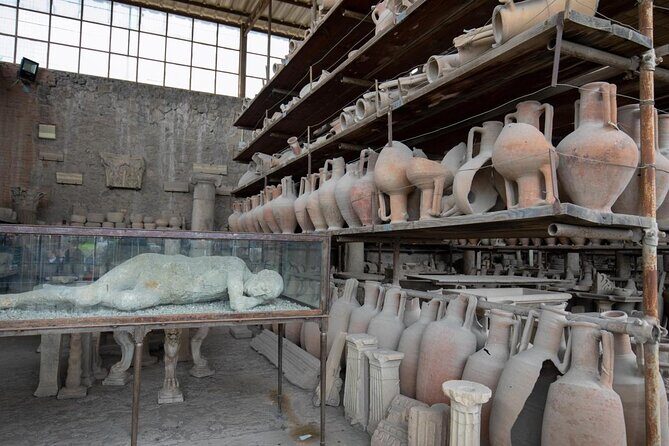
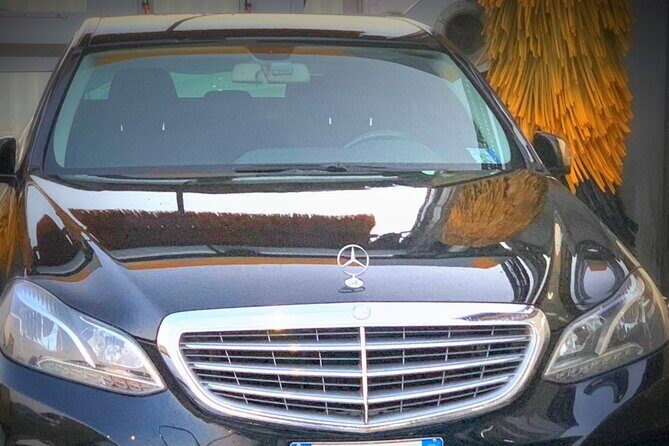
A Pompeii day can fall apart before you even reach the ruins. Traffic, parking, and the “where do we meet?” scramble are real. This tour is built to avoid that. You’re picked up from your accommodation or your cruise docking area, then driven to the Pompeii entrance.
The pickup window is early, around 8:00–8:30 am. That matters. Earlier arrival usually means you can get into the flow of the site with less pressure, and you’re more likely to enjoy those key areas without feeling rushed the second you step out of the car. Also, having a driver handle the logistics is a relief if your day is tied to a cruise schedule.
Another practical touch: bottled water is included. Pompeii is a lot of walking on stone and uneven surfaces, and half-day tours make every minute count. You’ll still want a light plan for snacks and personal needs, but at least you won’t start dehydrated.
If you’re planning a cruise-day excursion, this kind of arrangement is especially helpful. One traveler highlight mentioned a pickup that worked smoothly right at the port, but the practical tip was to leave the cruise terminal area rather than waiting right outside the ship to avoid confusion. That’s exactly the kind of detail that saves time.
Pompeii in about two hours: how the highlights fit together
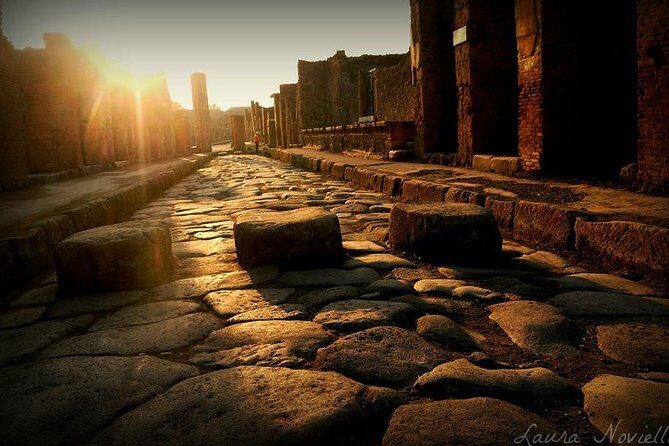
Pompeii is layered. You’re not just seeing ruins—you’re seeing daily life frozen under ash. The short, guided-style layout is designed for first-timers who want the core experience without spending a full day.
Here’s what the Pompeii time usually looks like. You arrive at the entrance and then either:
- you buy your entry ticket and explore on your own, or
- you meet your licensed English guide and go through the site with commentary.
Either way, your time on the ground is about two hours. That sounds short until you realize the tour stops are focused on the most recognizable “anchor points” of the city. You’ll see how the city worked in real life: civic space, law and business, entertainment, bathing, and domestic life.
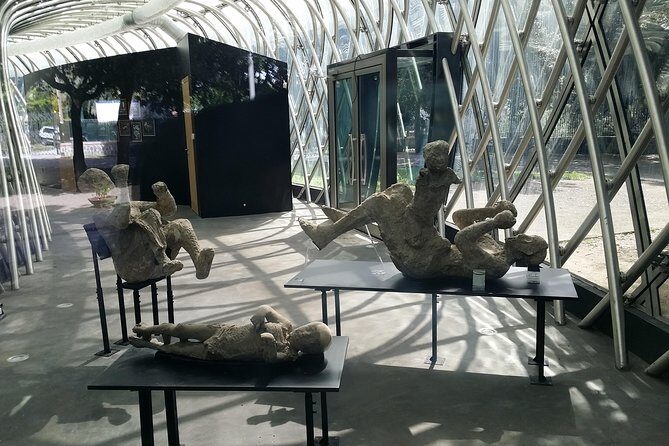
A key context point worth keeping in mind while you walk: Pompeii began around 600 B.C., grew with Greek and Etruscan roots, and became a major Roman city. Then on August 24, A.D. 79, Vesuvius erupted and buried the city under roughly 30 feet of volcanic ash. Because the burial was so complete, what remains is unusually clear. You get a sharp window into what middle-class Roman life looked like—daily routines, public buildings, leisure, and work all sitting in the same place.
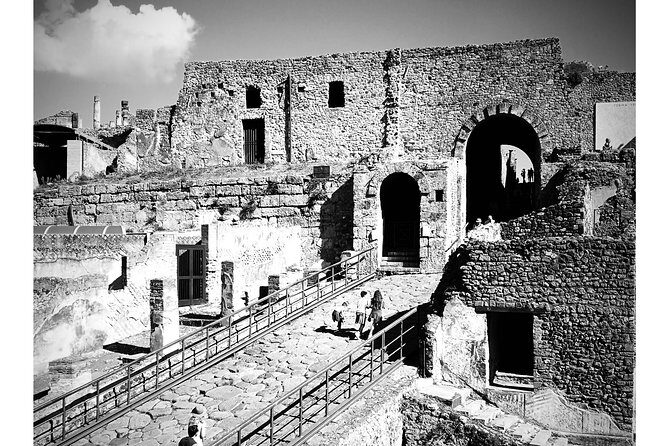
During your visit, don’t treat it like a museum hallway. Look for layout. Pompeii’s power is spatial: where people gathered, where commerce happened, where laws were discussed, where people bathed, and where entertainment drew crowds. With only two hours, your best move is to keep moving, then slow down at the big set-piece areas.
One more tip from real-world pacing: if your arrival is early, you may get a moment to grab a coffee before the site fully opens. It’s a small comfort that can make the start feel calmer. Just remember: once you’re inside, you’ll want to stick to the route so you don’t lose track of time.
You can also read our reviews of more private tours in Naples



Foro, Basilica, and Lupanar: civic power and everyday tells

This is where Pompeii starts to feel like a lived-in city rather than a pile of stones. Your route hits the main square, the law-and-business center, and then the darker-but-historically important corners of urban life.
Foro de Pompeya (main square) is the city’s public heart. It’s where civic life and the “who’s in charge” energy met commerce and political-religious activity. Even without a long stay, it helps you understand Pompeii’s social structure. Roman towns weren’t just homes and roads. They were built around public spaces that kept people connected.
Next is the Basilica, described as the seat of law courts and one of the biggest business points. It’s also tied to how later Christian churches were modeled. That’s a helpful mental link: you’re seeing a building type that influenced what came later, not just a stand-alone ruin.
Then comes a stop that often surprises first-timers: the Lupanar, Pompeii’s brothel. It’s not for everyone, but it’s historically significant. It’s also a reminder that Roman cities had all the same human variety you’d find today—jobs, pleasures, and services that modern visitors don’t always expect in a “holy vacation” setting. When you see it on a short tour, just keep your expectations realistic: you’re getting the key idea more than a long, private reflection.
Timing for these stops is short—think about minutes, not long museum-style pacing. The upside is that you’ll move through major “zones” without getting tired. The trade-off is that questions you’d want to ask might have to wait.
Teatro Grande, Stabian Baths, and a Pompeii house: leisure, health, and status
This is the fun part of Pompeii, because it shows how people relaxed and how they displayed social position.
Teatro Grande is a big one. It’s a Greek-Roman theater that could seat about 5,000 people. Even if you’re not a theater person, this stop is worth it because it shows scale. Pompeii wasn’t small and remote. It was a real community with entertainment infrastructure.
Then you hit the Stabian Baths (Terme Stabiane). This spa complex is famous for its set of pools:
- frigidarium (cold water)
- tepidarium (warm water)
- caldarium (hot water)
That’s a practical detail to watch for as you walk. In a short visit, you might think “okay, baths.” But if you notice how the temperature zones work, you understand bathing as a routine, not a single dip. Pompeians treated bathing like a daily or social activity—part health, part social time.
Finally, Casa del Menandro gives you a snapshot of domestic life. It’s a typical example of what a wealthier Pompeian home looked like. In other words: you’ll see how class differences translated into space and architecture. This stop helps you link what you saw in public buildings to what played out behind doorways.
A note on how these stops work in real time: your tour is built so you won’t lose energy. You’re not stuck in one place for too long. You get a sequence—entertainment, bathing, home—so your understanding fills in quickly.
If you have the option for a guide, this is the part where commentary can pay off. Architecture and everyday routines are easier to interpret when someone connects the dots for you. A few people in the feedback you provided singled out drivers like Antonio (and also Toni) for making the journey and the highlights clearer, which is exactly what you want when time is tight.
Pace and group size: what a private half-day actually feels like
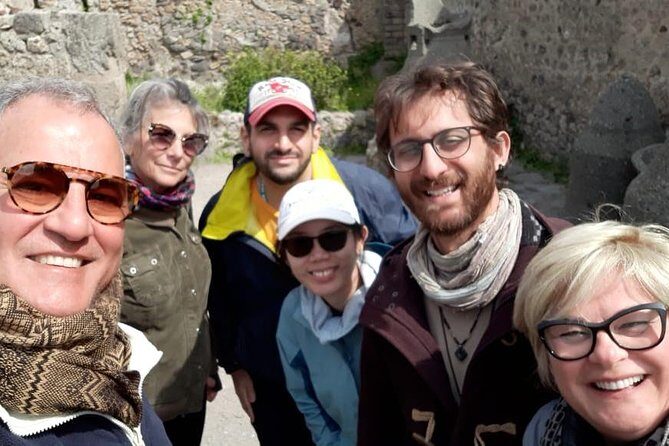
This is private, with only your group participating. In practice, that usually means less waiting and more control over how the day flows compared with a big bus tour. The tour is also described as a small-group experience, and the minimum booking requirement is 2 people, which helps keep it from feeling like a crowded scramble.
The pace is a classic half-day formula:
- drive in
- see Pompeii’s core areas
- stop at key features in a tight sequence
- return you to your pickup point area
For many people, this is exactly right—especially if you’re on a cruise or you’re limited by time in Naples. One cruise-day comment noted that the half-day plan was a great fit because it lets you see Pompeii, then still have room for Naples afterward. That logic is sound: Pompeii is the anchor, but Naples is the leftover treat.
Who it suits best:
- first-timers who want a smart overview
- cruise passengers who need a reliable, time-efficient plan
- people who prefer structured highlights over long self-guided wandering
Who might want something else:
- anyone who wants to read every inscription and take a full day with slower stops
- visitors who enjoy deep photography sessions that require staying in one spot longer than the tour allows
Price and value: what you’re paying for and what to check
At $300.40 per person for a 3–4 hour half-day with transfers, the question isn’t just “is it expensive?” It’s “is it solving the problems I’d have on my own?”
You’re paying for:
- pickup and drop-off from accommodation or the cruise port
- a driver handling the Naples-to-Pompeii round trip
- bottled water
- optional English guide (and tickets if you select that option)
That last part is important. Tickets are listed as not included by default, but they may be included depending on the option you choose. Before you go, confirm whether your package includes admission or if you’ll buy it at the entrance. The tour also offers a mobile ticket, but the exact mix of what’s provided vs what you purchase depends on the selected option.
One real-world caution: a couple of people flagged that the day felt more like transportation than a guided tour when the guide option didn’t match expectations. That can happen with any add-on. The fix is simple: double-check what you selected, and if a guide is included in your plan, confirm it before you leave Naples.
Is it still worth it? For many visitors, yes. Pompeii is too big to “wing it” comfortably when your time window is short. Paying for the logistics often buys you a smoother day and fewer headaches—especially if you’re traveling by cruise.





Should you book a private Pompeii half-day from Naples?
Book this if you want a high-impact Pompeii hit without the stress of sorting transport, timing, and where to focus. It’s especially strong for cruise days, first-time Pompeii visits, and anyone who likes a guided route that prioritizes the main emotional and architectural moments.
Skip or upgrade if you’re the type who wants hours of self-paced exploring and you know you’ll want more time at the same buildings. Half-day Pompeii can feel like tasting, not dining.
If you do book, here’s my practical game plan:
- choose the option that includes a guide if you want stronger context during the short stops
- confirm whether admission is included with your selected option
- wear smart casual comfortable walking shoes
- bring a small snack even though bottled water is provided, because you’ll likely move fast
FAQ
How long is the Pompeii private small group tour from Naples?
It’s about 3 to 4 hours total, including transfers.
What time do you get picked up?
Pickup is typically around 8:00 to 8:30 am.
Where does pickup happen?
Pickup is from your accommodation or the cruise docking area, depending on where you’re staying or arriving.
Is the tour private?
Yes. Only your group participates.
Is an entry ticket included?
Admission ticket inclusion depends on the option you selected. It may be included with the tour, or you may need to purchase it separately.
Is a guide included?
A professional guide is included if you select the option that includes a guide. The tour is offered in English.
What’s included in the cost?
Included items are bottled water, a driver, pickup/drop-off, and a professional guide if selected. Tickets are included only if you chose the option that includes them.
What should I wear?
The dress code is smart casual.
Is cancellation free?
Free cancellation is available. You can cancel up to 24 hours in advance for a full refund.
What should I bring for food?
Lunch and other food and drinks are not included, so plan accordingly.