REVIEW · NAPLES
Naples: Walking Tour of the Historical Center
Book on GetYourGuide →Operated by Insolitaguida · Bookable on GetYourGuide
Naples wakes up on this walk. You start with Neapolitan coffee and a warm sfogliatella, then move straight into Spaccanapoli to see San Gregorio Armeno through real craft shops and church stories. I love how the first 15 minutes get your bearings fast, and I also love the stop-by-stop feel of the itinerary, from Santa Patrizia to the final Pietrasanta bell tower. One drawback: it’s only 2 hours, so you’ll want comfortable shoes and a steady pace.
This is a small, guided stroll through the historical center with Insolitaguida. The guide shares anecdotes along the way, with enough details to make the streets feel lived-in rather than listed in a brochure. It runs on a tight schedule (Monday, Wednesday, and Friday), and the meeting point is very specific.
If you want a guided walk that mixes food, architecture, and local lore, this fits. It’s offered in Italian, Spanish, and English, and it’s wheelchair accessible with a private group setup.
In This Review
- Key Things You’ll Notice on This Naples Historical Center Walk
- Meeting at San Domenico Square and the 10:00 Coffee Ritual
- Spaccanapoli: Walking Naples’ Famous Decumanus With a Guide’s Focus
- San Gregorio Armeno and Santa Patrizia: Baroque Church Time
- San Lorenzo Maggiore Stories on the Way Through Via dei Tribunali
- Santa Maria delle Anime del Purgatorio ad Arco and the Pezzentelle Souls
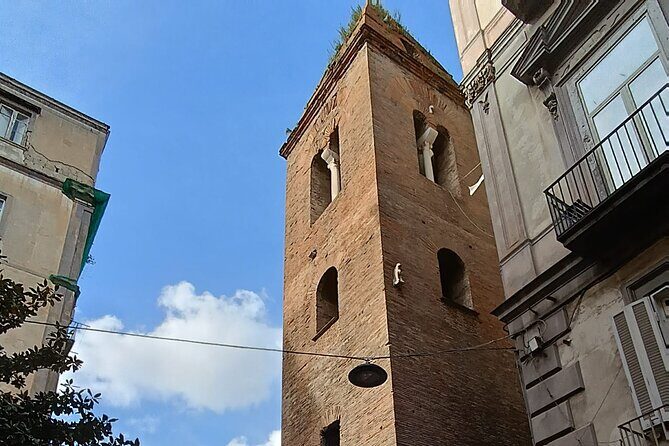
- Pietrasanta Bell Tower: Ending at the Oldest Landmark
- Price and Value: Is $226.57 Worth It?
- Timing, Days, and How to Plan Your Day
- Languages, Group Style, and Comfort Considerations
- Who This Tour Suits Best
- Should You Book This Naples Historical Center Walk?
- FAQ
- How long is the Naples walking tour?
- What days does the tour run?
- What time does the tour depart?
- Where do I meet the guide?
- Where does the tour end?
- What food is included?
- Is coffee included?
- Which churches and landmarks are part of the route?
- What languages are available?
- Is the tour wheelchair accessible?
Key Things You’ll Notice on This Naples Historical Center Walk
- Coffee + sfogliatella right at the start sets a Neapolitan rhythm before you even hit the streets
- Spaccanapoli (the famed decumanus) gives you a clear spine for understanding central Naples
- San Gregorio Armeno crafts and Santa Patrizia connect everyday skill to baroque worship
- Via dei Tribunali storytelling turns the alleyway grid into a guided narrative
- Santa Maria delle Anime del Purgatorio ad Arco spotlights a very specific local devotion
- Pietrasanta bell tower ends the tour at an old landmark you can still use as a reference point
Meeting at San Domenico Square and the 10:00 Coffee Ritual
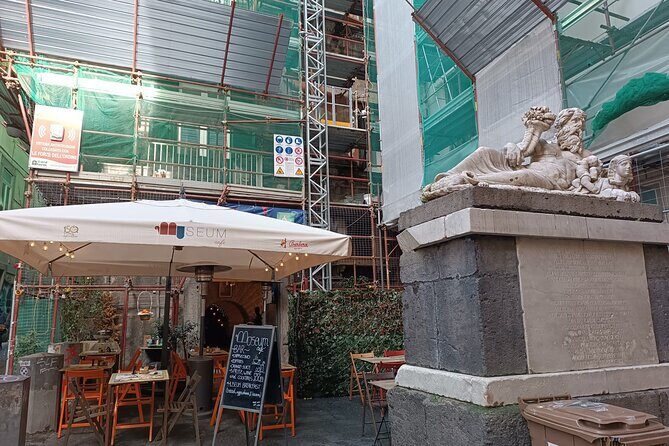
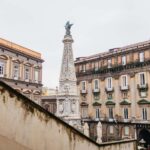
The tour meets in San Domenico Square, at Largo Corpo in Naples, next to the spire of San Domenic (the Obelisco di San Domenico). The start time is 10:00, and you’ll begin with what the tour calls a classic of the Neapolitan tradition: coffee.
I like this structure. You’re not walking hungry, and you’re also not wandering around trying to figure out which street is which. The coffee is paired with the moment the guide wants you to remember: a warm, refreshing sfogliatella, riccia or frolla (the one you get is decided on the day).
If you care about value, this first stop matters. A lot of walking tours offer photos and talking. This one puts a real local food experience up front, so you’re paying for guide time and a meaningful taste of Naples.
Practical note: since it’s a walking tour of central Naples, the pace will be active for 2 hours. Eat the pastry, sip the coffee, and then settle in for the streets.
You can also read our reviews of more walking tours in Naples


Spaccanapoli: Walking Naples’ Famous Decumanus With a Guide’s Focus
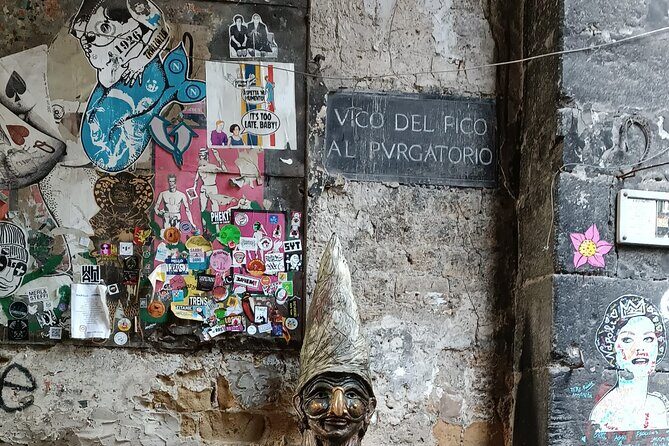
After coffee, you head into Spaccanapoli, described as the most famous decumanus of Naples. In plain terms, this is the central spine street that helps you understand the city’s layout and its historic center feel.
From there, you walk up one of the iconic streets: San Gregorio Armeno. This is a street that people often know by name, but a guide changes what you notice. You’re not just passing storefronts—you’re being pointed toward the shops and details that explain why this area became famous.
One of the most praised parts of the experience is how the guide finds unexpected corners and tells really interesting anecdotes. That matters here because central Naples can look chaotic if you’re on your own. With a local guide, the chaos starts making sense, one turn at a time.
You’ll also see how the tour connects street life with crafts. The guide takes you into a shop where you travel through the eyes of one of the best-known craftsmen, focusing on an ancient craft still alive today. It’s the kind of stop that turns a famous street into a place with a purpose.
San Gregorio Armeno and Santa Patrizia: Baroque Church Time
Next comes a proper church visit: inside the Church of San Gregorio Armeno. For Neapolitans, it’s known as Santa Patrizia, and the tour frames it as an excellent example of Neapolitan Baroque.
This is where the tour shifts from street-level Naples into the visual language of the city’s religious art. Even if you’re not a hardcore architecture person, you’ll likely appreciate why guides bring you here after the craft shop. You’re not just collecting landmarks; you’re learning what style and tradition look like from the inside.
A quick reality check: churches can be dim, busy, and sometimes uneven. Go slow, give yourself time to look up and around, and let the guide point out what to notice. The value of this stop is the connection the guide makes between what you saw in the shops and what you see in the church.
San Lorenzo Maggiore Stories on the Way Through Via dei Tribunali
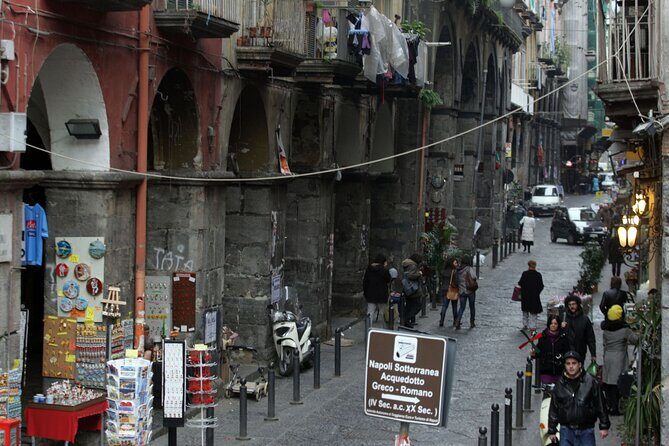
After Santa Patrizia, you move toward San Lorenzo Maggiore. The tour describes this as a church where a coronation, a consecration, a secret burial, and even a forbidden love are said to have taken place.
Important word here: said. This is part of the tour’s storytelling approach. You’re not being asked to treat folklore like a museum label. Instead, you’re learning how Naples holds onto its legends and uses them to make places memorable.
Then you walk along via dei Tribunali. This street is often known for its central position in the historic area, but on this tour it feels like a moving timeline. You pick up details, connect them to what you just heard, and carry that context into the next stop instead of starting from zero again.
For me, this is one of the tour’s strengths: it doesn’t throw you from monument to monument without a thread. The thread is the guide’s narrative, and the narrative makes the streets easier to remember later.
Santa Maria delle Anime del Purgatorio ad Arco and the Pezzentelle Souls
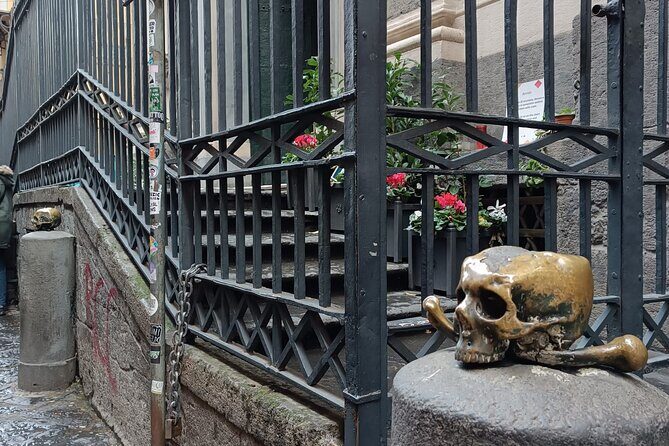
The next focal point is the church of Santa Maria delle Anime del Purgatorio ad Arco. The tour highlights the cult of pezzentelle souls.
This isn’t just trivia. Naples has local devotions that feel specific to the city’s worldview, and a guided explanation helps you see why this place matters to people who live here. If you like religious art and local customs, this stop is a strong payoff because it’s distinct from the more general “pretty church” approach.
One practical thought: because this is a walking route through churches and historic streets, you may spend time standing and listening. If you’re the type who likes to photograph everything, try to pace yourself. Let your eyes absorb first, then take photos so you don’t miss the guide’s key points.
You can also read our reviews of more historical tours in Naples




Pietrasanta Bell Tower: Ending at the Oldest Landmark
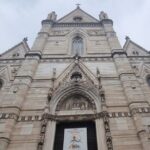
The tour ends in front of the Pietrasanta bell tower, described as the oldest in the city. That final location is useful: it gives you a clear endpoint you can locate on your own later.
I like ending with something you can see from the street. It makes the tour feel complete and gives you a visual reference before you continue exploring. After 2 hours of stories, a landmark finish also helps your brain store what you learned.
If you want to keep the momentum after the tour, plan to stick around in the area. Even if you don’t join another tour, you’ll likely recognize the street lines more easily once the bell tower pins the route in your mind.
Price and Value: Is $226.57 Worth It?
The price is $226.57 per person for a 2-hour guided walking tour.
On paper, it’s not cheap. But value in Naples often comes down to guide quality and how well the tour turns you from a passerby into an informed walker. Here, you’re paying for a professional local guide, a food component (sfogliatella), and coffee, plus a route that mixes Spaccanapoli, two major church stops, and a finish at Pietrasanta.
You also get the benefit of small-group pacing through a private group setup. The tour is designed as a tight loop with a clear start and end point, so you’re not spending your time guessing where to go next. And from the provided feedback, the guide’s storytelling style stands out—unexpected corners and true-feeling anecdotes are not standard in every walking tour.
Is it worth it? For me, yes, if you want more than landmarks. This tour is built around food at the beginning and narrative at every step, which is exactly what makes Naples click faster.
Timing, Days, and How to Plan Your Day
This tour runs every Monday, Wednesday, and Friday, departing at 10:00. Duration is 2 hours, and the meeting point and the end point are the same area: back at the Obelisco di San Domenico in San Domenico Square.
That schedule detail affects your planning. If you’re in Naples on a Tuesday, Thursday, Saturday, or Sunday, you’ll need another day or a different option. The benefit is that the itinerary is likely designed for a focused morning flow, when you can fit churches and street walking without rushing across the city.
For day planning, I’d treat this as your first or second stop of the day. After you learn the historic spine around Spaccanapoli, it becomes much easier to navigate on your own.
Languages, Group Style, and Comfort Considerations
The tour guide works in Italian, Spanish, and English. If you’re traveling with mixed language needs, this is good to know upfront.
It’s described as a private group and wheelchair accessible. That’s helpful not only for mobility but also for pacing. Private group setup usually means you’re not squeezed into a massive crowd rhythm, so you can actually hear the guide when you’re in the churches and along the tighter streets.
Even with accessibility noted, remember it’s still a walking tour. Plan for uneven historic streets, and keep your expectations realistic: 2 hours means you’ll cover key sights without stopping for long sits every time you see something.
Who This Tour Suits Best
This walking tour is a great match if you want:
- A guided overview of Spaccanapoli that explains why the street matters
- Churches with local stories, not just dates and names
- Food as part of the culture, starting with coffee and sfogliatella
- A guide who shares anecdotes and points out details you might otherwise miss
It’s also a smart fit for people who like their Naples experiences grounded in neighborhood life—craft shops, devotion, and the street-corner explanations that make the city feel personal.
If you prefer very slow museum-style pacing or want lots of free time to wander without a structure, this may feel a bit tight. The tour is built to move.
Should You Book This Naples Historical Center Walk?
I’d book this if you’re excited by the idea of starting with coffee and sfogliatella, then using Spaccanapoli as your map. The route hits recognizable names—San Gregorio Armeno, San Lorenzo Maggiore, Santa Maria delle Anime del Purgatorio ad Arco, and Pietrasanta—and the guide’s storytelling approach is part of the value.
I’d think twice if your schedule doesn’t match Monday, Wednesday, or Friday, or if you need a longer tour with more time to linger in each church. For a focused 2-hour hit of Naples’ historic heart, though, this is the kind of plan that pays off fast.
FAQ
How long is the Naples walking tour?
It lasts 2 hours.
What days does the tour run?
It runs every Monday, Wednesday, and Friday.
What time does the tour depart?
The departure time is 10:00.
Where do I meet the guide?
Meet next to the spire of San Domenic at San Domenico Square, in Largo Corpo, Naples.
Where does the tour end?
The tour ends back at the same meeting point area.
What food is included?
You’ll receive a typical Neapolitan pastry: sfogliatella.
Is coffee included?
Yes. The tour includes the best coffee in the world.
Which churches and landmarks are part of the route?
You visit the Church of San Gregorio Armeno (Santa Patrizia), San Lorenzo Maggiore, Santa Maria delle Anime del Purgatorio ad Arco, and you end in front of the Pietrasanta bell tower.
What languages are available?
The live guide speaks Italian, Spanish, and English.
Is the tour wheelchair accessible?
Yes, it’s listed as wheelchair accessible.