REVIEW · NAPLES
Naples: Herculaneum Entry Ticket with Digital Audio Guide
Book on GetYourGuide →Operated by Vox City International · Bookable on GetYourGuide
Herculaneum lets you walk in 79 AD’s footsteps. The big draw here is simple: you’re seeing a Roman city that got preserved in the chaos after Vesuvius erupted, so the ruins feel intimate and unusually “complete.” It’s less about big monument drama and more about everyday life—doors, floors, rooms—made visible by time and tragedy. Skip-the-line access helps you start sooner, and the digital audio guide gives you the story as you move through the site.
What I like most is the balance between atmosphere and details: you get help spotting what matters (frescoes, mosaics, and contrasts between different homes), without needing a live guide. Also, the layout is compact enough that you can get through a lot in your day without feeling like you’re racing. The main drawback to factor in is that the audio guide can be technical—some visitors reported download issues and had to sort it out on-site—so come prepared with working headphones and a charged phone.
In This Review
- Key highlights to look forward to
- Why Herculaneum Feels Different From Pompeii
- Ticket Value: Is $28 a Good Deal?
- Getting In Fast: Skip-the-Line and the Real Meeting Point
- Your Digital Audio Guide: How to Use It Without Stress
- Entering the Ruins: What You’ll See as You Walk
- Villas, Frescoes, Mosaics, and Doorways That Tell the Story
- Markets, Fountains, and Theaters: Life Beyond Homes
- The Hard Moment: Standing Near Where 300 Souls Awaited Rescue
- Practical Tips: What to Bring and How to Time Your Day
- Who This Works Best For
- Should You Book This Herculaneum Ticket?
- FAQ
- What’s included with the ticket?
- How long is the experience valid?
- What languages are available for the audio guide?
- Where do I go to enter?
- How do I get my e-ticket?
- How do I access the audio guide?
- What should I bring with me?
- Is there a guided tour included?
- Can I cancel this booking?
Key highlights to look forward to
- Skip-the-line entry to the Herculaneum Archaeological Park so you waste less time at the gate
- Digital audio guide (English, French, Italian) that helps you make sense of rooms, streets, and everyday objects
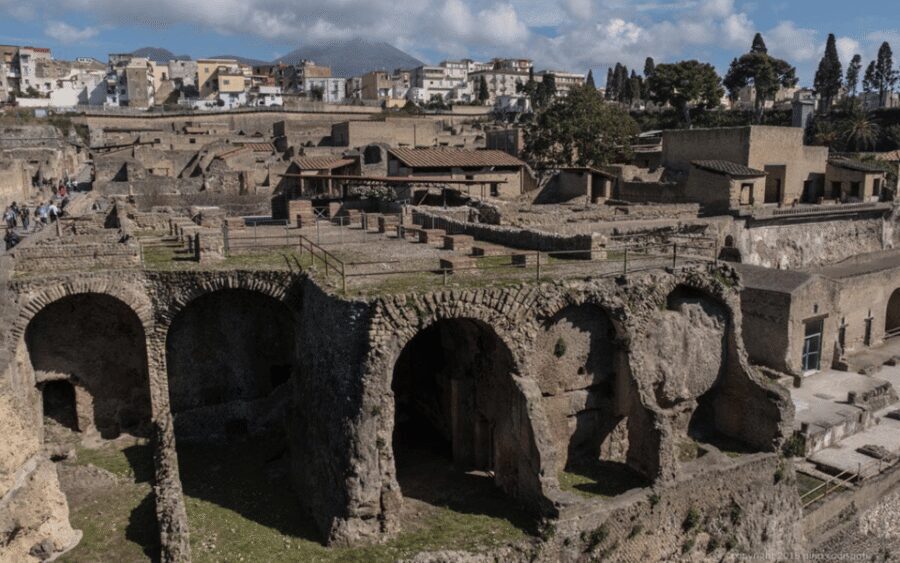
- Well-preserved villas and streets that show Roman domestic life in a close, human scale
- Clear contrasts in living conditions you can spot between slave areas and wealthier homes
- The poignant moment of 300 souls you can stand near, connecting the site to the eruption’s timeline
Why Herculaneum Feels Different From Pompeii

If you’ve visited Pompeii, you might expect a giant scatter of ruins. Herculaneum plays by a different rule. It’s more compact, and the experience leans toward homes and daily routines—so the “wow” comes from how much you can actually see inside the city’s spaces. Think: the kind of detail where you can look at surfaces and understand how people lived, not just how buildings looked from far away.
The other reason this place hits is the cause-and-effect clarity of the story. You’re walking through a Roman city that was struck by the Vesuvius eruption in 79 AD, and the preservation means the shock feels immediate. You’re not just admiring ruins—you’re reading a timeline written into rooms and streets.
I also like that this ticket approach is flexible. You’re not locked into a group’s pace. You can linger at the scenes that pull you in, and move on when you want more distance between you and the heavy parts of the story.
You can also read our reviews of more tours and experiences in Naples



Ticket Value: Is $28 a Good Deal?
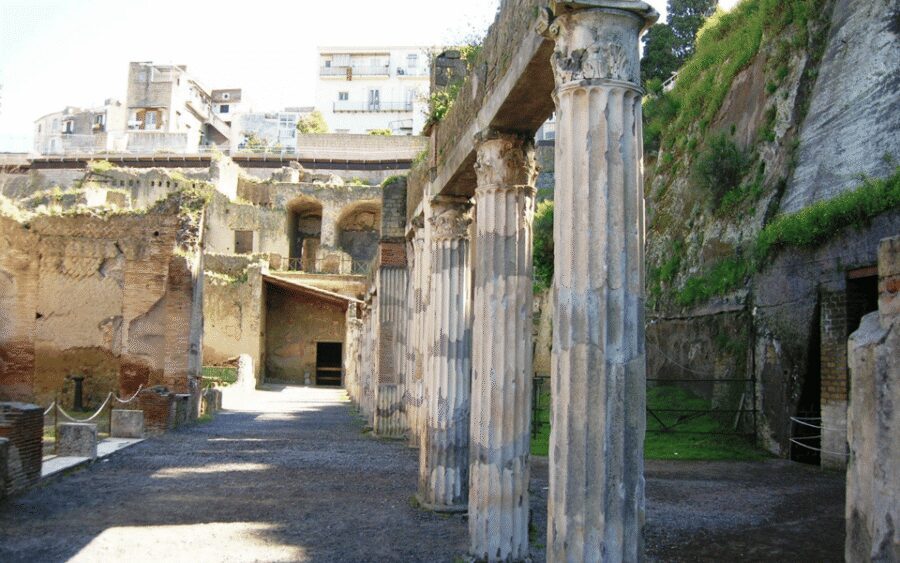
At $28 per person for skip-the-line entry plus a digital audio guide, the value depends on one thing: whether you’ll actually use the guide and take your time.
You’re not paying extra for a live guided tour here. Instead, you’re paying for access and interpretation. For many visitors, that’s a win. A phone-based audio path works well at Herculaneum because the site is full of small, specific things you’d otherwise miss—frescoes, wooden doors, mosaics, and the stark contrast between different living spaces.
The “value math” is simple:
- If you’ll listen to the audio guide while you walk, $28 feels fair.
- If your device fails and you don’t want to troubleshoot, that’s where the value can drop fast, since you might lose the main advantage of the ticket.
The good news: you don’t need fancy gear. The requirement list is basic—headphones and a charged smartphone—and the rest is about being ready.
Getting In Fast: Skip-the-Line and the Real Meeting Point

This is a practical “arrive and go” ticket. You can head directly to the Herculaneum Archaeological Park entry at Corso Resina, 187. Since it’s skip-the-line, you should plan to arrive with enough time to scan your ticket smoothly, not with a clock-timing fantasy.
Mobile access matters here:
- Your e-ticket is made available for download within 24 hours before your travel date.
- The e-ticket is also delivered by WhatsApp within 24 hours before your travel date, sent by Vox City.
- Entry is gained by showing the e-ticket on your mobile device to staff.
One small but important practical note: one of the disappointments tied to this type of entry is strictness around timing. So if you’re the type who likes to stroll in at the last minute, don’t. Build buffer time, because a short wait or redirection can ruin the whole “skip-the-line” promise.
Your Digital Audio Guide: How to Use It Without Stress

The digital audio guide is the heart of the experience package. It’s offered in English, French, and Italian, which is a nice comfort feature if you want to switch languages depending on who you’re with.
Before you go, make sure you do two things:
- Download your e-ticket in the 24-hour window before your visit.
- Use the QR code at the site to download the audio guide prior to arrival.
Here’s what I think is the smartest way to make this work in the field:
- Test your headphones before you leave the hotel or apartment.
- Keep your phone battery topped up. If you’re using audio + screen brightness, you’ll burn power quicker than you think.
- Download early if you can. The audio guide depends on your ability to access it smoothly.
A heads-up from actual experience patterns: some visitors reported trouble downloading the audio guide and even had to purchase an audio guide on-site. Also, one person specifically noted that they only discovered there was a French version when they were dealing with the app issue. That’s a strong reminder to treat the audio setup as part of your plan, not an afterthought.
If the app acts up, stay calm and be ready to ask staff for help. But don’t put yourself in that situation by arriving unprepared.
Entering the Ruins: What You’ll See as You Walk
Once you’re through the entry, your day becomes a guided walk—without a live guide—structured by the audio tracks.
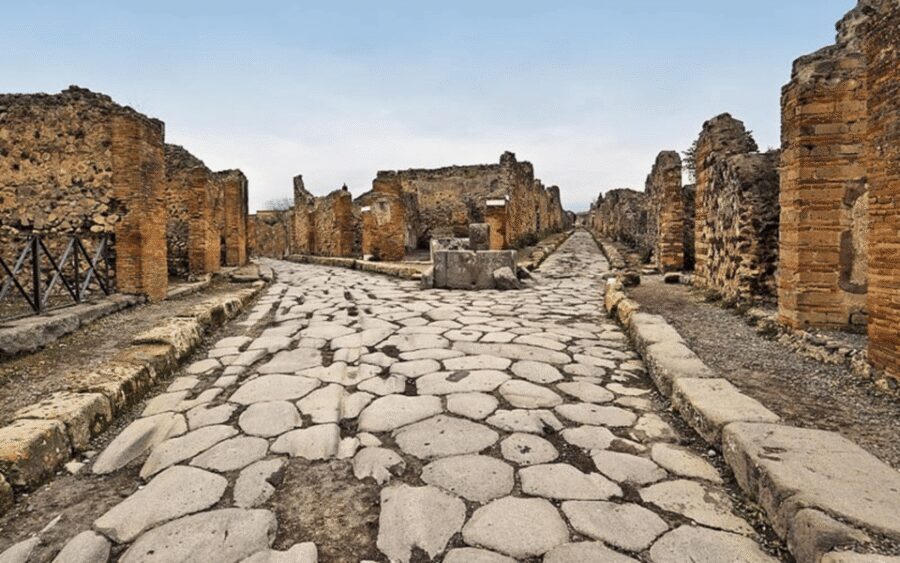
You’re moving through a city preserved by the eruption, so the “route” isn’t about hitting a list of monuments. It’s about encountering Roman spaces that feel like rooms you could step into if time reversed. Expect:
- Preserved villas
- Streets and everyday structures
- Scenes that highlight wealth, domesticity, and sudden disaster
The audio guide is designed to point out what you might otherwise pass by. And at Herculaneum, that matters. The difference between a good visit and a great one is whether you catch the meaning of the physical details—how people lived, what luxury looked like, and how the city’s shock changed everything.
If you like to travel like a detective, this works nicely. There’s a lot to look for, and the audio provides context right when your eyes land on something.
You can also read our reviews of more guided tours in Naples



Villas, Frescoes, Mosaics, and Doorways That Tell the Story
The most satisfying part of Herculaneum is how strongly it connects you to private life.
In many spots, you can spot:
- Frescoes (painted wall scenes)
- Mosaics underfoot
- Wooden doors and construction details that feel startlingly tangible
- The contrast between slaves’ quarters and wealthier homes
That last point is where the site becomes more than sightseeing. It turns into social history you can actually see. You’re not just told that society was unequal—you’re shown the space people were given, the difference in rooms, and the physical boundaries that shaped daily life.
And because the site is relatively compact, you can keep coming back to that same theme: comfort versus hardship, order versus chaos, everyday routine versus the eruption’s interruption.
If you’re the kind of visitor who loves architecture, this is also where you’ll get traction fast. You don’t have to know a lot of technical terms. Just look at the surfaces and the room logic. The audio helps connect the dots.
Markets, Fountains, and Theaters: Life Beyond Homes
Herculaneum isn’t only villas. It also includes parts of public life—areas that help you feel the city as a whole.
With the help of the audio guide, you’ll be directed through spaces like:
- Historical markets
- Fountains
- Theaters
Even if you don’t spend a long time in each area, the audio makes these places more legible. You begin to understand how people moved through daily schedules: eat, meet, watch, talk, return home.
This is also where the site’s compact scale helps again. You’re not bouncing between distant zones. You can connect private and public life in one continuous walk, which is a rare feeling at larger archaeological parks.
The Hard Moment: Standing Near Where 300 Souls Awaited Rescue
One of the most memorable components of Herculaneum is the tragedy built into the preservation.
The audio guide helps you connect to a specific moment: 300 souls awaited rescue as part of what happened during the eruption sequence. That’s not just a dramatic line—it changes how you view the city. You stop seeing artifacts and start seeing people in place.
I recommend slowing down around these heavier points. Don’t rush past them to “get your photos.” Take 60 seconds just to register the scale and the emotion. Then continue your walk with that weight in mind.
Herculaneum works because the city isn’t trying to protect you from the truth. It gives you preserved spaces and then asks you to understand what they meant.
Practical Tips: What to Bring and How to Time Your Day
The basics are spelled out, so follow them:
- Headphones
- Charged smartphone
Beyond that, here’s my practical advice for a smoother visit:
- Keep your phone charged enough for e-ticket display and audio use.
- Save time by downloading what you can before you arrive (e-ticket download and any audio guide prep).
- Wear shoes you can stand in for a while. This is a walk-through site, and you’ll want stable footing on uneven ground.
Also, consider your day flow. Because this ticket is for one day and you have skip-the-line entry, you can pair it with other Naples area stops. The key is that you’ll probably want a calm, not rushed schedule to get full value out of the audio.
Who This Works Best For
This ticket is a good fit if:
- You want self-paced exploration, not a fixed group tour.
- You like detailed interpretation tied to what you’re seeing on-site.
- You’re more interested in domestic life and everyday objects than only big ruins.
- You want fewer crowds and a more compact experience than you might find elsewhere.
It’s also a smart choice for mixed-language groups, since the audio guide supports English, French, and Italian.
If you’re heavily dependent on flawless app behavior and don’t like troubleshooting, this is the one place you should be cautious. The experience can still be worthwhile without the audio working perfectly, but the ticket’s value assumes you’ll be able to use the guide.
Should You Book This Herculaneum Ticket?
I’d book it if you want a focused, flexible visit to a preserved Roman city where the details matter—and you’re willing to prepare your phone and headphones like you mean it. The combination of skip-the-line entry and an audio guide in multiple languages is strong value for a day trip feel.
Skip it (or at least think twice) if you know your device often struggles with downloads, you hate QR-based setups, or you show up late and prefer to avoid systems and scans. With the reported audio download hiccups, your success here depends on setup more than people expect.
If you’re organized and curious, you’ll leave with the feeling that you didn’t just look at ruins—you understood how people lived, and what happened when the world stopped.
FAQ
What’s included with the ticket?
You get skip-the-line access to the Herculaneum Archaeological Park and a digital audio guide.
How long is the experience valid?
The ticket is valid for 1 day. Starting times depend on availability.
What languages are available for the audio guide?
The digital audio guide is available in English, French, and Italian.
Where do I go to enter?
You can go directly to the entry at Corso Resina, 187.
How do I get my e-ticket?
E-tickets become available for download within 24 hours before your travel date and are also delivered via WhatsApp within that same window. The sender is Vox City.
How do I access the audio guide?
Scan the QR code to download the audio guide prior to arrival.
What should I bring with me?
Bring headphones and a charged smartphone.
Is there a guided tour included?
No, a guided tour is not included.
Can I cancel this booking?
Yes. You can cancel up to 24 hours in advance for a full refund.