REVIEW · NAPLES
Naples: Culture & Street Food with a Local Guide
Book on GetYourGuide →Operated by IAMME IA! - Gray Line Amalfi Coast · Bookable on GetYourGuide
Naples can feel like a living postcard. This small-group tour stitches together the city’s landmarks and its street-food habits, so you don’t just see Naples—you understand why people love it. I especially like the official guide who makes the history make sense, and the very practical focus on local snacks (not tourist-only stops). One thing to consider: part of the route runs through narrow, older streets, and the look of the area can vary block by block.
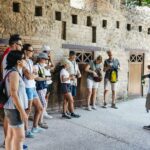
You’ll start at the Cathedral area and work your way through Naples on foot, with tastings planned along the way. In the reviews, I saw names like Loona and Roberta, and the big pattern was clear: the pace is meant to be comfortable enough to chat, take photos, and still fit in multiple bites. Still, it’s a walking tour. If you’re expecting a slow, elevator-style day, adjust your mindset now.
If you want Naples culture with food you can actually taste, this is a strong fit. You get a route that hits the headline sights (Duomo, San Gregorio Armeno, Spaccanapoli, Gesù Nuovo, Teatro San Carlo area, Piazza del Plebiscito, Via Toledo) and then pairs them with the edible stuff Naples does best.
In This Review
- Key things that make this tour work
- Starting Naples the right way: meet at the Duomo area
- Cathedral of Santa Maria Assunta (Duomo of San Gennaro): history before the snacks
- Via dei Tribunali: tarallo tastings and the street-life rhythm
- San Gregorio Armeno: presepi shops and the corno napoletano charm
- Spaccanapoli: walking the “spine” of the old center
- Piazza del Gesù Nuovo and the Guglia dell’ Immacolata: photos with context
- Piazza del Plebiscito: big open space, Canova statues, and breathing room
- Via Toledo: Naples’ main avenue and the pizza stop
- Quartieri Spagnoli: neighborhood atmosphere at the end of the loop
- The included street food: what you’ll actually taste
- Price and time: does $70 feel fair?
- Practical tips: shoes, clothing, pace, and what to bring
- Brief FAQ for planning your Naples street food walk
- FAQ
- Where is the meeting point?
- How long is the tour?
- What food is included?
- Is there a dessert and coffee stop?
- Do you get a souvenir?
- What’s the starting point?
- What languages are available for the guide?
- What should I wear to churches?
- Is the tour suitable for wheelchair users?
- What’s the biggest thing that is not included?
- Should you book this Naples street food tour?
Key things that make this tour work
- Official local guide with English, Spanish, French, or German support
- Street food tastings in multiple neighborhoods, including classic Naples sweets and savory bites
- San Gregorio Armeno presepi alley stop, plus a corno napoletano lucky charm
- Stops timed for photos around Piazza del Gesù Nuovo and Piazza del Plebiscito
- A focused 3–4 hour format built for walking and snacking without feeling rushed
Starting Naples the right way: meet at the Duomo area
Naples has a talent for sensory overload. The best way to handle it is to start with a guide who can explain what you’re seeing before you drift into pure sightseeing mode.
Your meeting point is outside the Cathedral of Naples in Via Duomo (Cattedrale di Santa Maria Assunta), a white, imposing neogothic building. The guide holds a board with the Iamme Ia! logo. This matters because Naples streets can be confusing if you’re trying to “figure it out” on your first morning.
Depending on your departure, the starting option can also be listed as Via dei Tribunali. Either way, you’re placed right where you can transition fast into the older heart of the city.
You can also read our reviews of more food & drink experiences in Naples


Cathedral of Santa Maria Assunta (Duomo of San Gennaro): history before the snacks
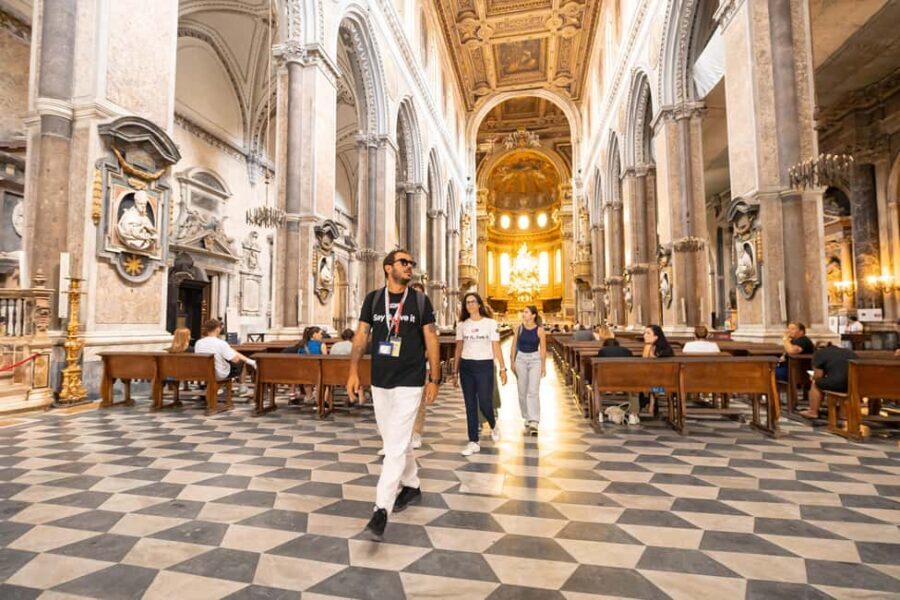
The tour begins with the Cathedral itself—officially Cattedrale di Santa Maria Assunta, but locally known as the Duomo of San Gennaro because it’s dedicated to Naples’ patron saint.
Why start here? Because it sets the tone. Naples religious tradition isn’t abstract. It’s tied to identity, streets, and stories you’ll hear again later as you walk past shops and squares. Even if church interiors are new territory for you, having that context helps you notice details instead of just admiring the exterior.
Quick practical note: inside churches, knees and shoulders must be covered. Bring a light layer if you need it. And yes, comfortable shoes are non-negotiable—this is a lot of on-foot time.
Via dei Tribunali: tarallo tastings and the street-life rhythm
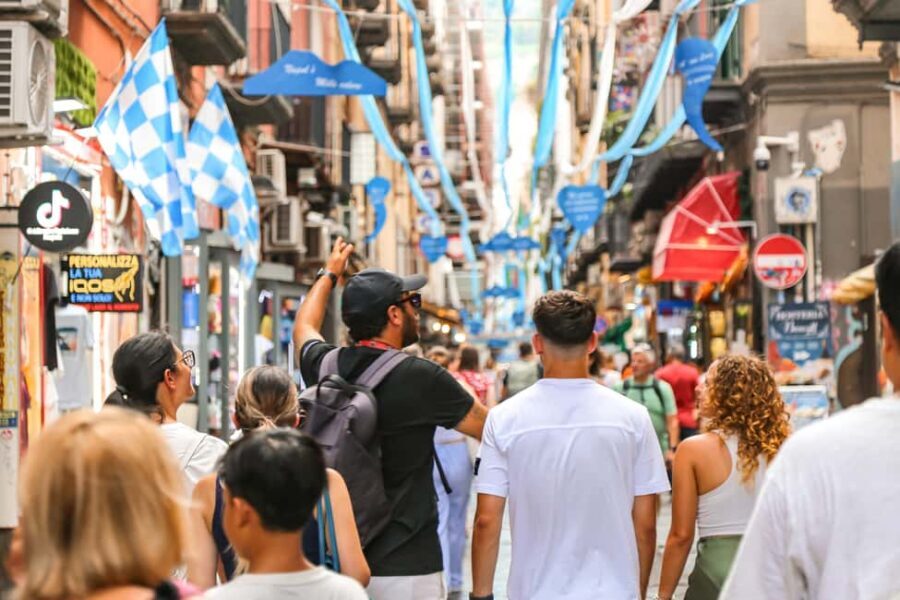
From the Cathedral area, you head toward Via dei Tribunali, one of Naples’ most colorful corridors. This is where the tour’s “culture plus food” formula kicks in.
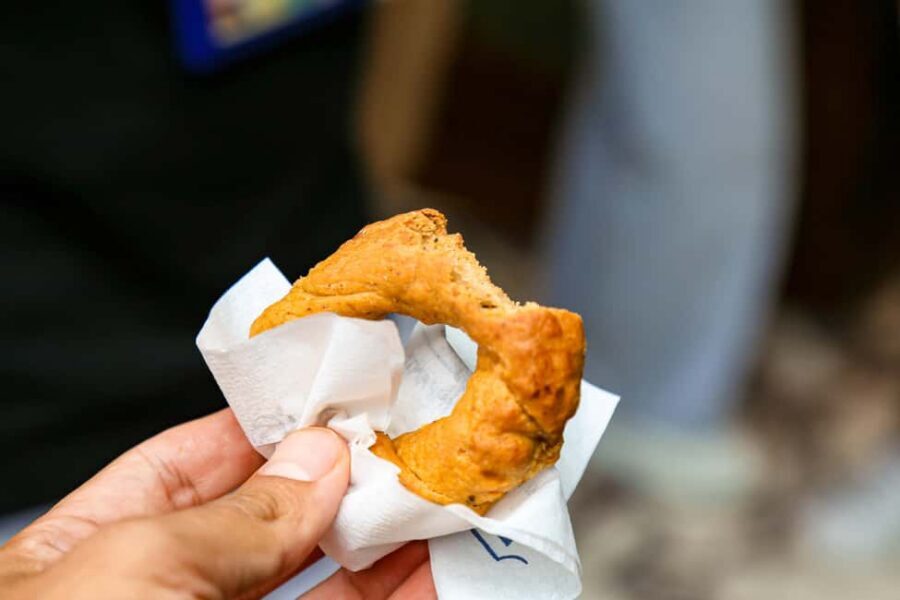
Here you taste Tarallo Napoletano, a spicy salted cookie. You can choose the flavor you like best, which is a nice touch because it turns a set menu into something more personal. Tarallo is the kind of snack locals actually reach for without thinking too hard—perfect for that first “I get it now” moment.
Then you keep moving through one of Naples’ most distinctive atmospheres: narrow lanes, side shops, and the sense that daily life is happening right next to major sights. This is also where a guide helps you keep your footing, both literally and figuratively.
One consideration from a less-positive experience: some side streets can look rougher than you expect, with older buildings and areas that feel rundown. On the brighter side, the tour balances these with photo-friendly spots later on. If you’re sensitive to that kind of street view, go in with realistic expectations.
San Gregorio Armeno: presepi shops and the corno napoletano charm
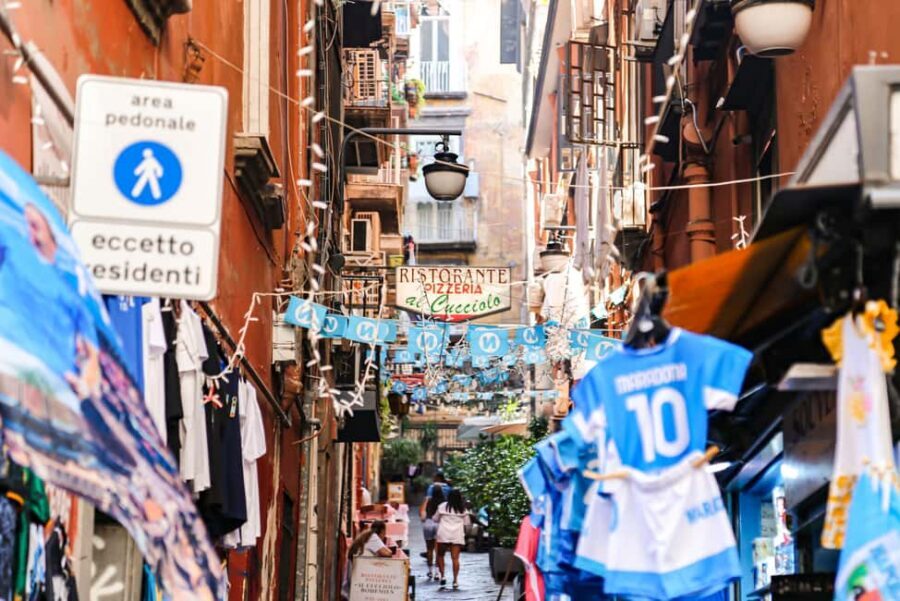
Next is San Gregorio Armeno, the alley often called in Italian la strada dei presepi—the street of nativity scenes.
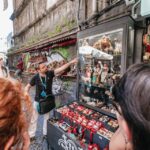
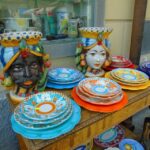
Even outside the holiday season, these shops feel like a small museum you can walk through at street level. You’ll see creative nativity scenes and figurines in lots of styles. The guide points out what’s special about the craftsmanship and local tradition so you don’t just browse with your camera and call it a day.
This stop also includes a signature add-on: Corno Napoletano, the lucky horn charm associated with the San Gregorio Armeno district. It’s a small souvenir, but it ties directly to the neighborhood’s identity. It’s the kind of thing that makes sense only once you’re standing there in the street.
Spaccanapoli: walking the “spine” of the old center
You’ll then walk along Spaccanapoli, the straight, narrow street that runs through Naples’ historic center and helps divide the city into two.
This part of the route is great for people who learn best by walking. Spaccanapoli shows you how Naples works at street scale: shops, religious references, snack stops, and lanes that feel made for wandering. A guide keeps you oriented, so you understand which streets matter and why.
Food comes back into the picture as you continue. The tour is designed so you’re not eating just once in the middle and then waiting around hungry. The tastings are spaced so your energy holds up for the rest of the walk.
You can also read our reviews of more tours and experiences in Naples




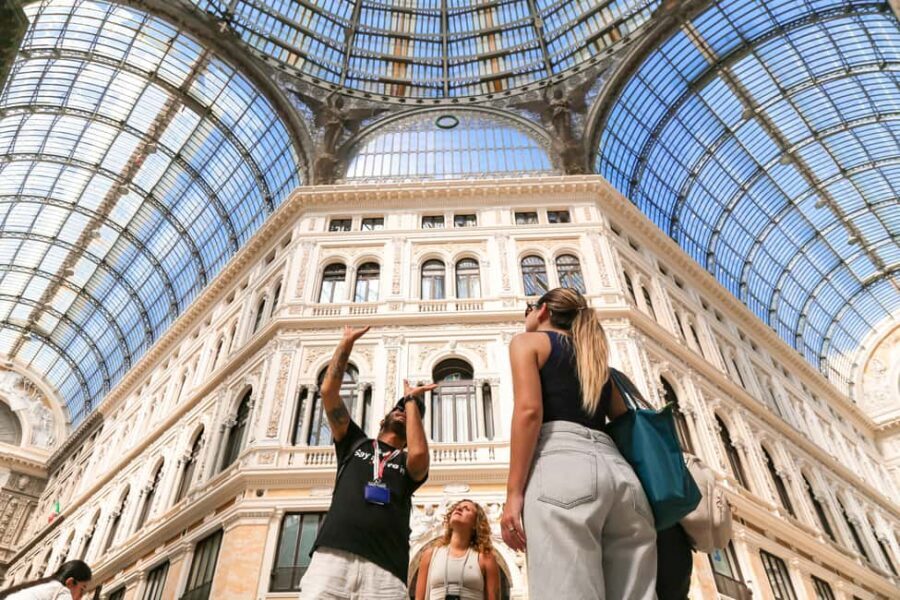
Piazza del Gesù Nuovo and the Guglia dell’ Immacolata: photos with context
After the lanes, you reach Piazza del Gesù Nuovo, one of Naples’ most beautiful squares. The focus here is the Church of Gesù Nuovo and the striking Guglia dell’ Immacolata.
What’s interesting about this area is the mix of styles. The guglia (a sharp pinnacle) is described as an artistic mash-up—rococo and gothic elements that look like they were designed to be photographed from multiple angles.
Then you keep walking toward the Teatro San Carlo, highlighted as the oldest opera house in the world still working. Even if you don’t plan to go inside, this gives Naples culture a different flavor than the street food alone. It’s the “artists and poets” side of the city, made tangible.
Piazza del Plebiscito: big open space, Canova statues, and breathing room
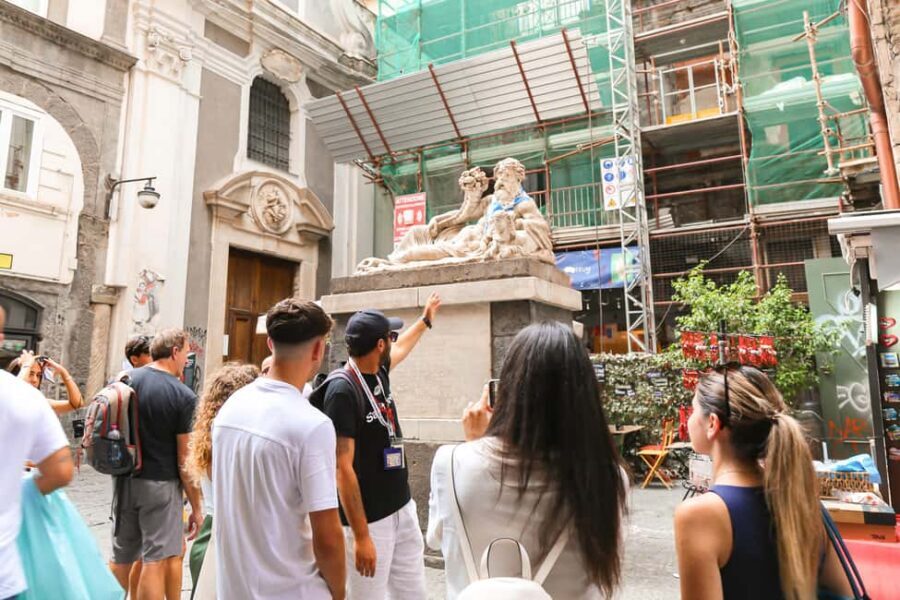
Next up is Piazza del Plebiscito, one of Italy’s best-known squares. It’s a noble semicircular space modeled on Rome’s Pantheon, framed by a neoclassical colonnade.
This is a great moment to slow down. After narrow streets, the open square lets you reset and really see Naples from a distance. In front of the church are equestrian statues of Ferdinand I of Bourbon and Charles III of Bourbon, linked in the tour description to the work of Antonio Canova. Whether you know Canova already or not, the statues give you a clear visual anchor in the city’s political and cultural story.
The tour includes a photo stop here. Take it. You’ll be grateful later when you look at pictures and realize how much of Naples you actually covered.
Via Toledo: Naples’ main avenue and the pizza stop
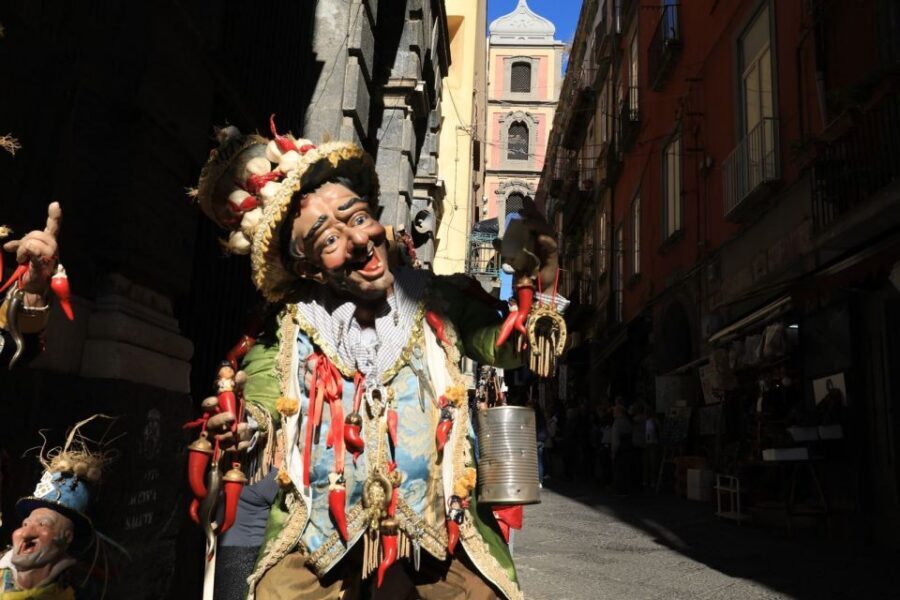
Now the tour shifts into a more central, high-energy stretch: Via Toledo. It’s described as one of Naples’ most important avenues, connecting the area of the decumani to Piazza del Plebiscito.
This section is ideal for a guided explanation because it’s not just a “walk from A to B.” It’s a corridor where you can feel how the city organizes itself—major movement, big views, and plenty of people doing everyday Naples things.
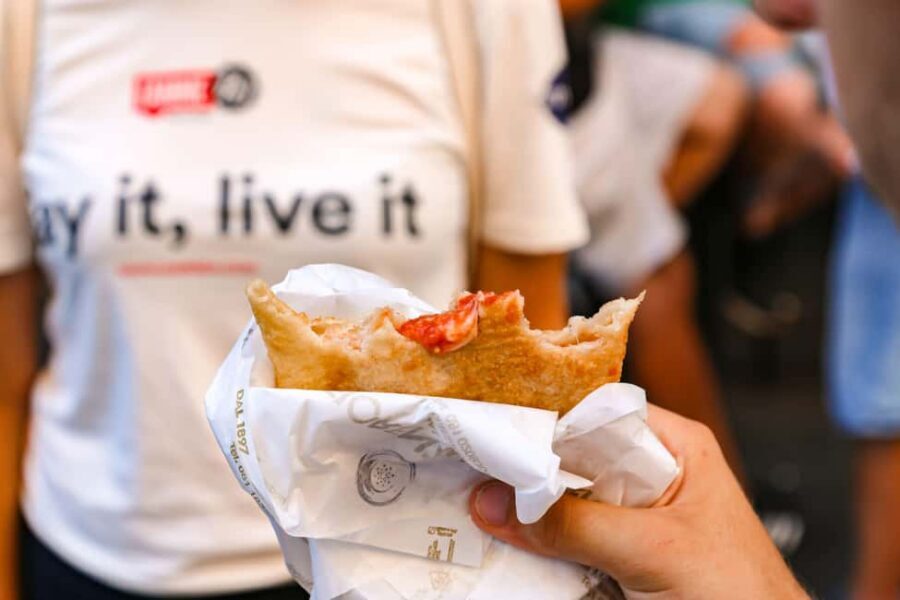
And yes, this is where the food comes in again, with pizza as part of the tasting. The tour includes pizza referred to as a folded “wallet” (Piazza Portafoglio) and also mentions fried pizza as an option. Either way, it’s practical street food: warm, handheld, and made for eating while you keep walking.
That balance is the real value. You’re not stuck at one table. You’re getting food you can eat like a local while the city unfolds around you.
Quartieri Spagnoli: neighborhood atmosphere at the end of the loop
The walk finishes with time in Quartieri Spagnoli, guided.
This is where Naples feels less like a show and more like daily life—tight streets, local density, and a sense that you’ve moved from the “sight” version of Naples into the neighborhood version. The tour includes a guided walk here, so you’re not wandering blind.
This is also where you should lean into the street-level side of Naples culture. The city is famous for art and music, but the attitude comes from neighborhoods like this—people living their life right next to history.
If you’re worried about safety or cleanliness, keep expectations grounded. One negative experience described dirty back streets and overflowing bins. That doesn’t mean every section will look the same, but it is a real reminder: Naples is a working city, not a curated park. Go with eyes open.
The included street food: what you’ll actually taste
Food is the heart of the day here. The included tastings are:
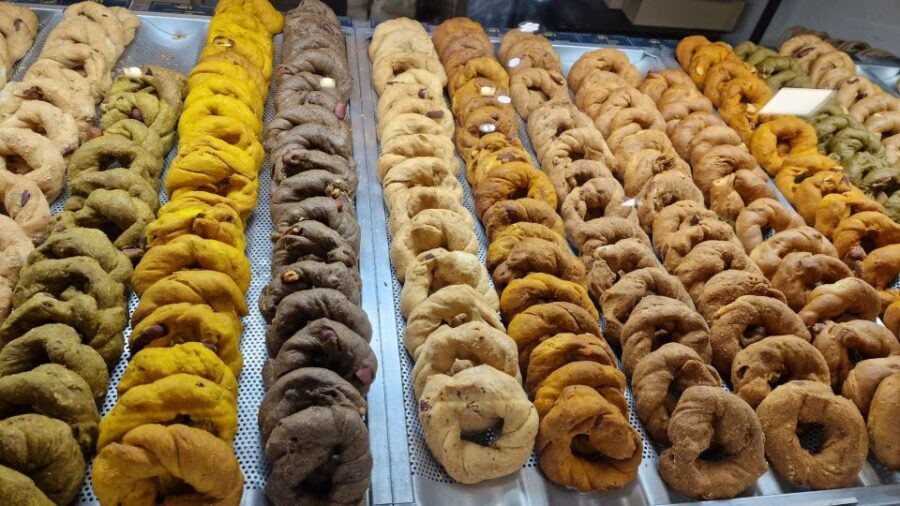
- Tarallo Napoletano (spicy salted cookie), with flavor choice
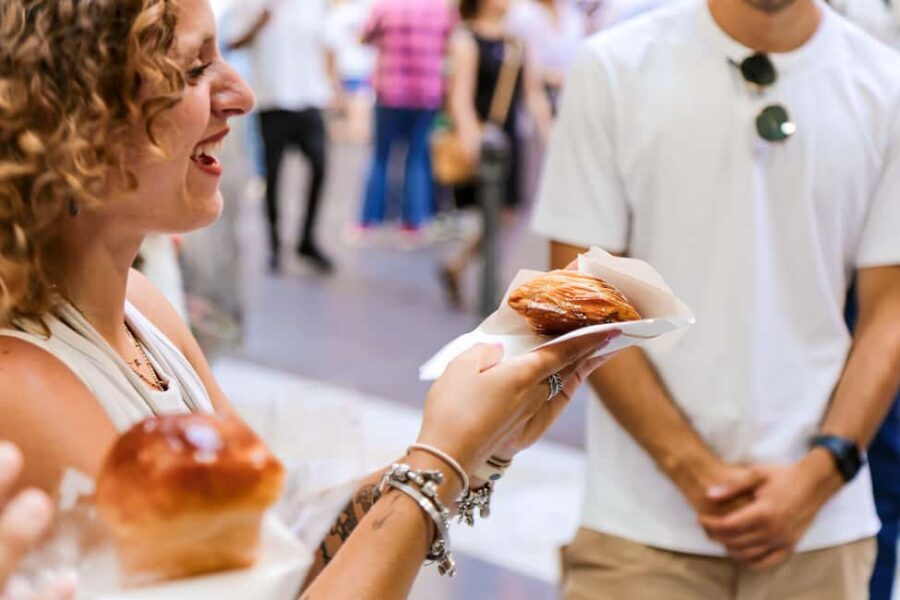
- Babà or Sfogliatella plus Neapolitan espresso
- Pizza wallet (Portafoglio) or fried pizza, plus a bottle of water
- Corno Napoletano lucky charm from the San Gregorio Armeno area
Here’s why this set matters. You’re not just sampling “random Italian snacks.” You’re getting a spread that covers savory, sweet, and a proper coffee finish. Babà and sfogliatella are both Naples signatures, and espresso anchors the sweet bite the way locals do.
Also, the lucky charm is a smart souvenir choice: it’s tied to a specific place on the route, not a generic gift shop stop.
Price and time: does $70 feel fair?
At around $70 per person for 3–4 hours, you’re paying for three things: a local guide, a structured walking route across major areas, and multiple tastings plus coffee and water.
Is it expensive? It can be, depending on what you’d do on your own. But consider what you’re getting in one block:
- An official guide
- Several scheduled food stops
- Church and square context you’d otherwise have to research yourself
- A route that includes both classic sights and neighborhood streets
If your alternative is “walk around and buy snacks as you go,” you might spend less money but lose a lot of the reason for the day. If you’re visiting Naples for the first time and want the city’s logic in under half a day, this price is easier to justify.
Practical tips: shoes, clothing, pace, and what to bring
A few things will make your day smoother:
- Wear comfortable shoes. You’ll be walking through historic lanes.
- Bring a camera. You’re timed through photo-friendly areas like Piazza del Plebiscito and Piazza del Gesù Nuovo.
- Dress for churches: knees and shoulders covered inside.
- Expect the route and timing to vary slightly, because street-level logistics never behave like a spreadsheet.
Group size can vary since it’s listed as private or small groups available. In the reviews, I saw mention of groups around eight, with a calm walking speed that allowed conversation. That’s exactly the kind of pace you want in Naples.
Brief FAQ for planning your Naples street food walk
FAQ
Where is the meeting point?
You meet the guide outside the Cathedral of Naples in Via Duomo, at Cattedrale di Santa Maria Assunta. The guide will hold a board with the Iamme Ia! logo.
How long is the tour?
It lasts about 3 to 4 hours.
What food is included?
Included tastings include Tarallo Napoletano, Babà or Sfogliatella with Neapolitan espresso, pizza (either the folded wallet style or fried pizza), plus a bottle of water.
Is there a dessert and coffee stop?
Yes. The tour includes Babà or Sfogliatella along with Neapolitan espresso.
Do you get a souvenir?
Yes. You receive a Corno Napoletano lucky charm from the San Gregorio Armeno district.
What’s the starting point?
The tour meeting point is outside the Cathedral on Via Duomo. The starting location may also be listed as Via dei Tribunali depending on the departure.
What languages are available for the guide?
The live guide is available in English, Spanish, French, and German.
What should I wear to churches?
You need knees and shoulders covered when entering churches.
Is the tour suitable for wheelchair users?
No, it is not suitable for wheelchair users.
What’s the biggest thing that is not included?
Transfers to and from your hotel are not included.
Should you book this Naples street food tour?
I’d book it if you’re doing Naples as a first-time or repeat visit and want a plan that mixes real street food with the city’s key landmarks. It’s especially worth it if you like learning why things matter as much as tasting them.
Skip it or rethink if you hate walking, can’t handle older streets, or expect a fully polished “museum Naples” day. This tour is made for moving through the city as Naples actually is: streets, squares, flavors, and a guide to keep everything connected.