REVIEW · NAPLES
Herculaneum Private Tour with an Archaeologist
Book on Viator →Operated by ELIANA SANDRETTI · Bookable on Viator
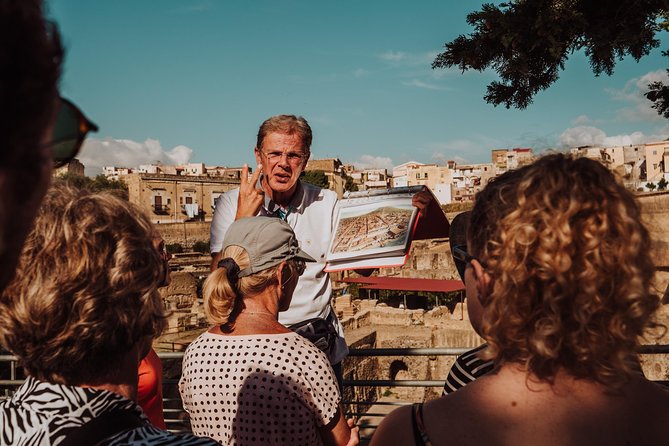
Herculaneum has a way of sticking with you. This private, English-language tour moves through the best-preserved neighborhoods of Ercolano with an archaeologist at your side, so you are not just looking at ruins, you are following the story of daily life and the eruption of Vesuvius as it happened. I loved how the guide made the site feel human, not like a museum display, and how the pace stayed thoughtful from house to house.
One thing to consider: you will still need to budget for the entrance tickets to the archaeological park, since those are not included in the tour price.
Your group gets a true private format, and that matters at a place like Herculaneum, where details can be easy to miss when you are walking fast. Guides such as Eliana Sandretti, Roberto, Pina, Amedeo, and others are repeatedly praised for answering questions clearly and keeping things understandable, even when the subject turns very serious. Still, it is a fairly set route, so if you want to linger on one room or skip the more sobering stops, you may feel slightly constrained by the schedule.
If you like ruins with context, this is a strong match. You get a guided sweep across major domus (houses) and landmark areas, plus a chance to stand where the coastline and eruption viewpoints shaped what people could see in the moment.
In This Review
- Key things to watch for (quick hits)
- Why this Herculaneum tour feels different from a self-guided walk
- Price and what you are really paying for (group up to 10)
- Meeting point: where your archaeologist will find you
- Stop 1: Parco Acheologico di Ercolano at the ticket office
- Stop 2: La Terrazza di M. Nonio Balbo and the eruption viewpoint
- Stop 3: Casa dei Cervi and the sea-facing luxury terrace
- Stop 4: Partem Domus lignea (Casa del Tramezzo di Legno) and the burned wooden partition
- Stop 5: Casa del Salone Nero and the black-painted room
- Stop 6: Salone della Barca di Ercolano and the charred boat
- Stop 7: College of the Augustales, Hercules frescoes, and a skeleton of the keeper
- Stop 8: House of the Skeleton and what a name teaches you
- Stop 9: Casa Sannitica, one of the oldest houses
- Stop 10: Casa di Nettuno e Anfitrite and the sea-world of art
- The guides are the difference: what makes this tour earn near-perfect ratings
- How to decide: who should book this tour
- Should you book this Herculaneum private tour with an archaeologist?
- FAQ
- How long is the Herculaneum private tour with an archaeologist?
- Is the entrance ticket to Herculaneum included?
- Where do we meet for the tour?
- Is the tour in English?
- Is this a private tour?
- Are mobile tickets used?
- What happens if the weather is poor?
Key things to watch for (quick hits)
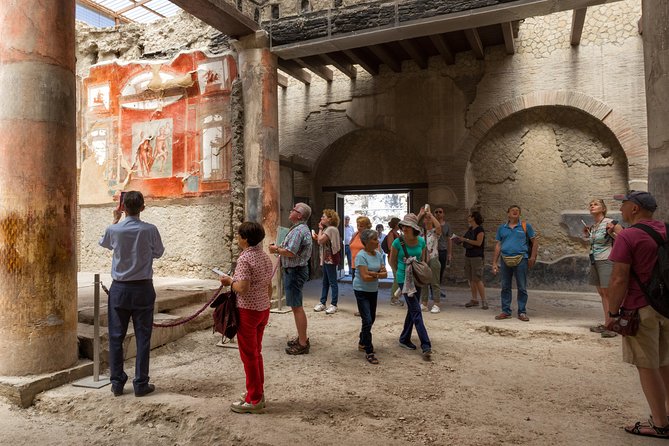
- Your guide’s explanations are built around what you are seeing, from fresco subjects to the meaning of burned architectural features.
- Carbonized discoveries bring the eruption into focus, especially the charred wood and the boat recently discovered.
- The stops are timed tightly for a 2-hour visit, so it feels efficient without turning into a sprint.
- You get a mix of art and tragedy, including black-painted rooms and skeleton remains in specific areas.
- The tour is private (up to 10 people total), so you can ask real questions instead of shouting over a crowd.
Why this Herculaneum tour feels different from a self-guided walk
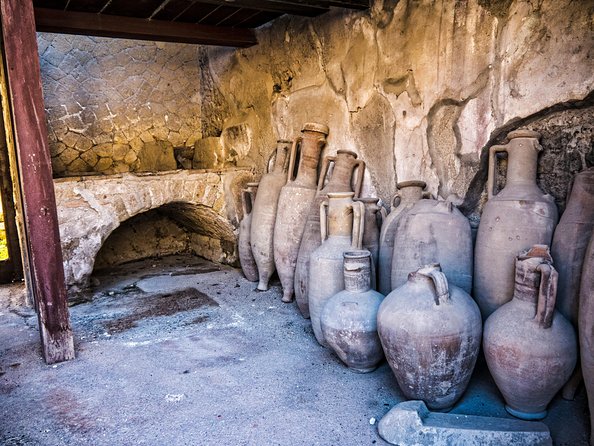
Herculaneum is often compared to Pompeii, but the vibe is different. Here, the town is smaller, and the preservation can feel almost intimate. One reason this tour works so well is simple: you get an archaeologist who can point out what matters and why.
When you walk through the Parco Acheologico di Ercolano with no guidance, you might admire the structures, but the site’s logic can stay fuzzy. With a guide, you start connecting dots quickly. You learn how the houses were organized, what certain rooms were used for, and what discoveries like charred wooden partitions or carbonized organic remains actually tell you about the last moments before the eruption.
This is also one of those places where the atmosphere changes as you move. Some parts feel like you are walking through everyday life—terraces, sea-facing views, painted rooms. Then you reach areas tied to human remains and the eruption’s immediate impact. A good guide keeps it factual and grounded, without turning it into melodrama.
You can also read our reviews of more private tours in Naples

Price and what you are really paying for (group up to 10)
The tour price is $349.98 per group for up to 10 people, and it runs for about 2 hours. That can sound steep until you do the math with your group size and the fact that you are hiring a specialist archaeologist for a private walk.
If you come as a group of friends or family, this can become fair value compared with paying for separate private guides. You also avoid the problem of trying to read everything alone at a fast pace. Here, the benefit is not only access to the best stops; it is the interpretation that helps those stops make sense.
Just know what is not included. You are still responsible for entrance tickets to the Herculaneum archaeological park (noted as 15€ for adults, with free tickets for under 18). The tour listing also notes an additional admission fee labeled for the private tour of Herculaneum as 15€ per person. When you budget, treat the site fees as a key part of your total cost.
So the real question is: do you want to learn how to read Herculaneum as you walk? If yes, the per-group pricing often feels like the smarter way to do it.
Meeting point: where your archaeologist will find you
You meet at the Archaeological Park of Herculaneum, Corso Resina 187, 80056 Ercolano (NA), Italy. The practical point here is that your guide meets you at the ticket office.
You should plan to show up a bit early so you can find the right place inside the park area and get settled before your guide starts the route. The tour provides a mobile ticket, and it is offered in English, which helps if you want to ask follow-up questions as you go.
Stop 1: Parco Acheologico di Ercolano at the ticket office
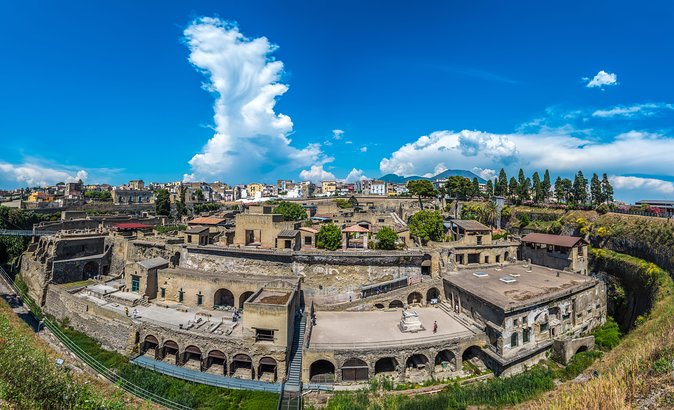
This is your launchpad. The guide is waiting at the site’s ticket office of Herculaneum, and you can purchase entrance tickets there if you have not already bought them online.
Here is what you gain by starting properly: your guide can set the tone fast. You typically want that context early because the eruption story is woven into almost everything you see afterward. You also want to make sure you understand the layout enough to follow the route as you move from house to house.
Possible drawback: because the entrance ticket is not included, you will need a little time and coordination at the start if you did not pre-book.
Stop 2: La Terrazza di M. Nonio Balbo and the eruption viewpoint
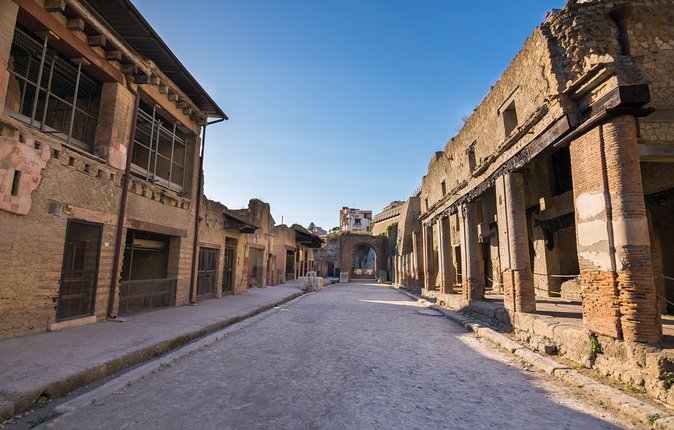
This quick stop is only about 5 minutes, but it carries a lot of weight. You will see skeletons of people who died during the eruption and then look out from the terrace to imagine what the panorama may have looked like before the main explosion of Vesuvius.
Why this matters: it anchors the visit in real geography and real time. From a terrace, it is easier to grasp how quickly conditions could change and why escape was so hard. A good guide explains what you are seeing without turning it into shock value. The goal is clarity: how the disaster unfolded and what that says about the town’s final moments.
If you are the kind of traveler who appreciates the human side of archaeology, this is the stop that tends to land hardest.


Stop 3: Casa dei Cervi and the sea-facing luxury terrace
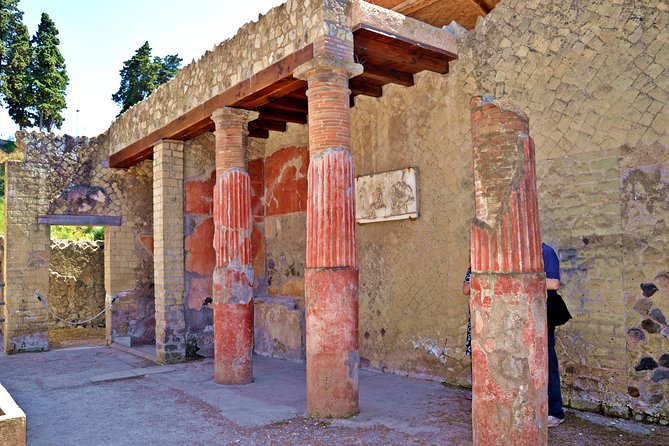
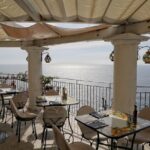
Next you reach Casa dei Cervi, a luxurious house with a terrace overlooking the sea. The time here is around 15 minutes.
This stop is where Herculaneum can feel strangely close to life before the disaster. Terraces matter because they show status, daily rhythms, and the way people used outdoor space. When a guide points out architectural choices and sightlines, you start to understand the house as a living environment, not just a preserved shell.
Drawback to keep in mind: like many historic sites, you will be doing plenty of walking over uneven ground. The tour duration is short, but comfortable shoes still matter.
Stop 4: Partem Domus lignea (Casa del Tramezzo di Legno) and the burned wooden partition
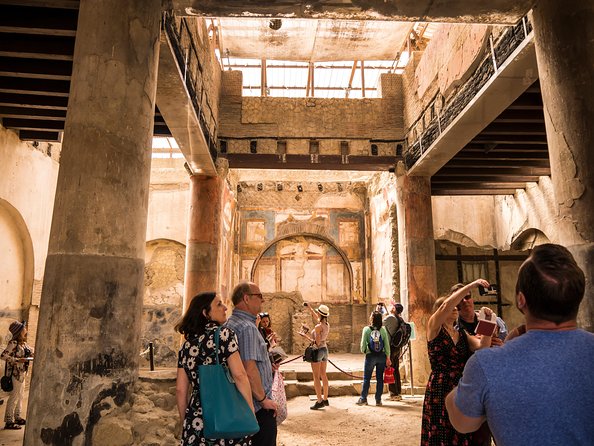
Now you shift from the scenic terrace to something startlingly specific: Casa del Tramezzo di Legno, named after a wooden partition that was charred due to the eruption.
You are looking at the kind of preservation that makes Herculaneum so powerful. Wood is usually gone in most archaeological sites, but here the eruption preserved enough material that you can grasp how rooms were partitioned and how space was managed inside the house.
If you enjoy detail—walls, partitions, how interior spaces were organized—this is one of the best stops on the route. It is also the kind of discovery that helps explain why Herculaneum studies keep producing new insights.
Stop 5: Casa del Salone Nero and the black-painted room
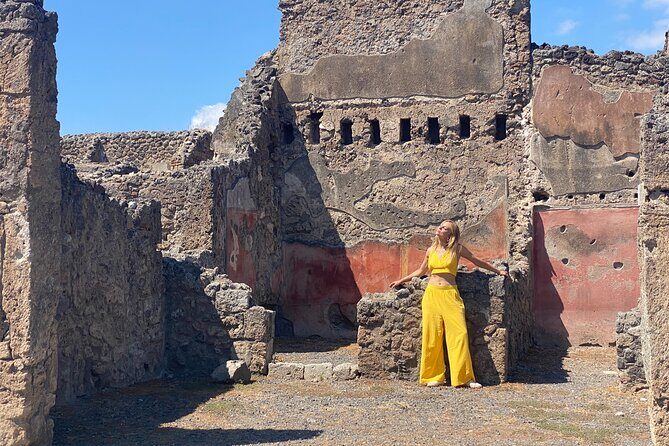
Casa del Salone Nero is known for the salon painted in black. You spend about 15 minutes here.
This is the artistic counterweight to the darker discovery stops. A black-painted room sounds simple until you learn what it might have meant visually and socially in context. When your guide talks through subjects and design choices, you realize that these homes were theaters of taste, not just shelter.
I like this stop because it shows you how art functioned as part of everyday spaces, even for people who never expected their town to become a time capsule.
Stop 6: Salone della Barca di Ercolano and the charred boat
This is another standout, around 15 minutes. You will see a boat charred by the eruption and recently discovered.
This is a stop built for imagination, but also for careful thinking. A boat is not an abstract “artifact.” It is a living part of a working relationship between the town and the sea—movement, trade, fishing, travel, or local connections. When a guide explains how it fits into the broader Herculaneum setting, you start to feel what the town relied on.
If you are the type who enjoys archaeology as a puzzle, this is your payoff moment: object + context = meaning.
Stop 7: College of the Augustales, Hercules frescoes, and a skeleton of the keeper
The College of the Augustales takes about 15 minutes, and it blends art, religious symbolism, and a human story.
You will see frescoes representing Hercules entering Olympus. In the same room, you will also see the skeleton of the keeper who died during the eruption.
This stop can be emotionally heavy, but the value is in how it connects belief and daily life. Instead of treating frescoes as decoration, a guide can help you understand how religious imagery worked in a public or semi-public space.
Practical note: this room’s content is dense. If you like to ask questions, this is a great place to do it, because you will already be hearing structured explanations from your guide.
Stop 8: House of the Skeleton and what a name teaches you
The House of the Skeleton gets its name from the discovery of a skeleton of an inhabitant who was unable to save himself. Your time here is about 10 minutes.
This stop is not long, but it is powerful. The quick duration helps keep the walk flowing, while still letting you process what the site is telling you. A good guide keeps the tone respectful and factual, pointing out how and why remains were uncovered in specific locations.
If you struggle with emotional weight, you might brace yourself ahead of time. If you prefer your history to include human consequences, you will likely leave this stop grateful that the site doesn’t sanitize the past.
Stop 9: Casa Sannitica, one of the oldest houses
You then reach Casa Sannitica, described as one of the oldest houses in Herculaneum, with about 15 minutes here.
This is where the archaeologist can show you how different houses reflect different phases of the town. Even within a single site, the age of a house helps you understand what changed over time—ownership patterns, architectural updates, and how the town evolved.
This stop is for travelers who like chronology. If you enjoy understanding how a place developed rather than just what survived, Casa Sannitica is a smart inclusion.
Stop 10: Casa di Nettuno e Anfitrite and the sea-world of art
Your final major stop is Casa di Nettuno e Anfitrite, where you will see rich scenographic compositions. You get about 15 minutes.
This is the last visual punch of the route. Neptune and Amphitrite are sea-related figures, and the fact that you’re seeing them in a house setting ties back to the sea-facing life you noticed earlier. When your guide connects the subject matter to the town’s setting and lifestyle, the houses stop feeling disconnected.
In a 2-hour tour, this ending matters. It helps you leave with a sense of continuity: not just a list of rooms, but a coherent picture of how people lived.
The guides are the difference: what makes this tour earn near-perfect ratings
Across the many successful tours, the praise is consistent in a way you can actually use for your decision. The guides are repeatedly described as:
- Answering questions in a way that is clear and easy to follow
- Keeping an efficient pace without feeling rushed
- Explaining details tied directly to each room
- Adjusting their explanations when needed, including for different interests and even mobility needs
One review note worth translating into your planning: if you have mobility concerns, mention it early. Some guides have been helpful with finding places to step around stairs and keeping the pace manageable. The overall tour is short, but the site itself includes uneven surfaces, so it helps when your guide works with your needs.
Also, if you are a photo person: ask your guide when to step back. At Herculaneum, timing can matter because lighting and sightlines can help you understand what you are seeing.
How to decide: who should book this tour
This private archaeologist-led tour is a great fit if:
- You want context, not just scenery
- You like asking questions and getting straight answers
- You want the eruption story explained in a way that matches what you are standing next to
- You care about art in situ—frescoes, room design, and symbolic themes
It might be less ideal if:
- You want to spend a lot of time wandering slowly on your own
- You do not like the emotional weight of human remains tied to the eruption
- Your group prefers very flexible pacing where you can skip stops without the schedule moving ahead
Should you book this Herculaneum private tour with an archaeologist?
Yes, if your goal is to understand Herculaneum quickly and deeply in just about 2 hours. The price is for a private group of up to 10, and the value comes from having an archaeologist connect architecture, art, and eruption discoveries into a clear narrative. Add the fact that your guide is meeting you right at the site, in English, and you get a tidy, high-impact plan.
If you are traveling as a small family or a group of friends who want to learn together, this is often the most practical way to experience Herculaneum without feeling lost. Just budget for the park entrance tickets so there are no surprises, and wear shoes made for historic ground.
FAQ
How long is the Herculaneum private tour with an archaeologist?
It lasts approximately 2 hours.
Is the entrance ticket to Herculaneum included?
No. The entrance fee is not included. The tour notes 15€ for adults and free tickets for under 18.
Where do we meet for the tour?
The meeting point is at the Archaeological Park of Herculaneum, Corso Resina 187, 80056 Ercolano NA, Italy (at the ticket office).
Is the tour in English?
Yes. It is offered in English.
Is this a private tour?
Yes. It is a private tour, meaning only your group participates.
Are mobile tickets used?
Yes, the tour includes a mobile ticket.
What happens if the weather is poor?
The tour requires good weather. If it is canceled due to poor weather, you will be offered a different date or a full refund.