REVIEW · NAPLES
Guided tour of the Sanità District with an art expert
Book on Viator →Operated by Svelaria guided tours · Bookable on Viator
Color spills out in Sanità.
This art-expert guided tour helps you read a neighborhood the way locals do, with stories tied to churches, palaces, and the walls themselves. I love how the route starts at the imposing Porta San Gennaro and keeps moving on foot, so the district feels like a living place rather than a checklist.
Two things I particularly like: you get pointed attention on baroque painting (Luca Giordano and Azzolino are named for you), and you also get street-art context, including an inclusion-focused exhibit with works by Mono Gonzalez and Tono Cruz. One possible consideration: several stops are short, and Totò’s house is visible only outside, so don’t expect an indoor museum-style visit.
In This Review
- Key highlights to look for
- Why Rione Sanità Feels Like Naples (Not a Theme Park)
- The 9:30 route: meeting point, finish point, and how to plan your day
- Porta San Gennaro: the monumental start that gives your bearings
- Santa Maria della Sanità: free access and a quick, meaningful reset
- The baroque Basilica of San Vincenzo Ferrer: where the artists get named
- Palazzo Sanfelice: a fast stop with long architectural clues
- Casa Natale di Totò: famous Naples, human scale
- Palazzo dello Spagnolo: noble architecture at the tour’s close
- Santa Maria Maddalena ai Cristallini and the inclusion street-art exhibit
- The best part: what the art expert actually does for you
- Group size and pacing: why up to 12 can feel personal
- Price and value: $242 per group, and the math that helps
- Who should book this Sanità District art walk?
- Should you book this tour?
- FAQ
- What is the duration of the Sanità District guided tour?
- Where does the tour start?
- Where does the tour end?
- What time does the tour begin?
- What is the group size and is it private?
- How much does the tour cost?
- Do I need to pay admission fees at the stops?
- Is the Casa Natale di Totò visited inside or outside?
- Who leads the tour?
- Is mobile ticketing used?
- Is the tour suitable if I have moderate mobility?
Key highlights to look for
- Porta San Gennaro sets the mood fast, right at the neighborhood’s monumental entrance
- Baroque church art is explained with artist names, not just vague descriptions
- 18th-century palaces like Palazzo Sanfelice and Palazzo dello Spagnolo shape the walking story
- Totò’s birthplace is exterior-only, but the tour turns it into a real cultural stop
- Street art for inclusion at Santa Maria Maddalena ai Cristallini adds a modern Naples layer
Why Rione Sanità Feels Like Naples (Not a Theme Park)
Sanità, in plain terms, is where Naples gets more human. You’re not boxed into a central-sight “greatest hits” loop. Instead, the tour is built around walking through real alleys and moving from one kind of art to another: religious painting, noble architecture, and then modern mural work on neighborhood walls.
What makes this kind of guided format work is the way the art expert connects details. A baroque church interior can become a dead stop if nobody gives you a key. Here, you’re given names and time periods (like 17th-century artists) so your eyes know what they’re looking at as you move.
And I like that the pacing matches the district. It’s not a “run from stop to stop.” You’ll spend enough time at each location to feel the change in atmosphere—then the next stop surprises you again.
You can also read our reviews of more guided tours in Naples


The 9:30 route: meeting point, finish point, and how to plan your day
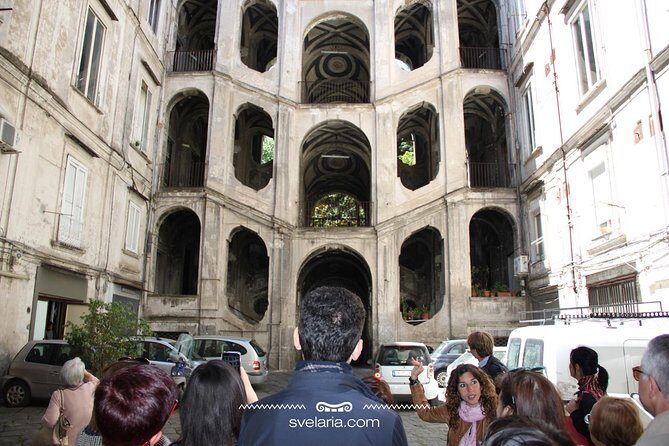
This is a private tour for your group only, typically sized up to 12 people, and it runs about 2 hours. The start is 9:30 am at Ristorante Pizzeria Capasso – Napoli, Via Porta S. Gennaro, 2. The route finishes at Palazzo dello Spagnolo, Via Vergini, 19.
That start-and-finish detail matters because you’ll end in a different spot than you began. If you’re planning lunch, head to your meal with the assumption you’ll be on foot in the area afterward, not circling back to the exact meeting corner.
The tour also uses a mobile ticket, so you can keep things simple on your phone. And it’s marked as near public transportation, which is helpful for getting there without turning your whole morning into logistics.
One more practical note: the experience calls for moderate physical fitness. That usually means stairs, uneven ground, and the normal “Naples on foot” reality. Bring shoes you trust.
Porta San Gennaro: the monumental start that gives your bearings
The tour kicks off at Porta San Gennaro—a monumental entry that immediately frames Sanità as more than a residential maze. Standing there first helps you understand why this area has always mattered. It’s the kind of place where you can feel the district’s importance without needing a big lecture.
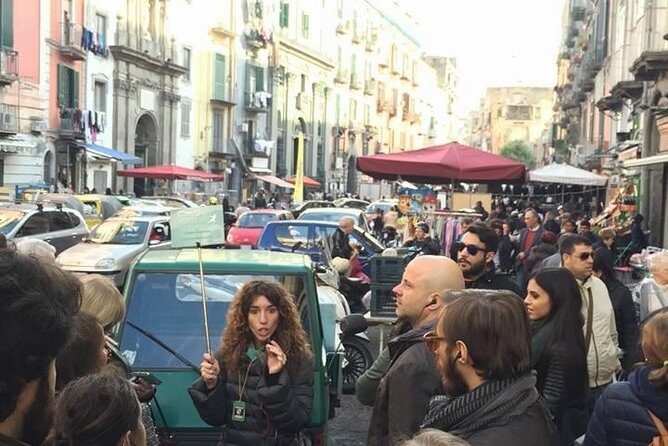
From there, you walk into the heart of the neighborhood. The early movement is not filler. It’s the transition from “seeing Naples” to “walking Naples.” That’s when you start noticing the color, the sound, and the way people use the street.
If you like tours that don’t dump you into a quiet museum box, this opening is a strong start.
Santa Maria della Sanità: free access and a quick, meaningful reset
Stop 1 is Santa Maria della Sanità (Church of S. Maria della Sanità) for about 30 minutes, and admission is free. This is a good early stop because churches in Naples often function as more than sightseeing stops—they’re community anchors.
Even with a shorter timeframe, the art expert approach can make a church feel readable: why certain details were made, what visitors should look for, and how the religious space connects to the neighborhood’s identity.
A small drawback to know: this stop is not described as an extended deep-dive, so if you’re looking for hours in one interior, plan to use the rest of the tour as your “breadth” and accept this as a focused visit.
The baroque Basilica of San Vincenzo Ferrer: where the artists get named
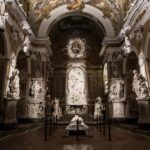
After the neighborhood walk, you reach the baroque Basilica of San Vincenzo Ferrer, which is highlighted for its paintings by Luca Giordano and Azzolino, plus other 17th-century artists.
This is one of the big “worth it” moments on the tour. Baroque art can be overwhelming if you don’t have a guide pointing your attention toward what matters. With named artists and an explanation of the work’s context, you’re more likely to notice faces, gestures, and the drama of the composition rather than just registering “lots of paint.”
Also, this is a great contrast stop. You’ve been outside with street life; now you’re inside with crafted visual storytelling. That shift is one reason the tour works so well in about two hours.


Palazzo Sanfelice: a fast stop with long architectural clues
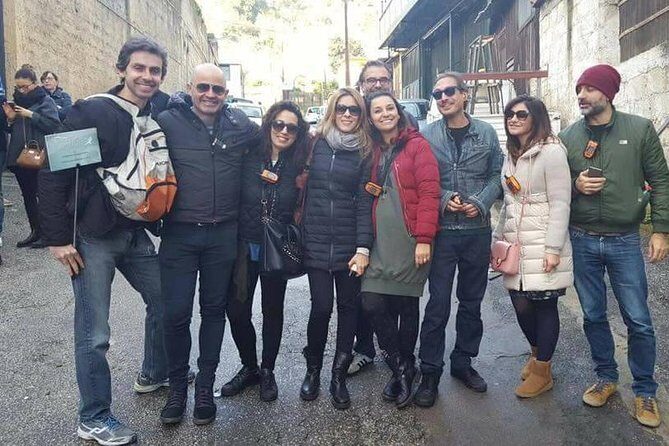
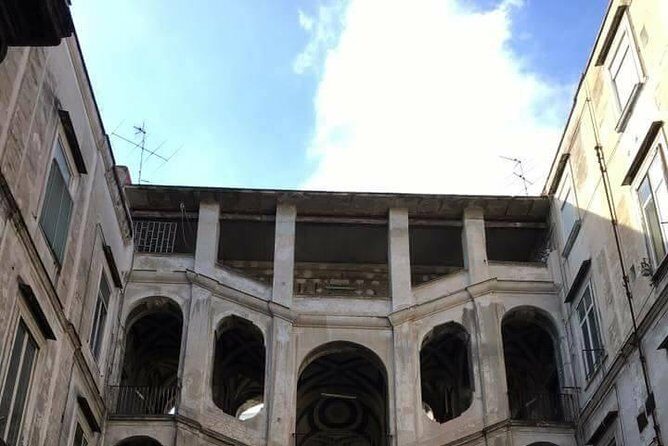
Next comes Palazzo Sanfelice for around 15 minutes, also free. Palaces like this are useful stops because they tell you what power and wealth looked like in an era before modern city planning.
In a short visit, you won’t become an architectural historian—but you will learn what to look for. The art expert can connect noble buildings to the district’s social story, and that helps you interpret what you see on the street as you keep walking.
This is also a good moment to take photos, but keep it respectful. In neighborhoods like Sanità, the street is part of daily life.
Casa Natale di Totò: famous Naples, human scale
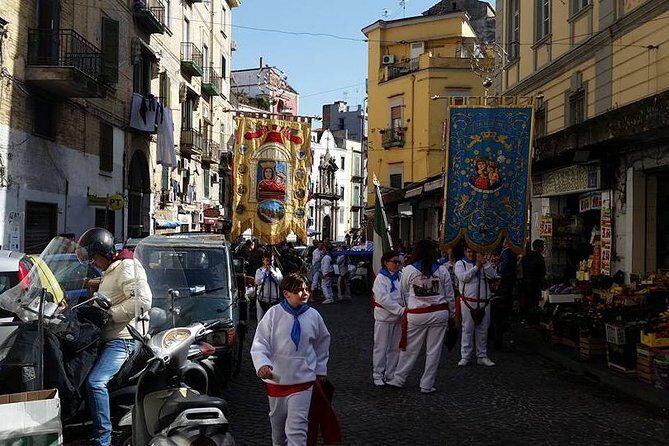
You’ll visit the Casa Natale di Totò—Naples’ beloved actor and comedian—but it’s visible only outside, with about 15 minutes for this stop and no admission fee.
This kind of stop is different from a museum. You’re not going inside; you’re standing in a place that shaped a person who shaped Neapolitan culture. The value here comes from the story: Totò isn’t just a name to read on a poster. With context from your guide, the house becomes a cultural landmark that fits the street setting.
If your group expects an indoor attraction, adjust your mindset. The exterior-only aspect is part of the charm if you like real-world places rather than staged displays.
Palazzo dello Spagnolo: noble architecture at the tour’s close
You then move to Palazzo dello Spagnolo, again about 15 minutes and free. The palace is both a sightseeing moment and a strong visual bookend, because it’s also where the tour ends.
Even if you don’t linger long, it’s helpful to compare it in your mind with Palazzo Sanfelice. Two palaces, different details, same era of ambition. Your guide’s explanations can make those differences stand out instead of blending together.
Because you finish here, you can also treat this as your “last stop photos” moment and then head off to your next plan from the area.
Santa Maria Maddalena ai Cristallini and the inclusion street-art exhibit
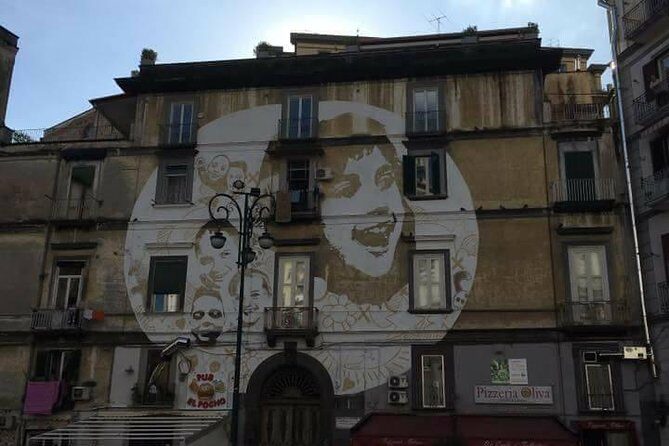
One of the most modern-feeling parts of the tour is Chiesa di Santa Maria Maddalena ai Cristallini. You’ll spend about 10 minutes here, with a street-art exhibit about inclusion, featuring works by Mono Gonzalez and Tono Cruz.
This stop is short, but it changes the tone of the whole experience. You’ve just been looking at religious and noble art; now you’re looking at contemporary public art tied to social themes. It’s a reminder that art in Naples is not locked behind ticket lines.
If you care about how art intersects with present-day issues, this is the stop that may stick with you longest.
The best part: what the art expert actually does for you
The success of a tour like this comes down to the guide’s ability to connect dots. The guide is presented as an art expert, and the impression you should look for is clear, structured storytelling.
In particular, the tour’s approach of naming artists and pointing out specific themes (baroque painting, noble architecture, and modern street-art messaging) is what makes the walking feel smarter, not just longer.
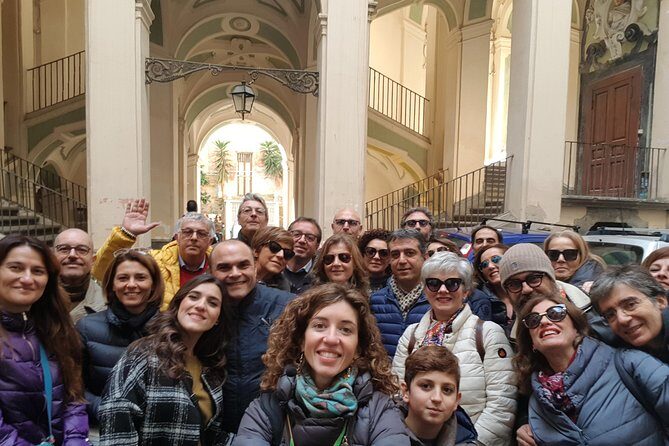
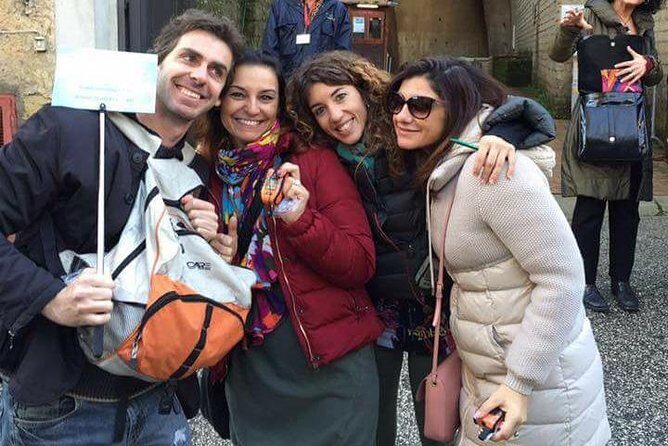
Also, guides associated with this tour brand get called out for keeping people engaged—even when families include kids. That matters. A good district walk can easily lose attention. Here, the structure helps you keep moving and keep listening.
Group size and pacing: why up to 12 can feel personal
With a group size of up to 12 and a private tour setup, the dynamics are usually better than the big-coach version of “Naples highlights.” You’re more likely to ask questions, and you’re less likely to get separated from the group the moment a photo angle looks good.
The total duration is around 2 hours, with multiple short stops. That pacing is ideal for a first taste of Sanità. If you want a slower, longer “live in the neighborhood” day, this tour works best as the beginning chapter, not the whole book.
Price and value: $242 per group, and the math that helps
At $242 per group (up to 12) for roughly 2 hours, the price looks reasonable because you’re paying for the guide time plus the planning of a focused route.
If the group fills close to 12 people, the effective cost per person drops a lot, turning this into a bargain compared to tours that charge per person for similar time on foot. Even if your group is smaller, the art expert guidance still tends to justify the fee—especially because the stops themselves are marked as free admissions where applicable, including churches and the palaces featured in the route.
Also, because it’s a private group, you’re not paying extra just to be part of a crowd. You’re paying to get a guided walk that’s designed to make the neighborhood legible.
Who should book this Sanità District art walk?
You’ll likely love this tour if:
- You want Naples that feels local and street-level, not just famous piazzas
- You enjoy art when someone gives you specific names and themes to look for
- You have about 2 hours and want a route that covers churches, palaces, and modern mural culture
- Your group includes mixed ages, and you want explanations that keep attention moving
You might skip it if:
- You need indoor, ticketed attractions with long time inside each stop
- You dislike walking on uneven streets for a moderate amount of time
- You expect Totò’s house to be an indoor visit (it’s outside only)
Should you book this tour?
Yes—if your goal is to understand Sanità as an art-forward neighborhood rather than a place you pass through quickly. The value comes from the combo: baroque church painting with named artists, 18th-century palaces, and modern street art with an inclusion theme. Add the short, manageable timing, and you get a strong first visit without burning half a day.
If you’re in Naples and you want one experience that helps you “read” what you’re seeing while you walk, this is the kind of tour that makes the district make sense fast.
FAQ
What is the duration of the Sanità District guided tour?
It lasts about 2 hours.
Where does the tour start?
The meeting point is Ristorante Pizzeria Capasso – Napoli, Via Porta S. Gennaro, 2, 80138 Napoli NA, Italy.
Where does the tour end?
The tour ends at Palazzo dello Spagnolo, Via Vergini, 19, 80137 Napoli NA, Italy.
What time does the tour begin?
The start time is 9:30 am.
What is the group size and is it private?
It’s a private tour/activity, and the group size is up to 12 people.
How much does the tour cost?
The price is $242.00 per group (up to 12).
Do I need to pay admission fees at the stops?
Admission is listed as free for the church and palaces included, and the Totò birthplace is visible only outside.
Is the Casa Natale di Totò visited inside or outside?
It is visible only outside.
Who leads the tour?
The tour is guided by an art expert.
Is mobile ticketing used?
Yes, you get a mobile ticket.
Is the tour suitable if I have moderate mobility?
The experience asks for a moderate physical fitness level, so plan for walking on neighborhood streets. Service animals are allowed.
If you tell me your travel dates and how many people are in your group, I can help you judge whether it fits well with your Naples plan.