REVIEW · NAPLES
From Naples: Guided tour of Pompeii skip-the-line and round-trip train
Book on GetYourGuide →Operated by inStazione · Bookable on GetYourGuide
Pompeii is waiting, but timing matters.
This day trip is built for speed and clarity: you start at Napoli Centrale, ride a fast train each way, then spend about two hours walking Pompeii with a professional guide using skip-the-line entry. I like the structure because it handles the hardest part for most people, getting from Naples to the ruins without stress. I also like that you get a real human guide covering what you’re seeing, from the bigger layouts down to everyday details like frescoes, baths, ceramics, and even the stories left behind by the Vesuvius eruption in 79 AD. One drawback to consider: the train ride can get very crowded, and a few departures reported long waits at the station or at the entrance even with skip-the-line.
The payoff is that Pompeii can feel like a time machine. The volcanic material didn’t just destroy the city, it also helped preserve it, so you’re walking streets that still show how Romans lived and spent free time. It’s a lot to fit into one day, and it helps to know where the tour is going and how to get back when your guided time ends.
In This Review
- Quick Take: What You Get for About $49
- Key Points Before You Go
- Why This Pompeii Day Trip Works From Napoli Centrale
- Morning Setup: Ticket Pickup at Napoli Centrale
- The 40-Minute Train Ride: Quick and Often Crowded
- Getting Into Pompeii: Skip-the-Line, Then Actually Use It
- Inside Pompeii With a 2-Hour Guided Walk
- What the Sites Mean: Temples, Theaters, Baths, Frescoes
- After the Guide: Navigating Back and Staying Oriented
- Price and Value: Is $49 a Good Deal?
- Who This Trip Fits Best (and Who Might Prefer Another Plan)
- Should You Book This Pompeii Day Trip?
- FAQ
- Where does the tour start?
- How long is the train ride to Pompeii?
- How long is the guided portion inside Pompeii?
- Does the ticket include skip-the-line entry?
- Are round-trip train tickets included?
- What languages are available for the live guide?
- Is lunch included?
- What do I need to bring?
- Are pets allowed on the tour?
- Can I cancel for a refund?
- Is there a pay-later option?
Quick Take: What You Get for About $49
This costs around $49 per person and is basically buying yourself three things: train tickets, a skip-the-line entrance, and a guided walk. For many people, that’s the right value because the train part is simple but the timing part isn’t. You’re paying to reduce confusion, cut waiting, and get a guide to connect the dots so Pompeii doesn’t turn into random ruins.
A few small issues show up in real-world feedback too: crowds on the train, occasional waiting, and one or two complaints about the return process being easier with someone shepherding the group. Still, the overall rating is strong, and the guided portion inside Pompeii is where this trip earns its keep.
Key Points Before You Go
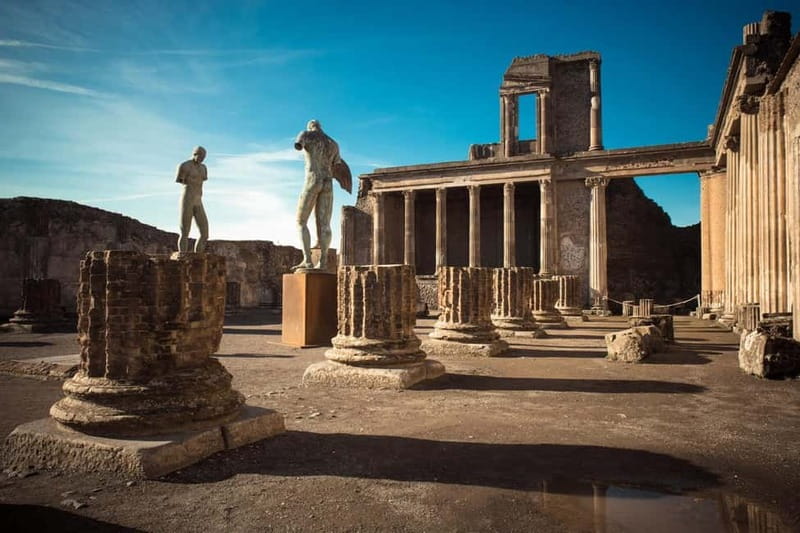
Train is simple, but it can be packed on both directions, so plan to stand or squeeze if your car fills up.
Skip-the-line helps, yet some waits happen at the entrance on certain days, so don’t bank on instant entry.
You get about 2 hours of guided walking focused on major parts of Pompeii and daily Roman life.
Guide names like Maria, Anna, and Bernadetta show up often in feedback for clear explanations and energy.
Return may feel independent once you finish the tour, so take your bearings before you break off.
You can also read our reviews of more tours and experiences in Naples.



Why This Pompeii Day Trip Works From Napoli Centrale
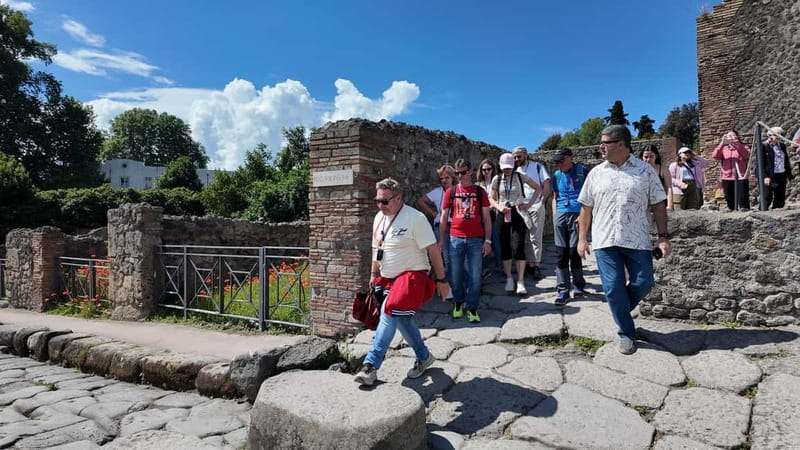
Starting at Napoli Centrale is a big deal. Many Pompeii day trips from the city start with a bus hop or a meeting point that’s hard to find when you’re tired, lost, or running late. Here, the rail plan is straightforward and the time is tight: about 40 minutes to Pompeii and about 40 minutes back.
What makes the experience interesting is the combination of speed and storytelling. Pompeii isn’t only dramatic because Vesuvius erupted in 79 AD. It’s dramatic because the eruption buried the city in a way that also preserved details, so you can look at temples, theaters, frescoes, baths, and ceramics and still get a sense of everyday life. The guide’s job is to turn those objects into a living picture, including how Romans used their free time.
I also like that the tour is multilingual in a practical way. You can get a live guide in French, English, Spanish, Italian, Portuguese, German, Russian, so you’re not stuck translating everything in your head. That matters in Pompeii, where small visual cues can be the difference between seeing stuff and understanding what you’re looking at.
The main consideration is your comfort tolerance. One theme shows up repeatedly: the train can be extremely cramped, especially on the way back. If you’re sensitive to crowds, go in with a plan to stay patient during the transit.
Morning Setup: Ticket Pickup at Napoli Centrale
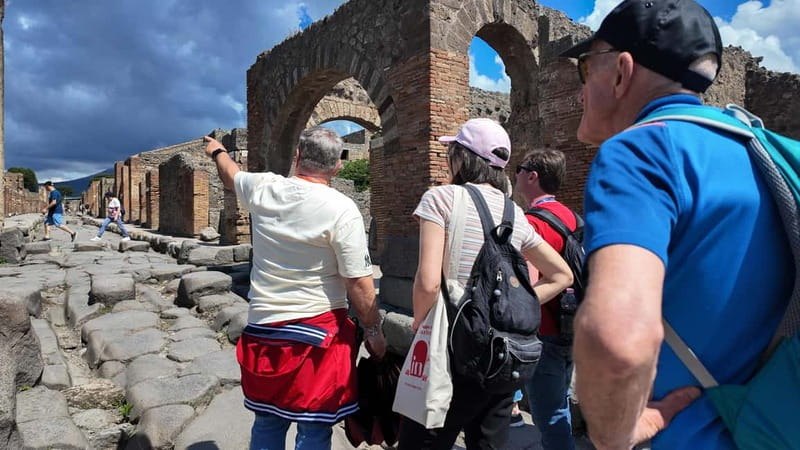
The day starts at Napoli Centrale. You pick up your entrance ticket and your train tickets at the meeting point area, which is one reason this tour feels less chaotic than a do-it-yourself day trip. The time window is not spelled out in detail here, but the important point is simple: don’t show up at the last second and assume it will be fine.
A few practical tips can save you stress. First, have your passport or ID card ready from the start. The operator notes no pets are allowed, so if you’re traveling as a family, plan accordingly.
Second, check for the reminder the day before. Your team will contact you on WhatsApp or by email to remind you about what you need. This kind of heads-up sounds minor until you’re standing in a busy train station asking where to go, so treat it like part of the tour.
Finally, aim to arrive early enough to find the ticket pickup spot without racing. Some feedback mentioned confusion around ticket office location. If you’re arriving for the first time, give yourself buffer time to orient yourself.
The 40-Minute Train Ride: Quick and Often Crowded
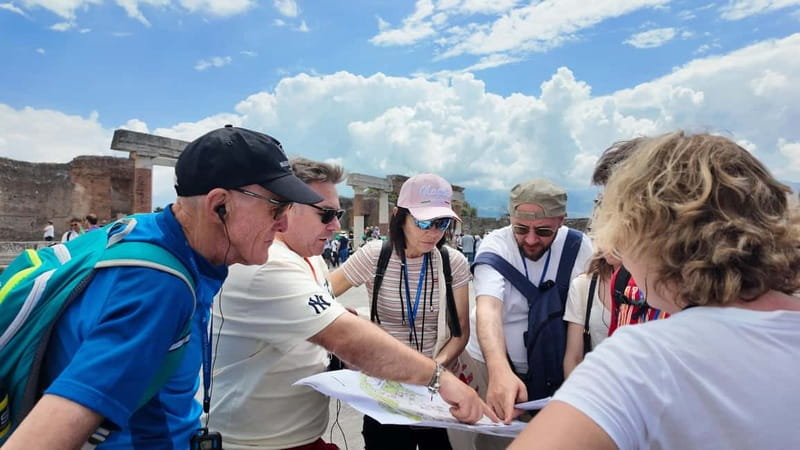
On paper, the train ride is easy: 40 minutes to Pompeii, then 40 minutes back. In practice, the experience can be intense because the cars can fill up. More than one person flagged the same problem: poor airflow, tight space, and standing for stretches.
Here’s how you make it better. Travel light, hold your bag close, and keep small essentials within reach: water if you need it, sun protection, and anything you use to avoid feeling miserable in tight spaces. If you’re doing this with kids, plan for comfort breaks during the ride both ways, because once you’re inside Pompeii you’ll be walking.
Also keep your expectations realistic. Even if you’re excited to start the ruins, the train ride can set the tone for the day. If you go in calm and prepared, the payoff at Pompeii will feel even better.
Getting Into Pompeii: Skip-the-Line, Then Actually Use It
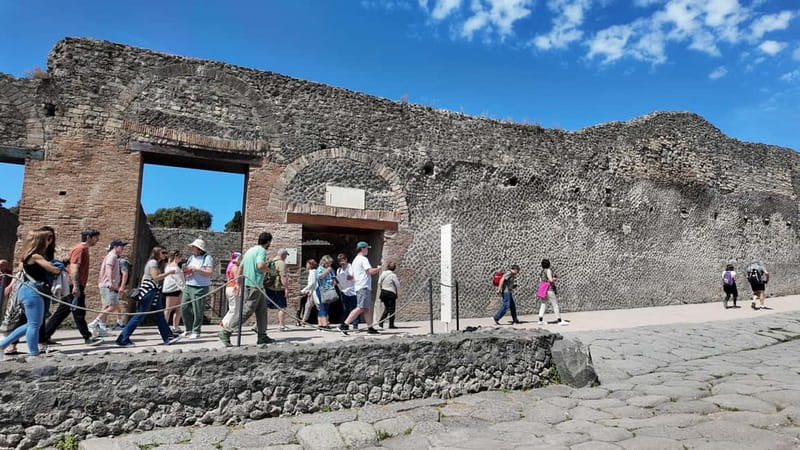
The big promise is skip-the-line entrance. That can be a game-changer in peak season because Pompeii is popular and entry lines can be long. However, real timing can still vary by day, and some people reported waiting even after paying for skip-the-line.
So use the skip-the-line for what it’s best at: reducing the chance of being stuck outside too long. If you arrive and entry is slow, don’t panic. Instead, focus on doing the basics right: stay with your group, confirm your entrance point, and keep an eye on where your tour guide is directing people.
What you’re walking into is massive. Pompeii isn’t a quick stroll of highlights. It’s a huge archaeological site, and multiple people said you could happily spend more time. This tour gives you guided structure for a couple of hours, then you’re on your own inside the ruins afterward.
That leads to a useful mindset: don’t try to see everything. Try to see the “how Romans lived” story first.



Inside Pompeii With a 2-Hour Guided Walk
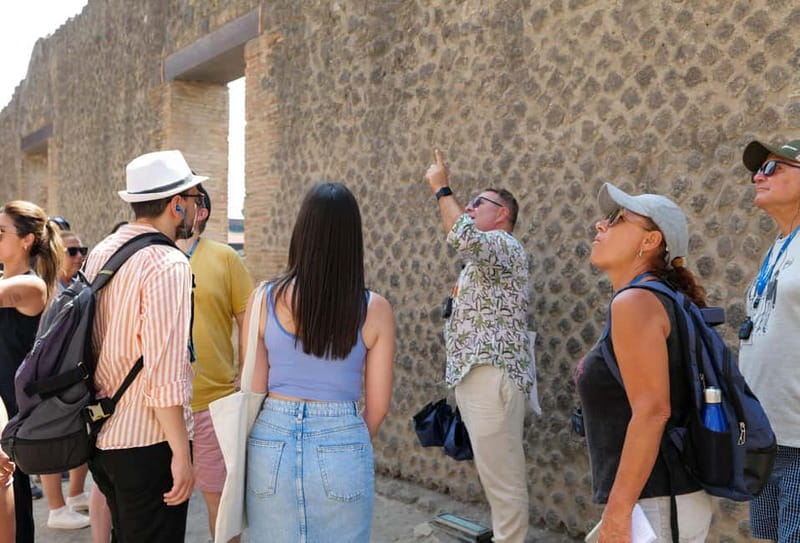
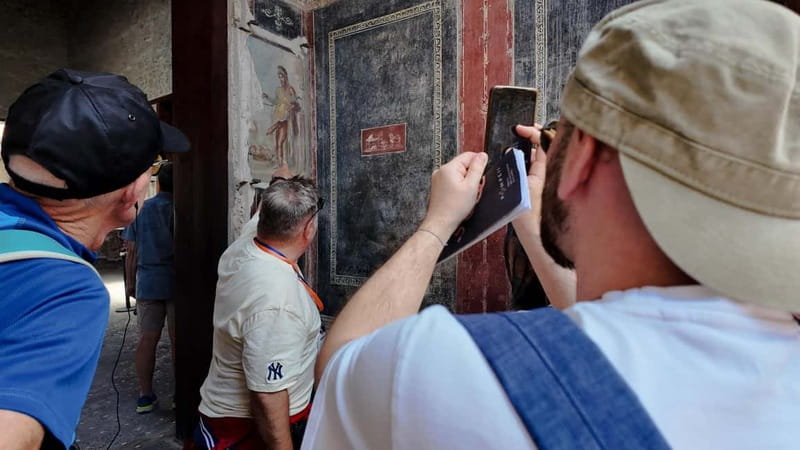
This is the heart of the experience: about 2 hours with a professional guide. The tour focuses on the kinds of places that help you read the city, not just the pretty highlights. You’ll see major examples like temples, theaters, frescoes, baths, and ceramics, and you’ll also get the human angle of what the eruption did to the city.
The guide is there to connect dots. If you walk Pompeii without context, it can feel like a collection of walls and rooms. With the guide, it becomes a place where Romans held events, relaxed, shopped (in the broad sense of daily life), and spent time in public spaces. The tour also gives anecdotes that help the site click, including how the eruption buried the city in 79 AD and how that burial preserved it.
One standout from feedback: guides like Maria and other named guides such as Anna and Bernadetta were praised for making the learning feel clear and lively. For families, there’s a special kind of value in a guide who can keep kids engaged, not just list dates.
Timing reality check: several notes mentioned that there can be periods of standing while the guide explains. That can limit how many corners you personally cover in the time you have. If you prefer a slower, wander-at-your-own-pace style, plan a little extra time beyond this tour later if you can.
What the Sites Mean: Temples, Theaters, Baths, Frescoes
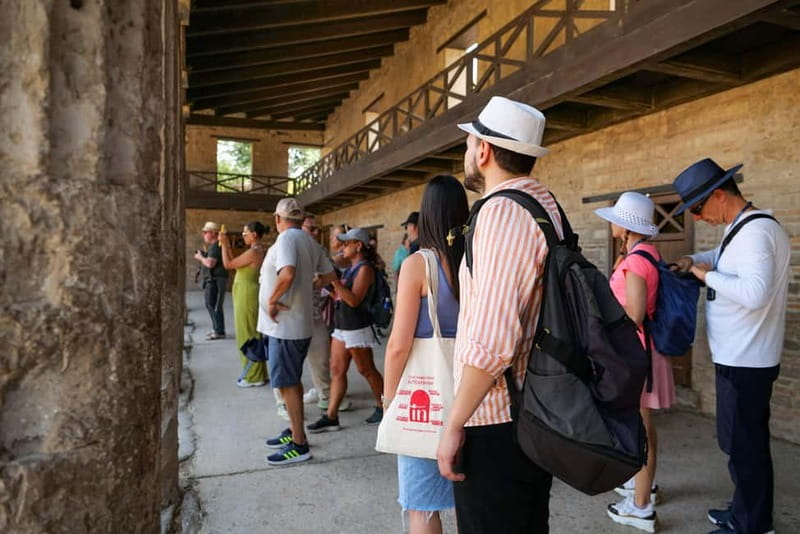
The tour’s topics aren’t random. They map to how you understand the culture of Pompeii.
Temples and theaters help you sense public life and community gatherings. Frescoes are visual storytelling, so they show you what people decorated their walls with and how they wanted space to feel. Baths point to daily routines and social habits, because bathing was both practical and social. Ceramics adds a practical layer, connecting art and household life to objects people actually used.
And then there’s the big backdrop: Vesuvius. The eruption buried the city, and paradoxically that burial helped preserve it. That’s why the streets feel different. You’re not just looking at remains; you’re looking at a city that’s stayed readable through time.
When the guide does this well, you’ll leave with mental anchors. You won’t only remember what buildings looked like. You’ll remember why they existed and what they meant to people living their normal days before 79 AD.
After the Guide: Navigating Back and Staying Oriented
Once the guided time ends, you need to handle the site like a smart independent explorer. Some feedback raised a key concern: the return can feel unsupported when there isn’t someone clearly guiding you from the ruins to the train area.
Here’s the practical way to handle it. Before you break off from the group, take note of how you’ll get back to the exit area. If you can, take a quick photo of any signs or meeting instructions so you can find the right route later. Bring offline navigation if you use maps, and download what you need in advance because signal can be spotty in and around crowded zones.
Also be aware that crowds can change your timing quickly. Pompeii draws lines of people like gravity, and if you end up delayed, the return train situation can feel like a scramble. One person noted having to wait for additional trains due to being unable to get in at the scheduled departure. That’s not guaranteed, but it’s a reason to treat return timing seriously.
A small comfort note: some groups felt the return was well organized, and staff at the railway area helped get people where they needed to be. Still, I’d plan as if you need to manage your own way back once the official guidance ends.
Price and Value: Is $49 a Good Deal?
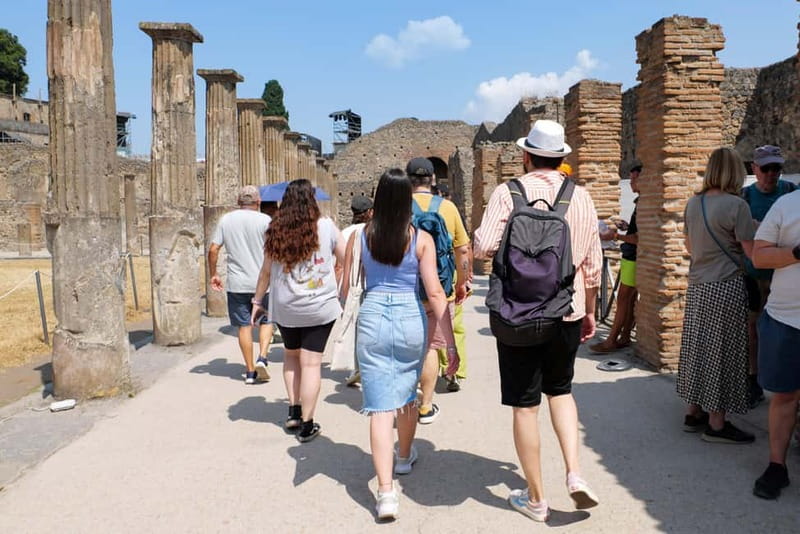
At about $49 per person, this tour is trying to solve three headaches: transportation, entry, and explanation.
If you DIY this, you might save money, but you’ll spend time and energy figuring out entry times, where to queue, and how to make sense of the ruins without a guide. Pompeii is big, and a guide helps compress learning so you get more out of the time you spend there.
You also get round-trip train tickets included, which is a real convenience. The itinerary includes train tickets both ways and an entrance ticket with skip-the-line, so you’re not piecing it together at the last minute.
So is it worth it? For most people who want a one-day Pompeii hit without the stress, yes. The best value is when you can stay flexible on timing and accept that the train ride may be cramped. If you know you hate crowds, then consider whether you can reduce that stress by going in cooler months or by adding an extra day in the area.
Who This Trip Fits Best (and Who Might Prefer Another Plan)
This tour is a good match if you want a structured day and you like learning with a guide. It’s also strong for first-timers to Naples who don’t want to experiment with transport.
It fits families too. Several comments mentioned guides doing a great job with kids, including being descriptive and engaging for younger travelers. Pompeii can be overwhelming for children if you don’t give them a narrative, and the guided approach helps.
It may be less ideal if you want long, quiet breaks or maximal walking time. Because the guided portion is about two hours and some time can be spent standing, you may want to add extra self-guided time later if you have it.
And if train comfort is a top priority, this is the one part you should not romanticize. Expect crowding. Pack accordingly, and keep your mood steady.
Should You Book This Pompeii Day Trip?
I’d book it if your goal is a clear, guided Pompeii day from Naples that handles the transport and entry for you. The combination of Napoli Centrale logistics, skip-the-line, and a live guide in multiple languages is exactly the kind of planning that makes a short trip feel smooth.
Skip it if you can’t handle crowded public transit or if you strongly prefer fully independent exploration with no guidance ending early. In that case, you’ll likely enjoy Pompeii more with a slower plan that gives you time to wander, sit, and return when you want.
If you do book, give yourself buffer time in the morning for ticket pickup and meeting instructions, and plan for the train ride to be uncomfortable. Do that, and the two hours inside Pompeii are the kind of experience that sticks with you long after the day ends.
FAQ
Where does the tour start?
It starts at Napoli Centrale.
How long is the train ride to Pompeii?
The train ride is about 40 minutes.
How long is the guided portion inside Pompeii?
The guided tour is about 2 hours.
Does the ticket include skip-the-line entry?
Yes, skip-the-line entrance tickets are included.
Are round-trip train tickets included?
Yes, round-trip train tickets are included (to Pompeii and back to Naples).
What languages are available for the live guide?
The live guide is offered in French, English, Spanish, Italian, Portuguese, German, Russian.
Is lunch included?
No, lunch and drinks are not included.
What do I need to bring?
Bring a passport or ID card.
Are pets allowed on the tour?
No, pets are not allowed.
Can I cancel for a refund?
Yes. You can cancel up to 24 hours in advance for a full refund.
Is there a pay-later option?
Yes. You can reserve now and pay later.