REVIEW · NAPLES
From Naples: Archeological day to Pompeii and Herculaneum
Book on GetYourGuide →Operated by Around Vesuvio · Bookable on GetYourGuide
Ash and history, close up.
This day trip is a practical way to see two cities that look completely different only because Vesuvius changed everything in 79 AD. I especially like the comfortable roundtrip bus transfer and the fact that you’re not wasting time at entry lines thanks to skip-the-line tickets.
You also get a structured visit with audio support: digital audio for Herculaneum and an audio guide plus a detailed map for Pompeii. One caution: this is an audio-first experience, so if you get frustrated with device controls or button prompts, you may wish there were a live guide at key moments.
In This Review
- Key highlights worth knowing
- A comfortable bus day to Pompeii and Herculaneum from Naples
- Meeting point in Naples: Where to find the Around Vesuvio bus
- Ercolano (Herculaneum) first: 2.5 hours among the ash-preserved streets
- How to spend your 2.5 hours well
- Pompeii in 4 hours: Frescoes, temples, and learning to navigate fast
- Your best strategy in Pompeii
- Audio guide experience: What’s included and what to watch for
- Transportation and timing: How the 8.5 hours actually feels
- Why these two cities belong together in one day
- What to know before you go (so the day runs smoothly)
- Who this day trip is best for
- Should you book this Pompeii and Herculaneum day trip?
- FAQ
- How long is the Pompeii and Herculaneum day trip from Naples?
- What are the main stops on the itinerary?
- Is skip-the-line entry included?
- Do I need identification for the audio guide?
- What languages are available for the audio guide?
- Is food included in the price?
Key highlights worth knowing
- Skip-the-line entry into both Pompeii and Herculaneum saves you real time
- Two different cities, two different feels—Ercolano’s atmosphere is quieter and more intimate
- Audio guide planning tools (Pompeii includes a detailed map) help you follow the story
- Vesuvius context built in so the eruption doesn’t feel like a random disaster date
- House visits and preserved details (frescoes, casts, and even food as preserved by ash) make it tangible
A comfortable bus day to Pompeii and Herculaneum from Naples

If you only have a day in Campania and you want the big Roman sites without the stress of timing multiple trains or coordinating multiple tickets, this format works. You’re picked up in Naples, then it’s straight to Ercolano (Herculaneum) and Pompeii, with scheduled time in each place.
The pace is designed for “see the must-sees, not just stand around.” You get roughly 2.5 hours in Herculaneum and 4 hours in Pompeii, with short bus legs between the two. That timing matters, because both archaeological areas can feel huge once you’re inside.
It also helps that the transportation is set up as roundtrip from the same meeting point. Your driver is listed as English/Italian, so you’re not totally on your own if something needs clarifying before you start walking.
You can also read our reviews of more tours and experiences in Naples.



Meeting point in Naples: Where to find the Around Vesuvio bus
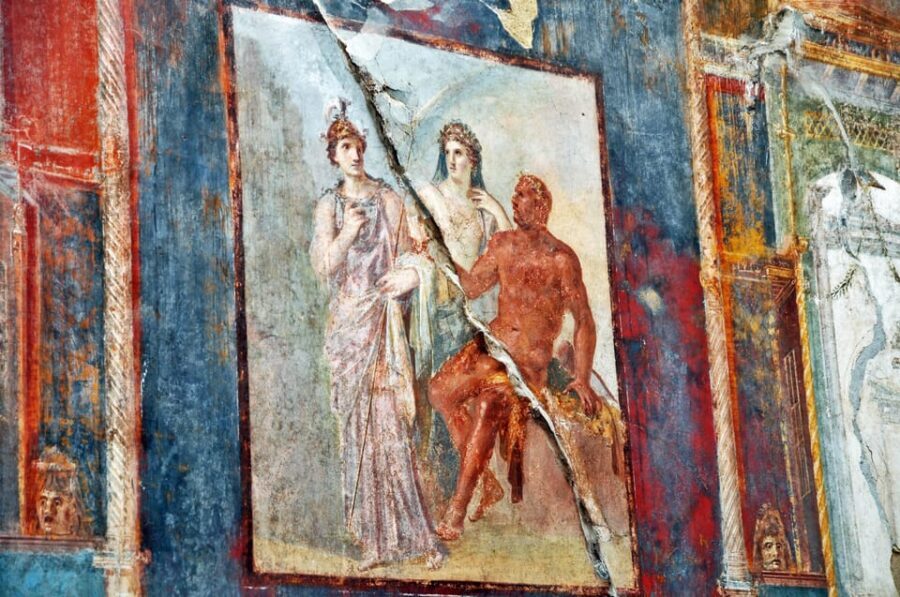
You start at Via Galileo Ferraris 40 (near the coordinates 40.8505189, 14.2747942). The bus is marked with the logo Around Vesuvio, which makes it easier to identify when you arrive.
Plan to get there a few minutes early so you’re not scrambling when everyone else is gathering. When a day is built around exact stop times (and your visits are timeboxed), a slow arrival can quietly eat into your museum time.
Ercolano (Herculaneum) first: 2.5 hours among the ash-preserved streets
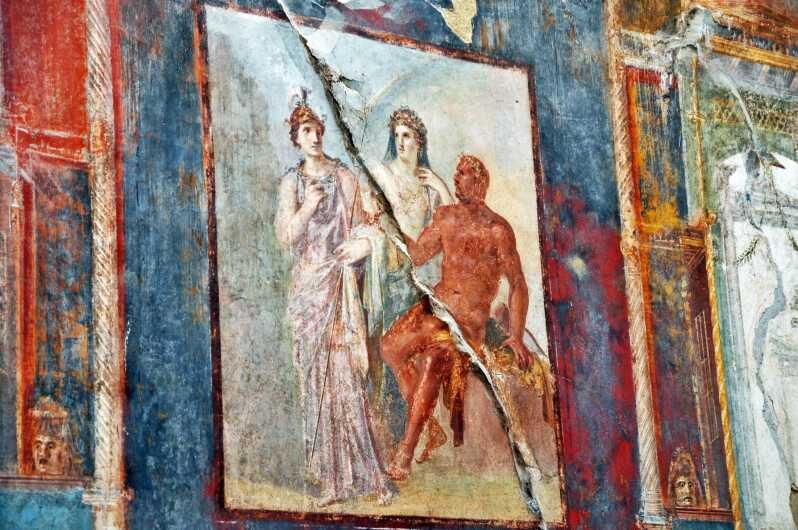
The day kicks off with a bus/coach transfer of about 40 minutes, then you’re in Ercolano for roughly 2.5 hours of visiting and free time. Going first here is smart for most people: the morning usually feels calmer, and Herculaneum rewards that slower approach.
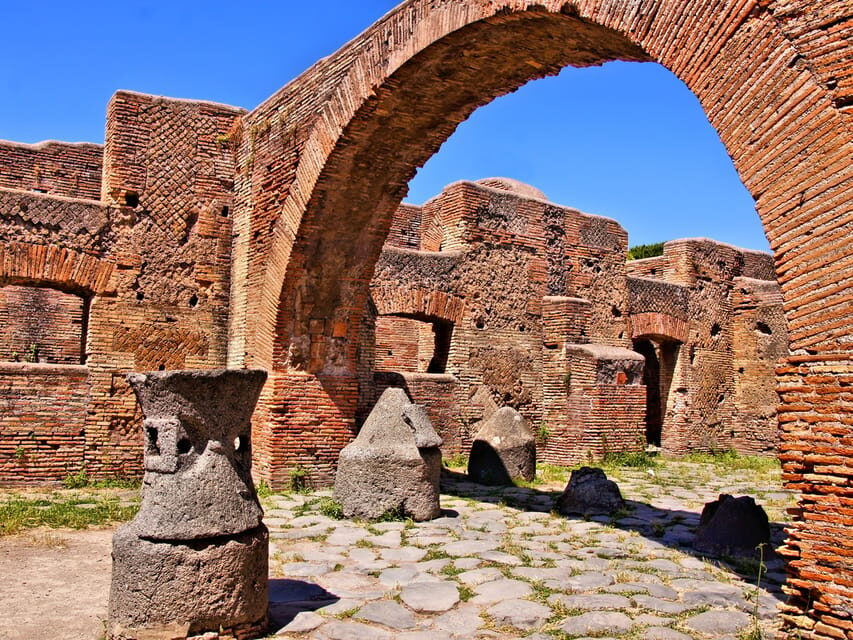
Herculaneum is famous for what the eruption left behind. The ash preserved homes, decorations, and even food-related traces, which means you can stand in places that feel more like a snapshot than a pile of stones. You’ll also be able to enter areas that show daily life: houses and notable spaces tied to public and private routines.
What I like about Herculaneum as a first stop is the emotional contrast. Pompeii often hits you with spectacle—streets, viewpoints, and larger open areas. Herculaneum hits you differently. It can feel more enclosed, more detailed, and more “how did people actually live here?” The preserved remnants help you connect archaeology to real rooms and real objects.
How to spend your 2.5 hours well
You’ll have free time, but you’ll get more from it if you don’t just wander randomly. Use the digital audio guide to follow a theme—like domestic spaces—then pivot to another theme once you’ve built your bearings.
If you’re the kind of person who likes to stop often, this is a good site for that. The 2.5-hour window is long enough to do it without turning the day into a sprint.
Pompeii in 4 hours: Frescoes, temples, and learning to navigate fast
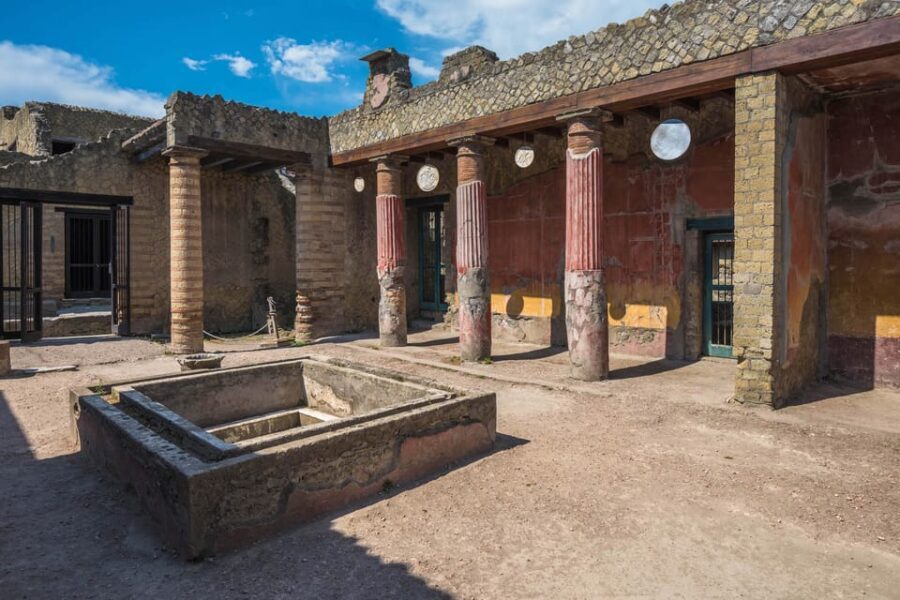
After the first stop, you transfer again for about 30 minutes and arrive for roughly 4 hours in Pompeii. Pompeii’s size can surprise you. Even if you’ve seen photos, the actual walking makes it feel like a city you could never finish in one visit.
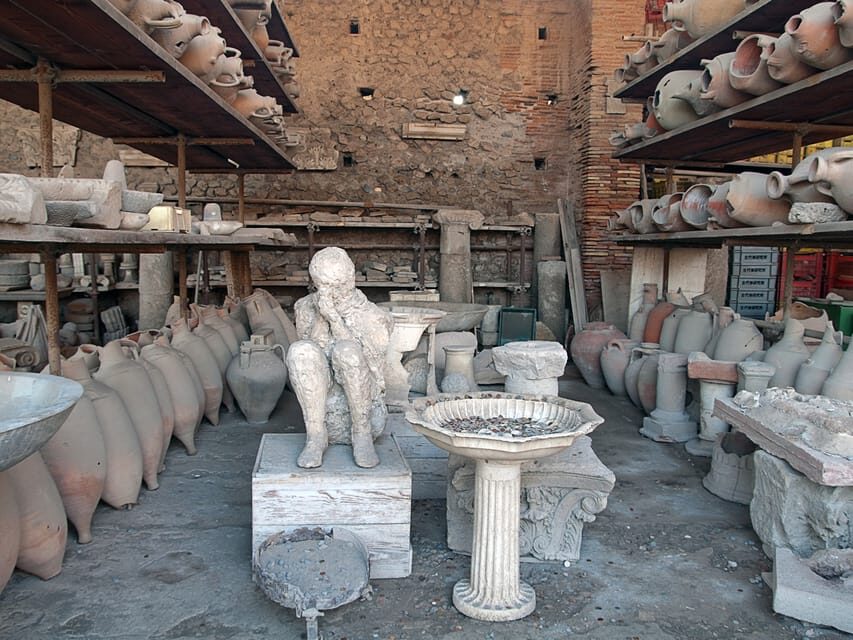
Pompeii is where the “tour story” really comes alive. You can stroll through ancient streets and look at frescoes and sculptures, then move into houses and temples. This is also where you get access to the most famous forms of preserved evidence, including casts and skeletons of victims—details that show the human cost of the eruption, not just the architecture.
The big practical challenge in Pompeii isn’t the site itself. It’s your orientation. One note from real-world experience: signage and street layout can be confusing at first, and the map is helpful but might not feel perfect if the street signs don’t match what you expect.



Your best strategy in Pompeii
Start by using the Pompeii audio guide along with the provided detailed map. The guide helps you understand what you’re seeing—why a building mattered, what a particular find represents, and how the eruption transformed the city.
Then accept a key reality: you’re not going to see everything. Pick a route that hits major areas you care about most, and let the audio guide guide your stops rather than trying to brute-force the entire site.
Audio guide experience: What’s included and what to watch for

This tour leans heavily on self-guided interpretation. Pompeii includes an audio guide and a detailed map, while Herculaneum uses a digital audio guide. Multiple languages are available for the audio component, including English, Italian, and many others.
Here’s the practical catch: the Pompeii audio guide requires a valid ID document to rent. That means you should bring your passport or other valid ID with you on the day. If you forget it, you may not get the audio guide you planned to use.
Also, audio-only can be a mixed bag. Audio guides are great when the information is paced well and the interface is straightforward. But if you run into unclear button instructions or you don’t like figuring out controls while you’re walking, you might spend more energy on the device than on the ruins.
If you prefer a real-time explanation—someone pointing out the key details and answering questions—this setup may feel less satisfying. Still, it can work well if you treat it like a “choose-your-own path” tour, not a passive sit-and-listen experience.
Transportation and timing: How the 8.5 hours actually feels
The total duration is listed as 8.5 hours, built around two main visits. Here’s the rhythm: Naples pickup, a 40-minute transfer to Ercolano, 2.5 hours there, then a 30-minute bus ride to Pompeii, 4 hours on site, and a final 30-minute ride back to Naples.
This is a realistic structure for a day trip. You get enough time to slow down inside the sites, but it still feels like a day that’s meant to be “productive,” not leisurely. The bus segments aren’t too long, but you will be walking most of the time once you arrive.
One thing I appreciate about this style is the stress reduction. Skip-the-line entry plus planned transfers mean you’re not stuck waiting while the day drains away. You trade a little spontaneity for reliability, which is usually worth it on a limited schedule.
Why these two cities belong together in one day

Pompeii and Herculaneum are often bundled because they were both affected by the same eruption. But they don’t feel identical once you’re inside.
Pompeii is often the louder, more expansive experience: streets, frescoes, sculptures, and a sense of the city’s layout. Herculaneum tends to feel more intimate, and the ash preservation can make details feel almost “too real”—homes, décor, and food traces that bring everyday life into sharp focus.
Seeing them back-to-back helps you understand what changed, what was preserved, and how the disaster played out. It also helps you avoid the common problem where one site becomes a blur of ruins. Two sites with different textures give your brain more anchors.
What to know before you go (so the day runs smoothly)

A few practical things will make your day easier:
- You must have a valid ID document to rent the Pompeii audio guide
- Food and drinks are not included, so plan on buying something during breaks or bringing what you can for the day
- You’ll have free time inside both sites, so wear shoes that handle uneven ground
- The driver is English/Italian, which is helpful for basic communication before you start walking
And since the experience is audio-driven, don’t underestimate the value of patience with the interface. If you keep your expectations realistic—use the audio guide to guide your stops, not to replace your own curiosity—you’ll get more out of the time you have.
Who this day trip is best for
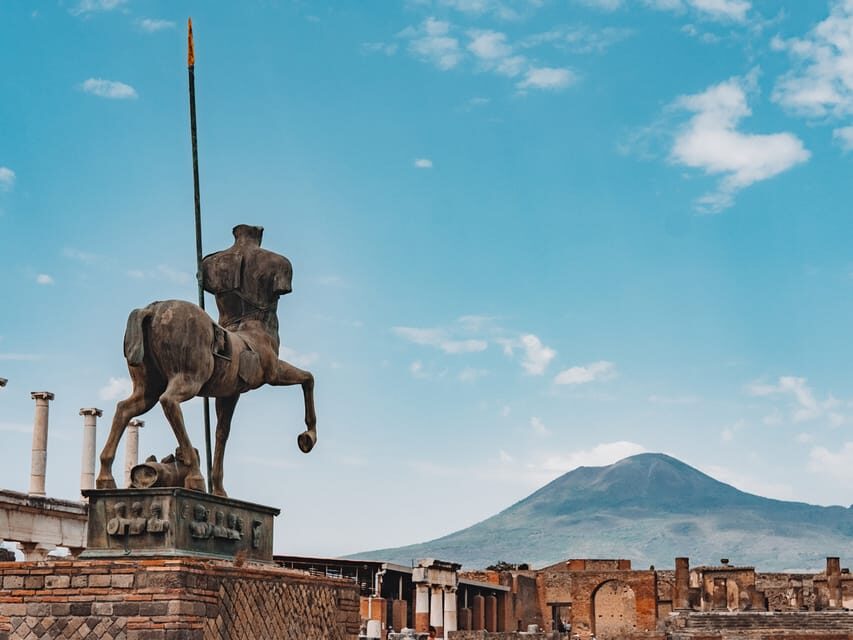
This tour makes sense if you want maximum payoff in one day: Naples to two major Vesuvius-impacted cities, with skip-the-line entry and interpretation support.
It’s a good fit for:
- History and archaeology lovers who want a structured way to understand what they’re seeing
- People who hate ticket lines and prefer a smooth transport plan
- Travelers who like exploring at their own pace while still having guidance
It may be less ideal if you strongly prefer:
- A live guide who can adapt on the spot and answer questions
- An experience where you never have to manage audio controls
- A super-relaxed day with minimal device interaction
Should you book this Pompeii and Herculaneum day trip?
If you want a straightforward day that combines skip-the-line access, planned transfers, and audio interpretation, I’d say it’s worth booking—especially if you’re comfortable navigating on your own inside large sites.
Book it if your priority is seeing both cities without the hassle of planning logistics and tickets. Skip it (or choose another format) if you’re convinced you need a live guide for your enjoyment, or if you already know you find audio-guide controls frustrating.
FAQ
How long is the Pompeii and Herculaneum day trip from Naples?
The tour duration is listed as 8.5 hours, including transportation and time at the sites.
What are the main stops on the itinerary?
You start in Naples, then visit Ercolano (Herculaneum) for about 2.5 hours, followed by Pompeii for about 4 hours, and then return to Naples.
Is skip-the-line entry included?
Yes. Skip-the-line tickets are included for both Herculaneum and Pompeii.
Do I need identification for the audio guide?
Yes. You must have a valid ID document to rent the Pompeii audio guide.
What languages are available for the audio guide?
The audio guide is listed as available in Chinese, English, French, German, Hebrew, Italian, Portuguese, Russian, and Spanish.
Is food included in the price?
No. Food and drinks are not included.