REVIEW · NAPLES
The Mystery of Naples Saga: The Skull with ears
Book on Viator →Operated by Grand Tour Experience · Bookable on Viator
Naples has a talking relic. This private English visit takes you to the Church of Santa Luciella ai Librai in San Gregorio Armeno, where the skull with ears was once treated like a real messenger between the living and the afterlife. You also get a quick walk on the famous Via San Gregorio Armeno, so the moment doesn’t feel like a random stop on a map.
I love that the story is handled by an authorized guide plus an archaeologist, which helps you understand what you’re seeing without turning it into pure legend. I also love the setting in the presepi-and-artisans streets, because you come away with a sense of how Naples makes and protects its sacred craft. One consideration: the whole thing is about an hour, so if you want to linger for a long time inside the church, you’ll need extra time on your own.
In This Review
- Key highlights worth planning around
- Naples at street level: why San Gregorio Armeno is part of the magic
- Santa Luciella ai Librai: a tiny church with a big reason to exist
- The skull with ears: what it symbolizes and how people used it
- Via San Gregorio Armeno moments: craft, not crowds
- Palazzo Venezia finish: a gentle landing back in the historic center
- Price and value: what $156.62 per group really buys you
- What’s included: guide depth, plus peace of mind
- Who should book the Skull with Ears tour
- Should you book it or pass?
- FAQ
- How long is The Mystery of Naples Saga: The Skull with ears?
- Is this tour private?
- What language is the tour offered in?
- Where is the meeting point?
- Is the admission ticket included?
- How much does the tour cost?
- What are the tour’s opening hours?
- Is a mobile ticket used?
- Can I cancel for a full refund?
- Is it near public transportation and are service animals allowed?
Key highlights worth planning around
- The skull with ears, kept in the church’s underground space and linked to local prayer practices
- Santa Luciella ai Librai’s origin story, founded in 1327 by Bartolomeo Di Capua
- Protection of eyesight, tied to local trades like the Pipernieri, Fabbricatori, and Tagliamonti
- Respiriamo Arte’s restoration work, reopening the site after 30 years of abandonment
- A short, focused route through San Gregorio Armeno and ending near Palazzo Venezia
- Private group up to 10, so you won’t be shuffled with strangers
Naples at street level: why San Gregorio Armeno is part of the magic
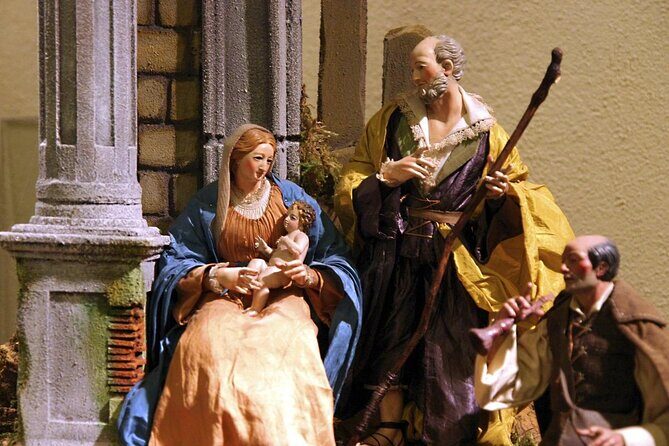
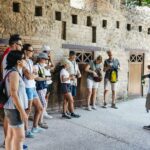
This tour works because it starts in the right place, not just at a doorway with a ticket line. You meet on Via San Gregorio Armeno, the celebrated street of presepi and local artisans, where the focus is on craft and tradition, not museum silence. Even the short time here matters, because it places Santa Luciella ai Librai in a living neighborhood.
You’ll get a sense of the street’s rhythm and what makes this area special: the techniques and secrets behind making Naples’ iconic religious scenes. That matters for the skull-with-ears part, because it’s not only about a strange relic. It’s also about why religious objects and rituals keep showing up in everyday life here.
One practical note: the experience is about an hour, so you’re not doing an all-day crawl. This is a “hit the key points” type of tour, and it’s best when you’re ready to listen and absorb in short bursts.
You can also read our reviews of more tours and experiences in Naples.

Santa Luciella ai Librai: a tiny church with a big reason to exist
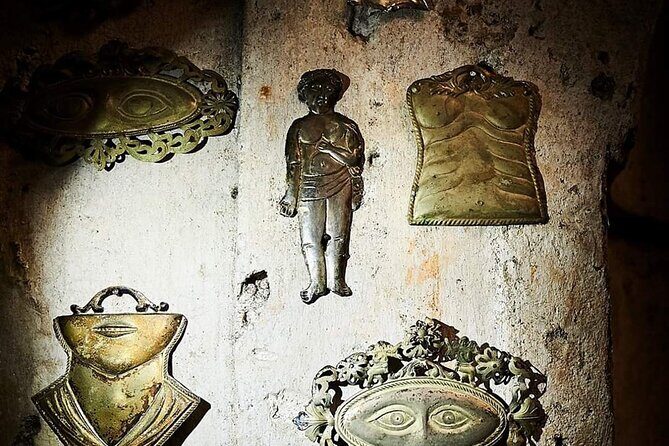
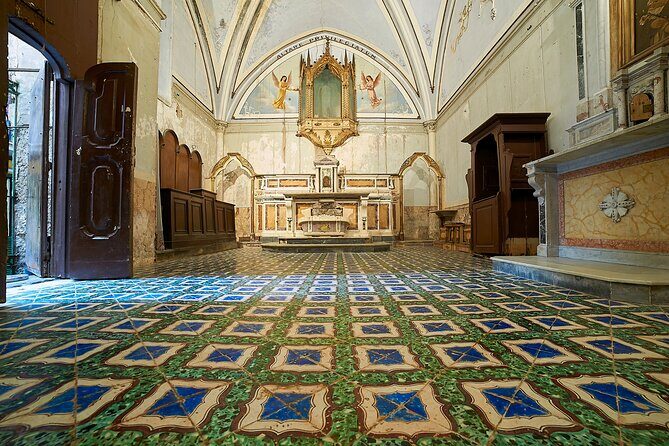
The main stop is the Chiesa Museo di Santa Luciella ai Librai, a small church-museum tucked in the heart of San Gregorio Armeno. Founded by Bartolomeo Di Capua in 1327, it later became a protected worship space for a local corporazione tied to trades that could harm eyesight.
Here’s the part I find most useful, because it turns the relic into something more understandable: the Corporazione dei Pipernieri, Fabbricatori, and Tagliamonti looked to Santa Lucia for help with vision, since their work could put sight at risk. That link between labor and faith is one of the clearest reasons the site endured, even when it was easy to ignore.
The church also has a modern comeback story. Since 2013, the association Respiriamo Arte has managed the site and worked to save it, reopening it to the public after 30 years of abandonment. That gives the visit a “why this survived” angle, not just a “what it is” angle.
For you, that means the tour isn’t only spooky or sensational. It’s grounded in how people tried to manage real-world problems—especially health—through devotion. When you understand that, the skull with ears stops feeling like a random oddity and starts feeling like a local tool for hope.
The skull with ears: what it symbolizes and how people used it
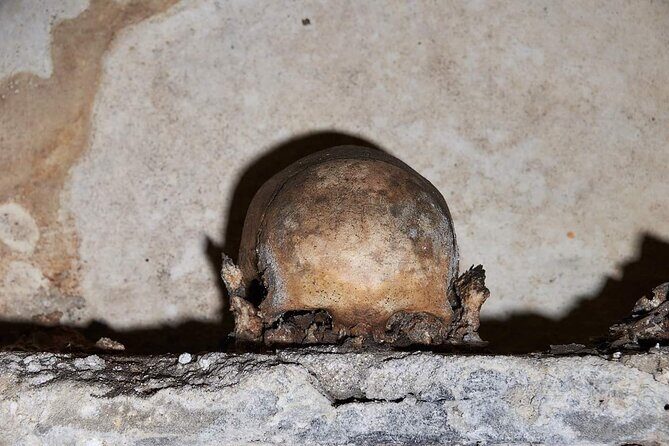
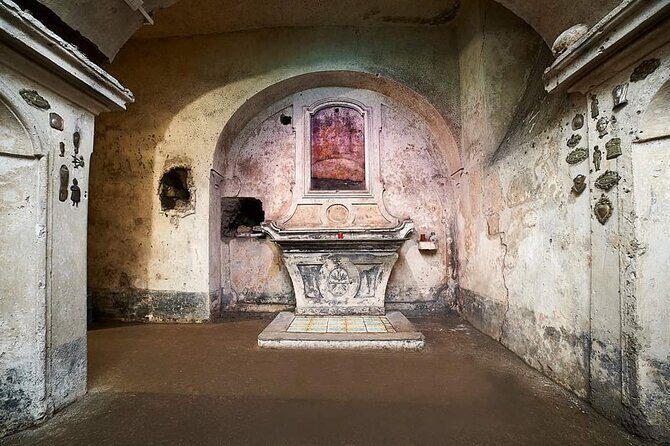
The skull with ears is kept in the church’s subterranei, the underground area tied to the site’s deeper religious function. The key detail to know is that locals visited it with prayers, up until the mid-1900s, believing the skull could carry those prayers to the afterlife. It’s described as a messenger between the world of the living and the dead.
That belief is what makes this experience emotionally charged, and it’s also what makes the explanation time with the guide so important. You’re not meant to treat the relic like a party trick. You’re meant to understand how people in Naples used it as part of a personal ritual.
I like how the story is framed: you’re given context for why a skull specifically could hold meaning. And you’re also shown the site in a way that connects religion, community, and everyday pressure—vision trouble, for example—that made spiritual hope feel practical.
Be aware of the practical side too. This part of the visit happens underground, so expect a different lighting feel and a more enclosed space than what you’re used to on the street. It’s still manageable, just plan your pace so you can listen without rushing.
Via San Gregorio Armeno moments: craft, not crowds
Stop time on Via San Gregorio Armeno is short, but it’s not filler. You’ll be on the famous street of Pastori and Presepi—pastoral scenes and the larger tradition of Naples’ Christmas cribs. The tour promises secrets and techniques, which is a nice way to say you’ll learn how the craft gets made and why Naples guards its look and style.
This is a good approach for you if you’re the kind of traveler who likes to understand what you’re seeing, even in a quick window. You’ll leave the church stop with more meaning because you saw the neighborhood’s craft culture first.
There’s also a quiet benefit of doing this as a private tour. You’re not competing with a big group rhythm, so you can spend a minute longer on details that catch your eye. If you’re interested in artisanship and local traditions, the street introduction is a smart warm-up.
Palazzo Venezia finish: a gentle landing back in the historic center
After the church, the route ends near the main historic-center streets, with Palazzo Venezia named as the endpoint reference. This portion is brief—about five minutes—and it functions like a graceful tie-off.
I like this structure because it helps you transition from the emotionally intense relic piece to normal street life. You’re not abruptly dropped into a chaotic maze. Instead, you finish in a central area where you can keep exploring at your own pace afterward.
Also note a timing reality: since the tour is about an hour, you’re not going to cover a whole chunk of Naples in one go. This is a focused experience. You’ll likely want to use the time afterward to explore nearby streets, grab a snack, and let the story settle.

Price and value: what $156.62 per group really buys you

The price is $156.62 per group for up to 10 people, with an English mobile-ticket experience that runs about an hour. That group pricing is the real value lever, especially if you’re traveling with family or friends and can fill the group.
Here’s a practical way to think about cost. If you hit the top end—10 people—your share of the tour fee is roughly $15.66 per person, before the local admission. Then there’s the additional church admission of €6.00 per person, which is not included in the base price. So with a full group, you’re usually budgeting around the low $20s per person total, give or take exchange rates.
If you’re only two people, the tour fee per person jumps because it’s still one group price. In that case, it can still be worth it, but the “value” math depends more on whether you care about the private format and the specialist context (authorized guide plus archaeologist).
Booking timing also matters. On average, it’s booked about 19 days in advance, so if you want a specific day or time window, don’t leave it too late. This is the type of tour that can sell out quietly because it’s limited and private.
What’s included: guide depth, plus peace of mind
You’re paying for more than a walk with a pass. The tour includes an authorized guide and an archaeologist, plus insurance and 24h assistance. That combination is a big deal for a site like this, where people could easily get pulled into rumor or dramatic storytelling.
From a practical standpoint, the guide structure helps you get the best kind of answer: what things mean, where the traditions came from, and why the site has been preserved and reopened. The archaeologist adds weight to the explanations of the older layers of the story tied to the church’s founding and later use.
Also, the tour is private, so your group is the only group participating. For many people, that alone is worth it. Naples is lively, but this keeps your attention on the story instead of on managing logistics and noise from strangers.
Who should book the Skull with Ears tour
This is a great fit if you want something unusual but not chaotic. You like religious history, local traditions, and the human side of how communities build rituals around real needs like protection of eyesight. You also enjoy experiences where a specialist helps you separate meaning from mere oddness.
It’s especially good for:
- Small groups who want private pace and conversation
- People who enjoy Naples beyond the big landmarks, focusing on neighborhood culture
- Anyone curious about Santa Luciella ai Librai, Santa Lucia’s role, and the story of the underground relic
On the other hand, you might skip it if you dislike compact tours and want long independent time inside a site. Since the visit is about an hour, this route moves.
Should you book it or pass?
I’d book it if you’re looking for a short, high-impact Naples experience with story depth. The skull with ears part is memorable, but the real reason it works is the context: the church’s founding in 1327, the local trades who sought protection of vision, and Respiriamo Arte’s modern restoration after 30 years of abandonment.
Pass if your travel style is slow wandering only. This tour is designed to be focused, not sprawling. If that sounds like your pace, you’ll get a lot from the hour. If not, consider adding the site to a self-guided plan and pair it with a longer street walk.
If you want one clear “decision rule,” use this: if you’d like your Naples to include a thoughtful, slightly eerie story with solid background, book it.
FAQ
How long is The Mystery of Naples Saga: The Skull with ears?
It lasts about 1 hour.
Is this tour private?
Yes. It’s private, and only your group participates.
What language is the tour offered in?
It’s offered in English.
Where is the meeting point?
You meet at Chiesa Museo di Santa Luciella ai Librai, Vico Santa Luciella, 5/6, 80138 Napoli NA, Italy.
Is the admission ticket included?
There is an admission ticket of €6.00 per person that is not included in the tour price.
How much does the tour cost?
The price is $156.62 per group (up to 10 people).
What are the tour’s opening hours?
The listed hours are Monday through Sunday from 8:30 AM to 6:00 PM.
Is a mobile ticket used?
Yes, it includes a mobile ticket.
Can I cancel for a full refund?
Yes, free cancellation is available. You can cancel up to 24 hours in advance for a full refund.
Is it near public transportation and are service animals allowed?
It’s near public transportation, and service animals are allowed.