Herculaneum feels like a time capsule. I love how the houses and city streets are unusually intact, so you can picture daily life without squinting at ruins. I also like that you’re not just looking at stones; you get archaeology-focused guidance that explains what you’re seeing. One catch: the €16 park entrance fee isn’t included, and you should be ready for some uneven ground and steps.
This is the kind of Roman site that lets you move fast but still feel like you learned something real. It’s smaller than Pompeii, so the 2 hours move at a human pace, with stops that cover everything from painted rooms to the seaside edge of town. You’ll see why people call it one of the best-preserved cities from 79 AD.
The tour is capped at 10 people, and it’s offered in English with a certified guide and an archaeologist. From prior groups, you may hear guiding names like Luigi, Ornella, Riccardo, Arcangelo, Raffaele, and Corrado, and the common thread is clear explanations and lots of room for questions. It’s also a practical setup: you start and end at the Herculaneum Ticket Office in Ercolano, and you can grab a free map at the park kiosk to help you orient yourself.
In This Review
- Key things I’d bank on
- Why Herculaneum Feels Different From Pompeii
- Price and Tickets: What You’re Really Paying
- The Meeting Point: How to Avoid the Usual Start-Time Headache
- Walking Herculaneum’s Main Story: Houses, Baths, and Civic Life
- The Ancient Waterfront and the Terrace With a Name
- House of Deer: Where Wealth and Detail Show Up Fast
- Wooden Partitions, Neptune Mosaics, and the Houses You’ll Remember
- The Temple Rites of the Augustales and Myth in a Peristyle
- The Boat Pavilion: A Small Stop That Leaves a Big Mark
- What the Small Group and Archaeologist Format Changes
- Practical Tips: Shoes, Time, and Weather
- Who Should Book This Herculaneum Tour
- Should You Book Secret Herculaneum?
- FAQ
- What is the duration of the Secret Herculaneum tour?
- How much does the tour cost, and is the entrance fee included?
- Where does the tour start and end?
- Is the tour offered in English?
- What do I receive after booking?
- What group size should I expect?
- Do I need good weather for the experience?
- How does cancellation work?
- Is the tour accessible for wheelchair users?
Key things I’d bank on
- Unusually preserved street life: doors, rooms, and shoplike spaces are still legible.
- Small-group pace: with a max of 10, it feels more personal than a big bus tour.
- Real artifacts, not just walls: mosaics, frescoed fragments, and even a charred boat.
- You’ll compare Herculaneum vs Pompeii: the differences matter for how you interpret what you see.
- Entrance fee reminder: plan for the €16 park ticket on top of your tour price.
- Good shoes are non-negotiable: expect walking on ancient surfaces with some steps.
Why Herculaneum Feels Different From Pompeii
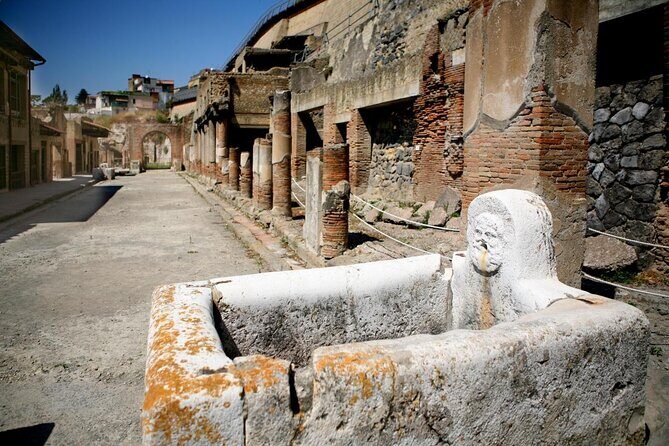
Herculaneum doesn’t try to be grand. It’s intimate. You walk through an ancient town that was buried during the eruption of Mount Vesuvius in 79 AD, and it survived in a way that keeps a lot more of its urban layout readable than you might expect.
The big emotional difference is how complete it looks. In Pompeii, you often work harder to reconstruct what you’re looking at. Here, you can follow the logic of where people lived and worked: the flow of rooms, the placement of small civic spaces, and the way wealth showed up in decoration and floor plans.
That’s why a guided approach pays off. A guide helps you see the purpose behind what you’re viewing: not just what’s left, but what those spaces meant when the city was fully alive. In a short 2 hours, you’ll cover major highlights without feeling like you’re sprinting through a museum.
You can also read our reviews of more tours and experiences in Naples.

Price and Tickets: What You’re Really Paying
Your tour price is $34.84 per person, and the duration is about 2 hours. What’s included is the human part: a certified guide plus an archaeologist.
What’s not included is the entrance fee to the Archaeological Park of Herculaneum: €16 per person. That extra cost matters for planning, because Herculaneum is one of those places where you’ll want to be there for real. If you’re on a tight budget, still treat this as value: you’re paying for interpretation and for help connecting the dots.
Also note the format: you’ll use a mobile ticket. That’s convenient if you’re doing multiple stops around Naples and don’t want to juggle paper.
The Meeting Point: How to Avoid the Usual Start-Time Headache
You meet at the Herculaneum Ticket Office (80056 Ercolano). The tour ends right back there. That makes your planning easier because you’re not trying to coordinate a pickup in the middle of a park.
Here’s the practical tip: check in promptly. Some groups get delayed when a few people don’t show up correctly. With a tour running on a tight 2-hour window, losing 15–20 minutes feels bigger than it should.
And once you’re inside, take 30 seconds to grab a free map at the kiosk at the entry. It helps you mentally label what you’ll see next, especially because the highlights move through the site in a logical route.
Walking Herculaneum’s Main Story: Houses, Baths, and Civic Life
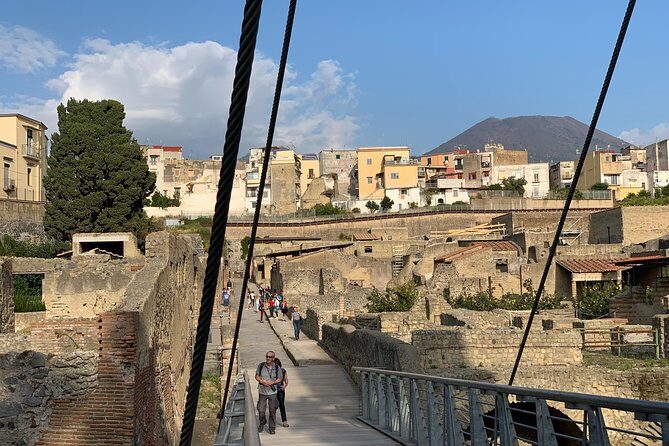
The tour begins in the Parco Acheologico di Ercolano, a UNESCO site and one of the best-preserved ancient cities in the world. The guide leads you along paved streets and through remains that still show the structure of daily life.
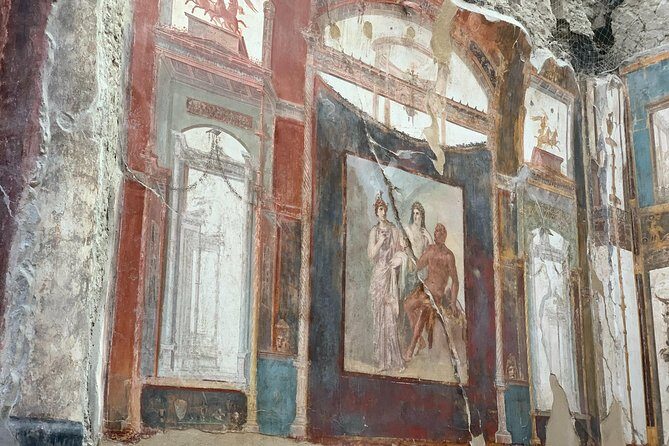
One of the best parts is how the tour teaches you to read the spaces. You’ll see houses where walls still carry painted decoration, including the warm colors of frescoes. You’ll also visit gym and bath areas, which is where locals didn’t just exercise or rinse—they talked. Even politics and business entered the conversation.
Because the park is more compact than Pompeii, you won’t feel like your feet are being punished for culture. Still, keep expectations realistic: this is archaeology in an outdoor environment. Wear sturdy walking shoes and be ready for steps and uneven ground.
The Ancient Waterfront and the Terrace With a Name
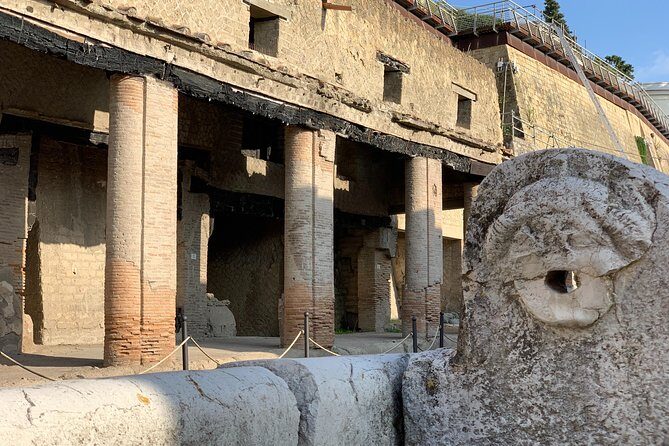
After the main urban route, you’ll spend time at what feels like one of Herculaneum’s most striking contrasts: the ancient beach. In a Roman city that’s almost entirely preserved on land, the waterfront helps you understand the town’s relationship to trade, travel, and daily access to the sea.
Then comes a small but memorable highlight: the terrace of Marcus Nonius Balbo (La Terrazza di M. Nonio Balbo). This is where a wealthy citizen would have looked out across the water. It’s the kind of viewpoint that turns ruins into story, because you start imagining who the terrace was for and what the view would have meant.
These are short stops, but that’s part of the charm. In 2 hours, you want multiple “how did this survive?” moments, not one long lecture.


House of Deer: Where Wealth and Detail Show Up Fast
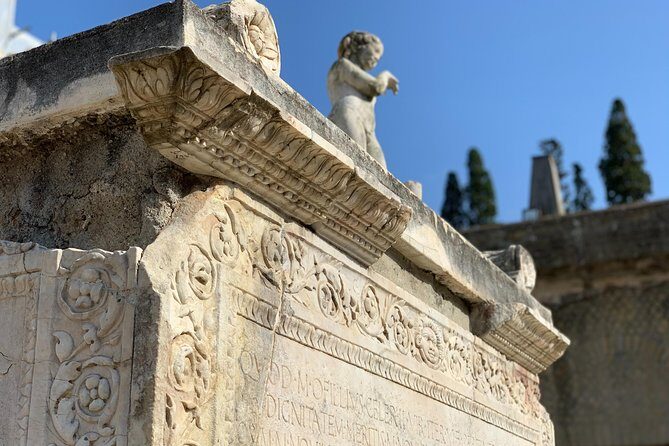
One of the richest residences in the excavation area is the Casa dei Cervi, the House of Deer. It earned its name from two marble groups showing deer attacked by dogs. Even if you’re not a sculpture nerd, you’ll feel the difference between a “survived” site and a “preserved” one when you see how complete the decorative program appears.
This stop is a great example of what guided interpretation adds. Without context, you might think you’re looking at a fancy house. With a guide, you learn how art, status, and room layout worked together.
If you’re wondering what to prioritize at Herculaneum, this is near the top. It’s visual, specific, and easy to connect to real people and real social rank.
Wooden Partitions, Neptune Mosaics, and the Houses You’ll Remember
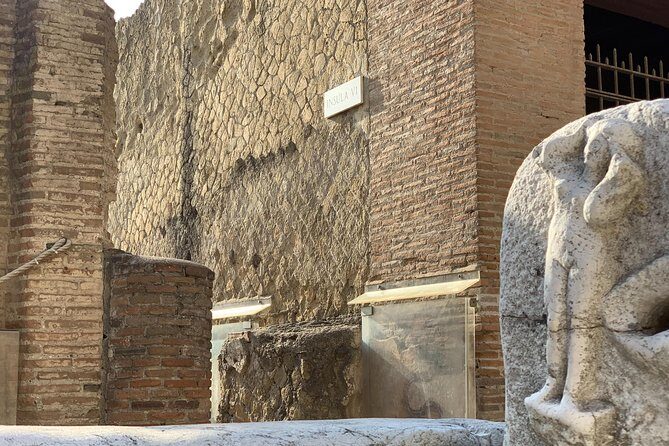
Next you’ll visit the Partem Domus lignea, also called the House of the Wooden Partition. The reason it’s famous is clever: a discovered folding wooden structure that helped separate the atrium from the tablinum (the homeowner’s study). That detail tells you something important: privacy and function mattered even in spaces that still looked open.
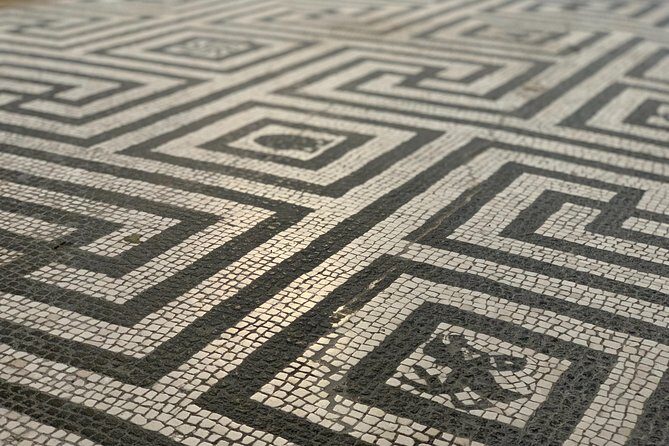
Then you move to the Casa di Nettuno e Anfitrite, the House of Neptune and Amphitrite. The star here is a mosaic with Neptune and his companion. Mosaics can be hard to appreciate when you’re rushing, but with a guide you get a sense of why this kind of image selection mattered—religion, mythology, and messaging all tied together in domestic art.
You’ll also see the Casa Sannitica, one of the most popular remains on the site and among the oldest dwellings you’ll encounter there. It gives you a sense of how layers of habitation and design might look in one city that evolved over time.
And threading through all of this is the main street concept: you’ll walk along the decumanus maximus, the primary street in Roman cities. In Herculaneum, that street hosted many of the most prestigious houses along its sides, so you can literally map status onto the urban plan.
The Temple Rites of the Augustales and Myth in a Peristyle
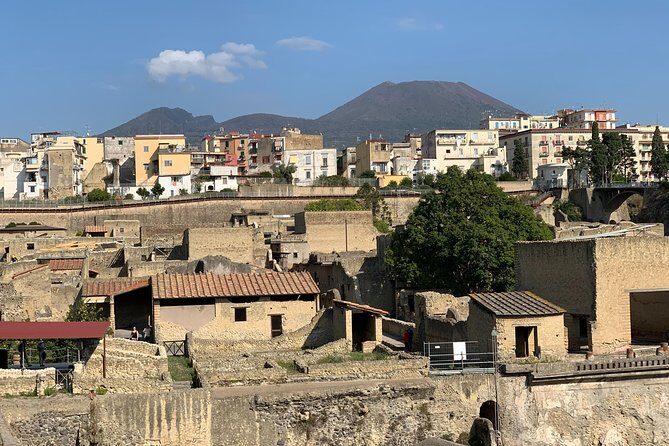
Roman cities weren’t only apartments and shops. They were also organized around worship and ceremony, and this tour includes a stop that makes that clear.
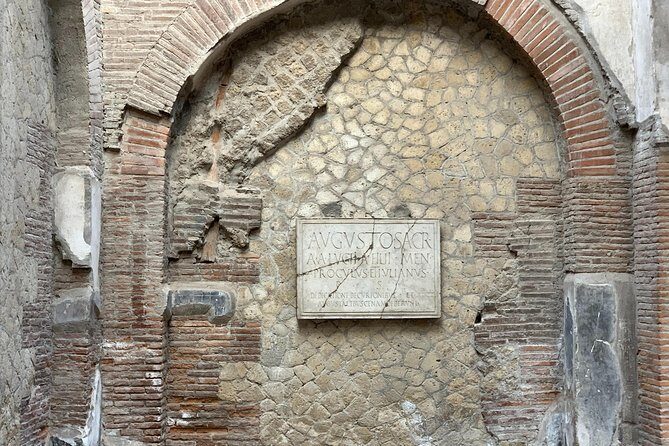
The College of the Augustales features the sacellum, a worship space from Roman times dedicated to rites connected to emperors, tended by augus priests (as described on the tour). It’s a quick visit, but it puts the city’s politics and religion on your mental map.
Then you’ll shift back into domestic storytelling with Casa d’Argo. The name comes from a now-disappeared fresco that decorated a peristyle with Argo Panoptes, the giant with a hundred eyes. Even though the fresco itself isn’t there anymore, you’ll learn how archaeologists interpret what used to be present and how a single art theme can shape how you understand a home.
This mix—worship, myths, everyday rooms—helps Herculaneum feel like a whole society, not a set of random rooms.
The Boat Pavilion: A Small Stop That Leaves a Big Mark
The tour ends with a real standout: the Salone della Barca di Ercolano, the boat pavilion. Here, a charred boat found along the beach of Herculaneum during excavations in 1981 is preserved.
This is the moment that often makes people slow down. A boat isn’t just an object; it’s the link between the sea and daily life—trade, work, travel, and how sudden disaster could still leave material traces behind.
If you want one reason to book a guide instead of walking the site on your own, it’s this kind of artifact context. You’ll hear the story behind what survived, and why it matters for understanding the eruption and the town’s final hours.
What the Small Group and Archaeologist Format Changes
Your group size is capped at 10. That’s a big deal at an archaeological park, because it keeps questions from getting swallowed and it makes it easier for the guide to tailor explanations.
In prior tour groups, guides have ranged in style—from high-energy presenters to more quietly spoken archaeologists—so here’s my practical suggestion: pick a position where you can hear and see the guide without strain. If you want to ask questions, do it early. With fewer people, the guide can usually give real answers instead of rushing.
Having an archaeologist in the mix also changes the tone. You’re not getting generic “wow history” talk. You’re getting interpretation tied to what the site reveals: layout, construction, and how artifacts connect to daily life.
Practical Tips: Shoes, Time, and Weather
Plan on about 2 hours. That’s enough time to hit the major highlights without turning your day into a long slog.
Good footwear matters. Expect stairs and uneven surfaces. Bring water if you run warm, and keep your hands free if you’re taking photos.
One more planning note: this experience requires good weather. If it gets canceled due to poor weather, you’ll be offered a different date or a full refund. So check the forecast the day before and stay flexible if Naples weather plays games.
Who Should Book This Herculaneum Tour
Book this if you want the best-preserved ancient city experience in a manageable time window. It’s a strong choice for first-timers who want context and for repeat visitors who want a tighter, interpretation-rich route.
It’s also a good fit if you like domestic details—frescoes, mosaics, room functions, and the feel of how Romans actually lived. If you’re chasing only the biggest monuments, Herculaneum’s strengths will be less about scale and more about preserved daily texture.
If you’re doing Herculaneum as part of a day trip from Rome, this can work well—just give yourself enough buffer time so you’re not stressed at check-in.
Should You Book Secret Herculaneum?
If your goal is to understand Roman life at 79 AD, I’d book it. The combination of small group size, archaeologist-led explanations, and a route that hits houses, public spaces, and a remarkable boat display gives you a lot of meaning for the time.
Just go in with two clear expectations: you’ll pay the €16 entrance fee separately, and you’ll want sturdy shoes for stairs. If that works for you, this is one of the smarter ways to spend a couple hours in Ercolano—focused, human-paced, and built around places you’ll remember long after you leave the park.
FAQ
What is the duration of the Secret Herculaneum tour?
The tour lasts approximately 2 hours.
How much does the tour cost, and is the entrance fee included?
The tour price is $34.84 per person. The entrance fee to the Archaeological Park of Herculaneum (€16.00 per person) is not included.
Where does the tour start and end?
It starts at the Herculaneum Ticket Office in 80056 Ercolano, Italy, and ends back at the same meeting point.
Is the tour offered in English?
Yes. The tour is offered in English.
What do I receive after booking?
You receive a mobile ticket.
What group size should I expect?
The tour has a maximum of 10 travelers.
Do I need good weather for the experience?
Yes. This experience requires good weather, and if it’s canceled due to poor weather, you’ll be offered a different date or a full refund.
How does cancellation work?
You can cancel for free up to 24 hours in advance for a full refund.
Is the tour accessible for wheelchair users?
Wheelchair use must be reported 24 hours before the visit.