REVIEW · OSTIA ANTICA TOURS
Rome: Ostia Antica Guided Tour in German with Tickets
Book on GetYourGuide →Operated by Römerin · Bookable on GetYourGuide
Ostia Antica is Rome’s quieter time machine. In about 3 hours, you’ll walk through an ancient port city with a direct look toward the sea, then learn what daily life felt like at street level. This guided visit is in German, and it comes with tickets and headsets, so you spend less time figuring things out and more time reading the ruins.
I really like two things here: the way the guide connects the big landmarks—theatre, Forum, and Neptune thermal bath—to real routines, and the practical setup that makes the tour smoother. If you’re lucky, your guide may be someone with a deep excavation background, like the kind of archaeologist experience described in feedback (for example, a Nürnberg archaeologist) and guides named Janina or Philipp who were praised for clear, lively explanations.
One possible drawback: this is not a casual stroll. You’ll be walking on uneven archaeological surfaces, and it’s rain or shine, plus you’ll go through airport-style security before entering the park.
In This Review
- Key highlights I’d plan around
- First impressions at the meeting point and security check
- Why Ostia Antica feels different from Rome’s big landmarks
- Theatre to Forum: reading the city layout in real time
- Neptune thermal bath: the Roman idea of leisure (and logistics)
- Latrines: the stop that makes history feel real
- Ancient buildings and street-level life you can actually picture
- What the included tickets and headsets change for you
- Price check: does €95 feel fair?
- What to pack for a comfortable 3-hour walk
- Rain or shine: planning around the weather reality
- After the tour: back to Rome or continue to Ostia Lido
- Who should book this Ostia Antica guided tour?
- Should you book? My practical verdict
- FAQ
- FAQ
- Is the tour in German?
- How long is the Ostia Antica guided tour?
- Are entrance tickets included?
- Are headsets included?
- Where do I meet the guide?
- What should I bring?
- Is glass allowed?
- Does the tour run in rain?
- Is there security screening?
- What are the prices by age?
Key highlights I’d plan around
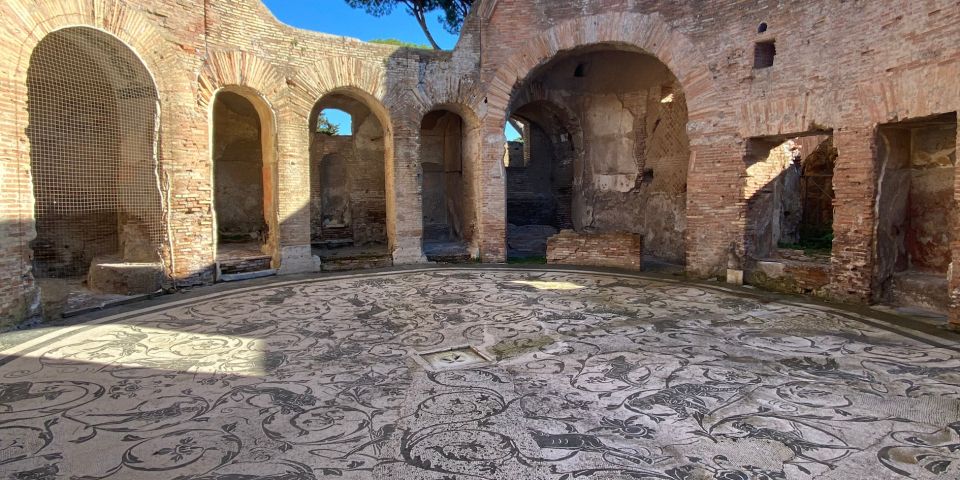
- Theatre + Forum: you learn the city’s layout instead of just seeing scattered stones
- Neptune thermal bath: daily comfort explained through the ruins you can still picture
- Latrines: the most human stop on the whole route
- Tickets and headsets included: you hear the guide clearly, even in busy areas
- German-speaking city guides: explanations tuned to how German history-minded travelers like to learn
- Ends at Ostia Antica park: easy to continue to Rome or one stop further to Ostia Lido
First impressions at the meeting point and security check
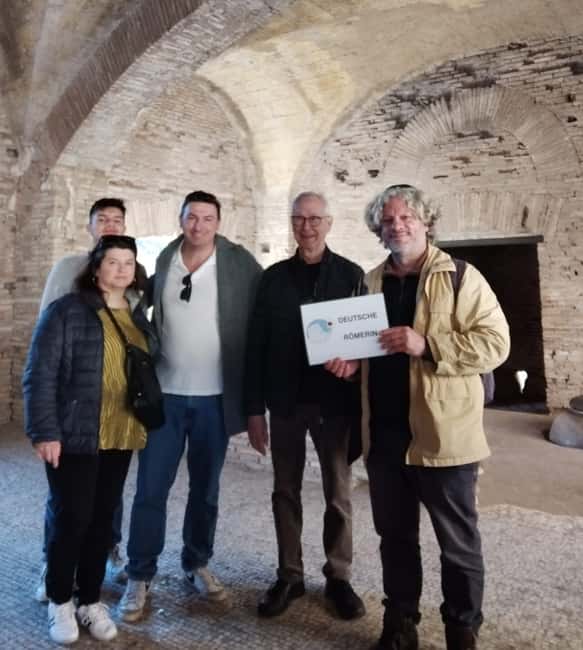
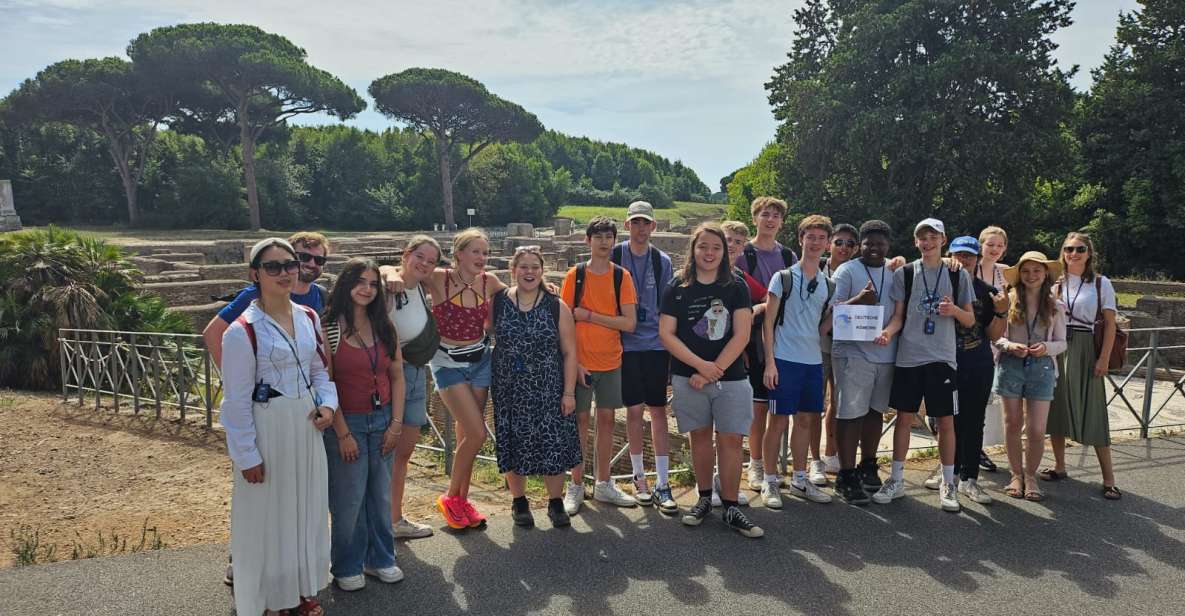
Meet your guide at the spot marked with the sign DEUTSCHE RÖMERIN. The coordinates are 41.75925827026367, 12.300618171691895. In practice, this matters because Ostia Antica is a real archaeological site, not a street-café gathering point. Arrive a few minutes early so you can find the sign without rushing.
Before you start walking, you’ll pass through airport-style security. That’s one of those details that can change your experience. If you’re the type who wants everything to feel spontaneous, security can take the edge off. On the bright side, once you’re through, the rest of the tour is straightforward: you’re in the park, with your guide and the included admission sorted.
Why Ostia Antica feels different from Rome’s big landmarks
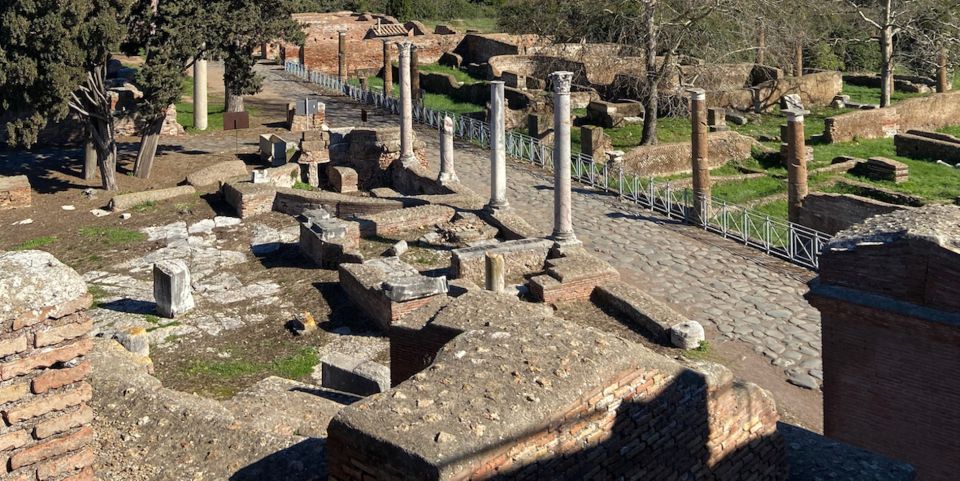
Rome’s famous sights are impressive, but they can feel like you’re standing far above the everyday world. Ostia Antica plays a different game. You’re dealing with a full ancient city footprint—buildings that show where people worked, shopped, ate, cooled off, and yes, used the latrines.
What makes this tour especially useful is that the route is built around daily-life anchors. You won’t only get monument photos. You’ll see how the Forum functioned as a civic center, how the theatre fits into social life, and how the Neptune thermal bath reflects Roman ideas about leisure and hygiene.
The sea is also part of the atmosphere. Ostia Antica had a direct view of the water, and that geographic “edge” helps the story click. It wasn’t an isolated Rome suburb. It was a working port city tied to trade and movement.
Theatre to Forum: reading the city layout in real time
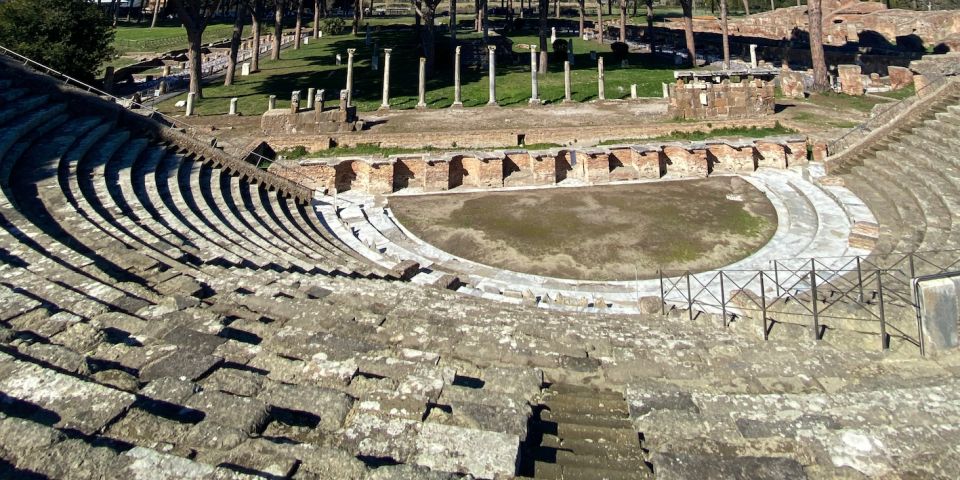
The tour includes a stop at the theatre, which is a great place to start because it tells you how the city hosted entertainment and public events. Even when the structure isn’t fully intact, the shape and positioning help you understand how people gathered and where conversations and crowds naturally formed.
From there, you move into the Forum area. This is where the guided approach pays off. In a self-guided visit, the Forum can feel like a collection of impressive ruins. With a guide, you get the “why this spot mattered” context: this was the place for civic life and the social rhythm of the city.
What I like about this part of the route is that it makes the site feel legible. Instead of wandering and hoping things “click,” you’re basically taught to read Ostia Antica like a map—where people were likely to be, and what the city expected from them day to day.
Neptune thermal bath: the Roman idea of leisure (and logistics)
Next up is the Neptune thermal bath. Thermal baths in Rome weren’t just about bathing; they were built for a whole social routine—warming up, cooling down, chatting, and getting stuff done in a semi-public setting.
Ostia’s bath stop is valuable because you can still connect physical features to human behavior. The guided explanations help you picture how visitors moved through spaces and how the city’s wealth and priorities showed up in architecture.
If you’ve only seen bath complexes in huge, dramatic museum-style contexts, this is a more grounded version. You’re not just looking at fragments; you’re standing in the kind of environment Romans expected to use regularly.
Latrines: the stop that makes history feel real
The tour includes latrines, and yes, this is the moment where “ancient history” becomes painfully human. It’s not glamorous, but it’s honest. Roman cities had to solve everyday bodily life, and the ruins show the infrastructure side of daily routine.
This is one of the most memorable stops because it’s where you get a reminder that people 2,000 years ago had the same basic needs—just with different technology and social norms. A good guide makes this part useful rather than gross for its own sake: you’ll learn how the facility worked and what that tells you about sanitation in a city that handled crowds and commerce.
Ancient buildings and street-level life you can actually picture
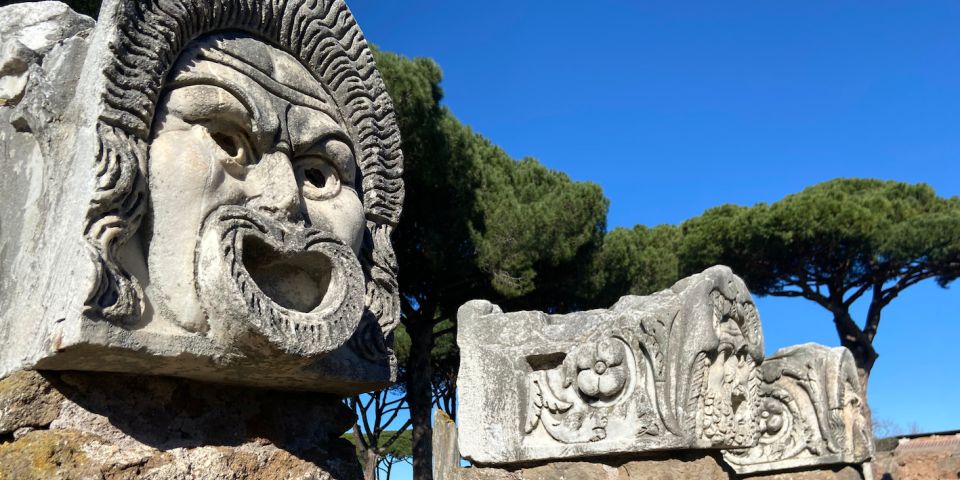
Beyond the headline monuments, you’ll also see antique buildings that round out the story of Ostia Antica as a once prosperous city. This is where the guide’s job is hardest—and where a good explanation matters most.
Without guidance, it’s easy to walk past building remains and treat them as scenery. With a guide, you start placing them into a city framework: what kind of neighborhood this might have been, what purpose certain structures likely served, and how the layout supported a port-city routine.
This is also a good time to slow down mentally. Walk, look, listen. Then ask yourself the simple question your guide is pushing you toward: What would I be doing here in a normal day? That’s the difference between seeing ruins and understanding a functioning city.
What the included tickets and headsets change for you
This tour includes entrance tickets and headsets. That combination is more valuable than it sounds.
- Tickets mean you’re not dealing with lines or admission decisions while you’re on the clock.
- Headsets mean you can keep pace with the group without constantly turning your head, which matters in an open-air site where wind and crowd noise are real.
Also, since the tour is German, headsets help you catch details even if the guide is moving. You’re paying for clarity, not just access to ruins.
One practical tip: keep your water bottle out and easy to reach. This is a walk among exposed areas, and you’ll appreciate not having to stop rummaging once you’re in motion.
Price check: does €95 feel fair?
Let’s look at the pricing by age:
- €95 adults (26+)
- €79 young people (18–25, bring ID)
- €50 children (13–17)
- €40 children (5–12)
- under 4: free
For many families and solo travelers, the best question isn’t just “Is it expensive?” It’s “What am I getting that saves me time or stress?”
Here, you’re getting:
- A guided experience in German
- Tickets included
- Headsets included
- A focused route that hits the most instructive stops (theatre, Forum, thermal baths, latrines)
So for me, the value makes sense if you want interpretation. If your style is to wander alone with a guidebook, you might save money by going independently. But if you want the site explained in a way that helps you connect buildings to daily life, this price becomes easier to justify.
What to pack for a comfortable 3-hour walk
Wear comfortable shoes. Ostia Antica is an archaeological park, and the ground can be uneven. If you bring stylish footwear, you’ll pay for it before the theatre even becomes interesting.
Bring:
- Passport or ID card (especially important for the 18–25 price category)
- Sunscreen
- A reusable water bottle
- Something light for layering, since conditions can shift even when it isn’t cold
Not allowed: glass objects. And you’re specifically advised to take water but not in glass. This sounds obvious, but it’s the kind of rule that can create a problem at security if you forget.
Rain or shine: planning around the weather reality
The tour runs rain or shine. That’s good news if you hate cancellations, but it means you should plan for visibility and comfort.
If it’s wet:
- expect slippery spots near older stone areas
- bring a compact rain layer if you have one
- don’t assume photos will be perfect; the ruins still teach a lot in gray light
If it’s sunny:
- use sunscreen
- drink water regularly
- aim to keep your head and shoulders protected during the open stretches
After the tour: back to Rome or continue to Ostia Lido
The tour ends in the archaeological park. From there, you can go back to Rome, or you can take things one step further to the beach of Ostia (Ostia Lido).
This is a smart add-on for a specific type of traveler: you want your ancient-city morning, then a relaxing change of pace afterward. If you’re more “museum-and-out,” returning to Rome may be the better move so you don’t feel rushed.
Who should book this Ostia Antica guided tour?
You’ll likely enjoy it most if:
- you want a German-guided experience with clear, structured explanations
- you prefer tickets + headsets included so you can focus on the ruins
- you like the idea of seeing not just big monuments, but the Forum, theatre, thermal baths, and latrines that show daily life
You might skip it if:
- you struggle with outdoor walking on uneven surfaces
- you want total freedom to wander without a planned route
- you’re sensitive to the idea of airport-style security before entering
Also note: this tour is not suitable for wheelchair users, so mobility planning matters.
Should you book? My practical verdict
If you’re doing Rome and you want one day that feels less crowded and more human-scale, I’d book Ostia Antica with a German guide. The included tickets and headsets remove friction, and the stop choices—theatre, Forum, Neptune thermal bath, latrines—cover the parts of the city that make the past feel concrete.
I’d only hesitate if your travel style is “no structure” or if weather and walking conditions would stress you out. Otherwise, this is one of the best ways to get meaning from ruins without spending your energy guessing.
FAQ
FAQ
Is the tour in German?
Yes. The tour is guided in German.
How long is the Ostia Antica guided tour?
The duration is 3 hours.
Are entrance tickets included?
Yes. Entrance tickets are included in the price.
Are headsets included?
Yes. Headsets are included.
Where do I meet the guide?
Look for your guide with the sign DEUTSCHE RÖMERIN. The provided coordinates are 41.75925827026367, 12.300618171691895.
What should I bring?
Bring your passport or ID card, comfortable shoes, sunscreen, and a reusable water bottle.
Is glass allowed?
No. Glass objects are not allowed, and you should bring water without glass packaging.
Does the tour run in rain?
Yes. This tour takes place rain or shine.
Is there security screening?
Yes. All visitors must pass through airport-style security.
What are the prices by age?
Adults (26+) cost €95. Young people (18–25) cost €79 (bring ID). Children 13–17 cost €50. Children 5–12 cost €40. Under 4 years are free.