REVIEW · TRASTEVERE
Rome: Monuments and Belvederes Bike Tour
Book on GetYourGuide →Operated by Rome for You - RM - 1436156 · Bookable on GetYourGuide
Rome feels faster from a bike saddle. This guided bike tour strings together Rome’s big-name sights with belvedere views you can’t get from street level. You’ll ride through historic neighborhoods and hit photo stops and short visits that make the city feel connected, not like a checklist.
Two things I like a lot: the local guide stories that explain what you’re looking at while you’re actually moving, and the way the route uses hills for payoff. On recent rides, guides such as Lorenzo (and sometimes Mario or Maurizio) have shared anecdotes and even practical restaurant ideas at the end, so you leave with more than photos.
One consideration: it’s not for people who can’t ride a bike, and the route includes hills like Aventine Hill and Capitoline Hill. Also, there’s no hotel pickup, so you’ll want to be on time at Via di S. Calisto, 9.
In This Review
- Key Highlights in Plain English
- Why This Rome Monuments and Belvederes Bike Tour Feels Worth It
- Start at Via di S. Calisto: What the First Minutes Are Like
- Trastevere Narrow Streets to Aventine Hill Views
- Circus Maximus and the Colosseum: Seeing the Icon at Speed
- Capitoline Hill Panoramas Over the Roman Forums
- Trevi Fountain to Spanish Steps: Classic Stops Done Efficiently
- Pincio Balcony and Piazza del Popolo: The View-and-Stroll Balance
- Piazza Navona and Bernini’s Four Rivers Fountain
- Castel Sant’Angelo and St. Peter’s Basilica: Finishing Strong
- How the 3 Hours Typically Feel (Photo Stops vs. Visits)
- Who This Bike Tour Suits Best
- Price Breakdown: What $71 Gets You (and What It Doesn’t)
- Should You Book This Rome Monuments and Belvederes Bike Tour?
- FAQ
- How long is the Rome Monuments and Belvederes Bike Tour?
- Where do I meet the guide?
- What’s included in the price?
- What should I bring?
- What languages are the tours offered in?
- Is the tour suitable if I can’t ride a bike?
- Are food and drinks included?
Key Highlights in Plain English
- Local guide storytelling that turns landmarks into something you understand
- Hilltop viewpoints from Aventine and Capitoline for quick, memorable panoramas
- A classic Rome hit list, with Colosseum, Trevi Fountain, Spanish Steps, Piazza Navona
- Bernini’s Four Rivers Fountain at Piazza Navona, a photo stop that’s actually worth your time
- A satisfying loop that ends near Castel Sant’Angelo and St. Peter’s Basilica
- Bike + helmet + child seat included, so you show up and ride
Why This Rome Monuments and Belvederes Bike Tour Feels Worth It
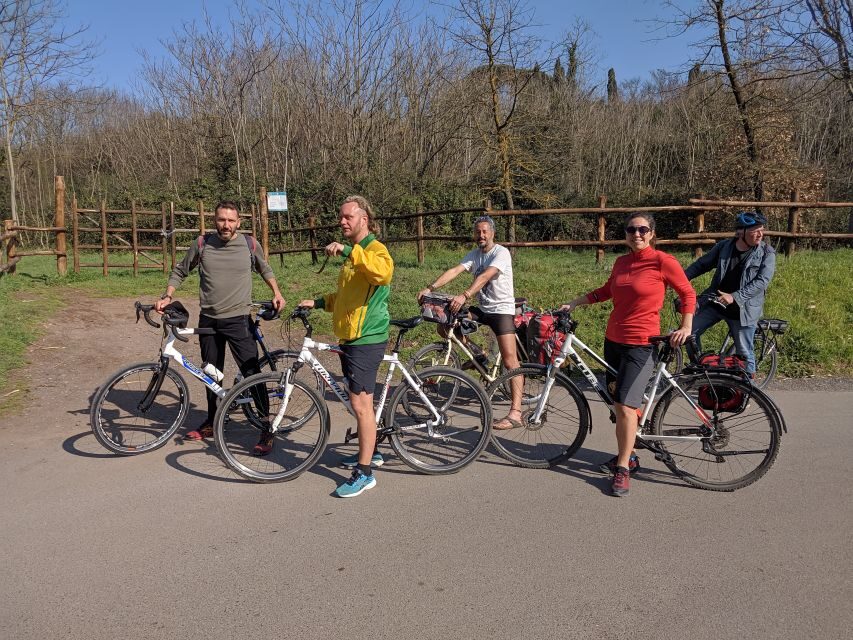
Rome is one of those cities where the famous sights can start to blur together if you see them one at a time, alone, with long waits and zero context. This tour is designed to keep your brain switched on while your legs do the work: a 3-hour ride through neighborhoods and viewpoints, with stops that help you connect the ancient city to the Rome you see today.
What makes it especially good value at $71 per person is what’s included. You get a tour guide, a bike, and safety gear like a helmet, plus a child seat if you need one. You’re not paying extra for the ride itself, and you’re not stuck trying to “figure it out” across a huge, spread-out city.
It also helps that the route is built around Rome’s natural stagecraft. You’re not only looking at monuments head-on; you’re also getting height and perspective from places like Aventine Hill and Capitoline Hill, then slipping into the lively central streets for spots like Trevi Fountain and Spanish Steps.
You can also read our reviews of more tours and experiences in Trastevere.
Start at Via di S. Calisto: What the First Minutes Are Like
You’ll meet at Via di S. Calisto, 9, and the instruction is clear: arrive 15 minutes early. That matters more than it sounds, because the early time is when you’ll get fitted on the bike and settle in before you join the group moving through tight streets.
This tour is offered with live guides in English, French, Spanish, and Italian, so you’re not stuck with headsets or unclear explanations. In at least a few accounts, the guides have been described as friendly and very good at sharing stories, which is exactly what you want for a sightseeing bike ride. When the guide’s comfortable teaching, the tour stops feel meaningful instead of rushed.
If you’re coming with kids, note the tour includes a child seat. That’s not something every bike tour can say.
Trastevere Narrow Streets to Aventine Hill Views
The route begins with a neighborhood that feels like Rome before the crowds settle in: Trastevere. You’ll ride through its narrow streets, and that’s a big part of the “aha” of a bike tour here. Walking in Rome is slow and stop-start. On a bike, you cover more ground, but you still get that intimate street feel.
Then comes Aventine Hill, one of the stops built for views. You’ll get a chance to pause for the panorama and absorb the city layout—what’s close, what’s far, and how the hills shape Rome’s look. This is the kind of stop that makes you stop thinking only in terms of monuments and start thinking in terms of geography.
One reason I consider this section a highlight is the pacing. After riding through close-up medieval streets, the hilltop view gives your eyes a break. It’s a quick reset before the tour pushes back into the ancient “big names.”
Circus Maximus and the Colosseum: Seeing the Icon at Speed
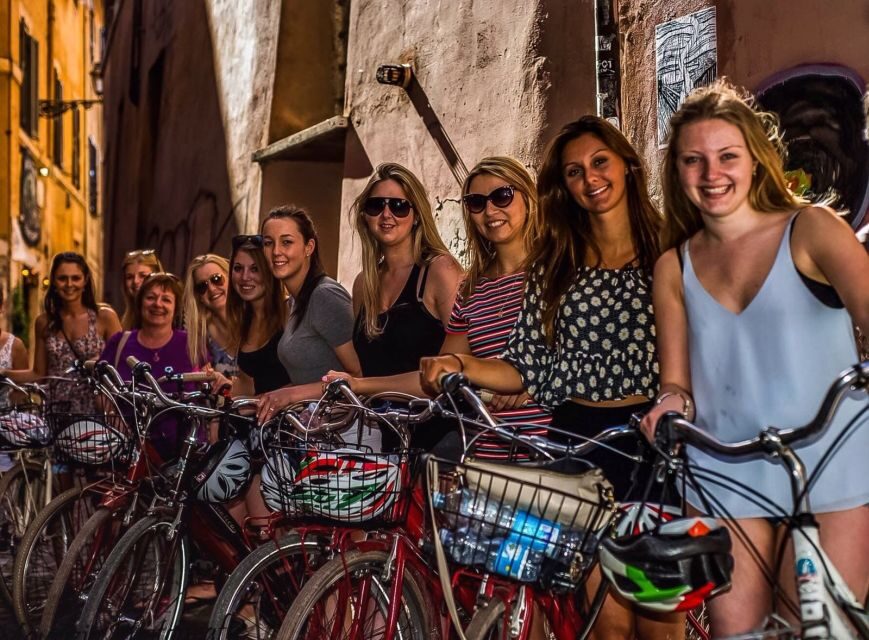
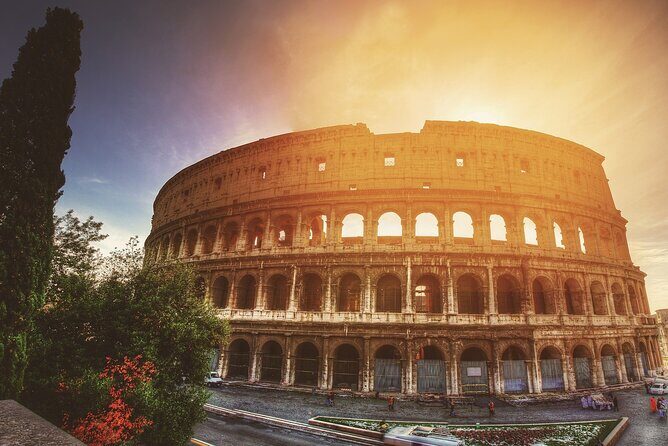
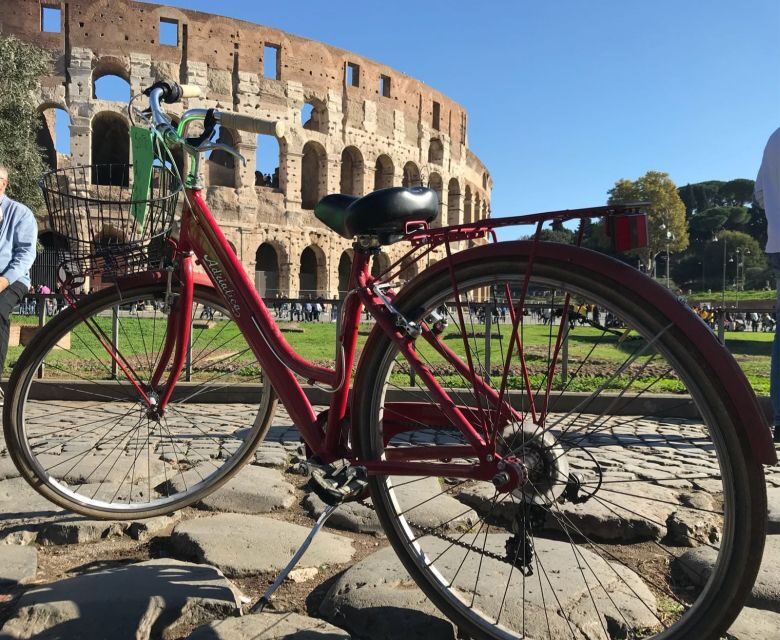
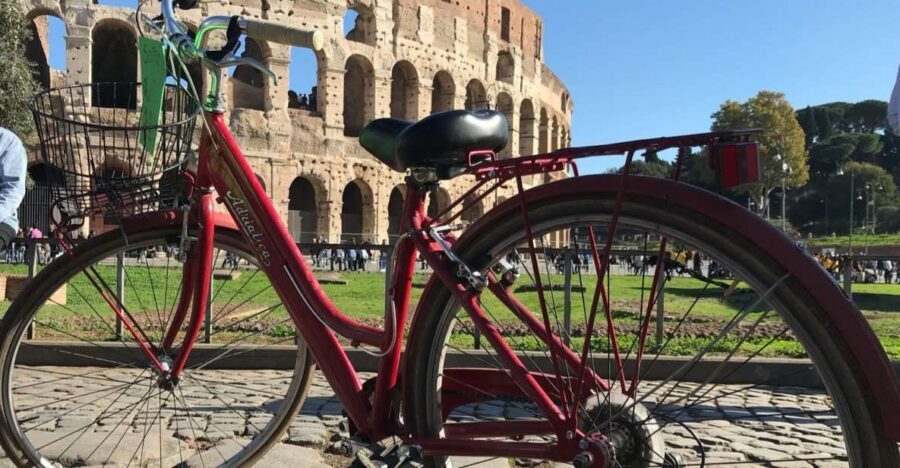
From the Aventine area you move toward ancient Rome again, passing the Circus Maximus and the Colosseum. This part works because the Colosseum isn’t just a background photo. The guide helps you understand what you’re looking at while you’re in the right place to see the scale.
You’ll have a photo stop at the Colosseum, and that means you can take your time without treating it like a drive-by. If you’re the kind of person who likes to know what you’re seeing, this is where the guide stories earn their keep.
Also, riding past ancient sites on a bike changes the experience in a practical way. You’re not only staring straight at a facade. You’re moving through the space around it, which can help you make sense of where big Roman public life happened.
Capitoline Hill Panoramas Over the Roman Forums
Next up is Capitoline Hill, and this stop is built around a panoramic view of the Roman forums. If you’ve ever looked at forum photos and wondered how everything fits together, a viewpoint like this helps. You can see the forum area as a big, layered site rather than a collection of ruins.
This is also a moment where you’ll likely feel the tour shift from “imperial ruins” to the rest of Rome’s layers. The tour description notes leaving the imperial ruins behind after this point, which is smart. It prevents the entire experience from getting stuck in the ancient past.
Practical tip: bring your best eye for composition here. A viewpoint is where small photography choices matter most—angle, horizon, and spacing. Even if you’re not a serious photographer, it’s worth spending a little extra time absorbing the view before you keep moving.
Trevi Fountain to Spanish Steps: Classic Stops Done Efficiently
Then you head to Trevi Fountain, with a photo stop and visit. Trevi is famous enough that it’s easy to feel underwhelmed if you only expect the postcard. A guided bike stop changes things because you can focus on what you’re seeing and what the fountain represents, instead of just fighting for a spot to stand.
After Trevi, the tour goes to the Spanish Steps and the nearby Trinità dei Monti church. Expect photo stop and visit time here too. Spanish Steps are one of those Rome scenes where the architecture matters as much as the crowd energy, and the church adds a deeper “why this place looks like this” layer.
This is a good section for you if you want the tour to cover the headline sights, but not at the cost of understanding them. The guide’s role here is to keep it from becoming only a walk-by spectacle.
Pincio Balcony and Piazza del Popolo: The View-and-Stroll Balance
After the Spanish Steps area, the tour includes more high-view moments. You’ll take in panoramas from the Pincio balcony and then stop at People’s Square. (In Rome, that’s Piazza del Popolo, though the tour data refers to it as People’s Square.)
This is a smart pivot because it balances “must-see monuments” with “place-making Rome.” The Pincio area is a natural viewpoint, and Piazza del Popolo gives you a different type of scene: a wide open square that helps you understand how Rome organizes major routes and gatherings.
If you like sightseeing that feels like a moving story, this section delivers. You go from fountains and steps into viewpoints, then into a square where the city’s geometry becomes clearer.
Piazza Navona and Bernini’s Four Rivers Fountain
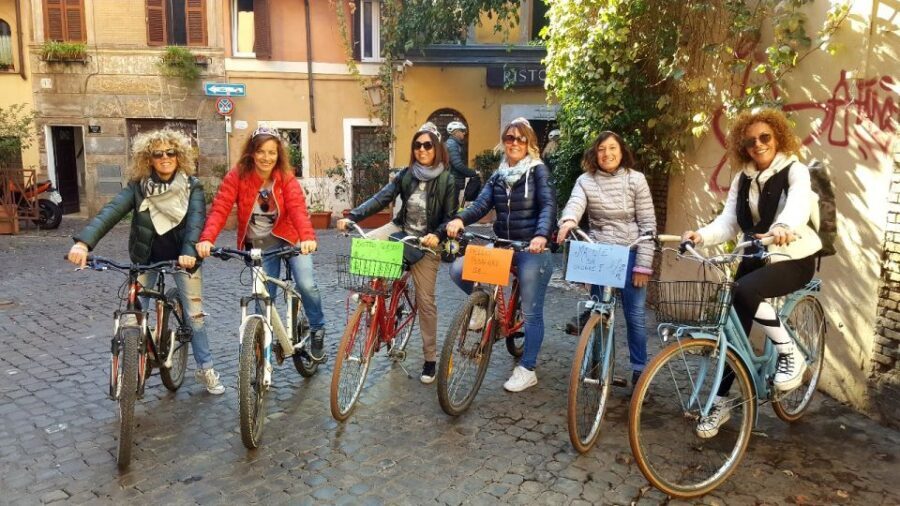
One of the strongest payoffs in the route is Piazza Navona. You’ll ride back through characteristic medieval alleys to reach it, which keeps the tour from feeling purely “central Rome.” Then you’ll have a photo stop and visit there.
Piazza Navona is where the tour highlights Bernini’s Fountain of the Four Rivers. That fountain is the kind of artwork you can see and immediately understand why it became iconic. It’s dramatic, sculpted, and made for a public square rather than a quiet museum corner.
If you only have a short time in Rome and you want one stop that feels both artistic and distinctly Roman, Piazza Navona is an excellent candidate. The guide’s explanation can help you read the fountain’s symbolism without you needing to research before you arrive.
Castel Sant’Angelo and St. Peter’s Basilica: Finishing Strong
The tour wraps up with two of Rome’s big religious landmarks: Castel Sant’Angelo and Saint Peter’s Basilica. You’ll reach them as the final marvel moment.
This ending works well for two reasons. First, it gives you a sense of where the tour has been headed geographically. Second, it closes the loop with a dramatic finish: castle silhouette, then the scale and gravitas of St. Peter’s Basilica.
Even if you’ve seen these places before, seeing them after a day of riding through Rome’s layers can make them feel new. The contrast between ancient ruins, baroque squares, and Vatican-area icons makes the city’s timeline feel real.
How the 3 Hours Typically Feel (Photo Stops vs. Visits)
This isn’t a long, slow “museum tour” style day. It’s a 3-hour bike circuit where you get a mix of photo stops and visits. That setup matters because it changes how you should plan your expectations.
Here’s the practical idea:
- Photo stops are quick moments to position yourself and take pictures.
- Visits are where you’re more likely to linger, learn, and look more closely.
- The bike rides between stops keep momentum so you cover multiple neighborhoods without feeling like you’re rushing.
A recent review described the ride as petit groupe (small group), and that lines up with how bike tours work best: enough people to stay social, not so many that it turns into a slow-moving parade.
If you’re the kind of traveler who loves spending 45 minutes at one monument, you’ll need to be okay with a faster rhythm. If you like getting the lay of the city and hitting many key stops with context, this format is a good match.
Who This Bike Tour Suits Best
I think this tour is a great fit for:
- You if you want a guided highlight loop rather than random self-guided wandering.
- You if you enjoy learning on the move and don’t want long transit breaks.
- You if you can ride a bike comfortably through city streets and are fine with short stops rather than long stays.
It’s less ideal for:
- You if you can’t ride a bike (this tour explicitly isn’t suitable for non-riders).
- You if hills make you nervous, since the route includes Aventine Hill and Capitoline Hill.
If you’re traveling with family, the included helmet and child seat are a big plus, assuming everyone can handle the ride.
Price Breakdown: What $71 Gets You (and What It Doesn’t)
At $71 per person, you’re paying for an organized guided experience that includes:
- A tour guide
- A bike
- A helmet
- A child seat
What’s not included: food and drinks. That’s normal for a short tour, but you should plan to eat before or after. Also, there’s no hotel pickup or drop-off, so you’ll start and finish at the meeting point in the Via di S. Calisto area.
From a value perspective, the best reason this price works is time and structure. Instead of spending hours figuring out logistics and searching for viewpoints, you get a routed plan that hits a lot of top sights in one go, with the guide helping you connect them.
Should You Book This Rome Monuments and Belvederes Bike Tour?
I’d book it if you want a smart first taste of Rome that mixes big-name monuments with actual viewpoint payoff. The route hits Colosseum, Trevi Fountain, Spanish Steps, Piazza Navona, and it adds perspective through Aventine Hill and Capitoline Hill. That blend is the sweet spot for many short trips.
I’d skip it if your top priority is slow, detailed time inside a single site, or if riding a bike through Rome sounds stressful rather than fun. Also, because there’s a clear meeting point and no pickup, make sure you’re comfortable getting yourself there on time.
One final reason to consider booking: the tour has a reputation for strong guiding. Multiple accounts highlight friendly, storytelling-focused leadership, and names like Lorenzo, Mario, and Maurizio show up in recent experiences, which suggests the provider takes guidance seriously.
FAQ
How long is the Rome Monuments and Belvederes Bike Tour?
It lasts 3 hours.
Where do I meet the guide?
You’ll meet at Via di S. Calisto, 9. Arrive 15 minutes before the start time.
What’s included in the price?
The tour includes a tour guide, a bike, and a helmet and child seat.
What should I bring?
Bring a passport or ID card. A copy is accepted.
What languages are the tours offered in?
The guide offers live tours in English, French, Spanish, and Italian.
Is the tour suitable if I can’t ride a bike?
No. It’s not suitable for people who can’t ride a bike.
Are food and drinks included?
No. Food and drinks are not included.