REVIEW · ROME
Rome: Castle Sant’Angelo Ticket w/ audioguide option
Book on GetYourGuide →Bookable on GetYourGuide
Skip the line and you gain time. Castel Sant’Angelo is one of Rome’s most dramatic buildings, with a story that runs from an emperor’s tomb to a papal fortress and prison. What I like most is the separate skip-the-line entrance and the fact you can explore at your own pace, including breaks for older folks and slow walkers.
You’ll also get major payoff without needing a group pace: the route takes you through key rooms and up to the rooftop terrace for big views over the Tiber and St. Peter’s Dome. The main drawback is simple: this is a ticket with no live guide, so your understanding will depend on the optional audioguide (or your own curiosity).
In This Review
- Key things I’d plan around before you go
- Why Castel Sant’Angelo feels like more than a ticketed stop
- Skip-the-line entrance: how to start smoothly
- The main route: Papal Rooms, stairs, and the key emperor focus
- Papal Rooms and the fortress makeover
- The spiral staircase: classic and a bit of a workout
- The Room of Hadrian’s ashes: the emotional center
- Prisons and famous prisoners: Cellini and Cagliostro
- The secret walkway idea: why Angels and Demons fans pay attention
- Rooftop terrace views: where the ticket payoff lands
- How long you really have (and how to pace it)
- Price and value: is $30 per person worth it?
- Who should book this ticket (and who might want a different option)
- Practical do’s and don’ts before you enter
- Bring
- Don’t bring
- Know the timing
- Getting the most out of it: my pacing advice
- FAQ
- FAQ
- How do I find the meeting point for Castel Sant’Angelo entry?
- Is this a live-guided tour?
- Is there an audioguide option?
- How long is the ticket valid?
- What time should I plan for in the castle?
- What are the main areas included in the visit?
- Can I go if I have mobility issues or use a wheelchair?
- What ID do I need to bring?
- Are strollers, luggage, or pets allowed?
- What’s the cancellation window?
- Should you book this Castel Sant’Angelo ticket?
Key things I’d plan around before you go
- Skip-the-line entrance uses a separate entry path, so you spend less time stuck outside.
- Self-paced route works well if your group needs slower steps and more stopping.
- You’ll see major stops in one visit, including Papal Rooms, the spiral staircase, and the Room of Hadrian’s ashes.
- Prison stories are part of the experience, tied to famous figures like Benvenuto Cellini and Cagliostro.
- Top-floor panoramic payoff from the rooftop terrace gives clear views of Rome, the Tiber, and St. Peter’s Dome.
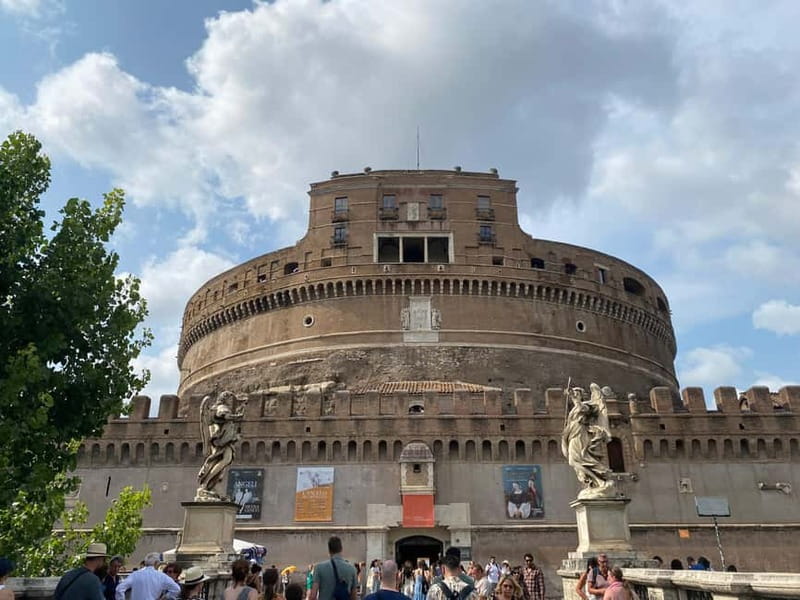
- Check-in is easy: look for the team right by the entrance near the Angel statue in light blue.
Why Castel Sant’Angelo feels like more than a ticketed stop
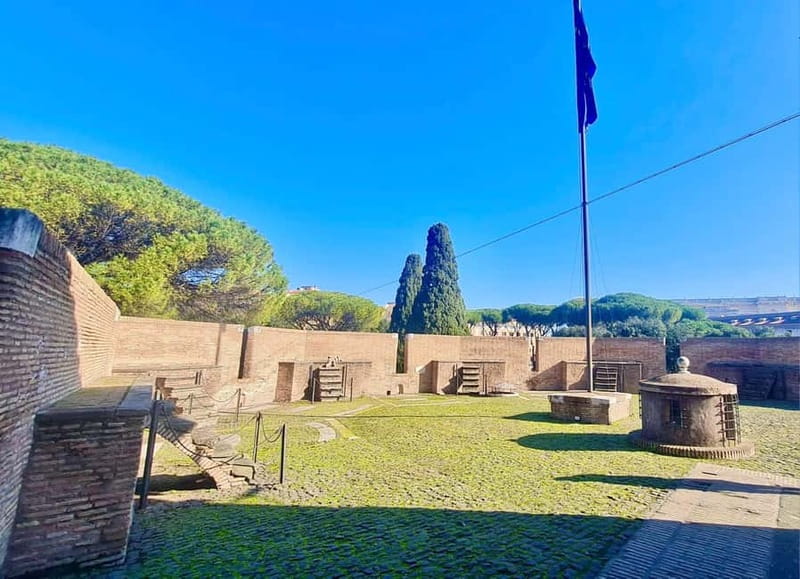
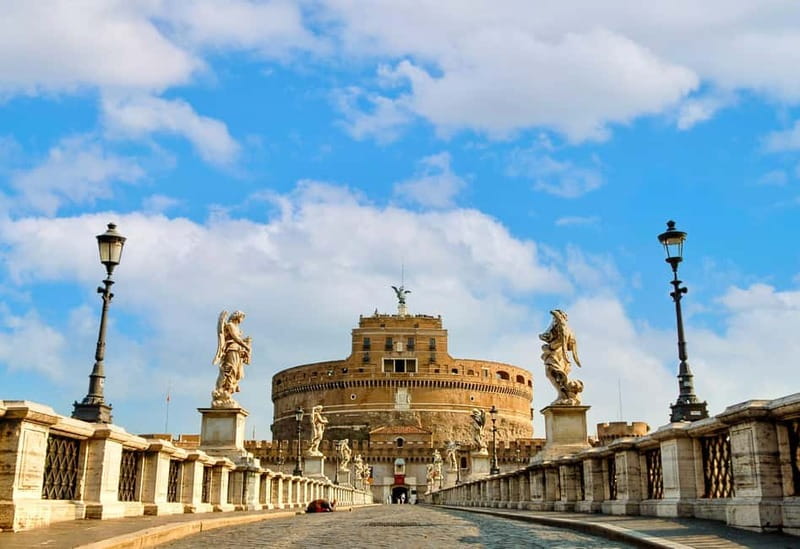
Castel Sant’Angelo is the kind of place where the setting does half the work. One part is Roman emperor business. The next part is papal power. Then it shifts again into prison-and-execution territory. Even without a live guide, the building’s layout helps you understand why it mattered.
And yes, there’s a reason this site shows up in popular imagination. There’s mention of a secret walkway connecting it with the Vatican Palace. The idea that popes could move through a hidden route when danger hit is the sort of detail that makes the stone feel less like a museum and more like a working fortress. (You’ll see the major areas tied to that story as you go.)
Skip-the-line entrance: how to start smoothly
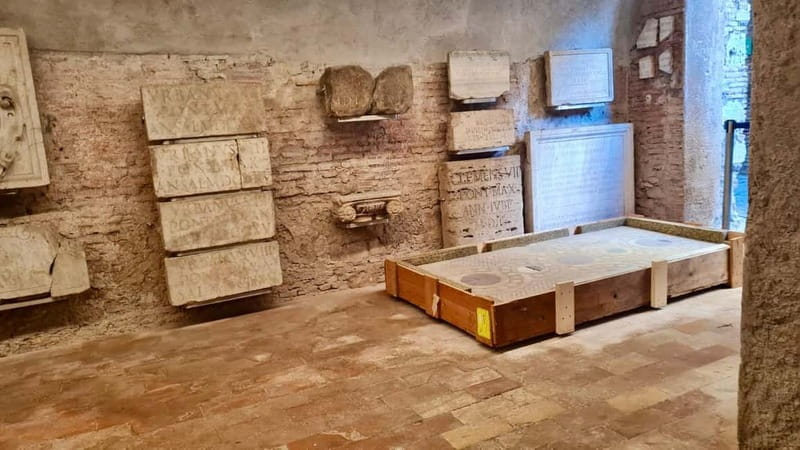
The ticket’s big practical advantage is the skip-the-line access through a separate entrance. In Rome, lines can swell fast, and not all of them move at the same speed. This is a good fix if you want your visit to follow your schedule, not the crowd’s mood.
Your check-in is straightforward. Meet right in front of the entrance near the Angel statue. You’ll spot the team wearing a light blue jacket or t-shirt. After you go in, the experience is set up as self-guided. You won’t need to keep track of a group or hit a tight sequence on someone else’s timing.
One more nice detail: there’s support around your ticket. In at least one case, tickets are emailed and you may get a reminder call around 30 minutes before your scheduled time to verify receipt. That kind of confirmation helps when you’re trying to keep a travel day organized.
The main route: Papal Rooms, stairs, and the key emperor focus
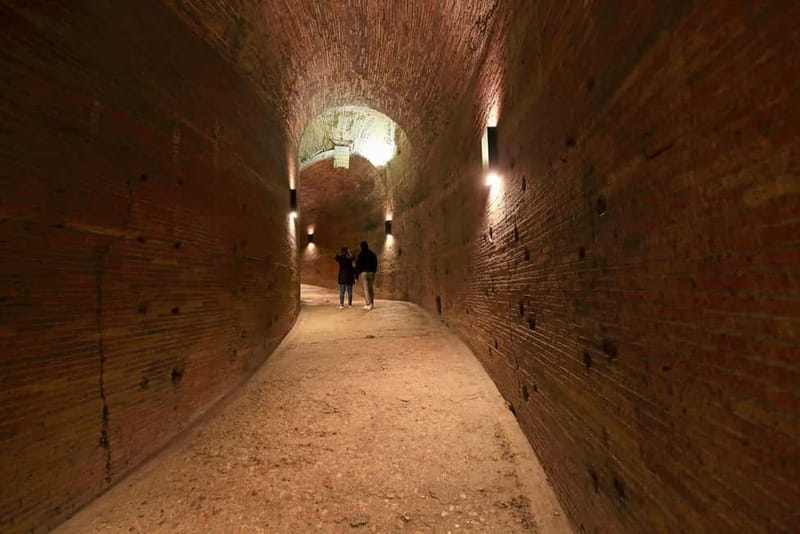
Once inside, you’re on your own schedule. That can feel liberating or risky, depending on your style. If you like structure, give yourself a rough plan before you start, because the building has enough stops to make you wander.
Your visit includes several core areas:
Papal Rooms and the fortress makeover
The Papal Rooms are where the site starts to feel like a working power base. Since Castel Sant’Angelo became a papal fortress during the Early Renaissance, this section helps you see how the Roman tomb identity shifted into something more like a command post—complete with rooms that match that new purpose.
Even if you’re not chasing every label, just seeing the change in function across the rooms makes the story click. The building isn’t one straight timeline. It’s layers.
The spiral staircase: classic and a bit of a workout
A spiral staircase is part of the standard experience. It’s a visually memorable way to move between levels, and it’s also the moment where your pace matters. If you’re traveling with someone who needs extra breaks, this is where to take them.
Because this is self-paced, you can slow down without worrying about anyone waiting on you.
The Room of Hadrian’s ashes: the emotional center
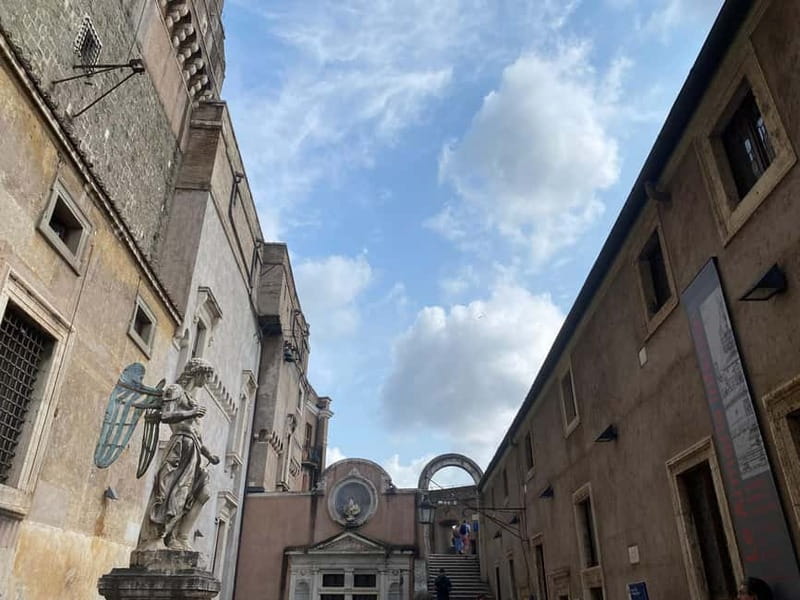
Built in ancient Roman times as Hadrian’s tomb, the ashes of the emperor are kept inside. That’s the heart of the emperor angle. The presence of these ashes (kept since the II A.D.) gives the place a direct, grounded connection to the Roman world instead of just an architectural “vibe.”
I like how this part anchors everything else. Once you’ve seen the emperor-focused section, the later papal-and-prison identity feels less like a random twist and more like a reuse of a powerful location.
Prisons and famous prisoners: Cellini and Cagliostro
Castel Sant’Angelo became a prison and execution site, and the experience includes the themed prison element. Two names tied to famous prisoners are Benvenuto Cellini and Cagliostro.
This is one of those areas where you don’t want to sprint. Even with limited time, take a few minutes to absorb what a prison inside such a famous monument means. It changes the tone of the building. You’re not just looking at “old walls.” You’re looking at a place where people were held and, in some cases, punished.
If you choose the audioguide, this is a great place to use it, because themes like this make more sense when you hear the story rather than just reading a sign.
The secret walkway idea: why Angels and Demons fans pay attention
There’s a key detail that comes up in the description: the castle has a special secret walkway connected with the Vatican Palace, which gave inspiration to the Angels and Demons movie story. The focus here isn’t on making you watch a film. It’s on helping you understand how the site functioned when popes needed protection and escape routes.
Think of it like this: if you understand that this was designed for movement under threat, the fortress design feels purposeful rather than decorative.
You might find you’re more observant about the connections between areas as you go. That’s the value of a place like this: the building itself supports the narrative.
Rooftop terrace views: where the ticket payoff lands
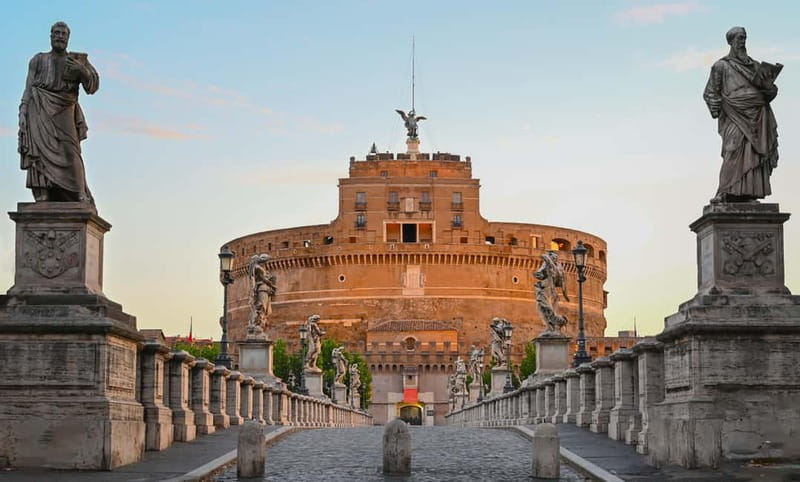
The rooftop terrace is part of the experience and it’s the big visual reward. From up top, you get panoramic views of Rome, the Tiber, and the St. Peter’s Dome area.
I love rooftop stops because they change what you’re seeing. Down on the rooms level, everything is walls and corridors. Up on the terrace, you’re suddenly in the city itself again, and you can spot how the fortress relates to the broader geography.
Bring your “slow eyes” up here. Look around before you take photos. If the light is good, the views feel extra clean and you’ll notice more details across the river.
How long you really have (and how to pace it)
Your ticket is valid for 1 hour. That doesn’t mean you’ll be rushed every minute, but it does mean you should plan like time matters.
In practice, a 1-hour self-guided visit means:
- You’ll need to choose priorities, not attempt every single corner.
- The rooftop terrace becomes even more important, since it’s the place where you either catch the views or you miss them.
- The spiral staircase is your main built-in time drain, so don’t let it become a surprise bottleneck.
If your group has anyone who needs extra stops, you’ll still be fine because this is self-paced. Just start a little earlier in the hour than you think, so you aren’t sprinting at the end.
Price and value: is $30 per person worth it?
At around $30 per person, this ticket sits in the midrange for major Rome sights. What makes it feel worth it is the combination of:
- Skip-the-line access (less waiting, more actual time inside)
- A route that includes several standout areas: Papal Rooms, Hadrian’s ashes area, prisons theme, and the rooftop terrace
- Optional audioguide support in multiple languages if you want more context
This is also good value if you’re traveling with people who want control. One key review detail highlighted that the group loved going at their own pace, including taking breaks for elderly visitors. A live-guided tour can be great, but it can also force a pace that doesn’t match everyone’s energy. Here, your pace is yours.
That said, if you’re the type who wants a full spoken explanation from a live guide, you may feel the self-guided setup is lighter. You’re paying for entry and independence, not for a walking lecture.
Who should book this ticket (and who might want a different option)
This experience fits well if you:
- Want skip-the-line entry
- Prefer exploring at your own speed
- Care about a building with both Roman and papal layers
- Want rooftop views without needing to join a group schedule
It may not be your best match if:
- You rely on a live guide for context
- Your group needs full wheelchair access or mobility accommodations (this isn’t suitable for people with mobility impairments and wheelchair users)
- You’re traveling with large items or pets that aren’t assistance animals (more on that next)
Practical do’s and don’ts before you enter
A few rules keep things smooth once you arrive:
Bring
- Passport or an ID card
Don’t bring
- Weapons or sharp objects
- Baby strollers
- Luggage or large bags
- Pets (assistance dogs are allowed)
- Alcohol and drugs
If you’re thinking, I’m fine, I’ll just bring a backpack, double-check your bag size. The rules call out luggage or large bags as not allowed, so you’ll want to travel light.
Know the timing
You’ll want to pick a time slot that fits your day. Your ticket is valid for 1 hour, and you may need to reschedule if your entry time changes. If you do need to reschedule, contact is recommended because the entry ticket is valid for same-day tickets.
Getting the most out of it: my pacing advice
If you want the best experience inside one hour, here’s how I’d run it:
1) Start with the emperor-focused moment (Hadrian’s ashes area) early. It sets the tone.
2) Move into the Papal Rooms and then handle the spiral staircase without rushing. Pause if you need to.
3) Spend a little time on the prison theme stops and related figures like Cellini and Cagliostro. This is where story details help.
4) Save rooftop terrace for last so you end with the views while your energy is still good.
Using the audioguide here can turn “see rooms” into “understand why those rooms mattered.” Optional audioguides are available in English, French, and Italian, plus Spanish (listed as an option as well), with other language options also supported.
FAQ
FAQ
How do I find the meeting point for Castel Sant’Angelo entry?
Meet right in front of the entrance near the Angel statue. Look for the team wearing a light blue jacket or t-shirt.
Is this a live-guided tour?
No. This experience includes skip-the-line entry tickets. A live guide is not included.
Is there an audioguide option?
Yes. An optional audio guide is available in English, French, and Italian, and Spanish is also listed.
How long is the ticket valid?
The ticket is valid for 1 hour. You should check availability for your starting time.
What time should I plan for in the castle?
Plan around 1 hour for the visit with your own pace, including time for the rooftop terrace and stairs.
What are the main areas included in the visit?
You’ll visit Papal Rooms, a spiral staircase, the Room of the ashes of Hadrian’s Emperor, and the rooftop terrace for panoramic views.
Can I go if I have mobility issues or use a wheelchair?
This activity is not suitable for people with mobility impairments and is not suitable for wheelchair users.
What ID do I need to bring?
Bring a passport or ID card.
Are strollers, luggage, or pets allowed?
Baby strollers, luggage or large bags, and pets are not allowed. Assistance dogs are allowed.
What’s the cancellation window?
Free cancellation is available up to 3 days in advance for a full refund (with the option to cancel up to 24 hours before in some notes).
Should you book this Castel Sant’Angelo ticket?
If you want skip-the-line entry and a self-paced way to see Roman-to-papal highlights plus rooftop views, this is a solid choice. I’d book it when your schedule is tight, you want control over pace, or you’re traveling with someone who needs more breaks.
Skip it if you strongly prefer a live guide for interpretation, or if mobility needs make self-paced stairs difficult. For everyone else, it’s a practical way to spend an efficient hour inside one of Rome’s most story-rich fortresses.