REVIEW · CAPITOLINE MUSEUMS
Rome: Capitoline Museums and Centrale Montemartini Tickets
Book on GetYourGuide →Operated by TOURISTATION · Bookable on GetYourGuide
Rome’s museums surprise in real ways. This ticket gets you into the Capitoline Museums (also called the Roman Empire Museum) with skip-the-line entry, plus an option to add Centrale Montemartini. I like how the visit is designed around two very different settings—classical sculpture in palace halls, then ancient statues inside Rome’s first public thermoelectric power plant.
Two things I really enjoy here: the famous She-wolf of Rome and the view/architecture that ties the collection to the Forum area. Another strong point is the Centrale Montemartini concept—watching classical art sit in an industrial space makes the whole story of Rome feel more grounded, not just “museum on a wall.” One drawback: if you choose the combined option, you must plan time to move between the two sites (transfer is not included).
Key highlights
- Skip-the-line entry to the Capitoline Museums
- She-wolf of Rome sculpture experience and Rome-founder context
- Central piazza between the museum buildings where you can pause and reset
- Centrale Montemartini in Rome’s first public thermoelectric power plant
- The Machines and the Gods exhibition theme (classical vs industrial archaeology)
- Cartier e il Mito ai Musei Capitolini exhibition access during the stated dates
In This Review
- First stop: Capitoline Museums and the central piazza reset
- The She-wolf of Rome: why that sculpture still matters
- Michelangelo’s architecture and the Forum edge you can feel
- Centrale Montemartini: a power plant museum that changes how you see sculpture
- What you’re really getting out of Centrale
- How the ticket experience works: Touristation Aracoeli and your smartphone app
- A practical tip that matters
- Timing and planning: making 3–5 hours feel like enough
- Capitoline Museums only
- Combined option: plan the transfer time
- What the Cartier exhibition adds (if your dates match)
- Price and value: is $42 worth it?
- Who should book this experience
- A real caution: double-check your ticket date
- Should you book this ticket?
- FAQ
- FAQ
- Where do I redeem my voucher?
- How long does the visit take?
- Is skip-the-line entry included?
- Is Centrale Montemartini included too?
- How far is Centrale Montemartini from the Capitoline Museums?
- Is the transfer between the two museums included?
- Is this a guided tour?
- What’s included besides museum entry?
- Are there any food or drink options included?
- What dates does the Cartier exhibition cover?
First stop: Capitoline Museums and the central piazza reset
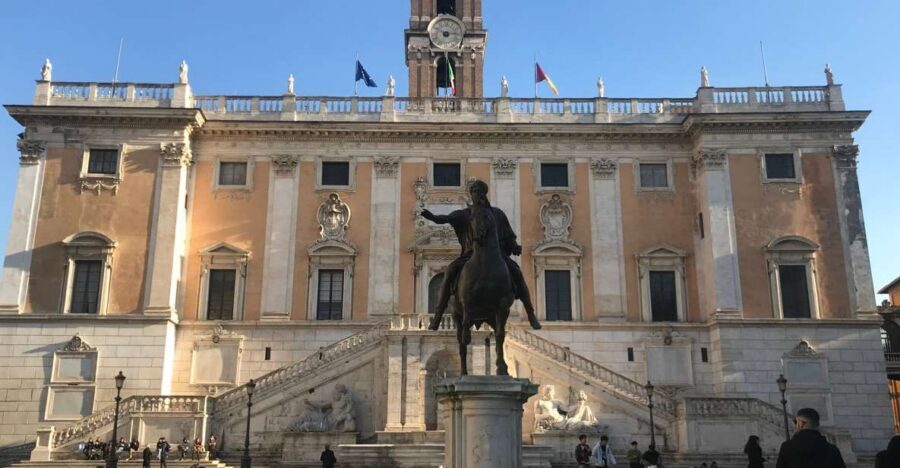
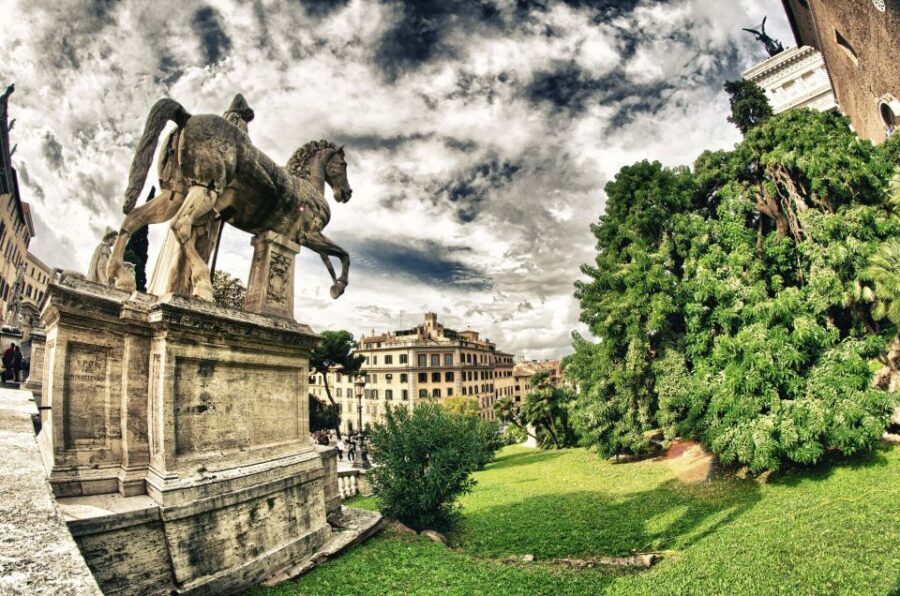
If you want a Rome museum visit that feels logical instead of chaotic, the Capitoline Museums are a great anchor. The site is set up around a central piazza between the buildings, so you’re not stuck marching from room to room like a checklist. You can take a breath there, orient yourself, then pick the galleries that match your mood.
Once inside, you’re stepping into a museum built on a clear idea: make Rome’s major collection of artworks and ancient sculpture permanently accessible. This collection became public in the early 1700s, when Pope Clement XI decided it should be available to the people of Rome, and the museum grew into one of the city’s essential stops. Even if you’ve seen Roman artifacts before, the flow here tends to make the story feel more complete.
Don’t rush the piazza. It’s not just an empty courtyard moment—it helps you slow down enough to actually notice how the museum buildings sit in relation to the rest of the hill and the wider Forum landscape.
The She-wolf of Rome: why that sculpture still matters
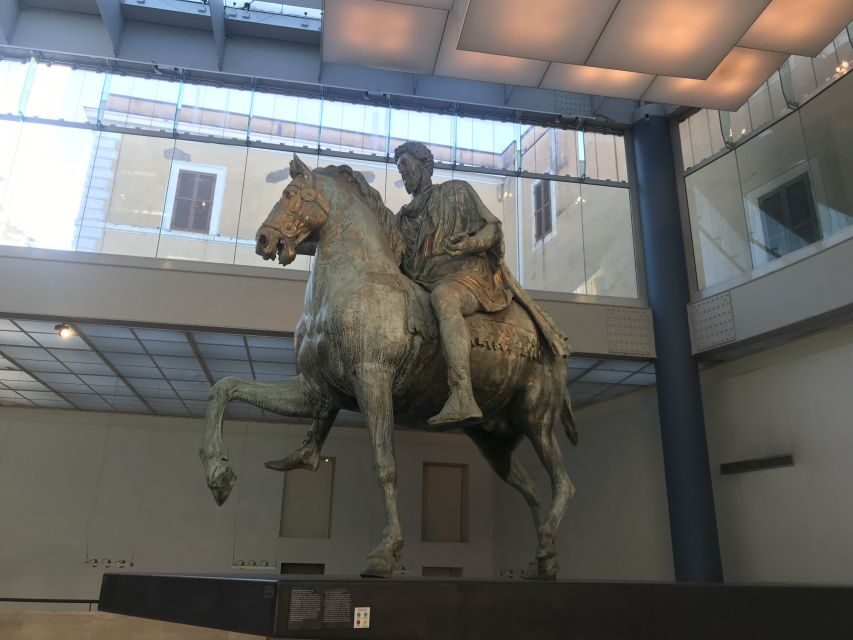
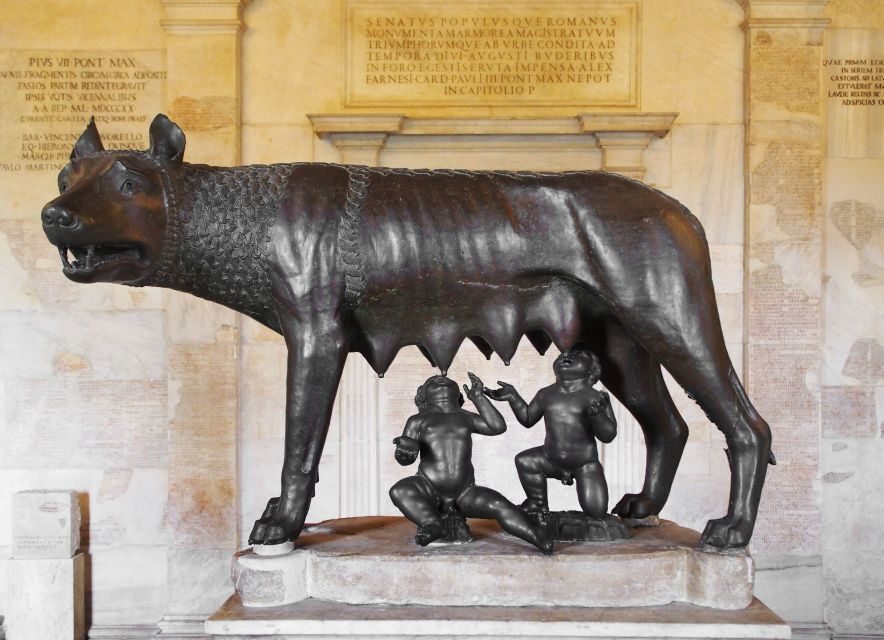
One of the big reasons to come here is the She-wolf of Rome—the sculpture linked to the founders Romulus and Remus. It’s the kind of image that’s so well known that it can feel familiar before you even see it. In person, though, you get a better sense of why it became a symbol: it’s dramatic, compact, and instantly readable, even if you’re not a hardcore mythology person.
I also like that this is not presented as a random famous statue. It’s part of a broader sense of what Rome called itself and what it claimed as its origin story. That matters because the rest of the museum keeps circling back to Rome as identity—how art, politics, and power show up together.
You’ll also want time for the artifacts tied to Rome’s idea of being the center of the world—the Caput Mundi concept. One highlight is the display described as a treasure chest of items that tells the story of ancient Rome. Even if you don’t read every label, the effect is that you’re moving through objects that each explain a piece of Rome’s self-image.
Michelangelo’s architecture and the Forum edge you can feel
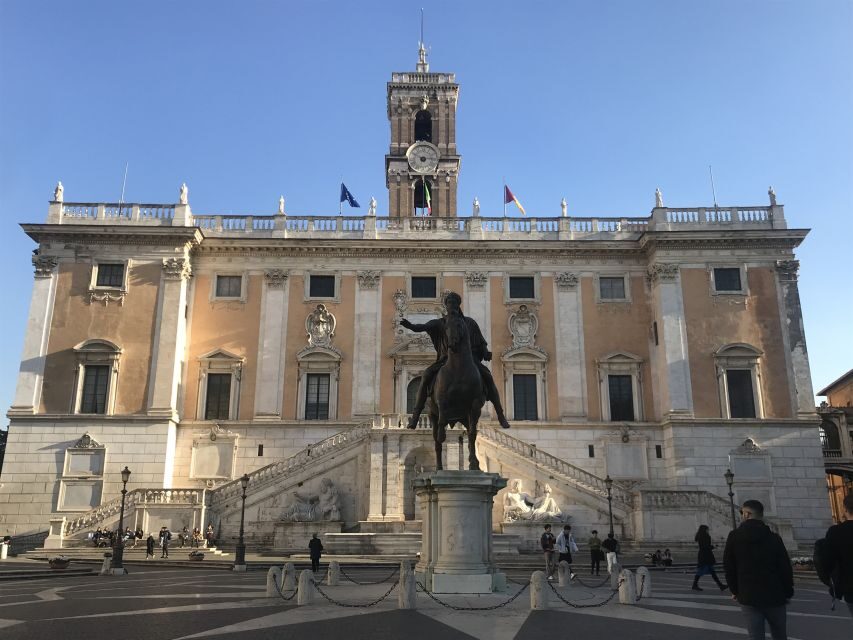
The Capitoline Museums sit in a spot that lets you connect the collection to the landscape. There’s a specific architectural element connected to Michelangelo, and it’s positioned so you get that “museum meets city” feeling—especially with the Forum area in the background of your thinking.
This is a big deal for how Rome museums land emotionally. In some cities, you feel like you’re leaving the streets behind. Here, you get pulled back into the idea that these statues and fragments belong to a real city layout, not just a “past” separated by glass. You may not spend long staring at the distance, but once you notice the relationship, your whole visit changes from “look at art” to “understand setting.”
If you’re short on time, focus on the “Rome in the city” zones first, then fill in gallery gaps after.
Centrale Montemartini: a power plant museum that changes how you see sculpture
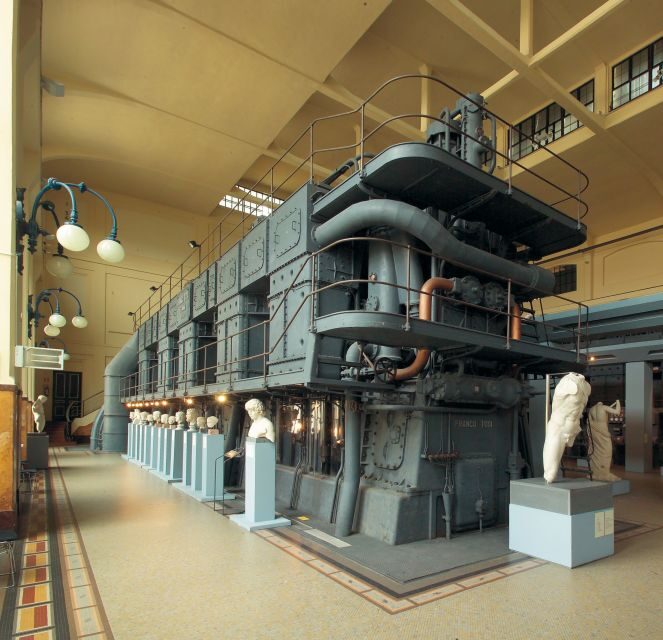
If you add the second option, Centrale Montemartini is where the experience turns memorable for reasons beyond the usual museum highlights. This site is the first public thermoelectric power plant in Rome, converted into a museum. That means you’re not just walking into another building with classic statues; you’re walking into an industrial shell that was originally made for machinery, not worship or empire.
The centerpiece idea is the contrast between two worlds: classical art on one side, industrial archaeology on the other. The exhibition described as The Machines and the Gods (referenced with a 1997 presentation) leans hard into that opposition, and it works. Seeing hundreds of sculptures in an industrial setting makes the objects feel less “dead marble” and more like something that survived real economic change and urban transformation.
The displays also aim to reconstruct monumental complexes and show development across Roman time—from the Republican era into the late Imperial age. That’s helpful because it gives you a timeline to hold in your head while you look. Without that framing, museum sculpture can blur into a general “Roman art” category.
What you’re really getting out of Centrale
For me, the value isn’t only that the building is unusual. It’s that it teaches your eyes to notice different kinds of details. In a palace museum, your brain expects softness, light, and reverence. In a power plant, you notice structure, materials, scale, and the way objects anchor a space. It makes the ancient story feel less like fantasy and more like infrastructure—Rome as a system.
How the ticket experience works: Touristation Aracoeli and your smartphone app
This is one of those tickets where logistics matter, because you’re dealing with two separate sites if you pick the combined option. You redeem vouchers at TOURISTATION ARACOELI, Piazza d’Aracoeli 16. The office is marked by a fountain and orange flags in front, so it’s easier to spot than you’d expect.
From there, you get what you need to use the visit smoothly:
- Skip-the-line ticket for Capitoline Museums
- If selected, a reserved entrance ticket for Centrale Montemartini
- Access to the Cartier e il Mito ai Musei Capitolini exhibition during the stated dates (Nov 19, 2025 – Mar 15, 2026)
- Help at the Touristation Office if something doesn’t match up
- A city app audioguide downloaded to your smartphone
- Free Wi‑Fi
No guided tour is included, which is actually a plus if you like museums at your own pace. The audioguide helps you keep your focus without needing a live guide schedule that can push you into crowd flow.
A practical tip that matters
One review notes that if you have larger backpacks, you should store them in free lockers located in the same building. That’s a simple but important detail for a smooth visit. If you can travel lighter, do it. If you can’t, plan on using lockers so you don’t spend energy holding your bag while you try to look at sculptures up close.
Timing and planning: making 3–5 hours feel like enough
The duration is listed as 3 to 5 hours. That range is wide enough that it can either feel comfortable or rushed, depending on whether you choose one museum or both.
Capitoline Museums only
If you’re doing just the Capitoline Museums, you can likely cover the big-name stops (like the She-wolf) and still have time for slower browsing. Use the central piazza to decide what you care about most. If you only have part of the day, this is the safer option because you’re not tied to cross-city movement.
Combined option: plan the transfer time
For the combined ticket, Centrale Montemartini is about 10 minutes by car or 30 minutes by public transportation from the Capitoline Museums. Transfer between the attractions is not included, so don’t assume you’ll be moved from A to B. Build that travel time into your schedule and keep buffer in mind.
If you’re not sure how you’ll move, choose the transport plan you can handle calmly. Getting to Centrale stressed is the worst way to start an experience that depends on noticing contrasts.
What the Cartier exhibition adds (if your dates match)
This ticket also includes access to Cartier e il Mito ai Musei Capitolini during Nov 19, 2025 – Mar 15, 2026. That’s not just a bonus checkbox. If you’re the type who enjoys connections between art, design, and storytelling, this exhibition may give you a different lens inside the Capitoline Museums.
If your visit falls outside those dates, you’ll still have the Roman Empire collection, the key sculptures, and the Centrale option if selected. The main museum value doesn’t hinge on Cartier being available, but it can add an extra layer if it is.
Price and value: is $42 worth it?
At $42 per person, the key value comes from combining two things: museum access and time-saving entry style. You get skip-the-line access to the Capitoline Museums, and (if you pick it) you also get a reserved entrance ticket for Centrale Montemartini. That’s the kind of arrangement that can make a difference in Rome, where lines can eat your day.
You’re also not paying for a full guided tour here. Instead, you’re paying for entry and support elements:
- app-based audioguide
- staff assistance at the office
- free Wi‑Fi
- exhibition access (for the Cartier show, if the dates match)
If you like museums independently and you’re comfortable using a phone audioguide, the value reads very well. If you know you strongly prefer a live guide to explain context, you might feel like you’re doing more “reading and interpreting” yourself.
Who should book this experience
This experience is a great match if you want:
- a focused Rome museum day with easy entry
- a major Roman art stop plus an unusual “Rome in an industrial machine” setting
- independence (no guided tour pressure)
- a blend of famous symbols and themed presentation across time
It’s also a smart fit for couples, small groups, and solo travelers. With only 3–5 hours, you can build it into a wider Rome itinerary without turning your whole day into “museum logistics.”
A real caution: double-check your ticket date
One important lesson comes from a booking mistake described in the supplied reviews: a date mismatch on a ticket nearly caused trouble at check-in. The fix wasn’t dramatic, but the stress was real.
So here’s what I recommend: before you go, check that the date on your ticket matches the day you’re entering and that the details line up with what the staff expects. If something looks off, address it early at the Touristation office rather than hoping it will resolve at the museum door.
Should you book this ticket?
If you want a Rome museum experience that does more than repeat the same “Roman statue” story, I think you should book—especially if you add Centrale Montemartini. The combination is the point: the Capitoline Museums give you the iconic anchors like the She-wolf of Rome, while Centrale reframes Rome by placing ancient sculpture inside a former power plant.
Book this if you’re happy to go self-guided with an audioguide and you plan for the transfer time if you choose both sites. Skip it (or choose Capitoline only) if you hate moving around mid-day or you know you’ll need a live guide to make sense of everything.
FAQ
FAQ
Where do I redeem my voucher?
You redeem your vouchers at TOURISTATION ARACOELI, Piazza d’Aracoeli 16. There is a fountain and orange flags in front of the office entrance.
How long does the visit take?
The duration is listed as 3 to 5 hours. Start times depend on availability.
Is skip-the-line entry included?
Yes. The ticket includes a skip-the-line ticket for the Capitoline Museums.
Is Centrale Montemartini included too?
Centrale Montemartini is included only if you select the combined option. It comes with a reserved entrance ticket for Centrale Montemartini.
How far is Centrale Montemartini from the Capitoline Museums?
Centrale Montemartini is about 10 minutes away by car or about 30 minutes by public transportation.
Is the transfer between the two museums included?
No. Transfer between the attractions is not included for the combined option.
Is this a guided tour?
No guided tour is included. You’ll use the city app audioguide on your smartphone.
What’s included besides museum entry?
Included items are assistance at the Touristation Office, access to the Cartier exhibition during the stated dates, a downloadable city app audioguide, and free Wi‑Fi.
Are there any food or drink options included?
No. Food and drinks are not included.
What dates does the Cartier exhibition cover?
The access included with this ticket is for Cartier e il Mito ai Musei Capitolini from November 19, 2025 to March 15, 2026.