REVIEW · NAPLES
Pompeii & Herculaneum Day Trip from Naples with Lunch
Book on Viator →Operated by Napoli City Vision · Bookable on Viator
Two ancient cities in one day.
This day trip is a smart way to see Pompeii and Herculaneum without doing the logistics yourself. I like that you get a guided start in Pompeii, with a clear story tied to what you’re walking past, and I also like that lunch is included, so you’re not hunting for food while your legs are protesting. One thing to consider: the whole plan moves at a walking pace and you’ll be paying extra for site entry, so this is best if you plan to see both places, not just one.
The best part is how the day is paced for first-timers. You’ll ride out of Naples in a modern coach, step into Pompeii’s excavated streets with your guide (some groups get guides such as Erica, Monica, or Maria), then head for Herculaneum where the experience shifts to an audio-led style (often phone-like) and you explore on your own. If you’re sensitive to heat, or you hate crowds, this isn’t a mellow stroll. It’s historic, yes, but it’s still a Roman walking tour.
In This Review
- Key points I’d underline before you go
- Pompeii and Herculaneum: the best one-day pairing
- Coach pickup from Naples and how the day stays on rails
- Guided Pompeii: seeing the Forum and Teatro Grande without getting lost
- The time reality: expect a “highlights” visit
- The “extra” stop if time allows: coral and cameos
- Lunch in Pompeii’s orbit: a real break, not a snack run
- Herculaneum in the afternoon: better-preserved details at your pace
- Why Herculaneum is worth the effort even when it’s smaller
- Timing, heat, and walking: plan your comfort like it’s part of the ticket price
- Price and value: what you’re buying for $120.68
- Small group feel, big-site reality: how to handle group logistics
- What kind of traveler this suits best
- Should you book this Pompeii and Herculaneum day trip?
- FAQ
- How long is the Pompeii and Herculaneum day trip from Naples?
- What’s included in the tour price?
- Do I have to pay entrance tickets for Pompeii and Herculaneum?
- Will there be a live guide at both sites?
- Is Herculaneum guided or self-guided?
- Is this tour suitable for people with walking difficulties?
Key points I’d underline before you go
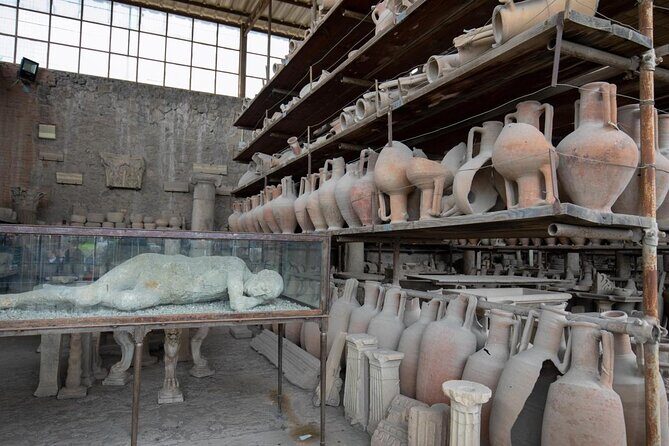
- You cover both sites in one day, so you get the comparison: big, famous Pompeii versus smaller, better-preserved Herculaneum.
- Pompeii is guided and structured, which helps you avoid wandering past the highlights.
- Lunch is included, and it breaks up the day at a real restaurant instead of a quick snack.
- Herculaneum is audio-guided, so your pace is freer once you’re inside.
- Entry tickets cost extra, so budget for them on top of the tour price.
- Group size can affect how you’re guided, with audio replacing a live guide when the group is small.
Pompeii and Herculaneum: the best one-day pairing
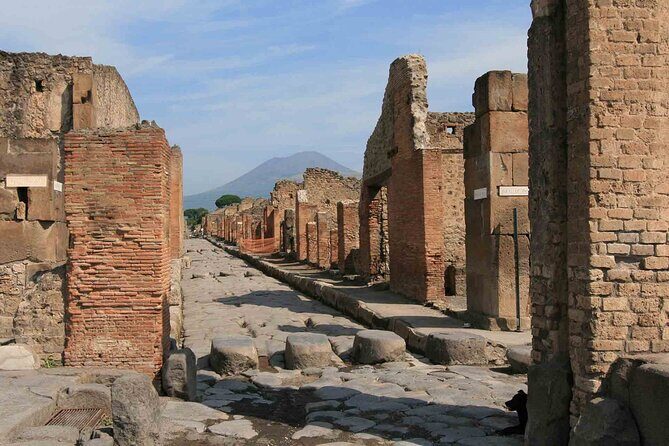
If you only have a day from Naples, this combo makes a lot of sense. Pompeii is the headline act. It’s huge, dramatic, and the kind of place that can swallow your day if you don’t have a plan. Herculaneum is the quieter sibling, and the payoff is preservation—more mosaics, more intact “everyday Roman life,” and that eerie sense that time froze right when the eruption hit.
What I like about doing both on the same day is how the story changes. Pompeii gives you scale: the city’s streets, forum area, and venues like the Teatro Grande (once holding up to about 5,000 spectators). Herculaneum changes the mood. Even though it’s smaller, it can feel more intimate because so much survived.
This trip is built for people who want that contrast without spending your vacation figuring out trains, buses, and entry times. You get a coach, a schedule, and enough structure to keep you moving.
You can also read our reviews of more tours and experiences in Naples

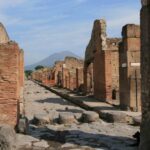
Coach pickup from Naples and how the day stays on rails
You start with hotel pickup from select spots in Naples. After the final pickups, the group drives toward Pompeii. In practice, this is the “save your energy” part of the day. You’ll be walking a lot once you’re inside the ruins, so having transport handled helps.
The coach time also matters because the schedule is tight. This is not a slow sightseeing loop. You’re looking at about 6–7 hours total, so the transport segment is part of how the operator protects your visit time later.
A few practical things to keep in mind:
- Your tour uses a mobile ticket, so have it ready on your phone.
- There’s a maximum group size of 52, which usually keeps it manageable on the coach, but you’ll still see crowds at the sites.
- The trip is not for people with walking difficulties, and the physical demands are real—there’s uneven terrain and lots of stepping.
Guided Pompeii: seeing the Forum and Teatro Grande without getting lost
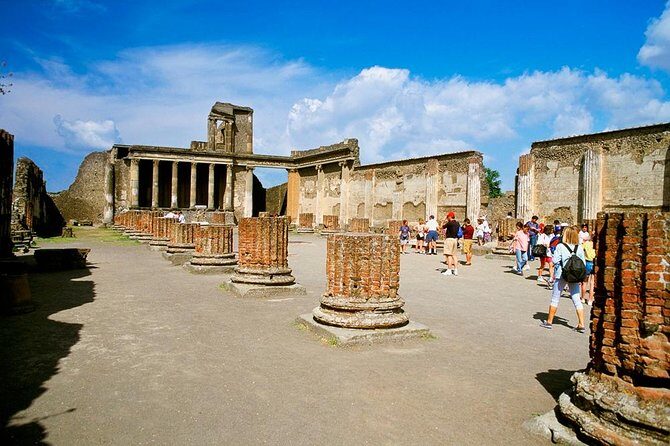
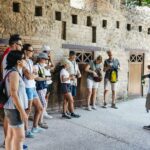
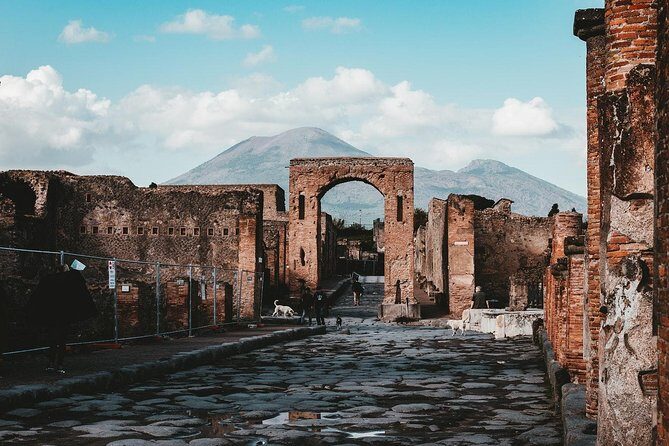
At Pompeii, the tour structure is the real value. The guide walks you through key areas so you’re not stuck guessing what’s important. You’ll focus on major highlights like the Forum and the Teatro Grande, which helps you understand what Pompeii was for—public life, shows, politics, and status—right as you’re standing where those things happened.
Here’s why the guided portion matters: Pompeii is enormous. Even with guided time, you’re not “seeing it all.” You’re seeing what the guide prioritizes as the best way to understand the city and the eruption’s impact. One of the most common takeaways from people who do Pompeii with a guide is that it’s simply the most efficient way to get meaning out of the ruins.
Also, your guide can make the experience feel alive. In the guide rotation, people have had Pompeii guides such as Erica, Monica, and Maria, and the consistent theme is story-telling—tying daily life and architecture to the big eruption moment in 79 AD.
The time reality: expect a “highlights” visit
Even with guidance, Pompeii excavations cover a huge footprint. Your Pompeii visit is set for about 2 hours. That’s enough to hit major zones, absorb the eruption context, and get your bearings, but it’s not enough for deep research or long bathroom breaks. If you’re the type who could spend a whole day in one neighborhood, you’ll likely wish you had more time.
The “extra” stop if time allows: coral and cameos
If the schedule has room, you might also stop at a family-run coral and cameo factory. This isn’t just shopping. You’ll see how local artisans work and learn about jewelry-making methods. It’s a neat cultural add-on because it connects to Naples-area crafts, not just ancient sites.
Don’t bank your entire day on it, though. If timing gets tight, it can be skipped. I’d treat it as bonus time, not a guaranteed must-do.
You can also read our reviews of more tours and experiences in Naples





Lunch in Pompeii’s orbit: a real break, not a snack run
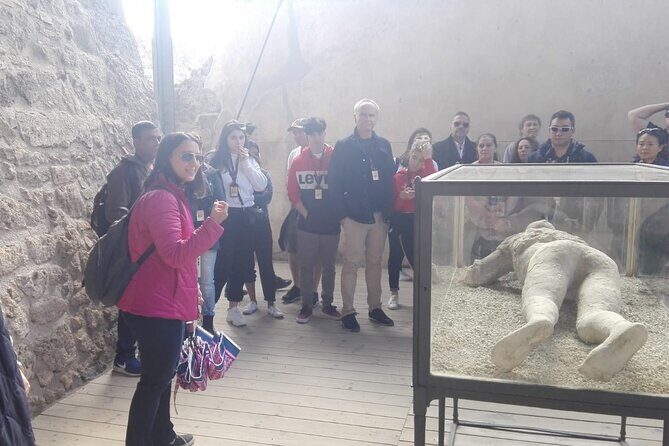
Lunch is included, and that matters more than you think. Pompeii and Herculaneum are both places where time and stamina disappear fast. Having an included restaurant stop keeps you from spending your one day in a line for overpriced sandwiches.
The lunch break runs about 1 hour. That’s enough to eat, reset your legs, and drink water before the afternoon shift.
One note: the lunch is an Italian-style meal at a local restaurant, and like many group lunches, it may be a set menu. Some people have said they found the chicken portion less enjoyable (for example, chewy), so if you have a strict preference, you’ll want to manage expectations. This is still a good, functional break that lets the day keep moving.
Herculaneum in the afternoon: better-preserved details at your pace
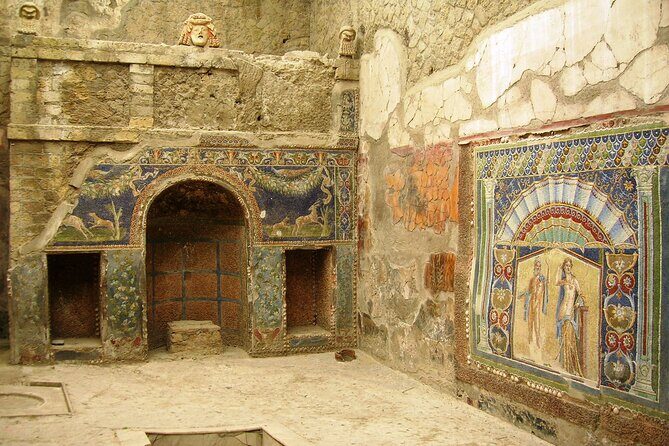
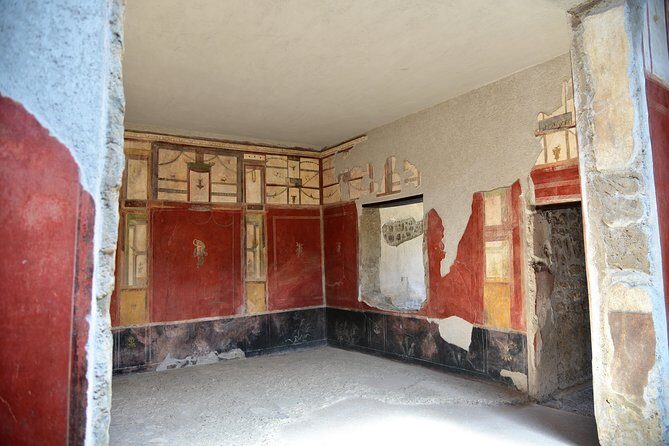
After lunch, you head to Herculaneum. The vibe changes. Pompeii feels like a big archaeological stage. Herculaneum feels more like a preserved snapshot of daily life.
Your Herculaneum visit is around 1.5 hours. You’ll enter and then explore at leisure. The big help is the audioguide setup in the ruins of Herculaneum. Instead of a live guide walking you edge-to-edge, you’ll use an audio guide (often described as phone-like in the experience).
This is where the experience can go two ways:
- If you like exploring independently, audio lets you pause when something catches your eye—mosaics, building details, or small clues.
- If you strongly prefer a live guide’s ability to answer questions and steer you through, the audio format can feel less satisfying.
People have also commented that the audio device setup can be awkward, with suggestions like using earbuds for hands-free listening. If you’re the type who hates tangled gear, it’s smart to bring your own earbuds just in case.
Why Herculaneum is worth the effort even when it’s smaller
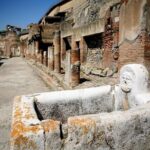
Pompeii gets the fame, but Herculaneum brings the preservation. You’re looking at well-kept mosaics and features that can still feel startlingly intact, plus scientific details like fossils. The site is also linked to the Villa dei Papiri, famous for a library with over 1800 papyri.
In other words: you’re not just seeing ruins. You’re seeing something that helps you picture what Roman life felt like—more tactile and less “stones only.”
Timing, heat, and walking: plan your comfort like it’s part of the ticket price

This trip is most comfortable when you treat it as a summer-ready outing. Even though you might visit in cooler months, the schedule is outdoors and walking-heavy.
Here’s the practical advice I’d follow:
- Wear breathable shoes with good traction. The ground can be uneven.
- Bring water and plan to sip often. You’re outdoors most of the day.
- If you go in hot weather, consider shade tools like a cap, hat, or small umbrella. Some people recommended handheld fans and even spray bottles for relief.
Also, remember the schedule has a built-in pace. If you stop too long in one plaza or spend extra time at the edge of a major feature, you can cut into the rest of the day. The operator’s time blocks are what keep you from feeling rushed at both sites.
Price and value: what you’re buying for $120.68

The listed price is $120.68 per person, and what’s included is the “infrastructure” of the day:
- Modern coach transportation from Naples and back
- Commentary onboard
- A guide (with a key condition: at least 6 participants per language for a live guide; otherwise you may get an audio guide)
- Audioguides in Herculaneum
- Lunch
What’s not included is the part you can’t skip:
- Pompeii entry ticket (listed at €19 per person)
- Herculaneum entry fees (listed as €16 and also €14 per person in the details—so plan for Herculaneum fees in that range)
- Drinks with lunch
- And the ruins’ entry fees are paid separately from the tour price.
So is it worth it? For most people, yes, if you want both sites in one shot and you don’t want to manage transportation plus guide plus tickets on your own. The real value is time saved and the structured Pompeii walkthrough—especially if Pompeii is your first Roman ruins visit.
If you’re traveling as a tiny group, though, it can be less satisfying because the live guide requirement can shift you into audio mode. One traveler specifically warned that during slower seasons or weekdays, the experience may end up being more self-guided and less detailed, so you might get less guidance value for the money. If you want maximum guide-led storytelling, going when the group is larger helps.
Small group feel, big-site reality: how to handle group logistics
This is a group tour with a max of 52. That’s not “private car and silence,” but it can be comfortable for a day like this. The coach keeps everyone together, and the schedule keeps the day from slipping.
Still, two logistics points are worth knowing:
- Pickup time windows can be real. If you’re early, you may wait; if you’re late, you may miss the van. That’s not unique to this company, it’s just how group operations work.
- Language matching can matter. Some people reported mixed-language dynamics at one of the stops, where the group situation didn’t feel perfectly aligned. If English guide delivery is important to you, it’s worth booking for a time when your group size is more likely to support the intended language format.
What kind of traveler this suits best
This trip fits best if you:
- Want both Pompeii and Herculaneum without building your own plan
- Like having your day structured so you don’t miss the main areas
- Are okay with moderate walking and uneven ancient terrain
- Prefer audio support at Herculaneum instead of a fully guided walkthrough
It’s not a great match if you:
- Have mobility limits or walking difficulties
- Want a slow, museum-style pace with long breaks
- Expect “free time to roam endlessly” in Pompeii—you’re on a timetable for a reason
Should you book this Pompeii and Herculaneum day trip?
If your goal is to get the Pompeii story, then the Herculaneum preservation payoff, and you’d like the day handled end to end, I think this is a strong booking. The combo of coach transport + lunch + Pompeii guiding + Herculaneum audioguides is practical for a tight Naples visit.
Book it especially if:
- You’re a first-timer at Roman ruins
- You want to compare two styles of eruption impact in one day
- You’d rather spend your energy walking ruins than planning routes
Consider another option if:
- You hate audio-guided exploration
- You’re traveling in a small group where a live guide may not be available
- You need more time at Pompeii than the highlights route allows
FAQ
How long is the Pompeii and Herculaneum day trip from Naples?
It runs about 6 to 7 hours total.
What’s included in the tour price?
The price includes modern coach transportation, onboard commentary, a guide (depending on group size), audioguides in Herculaneum, and lunch. Drinks are not included.
Do I have to pay entrance tickets for Pompeii and Herculaneum?
Yes. Entrance tickets are not included. Pompeii is listed at €19 per person, and Herculaneum fees are listed at about €14–€16 per person in the tour details.
Will there be a live guide at both sites?
A live guide is provided when there are at least 6 participants per language. If the group is smaller (for example, 5 people), you’ll have an audio guide instead.
Is Herculaneum guided or self-guided?
Herculaneum is handled as a self-guided visit using audioguides while you explore at your own pace.
Is this tour suitable for people with walking difficulties?
No. You should have moderate physical fitness, and it is not suitable for passengers with walking difficulties.