REVIEW · NAPLES
Pompeii and Herculaneum Private Walking Tour with an Archaeologist
Book on Viator →Operated by Askos Tours · Bookable on Viator
Volcanic ash makes history feel personal. You’ll move through Herculaneum’s ash-preserved streets and houses, then head into Pompeii to see the Forum, baths, theaters, and even the Lupanar, guided by an archaeologist. I love the private format that keeps the day flexible for your questions, and I love how the guide links small details (doorways, carvings, bath layouts) to how Romans actually lived.
One possible drawback: admission tickets and any transport you need aren’t included, so you’ll want to budget for entry and plan your start points carefully. It’s also a walking-focused half-day, so good shoes matter more than you think.
In This Review
- Key highlights to know before you go
- Pompeii and Herculaneum: the value of seeing two angles of one eruption
- Price and tickets: what $597.36 buys (and what it doesn’t)
- Where the day actually starts (and why meeting points matter)
- Timing and walking pace: a 5.5-hour plan that stays moving
- Herculaneum: where everyday Roman life is preserved in charcoal detail
- House of the Deer: the name comes from art you can’t ignore
- M. Nonius Balbus’ terrace and the power of inscriptions
- College of the Augustales: religion, empire, and local authority
- Luxury homes and surprising details: Telephus reliefs and private bath access
- House of the Skeleton: human remains and the shock of what’s preserved
- Central Thermae: men’s and women’s baths, separate entrances
- House of the Black Salon: luxury, carbonized doorframes, and an eerie threshold
- Casa Sannitica and Casa del Bel Cortile: different plans, clear personalities
- House of the Grand Portal: charred wood and a full mansion feel
- The Pompeii shift: start at Porta Marina Superiore and hit the city’s main pulse
- Lupanar: Pompeii’s most famous brothel stop
- Main street walk and the city’s everyday spine
- Foro de Pompeya: the square where power and commerce shared space
- Granaries of the Forum: marble tables, fountains, and casts
- Basilica and Stabian Baths: business shelter and the city’s oldest thermal complex
- House of the Faun and House of Menander: big domestic luxury in two styles
- Teatro Grande and Teatro Piccolo: two theater scales, one city culture
- The archaeologist guide factor: what you should expect from the best ones
- Crowds, queues, and the reality of “private”
- What to pack for a comfortable Herculaneum + Pompeii walking day
- Who should book this Pompeii and Herculaneum archaeologist tour
- Should you book Askos Tours’ private Pompeii and Herculaneum tour?
- FAQ
- What is included in the tour price?
- Are Pompeii and Herculaneum entry tickets included?
- How long is the tour?
- Is this tour private?
- Where do we meet the guide in Herculaneum?
- Where do we meet the guide in Pompeii?
- What should I wear or bring?
- What is the cancellation policy?
Key highlights to know before you go
- Two cities, two very different “looks” at the same disaster: Herculaneum’s ash-preserved wood and Pompeii’s broader street-and-public-life layout
- A real archaeologist guide: you get explanations tied to each house, bath, and public building, not just a surface walk
- Herculaneum’s standouts: charred doorframes, private connections to baths, and a famous wooden partition that survived
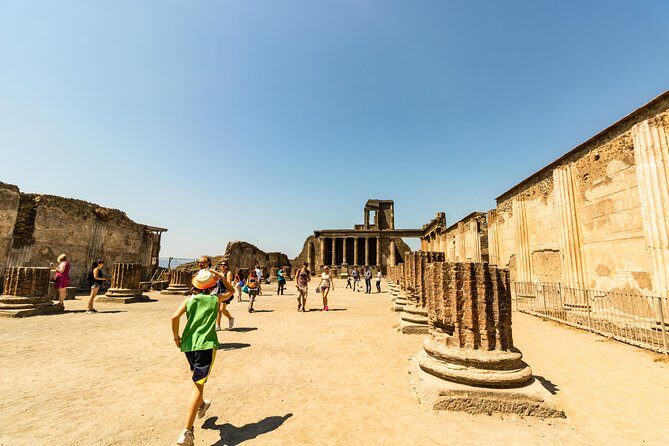
- Pompeii’s recognizable anchors: Forum square, Basilica portico, Stabian Baths, and the big theater
- Short stop rhythm: many sites are only about 10–15 minutes, which keeps energy up but means you’ll want questions ready
- Private group pacing for up to 15: easier to manage kids, mobility differences, and time for photos
Pompeii and Herculaneum: the value of seeing two angles of one eruption
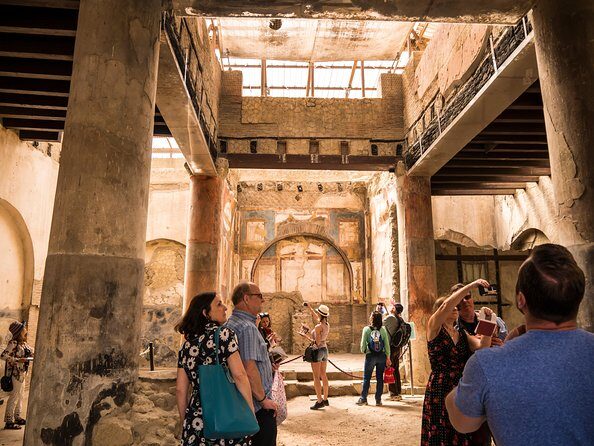
If you only visit one site, you get part of the story. Do both and you start to understand the bigger picture of how Vesuvius changed life fast—and how differently the ash and time treated what remained.
What I like about this tour setup is that it’s designed for focus. You’re not wandering with just a map. You’re walking from house to house, bath to bath, and public space to public space, with an archaeologist who can explain why each place matters.
Also, the “private for your group” part is more useful than it sounds. When you can slow down for a specific question—say how a bath complex worked, or why a house is unusual—you actually get answers instead of watching the clock.
You can also read our reviews of more walking tours in Naples



Price and tickets: what $597.36 buys (and what it doesn’t)
The price is $597.36 per group (up to 15 people). That can feel steep at first, but for a private archaeologist—plus a day covering two major UNESCO sites—it often lands in the “fair if you want quality” category.
Here’s the part to budget for separately:
- Herculaneum entry tickets cost 16 euros for adults and 2 euros for EU citizens aged 18–25.
- Pompeii entry tickets are not included (the listing references Pompei express tickets).
- Food and drinks aren’t included.
- Any transport to the sites isn’t included, even though the schedule includes moving by train and short walks between areas.
My practical take: the guide fee is for expertise and pacing. The entry fees are for access. If you want to avoid surprise spending, estimate tickets up front and decide whether you’ll buy Pompeii/Herculaneum entries online ahead of time.
Where the day actually starts (and why meeting points matter)
The tour starts at Via dei Papiri Ercolanesi, 80056 Ercolano NA, Italy and ends inside Pompeii Ruins near Via Villa dei Misteri, 2, 80045 Pompei NA.
Within the experience, you’ll also have two key “meet the guide” moments:
- In Herculaneum, you meet at the Ticket Office of the Herculaneum ruins.
- In Pompeii, you meet at Porta Marina Superiore, where the guide holds a sign with Askos Tours.
I strongly suggest arriving a little early. One guide, one sign, one location—then you’re off. If you show up late, the private format can’t magic extra time into existence.
Timing and walking pace: a 5.5-hour plan that stays moving
You’re looking at about 5 hours 30 minutes total, with multiple stops and short visits at each. Many locations are around 10 minutes (some 15), so this tour is best for people who want momentum more than lingering.
That doesn’t mean it’s rushed. It means the guide is building a narrative in bite-sized scenes—so you see a lot and still get context.
Fitness note: the tour asks for moderate physical fitness and comfortable shoes (no flip flops). The terrain at both sites is uneven, and you’ll be on foot. Bring sunglasses and sunscreen, too. Even when the guide is inside or shaded briefly, the day still runs under open sky.
Herculaneum: where everyday Roman life is preserved in charcoal detail
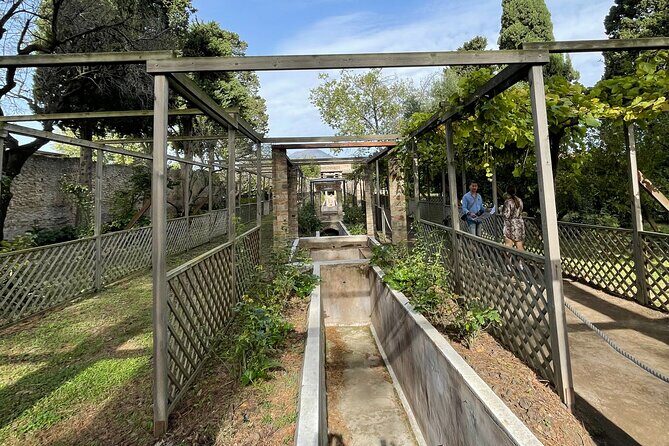
Herculaneum is often the first stop for a reason: it feels intimate. Pompeii can look like a whole city scene. Herculaneum can feel like stepping into specific rooms where the ash did its work unusually well.
Your path through Herculaneum is packed with “how did people live?” answers.
You can also read our reviews of more private tours in Naples






House of the Deer: the name comes from art you can’t ignore
This stop is short, but it’s a good example of how the guide connects objects to meaning. The House of the Deer gets its name from marble statues of stags/deer found in the peristyle. It’s a reminder that wealthy Romans didn’t just buy function—they bought statement-making art.
If you’re the kind of person who likes to understand symbolism, this is a quick win.
M. Nonius Balbus’ terrace and the power of inscriptions
Next is La Terrazza di M. Nonio Balbo, named after the city’s major benefactor who restored and built public buildings. On his death he received honors tied to details on the long inscription on his funeral altar.
Even if you don’t read Latin (most of us don’t), the guide can show you how civic pride and political influence were displayed. In a place like this, text matters because it anchors the story to a named person.
College of the Augustales: religion, empire, and local authority
The College of the Augustales is thought to connect to the cult of Emperor Augustus, and it’s linked to the Collegium Augustalium—possibly even local civic leadership.
This stop helps you see how Roman life mixed public worship and social power. It also gives you a framework for understanding why houses and neighborhoods weren’t just private spaces. They were tied to bigger systems.
Luxury homes and surprising details: Telephus reliefs and private bath access
At Casa del Rilievo di Telefo, you’ll learn about a house tied to leading benefactors (the description connects it to Marcus Nonius Balbus). It’s unusual for having private access to the adjoining Suburban Thermae.
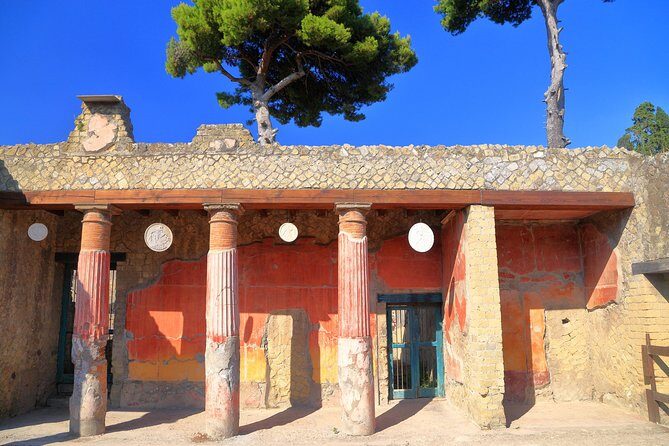
Then you get Partem Domus lignea – Casa del Tramezzo di Legno, famous because an elegant wooden partition remained. This is one of those details that makes ash-preservation feel like magic—but the point is practical: it explains how interior spaces were designed and used.
House of the Skeleton: human remains and the shock of what’s preserved
House of the Skeleton gets its name from the discovery of human remains in a second-floor room in 1831. The guide’s job here isn’t to scare you—it’s to ground the disaster in real people and real spaces.
It’s a short stop, but it lands emotionally. If you prefer purely architectural history, just know this one leans human.
Central Thermae: men’s and women’s baths, separate entrances
The Central Thermae were built around the beginning of the 1st century AD and were divided—with separate entrances—into men’s and women’s baths.
This is where you start to understand daily routines beyond “big events.” Baths weren’t only about hygiene; they were social schedule points. And the layout tells you how Romans organized privacy, movement, and public life.
House of the Black Salon: luxury, carbonized doorframes, and an eerie threshold
At the House of the Black Salon, you’ll see the kind of wealth that comes through in design. The description highlights a monumental entrance and carbonised remains of doorposts and lintel.
That threshold detail is the kind of thing an archaeologist can turn into a lesson: what materials were used, how doorways were built, and what it means that the ash preserved the evidence.
Casa Sannitica and Casa del Bel Cortile: different plans, clear personalities
Casa Sannitica shows a layout typical of the Samnites, including a splendid atrium skirted by a gallery with Ionic columns and frescoes in the rooms.
Then Casa del Bel Cortile stands out for its original plan: a courtyard with a stairway and a stone balcony instead of an atrium. This is a great stop for architecture lovers because it’s an alternate “how it all works” model, not just decoration.
House of the Grand Portal: charred wood and a full mansion feel
Finally, House of the Grand Portal rounds out Herculaneum with a grand, central domus layout. You’ll see multiple environments, colonnati, frescoes, and charred remains of wooden parts.
It gives you a sense of scale before you head to Pompeii, where the public spaces get louder.
The Pompeii shift: start at Porta Marina Superiore and hit the city’s main pulse
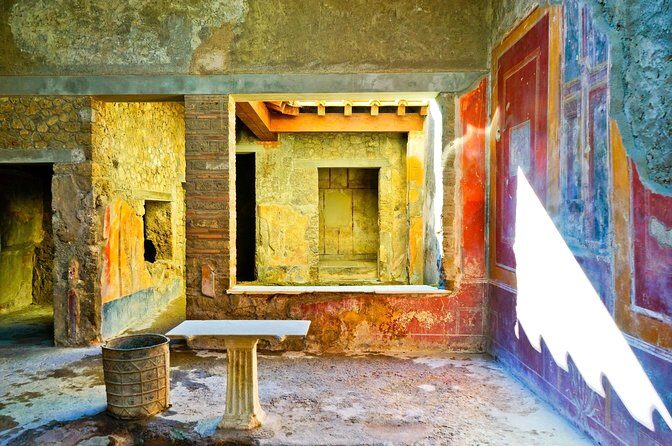
In Pompeii, you meet the guide at Porta Marina Superiore with an Askos Tours sign. From there, the pace turns slightly more city-walk and public-space focused.
That’s a good match: Pompeii is wider, more open in layout, and better for seeing how a city functioned.
Lupanar: Pompeii’s most famous brothel stop
You’ll visit the Lupanar, described as Pompeii’s most famous brothel in the ruined city. This is one of those stops that can surprise people—mostly because it forces you to treat every part of ancient life as real life, not just marble monuments.
Keep it factual with the guide’s help. Let the explanations frame what you’re seeing, rather than treating it as scandal or entertainment.
Main street walk and the city’s everyday spine
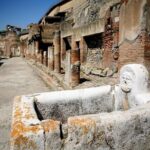
After the Lupanar, you walk through the main street. This is the moment where you start to visualize movement: shops, foot traffic, doorways, and the rhythm of people going about their day.
Even if you don’t stop at every corner, the guide can point out the logic behind the street system and the built environment.
Foro de Pompeya: the square where power and commerce shared space
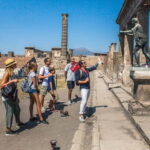
The Forum is your ancient main square. In a short time, you get the feeling of a place used for speeches, trade, and public announcements.
The next stop adds texture: the Granaries of the Forum.
Granaries of the Forum: marble tables, fountains, and casts
In the granary area, you’ll see marble tables and baths for fountains that adorned entrances of houses. You’ll also see casts of victims of the eruption—and even a dog and a tree.
This stop is emotional, but it’s also informative. It shows how catastrophe left traces not only of humans, but of everyday companions and surroundings.
Basilica and Stabian Baths: business shelter and the city’s oldest thermal complex
The Basilica here is described as an open portico that sheltered merchants and other activities. Nearby, the Stabian Baths (Terme Stabiane) cover a vast area and are described as the oldest thermal complex in the city.
If you’re wondering what “Roman public life” means in practice, these are the kind of stops that answer that question. They explain how commerce and routine happened under architecture, not apart from it.
House of the Faun and House of Menander: big domestic luxury in two styles
You’ll tour House of the Faun, one of Pompeii’s largest and most impressive private residences, and then House of Menander, highlighted for rich architecture, decoration, and contents.
Because these are described as houses of major status, the guide can help you interpret what you’re seeing as lifestyle, not just rooms. Look for contrasts: how these spaces welcome visitors, how art signals wealth, and how daily movement likely worked.
Teatro Grande and Teatro Piccolo: two theater scales, one city culture
You end with the Teatro Grande, described as the most important theater in Pompeii, plus a look at the Teatro Piccolo.
The theater stops are useful even if you’re not a “theater person.” In Roman cities, theaters were entertainment plus social identity. The scale differences help you understand local audience habits and civic priorities.
The archaeologist guide factor: what you should expect from the best ones
This tour stands or falls on the guide. The big theme in the best experiences is clear communication: someone who can turn a doorway or bath layout into a story you can picture.
In the feedback I’ve seen associated with Askos Tours, names like Mena, Vincenzo, Ivan, Sylvia, Raffaele Romano, Giovanni, Alessandra, Paola, and Giancarlo come up as guides who explained material clearly and answered questions. The common thread: patience, context, and the ability to link details across both cities.
You’ll also want to be ready with questions. Short stop times mean you get more from the guide if you ask for specific explanations, like:
- Why is this room plan different from the next one?
- What does bath layout tell us about daily routines?
- How do benefactors show power in buildings and inscriptions?
Private guide pacing usually helps you ask those questions without feeling like you’re holding up a group.
Crowds, queues, and the reality of “private”
Private tours can still be limited by ticketing and entry rules. One consideration I’d plan around: you’re not automatically guaranteed “no lines” just because you have a guide.
That means it’s smart to:
- Know the entry ticket types for both sites.
- Consider buying tickets in advance if online options are available.
- Arrive early to your meeting points so your private schedule doesn’t start late.
The tour can still feel calm because you’re moving with a guide who knows where the story points are. But your best results still depend on your ticket prep.
What to pack for a comfortable Herculaneum + Pompeii walking day
Here’s a simple packing checklist based on what the tour recommends and how the sites feel underfoot:
- Comfortable shoes (no flip flops)
- Sunglasses and sunscreen
- A small water plan for the day (since food and drinks aren’t included)
- A light layer if you get sunburnt easily—Pompeii especially can roast
If you’re traveling with kids, aim for short questions and quick photo targets. The stop rhythm is built for “see, learn, move,” not marathon hanging-out.
Who should book this Pompeii and Herculaneum archaeologist tour
This is a strong fit if you:
- Want expert context while walking major sites
- Prefer a private group pace over a big bus-group stampede
- Like architecture and material details (doorways, layouts, carvings, inscriptions)
- Want both Roman daily life and public-life anchors in one day
It’s also a good “family ages mixed” choice, since the guide can answer questions for adults and still keep things interesting for younger visitors.
If you want a super slow museum-style pace with lots of time to roam freely, this might feel “tight.” The tour is designed for coverage plus explanation, not free-form wandering.
Should you book Askos Tours’ private Pompeii and Herculaneum tour?
I’d book it if you care about the story behind what you see and you want your questions answered by someone trained to interpret the ruins. The best part isn’t any single monument—it’s the way an archaeologist helps you read the city.
Skip the idea only if you:
- Don’t want to handle separate entry tickets
- Have limited willingness to walk uneven archaeological ground
- Prefer to plan your own route with zero guide structure
For most people, the private format and archaeologist-led explanations are the difference between a nice visit and a truly memorable one.
FAQ
What is included in the tour price?
The tour includes guidance and assistance by an archaeologist guide, plus a private tour for your group.
Are Pompeii and Herculaneum entry tickets included?
No. Herculaneum entry tickets are not included (16 euros for adults; 2 euros for EU citizens aged 18–25). Pompeii entry tickets (Pompei express) are also not included.
How long is the tour?
It’s approximately 5 hours and 30 minutes.
Is this tour private?
Yes. It’s a private tour, and only your group will participate.
Where do we meet the guide in Herculaneum?
You meet at the Ticket Office of the Herculaneum ruins.
Where do we meet the guide in Pompeii?
You meet at the main entrance of the Pompeii archaeological site called Porta Marina Superiore. The guide will be holding a sign with the company name Askos Tours.
What should I wear or bring?
Wear comfortable shoes and bring sunglasses and sunscreen. Flip flops are not recommended.
What is the cancellation policy?
You can cancel for a full refund if you cancel at least 24 hours before the experience’s start time. If you cancel less than 24 hours before, the amount paid is not refunded.