REVIEW · NAPLES
Napoli: Entrance Tickets to Sant’Anna dei Lombardi Complex
Book on GetYourGuide →Operated by Cooperativa Sociale ParteNeapolis · Bookable on GetYourGuide
One church can feel like two worlds.
Sant’Anna dei Lombardi is a Tuscan Renaissance-style complex tucked into Naples, and this ticket gives you planned access plus an app audioguide focused on the standout artworks. It’s a compact visit, but it’s packed with names and details that make you look harder at what you’re seeing. Sant’Anna dei Lombardi is also tied to the Aragonese era, so you’re not just touring art—you’re walking through a story.
I especially love the clear, work-specific explanations built into the audioguide. And I also like that you get pointed attention to the Sacristy and the dramatic sculptural scene in the Compianto. The result is a visit that feels guided without slowing you down too much.
One thing to plan for: headphones aren’t included, and the complex is not suitable for people with mobility impairments. Also, at 30 minutes, you’ll want to accept the pace—it’s not a long wander.
In This Review
- Key highlights to look for
- Sant’Anna dei Lombardi: a quick ticket with Renaissance muscle
- What you’ll see: Sacristy frescoes, the Abbots’ Cript, and the Compianto
- The Sacristy frescoed by Giorgio Vasari
- The Abbots’ Cript (for a change of mood)
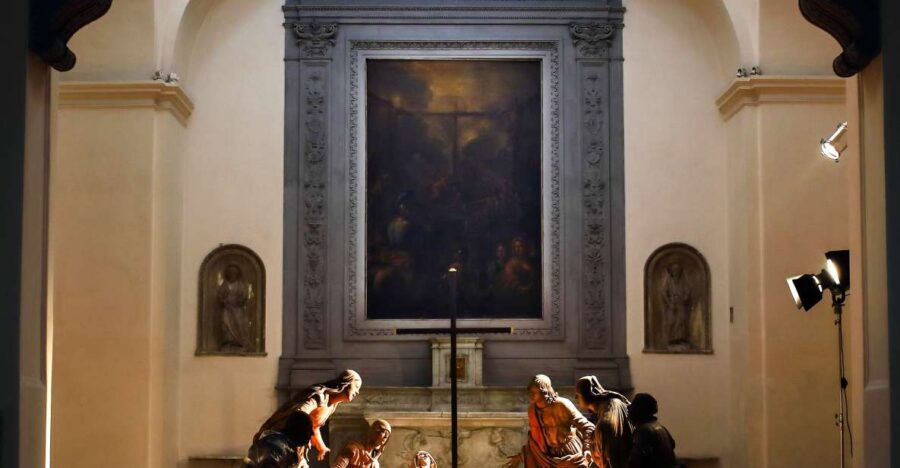
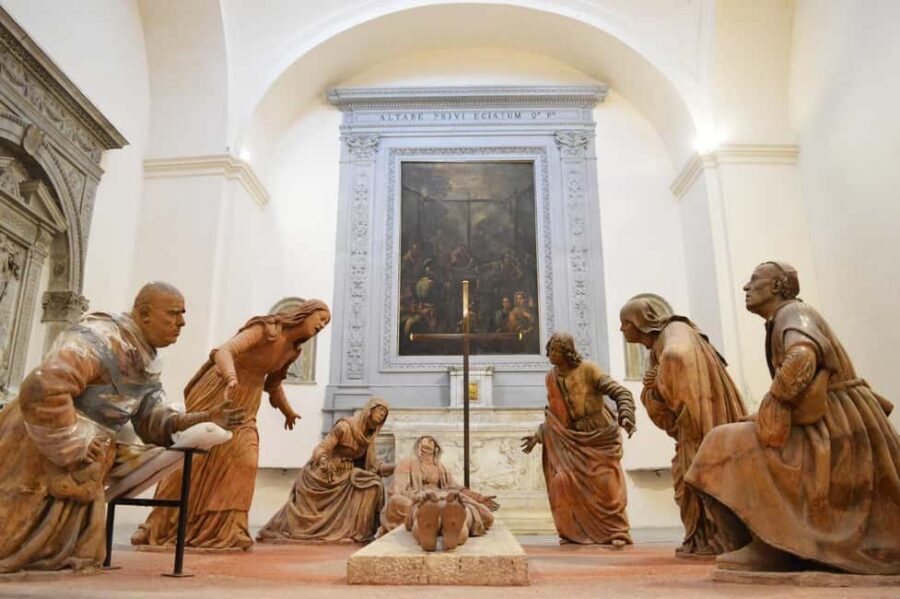
- The Lamentation over the Dead Christ (Compianto) by Guido Mazzoni
- A puttino attributed to Michelangelo
- The structure of your visit: how to use the 30-minute window
- The app audioguide: why it improves the experience
- Value check: $7 for entry plus discounts to other Naples sites
- Who this ticket suits best (and who should consider alternatives)
- Logistics in plain terms: what to know before you go
- Should you book the Sant’Anna dei Lombardi ticket?
- FAQ
- How much is the ticket for Sant’Anna dei Lombardi?
- How long does the visit take?
- What’s included in the ticket?
- What languages are available for the audioguide?
- Are headphones included?
- Is flash photography allowed?
- Is the complex suitable for people with mobility impairments?
Key highlights to look for
- Giorgio Vasari’s sacristy frescoes: Renaissance artistry in a tight, high-impact space
- Guido Mazzoni’s Lamentation over the Dead Christ (Compianto): emotion and gestures that read fast once you know what to watch
- The Abbots’ Cript: a quieter, more mysterious pocket of the complex
- A Michelangelo puttino: one small work, one big name
- Naples through foreign artists’ eyes: the mid-1500s mix of Tuscan and Spanish influence in the church spaces
- Audio guide built around the main works: you’re not guessing what’s important
Sant’Anna dei Lombardi: a quick ticket with Renaissance muscle
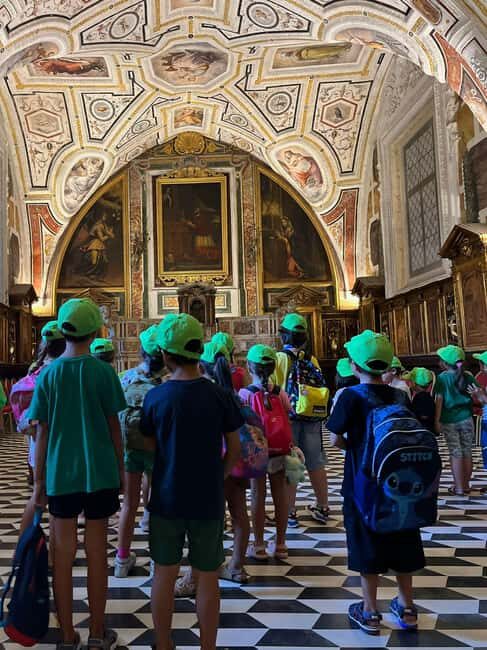
This is one of those Naples stops that surprises you by how much it delivers in a short time. The Monumental Complex of Sant’Anna dei Lombardi (Santa Maria di Monteoliveto) traces back to 1411, and the complex became especially meaningful for the Aragonese Dynasty, including Alfonso II, who went there daily.
What makes it feel worth your time is the blend of styles and the sense of cultural cross-pollination. In the church spaces, you can see connections between foreign artists and Neapolitan work from the mid-500s, with names like Spanish artist Pedro Rubiales and Tuscan master Giorgio Vasari tied to major decorative work.
And because this ticket is designed around the big highlights, you won’t spend your visit stuck asking yourself, So… where do I look first?
You can also read our reviews of more tours and experiences in Naples

What you’ll see: Sacristy frescoes, the Abbots’ Cript, and the Compianto
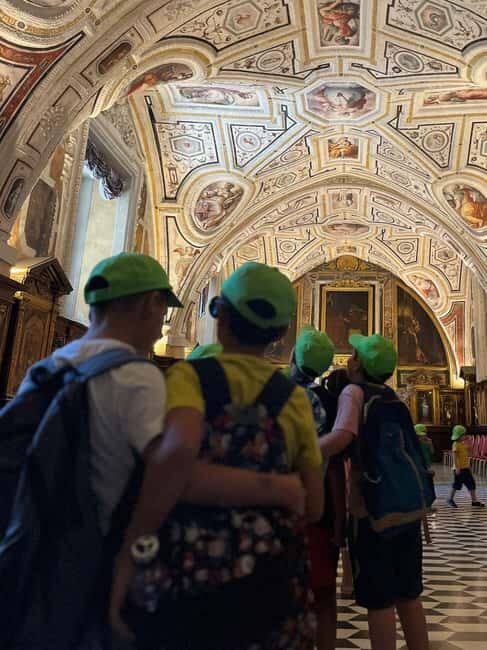
The ticket centers on the heart of Sant’Anna dei Lombardi: the areas where the art does the talking.
The Sacristy frescoed by Giorgio Vasari
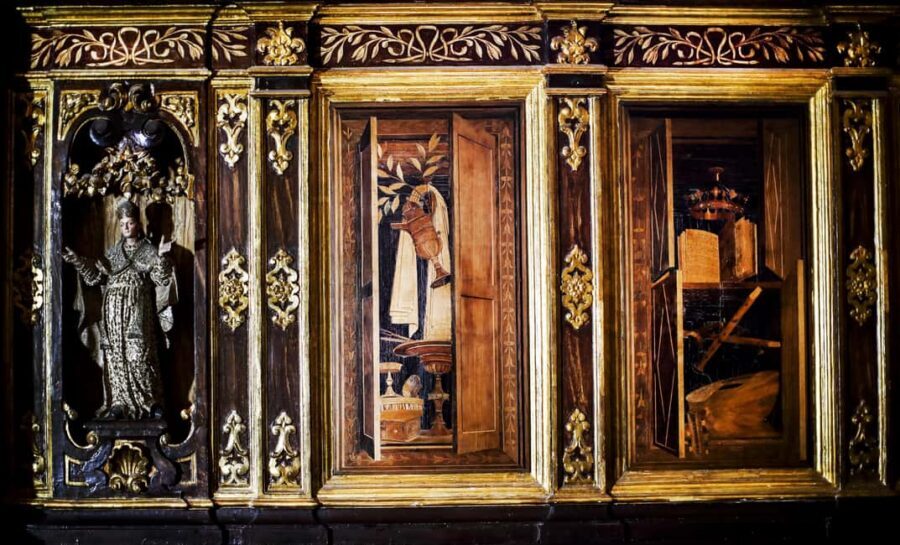
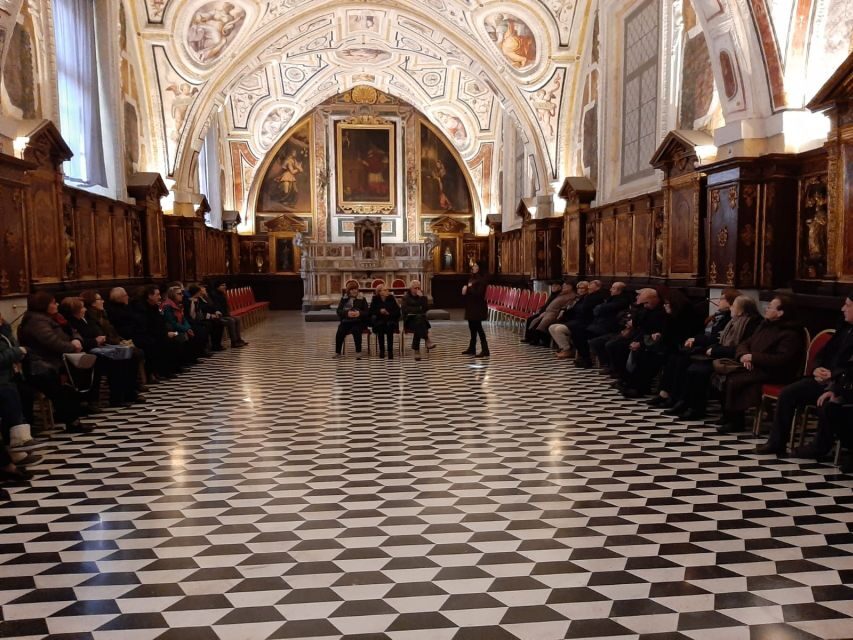
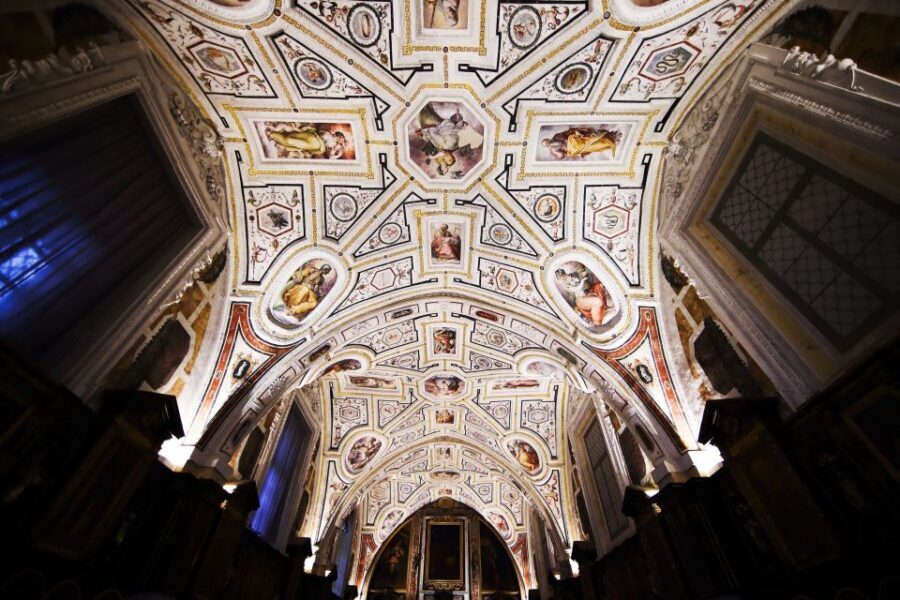
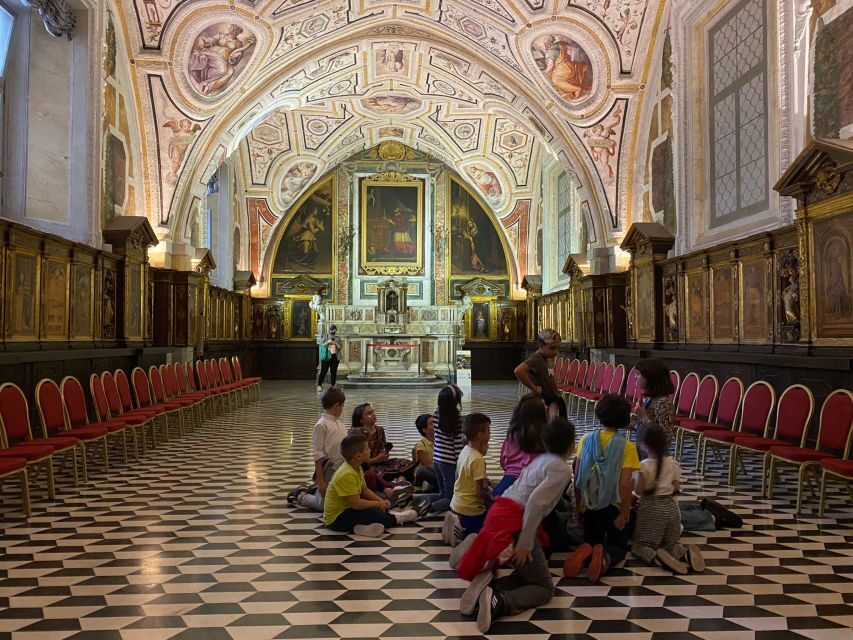
If you want a Renaissance “wow” moment without traveling far, start here. Vasari frescoed the sacristy’s vault, and the app audio guide is specifically made for this section. That matters because frescoes can look impressive but vague if you don’t know what you’re looking for—so having the narration tied directly to the space helps you register details sooner.
You’ll also get a better feel for why Vasari’s name carries weight here. The complex isn’t just decorated; it’s part of a larger artistic relationship between Tuscany and Naples during a time when artists moved, influenced, and collaborated.
The Abbots’ Cript (for a change of mood)
Then shift gears. The Abbots’ Cript is the kind of place where the lighting, the tone, and the architecture nudge you toward slower looking. It’s described as a place of secrets, and that’s exactly how it plays: you’re not there for one single view; you’re there to catch the sense of hidden depth.
If you tend to rush through crypts, this is one where the audio guide and the structure of the experience encourage you to pause.
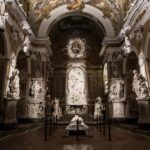
The Lamentation over the Dead Christ (Compianto) by Guido Mazzoni
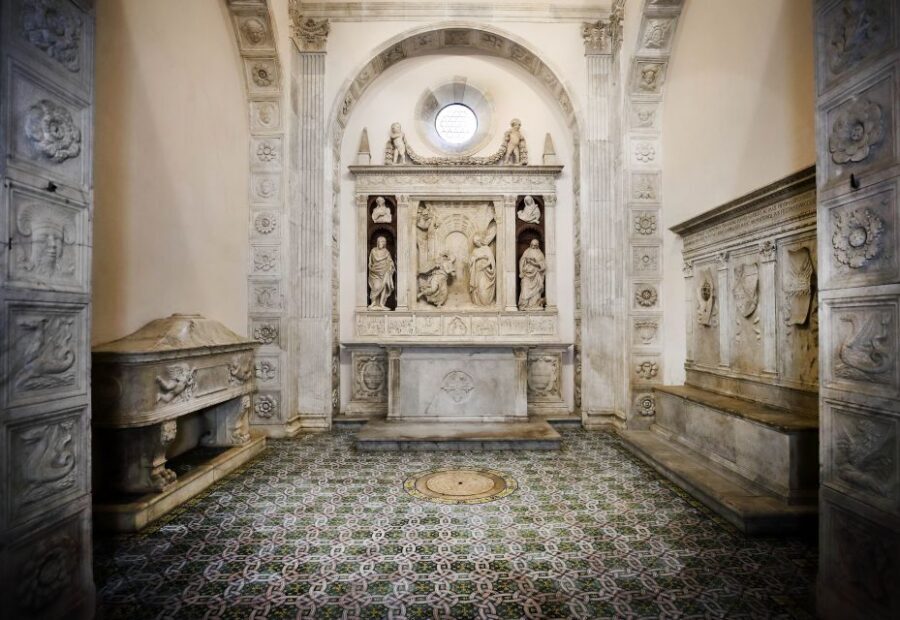
This is the emotional centerpiece. The Compianto sul Cristo Morto (the lamentation scene) is known for the accuracy of details in how the characters move and express feeling—how their energy and emotion show up in posture and gestures.
The audio guide includes this work, too, and that’s key. Sculpture tells its story in body language. With narration guiding what to notice, you’ll usually “get it” faster—why certain movements feel tense, why faces and hands look the way they do, and how the scene is staged to hit you right in the center.


A puttino attributed to Michelangelo
There’s also a Michelangelo puttino to marvel at. Even if you’re not a Michelangelo specialist, seeing one small work linked to his name can reframe the whole visit. It signals how seriously this complex was treated as a site where major artists mattered.
The structure of your visit: how to use the 30-minute window
This experience is timed at 30 minutes, and you’ll want to check availability for starting times. That brief duration is not a deal-breaker—it’s part of the value. The complex can feel “big” in reputation, so a timed ticket with a focused audio guide keeps you from spending half your trip wandering randomly.
Here’s how I’d pace it:
- Give yourself a strong start in the Sacristy area so you’re warmed up with the most guided section first.
- Then go to the Compianto and let the narration push you into reading the figures’ body language instead of just admiring the craftsmanship.
- Finally, use the Abbots’ Cript as your slower stop, where the atmosphere does some of the work.
Also, note the practical constraint: flash photography isn’t allowed. So set your expectations accordingly and rely on your eyes, not your phone flash.
The app audioguide: why it improves the experience
The audioguide is included and it’s not vague. It’s an App Audioguide specifically for:
- the Sacristy of Giorgio Vasari
- the Lamentation Over The Dead Christ of Guido Mazzoni
That targeted focus is a big reason the experience scores well. Short, specific explanations usually work better than general commentary—especially in a complex where there are multiple art stops and you don’t want to lose time figuring out what matters.
Language options are wide, including Italian, English, French, German, and Spanish. That’s useful if you’re traveling as a mix-language group: you can all listen at the same time without everyone feeling stuck with the same single track.
One more practical point: headphones are not included. Bring a wired set or check that your device setup works smoothly. If you plan to rely on speaker audio, you may find it tough, since these spaces are quiet and you’ll likely feel like you’re competing with your surroundings.
Value check: $7 for entry plus discounts to other Naples sites
At $7 per person, the ticket price is low enough that it feels easy to justify—especially because you’re not paying just for entry. You’re also getting the app audioguide for the key artworks, which means you’re more likely to leave understanding what you saw.
On top of that, the ticket includes a discount for other Naples attractions, including:
- Catacombe di San Gennaro
- Pio Monte della Misericordia (Caravaggio)
- Archeological Museum (MANN)
- Neapolis Sotterrata: Complesso Monumentale di San Lorenzo Maggiore
- Museo Diocesano di Donnaregina
That’s where the value becomes practical. If you’re building a Naples art and underground-culture day, this can act like a savings booster while you’re already in the area. Even if you don’t use every discount, having options makes planning simpler.
Who this ticket suits best (and who should consider alternatives)
This works well for you if:
- you like art that’s explained clearly but still want your own pace
- you want a focused visit that fits into a tight schedule
- you’re excited by Renaissance names and want to see how they connect in Naples
It may be less ideal if:
- you need easy access support (the complex is not suitable for people with mobility impairments)
- you don’t want to use headphones or you forgot yours—since headphones aren’t included
- you’re hoping for a long, slow, open-ended tour. This one is structured for about 30 minutes
If you’re traveling with kids, it can still work, but only if you’re okay with an art stop that depends on listening. Without headphones, the audioguide value drops fast.
Logistics in plain terms: what to know before you go
A few practical notes keep the experience smooth:
- Your visit runs about 30 minutes, and starting times depend on availability.
- Plan to arrive a bit early so you can get set with your app and headphones before you start listening.
- Flash photography is not allowed, so rely on careful looking instead.
This experience is provided by Cooperativa Sociale ParteNeapolis, and the included app audioguide is the main “guide” element. That’s good news if you like self-guided travel with structure—less waiting around, more attention on the art.
Should you book the Sant’Anna dei Lombardi ticket?
I’d book it if you want a compact, high-impact Renaissance stop in Naples with a guided-feeling audio track. The big selling points for me are the pairing of Vasari in the sacristy and the Compianto—and the fact that the audio guide focuses on exactly those works.
Skip it or be cautious if you can’t do audio with headphones, if your mobility needs make the site hard to navigate, or if you’re looking for a long, wandering church visit. For most people who want strong art value in a short time, this ticket hits the sweet spot.
FAQ
How much is the ticket for Sant’Anna dei Lombardi?
The price is $7 per person.
How long does the visit take?
The experience lasts about 30 minutes. Starting times depend on availability.
What’s included in the ticket?
The ticket includes entry to the Sant’Anna dei Lombardi Monumental Complex and an app audioguide for the Sacristy of Giorgio Vasari and the Lamentation over the Dead Christ by Guido Mazzoni.
What languages are available for the audioguide?
The app audio guide is available in Italian, English, French, German, and Spanish.
Are headphones included?
No. Headphones (eadphones) are not included.
Is flash photography allowed?
No, flash photography is not allowed.
Is the complex suitable for people with mobility impairments?
No. It is not suitable for people with mobility impairments.