REVIEW · NAPLES
Naples: San Lorenzo Maggiore and Neapolis Sotterrata Ticket
Book on GetYourGuide →Operated by Complesso San Lorenzo Maggiore · Bookable on GetYourGuide
San Lorenzo Maggiore is one of those Naples stops that rewards you for slowing down. You start in a grand church complex, then you drop 10 meters into the Neapolis Sotterrata ruins—where ancient streets and a Roman market sit under the current city.
I especially like the sense of time travel here: you’re literally moving from medieval beauty to an ancient Greek-Roman commercial heart. I also like how the ticket covers both the San Lorenzo Maggiore Complex and the subterranean Neapolis Sotterrata, so you’re not choosing between art and archaeology.
One drawback to consider: the underground portion is compact. If you’re expecting a huge, maze-like underground route, you might wish it stretched a bit more.
In This Review
- Key highlights at a glance
- San Lorenzo Maggiore: the centered meeting point that makes planning easy
- Before you descend: what the complex is really like
- Cloister and Chapter Hall: Gothic details that frame the story
- Sisto V Hall frescoes: where the art earns its hype
- Museum time: a clean way to connect classical to the 1800s
- The real event: descending 10 meters into Neapolis Sotterrata
- What you’ll see in the underground market area
- Audio guide and optional guided tour: what to choose
- Practical tips: shoes, GPS trouble, and timing your day
- Who this ticket is best for (and who should rethink it)
- Value check: is $10 plus extras worth it?
- Should you book this San Lorenzo Maggiore and Neapolis Sotterrata ticket?
- FAQ
- How much does the Naples San Lorenzo Maggiore and Neapolis Sotterrata ticket cost?
- Where does the activity start?
- What is included in the ticket?
- Is the guided tour included?
- Is the ticket valid for more than one day?
- Is it wheelchair accessible?
- What should I wear for this experience?
Key highlights at a glance
- Piazza San Gaetano 316 meets you right where you need to be, before you start climbing down
- Chapter Hall and its late-1300s Gothic portal give the complex real medieval charm
- Sisto V Hall frescoes feel like the main event once you’re inside
- Museum walkthrough links Naples from the classical era through the nineteenth century
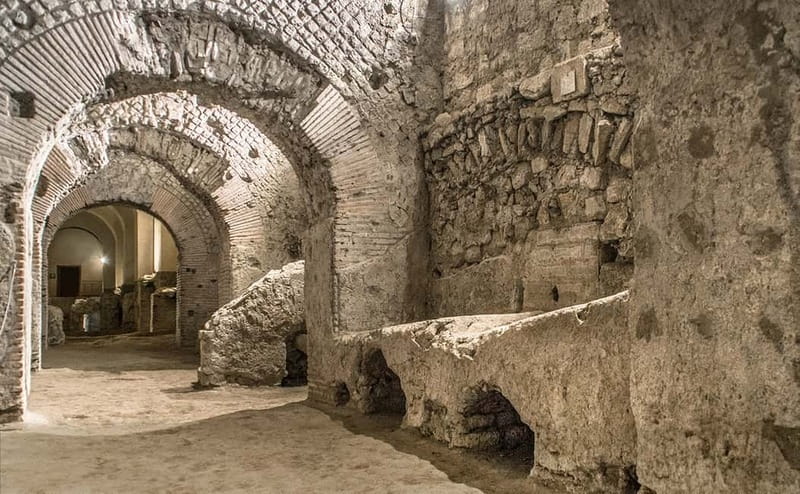
- Neapolis Sotterrata descent takes you 10 meters down to the old market area (Macellum)
- Free audio guide is available on site, but have a backup plan if your phone acts up
San Lorenzo Maggiore: the centered meeting point that makes planning easy

You begin at the entrance to the complex in Piazza San Gaetano, 316. This matters more than it sounds. In Naples, getting your bearings fast can save you real time, and this location keeps your day from turning into a scavenger hunt.
The big idea of this ticket is simple: you’re visiting the San Lorenzo Maggiore Complex (above ground) and the Neapolis Sotterrata (below ground). And there’s a practical bonus: the entrance to the Basilica of San Lorenzo Maggiore is free. So even if you arrive with limited time, you still have a beautiful church option on your radar.
Another practical point: the ticket is priced at $10 per person and is valid for 1 day. Starting times depend on availability, so check what slots are offered before you lock in your whole route.
You can also read our reviews of more tours and experiences in Naples.



Before you descend: what the complex is really like
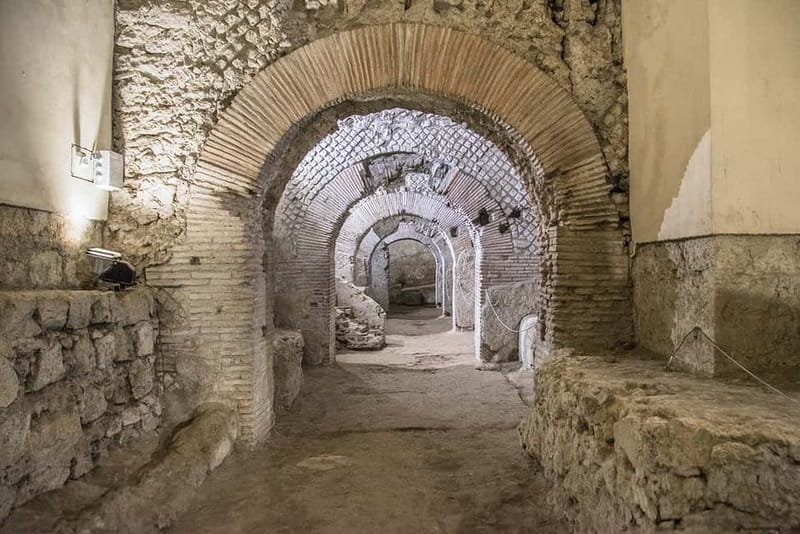
San Lorenzo Maggiore is not just a church with a side room of ruins. It’s a full complex with multiple stops that move you through different layers of Naples.
As you enter, expect a slow rhythm. You’ll pass through areas like the cloister and the Chapter Hall before the indoor fresco moments. Then you’ll shift to the museum component, and only after that do you descend.
That order is worth respecting. The fresco-filled halls help you understand why people built and decorated these spaces in the first place. Then, once you go underground, the ruins feel less random and more connected to the same long Naples story.
One thing you’ll appreciate is the variety. This isn’t only about “look at the underground market.” It’s also about walking through rooms with Franciscan frescoes and then stepping into excavated remains. If you like travel days that change texture every 10 minutes, this works.
Cloister and Chapter Hall: Gothic details that frame the story
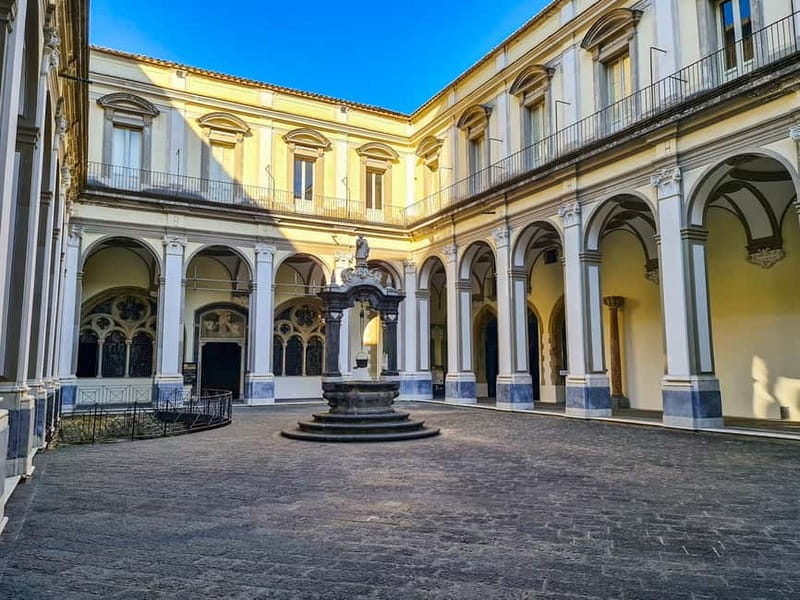
The cloister sets a calm tone. Even if you’ve been walking all morning, this is where you can catch your breath and read what you’re seeing without feeling rushed.
Next comes the Chapter Hall, including a Gothic portal from the late fourteenth century. This isn’t just decorative background. Gothic portals tend to signal how serious the space was to the community using it—so when you’re later looking at ruins below, you can feel the contrast between what was built above and what was preserved beneath.
I like this stop because it’s visually clear. You can stand, look up, and get oriented. And you can also take it in at your own pace. This is the kind of site where you’ll do yourself a favor by not rushing. You’re not just collecting photos—you’re learning the shape of the place.
Sisto V Hall frescoes: where the art earns its hype
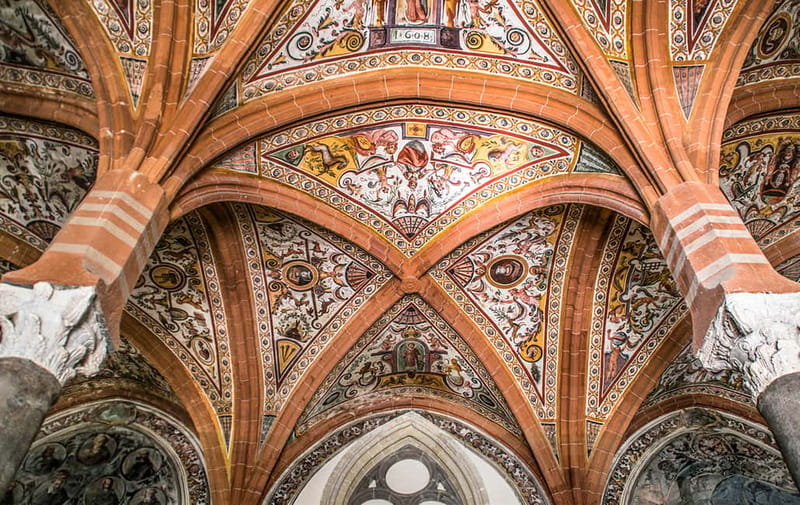
If you care about art, plan to spend more time than you think you need in the Sisto V Hall. The focus here is Franciscan fresco beauty, and the site experience notes the stunning ceiling frescoes too. This is where the complex turns from “cool rooms” into “wow, this was worth building.”
What makes this hall work is that it gives you a break from the underground theme without cutting the momentum. You move from cloister and Gothic framing into a space designed for visual impact. And because it’s indoors, it’s also a strong choice if weather is poor.
One practical tip: comfortable clothes matter here. You’ll likely spend time standing and looking upward, and you may move between areas that feel cool compared with the street. I’d wear shoes you trust for uneven surfaces.
Museum time: a clean way to connect classical to the 1800s
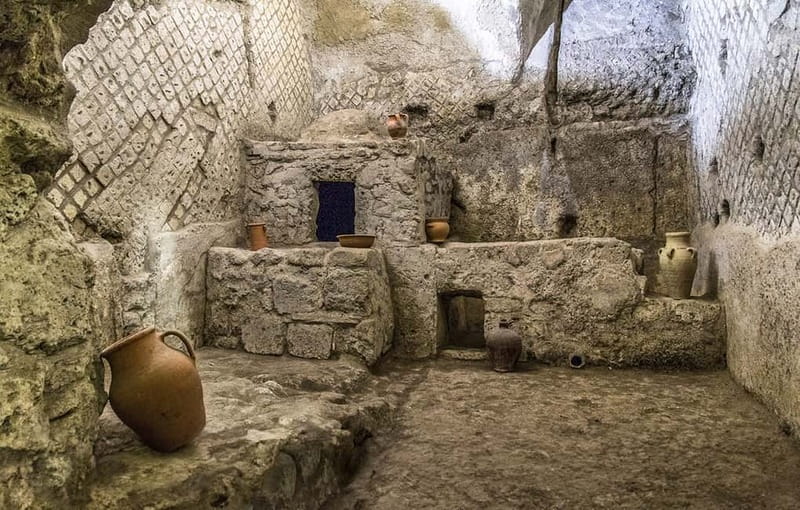
After the fresco moment, you end up with a museum stop that presents a cross-section of Naples history, from the classical age through the nineteenth century.
This part can be easy to underestimate. But I think it’s the glue that makes the rest click. Without the museum context, the underground ruins can feel like an isolated curiosity. With the museum, the ruins become part of a longer Naples timeline—layers of occupation and reuse.
The museum experience also helps you understand what you’re looking at underground. When you later see the ancient city elements tied to the commercial heart, you’ll have a better idea of why a market matters in the first place.
And it’s a nice way to keep your energy steady. If you’re doing this on a hot day or a rainy afternoon, indoor time is real value.


The real event: descending 10 meters into Neapolis Sotterrata
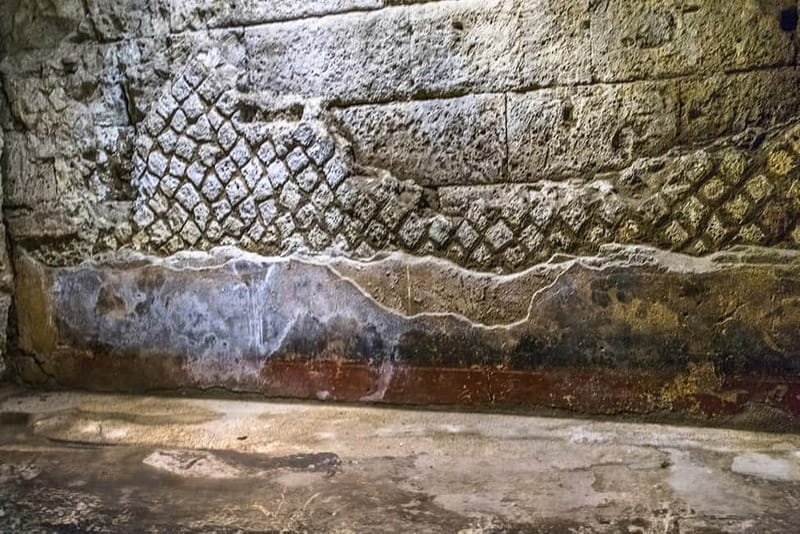
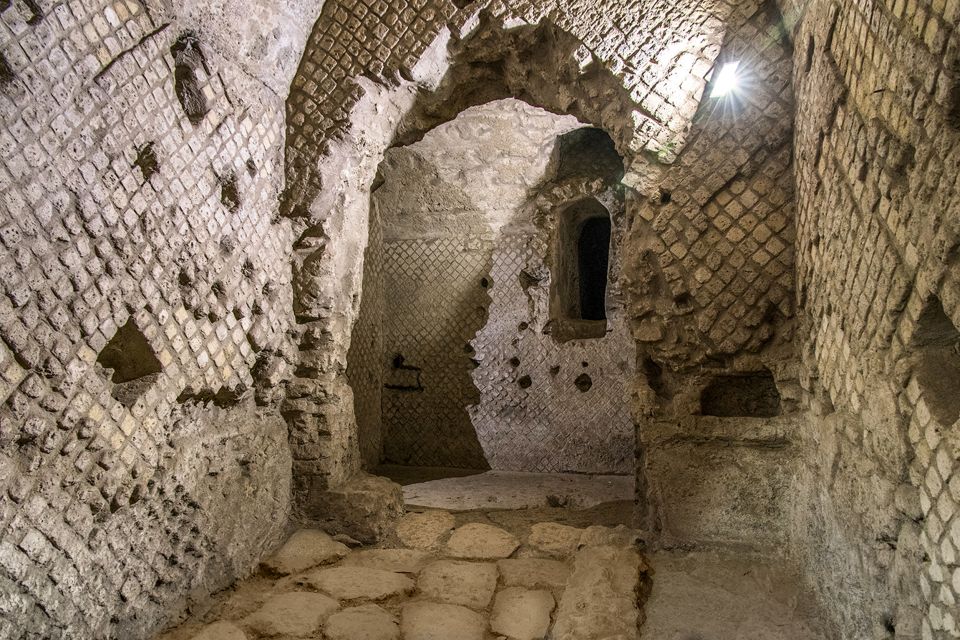
Now the main shift. You descend about 10 meters underground and discover the ancient ruins of Neapolis, the old Greek-Roman city founded in 470 B.C. That date gives you a clear anchor: you’re not looking at vague ruins. You’re seeing a long-lived city footprint.
The walk is designed to feel like going back in time. You’ll follow an ancient road and then reach the old commercial space, the Macellum (the Roman market). The Macellum is one of the most meaningful parts of the experience because markets show how people actually lived—where goods moved, where daily routines played out, and how food and trade shaped a city’s energy.
This is also one of those Naples contrasts I love: above you have medieval religious spaces decorated with Franciscan frescoes. Below you have an ancient marketplace zone, preserved enough to make you stop and imagine the noise of real commerce.
What you’ll see in the underground market area
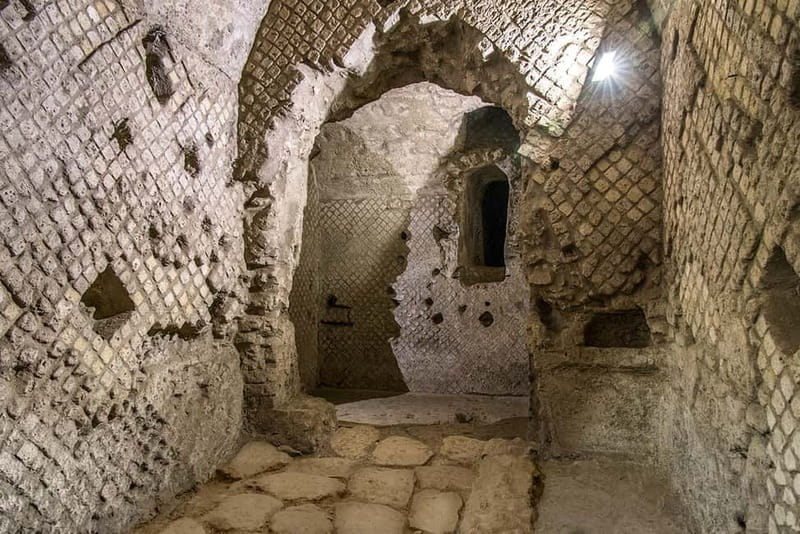
The subterranean world here is about more than being underground. It’s about what is preserved and how clearly it relates to city life.
You’ll spend time around the ancient road and the market area, and it’s cool to experience it as a recovered environment rather than just scattered stones. The experience description makes a point of the old commercial heart, and that matches what most people will care about once they’re down there: you want to understand the space as a functioning place, not only a set of ruins.
A quick reality check: the underground portion is not huge. If you’re comparing it to larger underground Naples routes, you might find this one more intimate. That’s not a bad thing. Less sprawl can mean you can actually pay attention without getting swept into a long, exhausting circuit.
Also, note the site title can be misleading in the sense that this ticket centers on the ruins under the church complex area, not a larger network. So set your expectations accordingly and you’ll enjoy it more.
Audio guide and optional guided tour: what to choose
The ticket includes a free audio guide available to download on site. This is handy because you can pause when something catches your eye instead of waiting for a group pace.
That said, build in flexibility. I recommend downloading what you can before you arrive, and if your phone refuses to cooperate, don’t panic. The site has enough visual structure that you can still get value even without the audio running perfectly.
There’s also an optional guided tour for €2, available to book on site. I think it’s worth considering if you like history explained in human language. When you pay a small extra amount for a guide, you’re often paying for that “connect the dots” effect—especially helpful for understanding market layout and what different underground features likely meant.
Practical tips: shoes, GPS trouble, and timing your day
This is a walking-and-standing site with an underground descent, so comfortable shoes are non-negotiable. You also want comfortable clothes, since you’ll spend time inside rooms and possibly move between warmer street air and cooler interior spaces.
About timing: the ticket is valid for one day, but starting times depend on availability. If you can, pick a slot that fits your energy level. Going underground after a long morning of walking can feel like a final test, even though the descent is the highlight.
Also: don’t trust GPS blindly. Getting routed past the entrance happens. Use the meeting point—Piazza San Gaetano, 316—as your anchor and walk in with purpose.
Finally, if your plan includes QR code entry for anything on the day, do a quick check on your phone before you start. If a QR code doesn’t load and you don’t end up in a group, it can slow you down. I’d rather take two minutes to test than spend your precious first half hour troubleshooting.
Who this ticket is best for (and who should rethink it)
This is a great choice if you want:
- a mix of art + archaeology in one ticket
- a time-efficient Naples experience that doesn’t require a long transit day
- an underground stop that stays readable and manageable
It’s also a strong option for a rainy afternoon. Much of the experience is indoor, and the underground area tends to feel like a cool break from weather outside.
Who might not love it? If you expect a huge underground labyrinth with lots of separate chambers and long distances, you may feel it’s a bit limited in scale. Likewise, if you dislike fresco rooms and want only “hardcore ruins,” you might wish there were more excavation coverage.
Value check: is $10 plus extras worth it?
At $10 per person, this ticket is good value on pure entry alone, because you get more than one type of experience: above-ground complex rooms, frescoed halls, a museum section, and the underground descent.
The optional €2 guided tour is the one add-on that could improve your understanding. If you’re the type who likes context—why the market mattered, what specific features likely were—you can justify that small extra cost. If you prefer to roam at your own pace with an audio guide, you’ll likely be satisfied without paying more.
For me, the best value angle is that you leave with a fuller picture of Naples: how it looked when it was modernizing religious spaces, and how it looked when it was trading goods as a commercial hub.
Should you book this San Lorenzo Maggiore and Neapolis Sotterrata ticket?
Book it if you want a compact, high-impact Naples experience that connects medieval art and a real ancient market space below the street. This is especially smart if your time is limited, your weather is unpredictable, or you simply want Naples that feels grounded in place rather than rushed from sight to sight.
Hold off or adjust expectations if you’re chasing a sprawling underground itinerary or you’re only interested in underground ruins with no interest in fresco halls and the museum. In that case, you might feel slightly shortchanged on scale.
If you do book, give yourself enough time to sit with the frescoed rooms and don’t skip the museum component. That’s often what turns a neat underground visit into a visit that makes you understand what you just saw.
FAQ
How much does the Naples San Lorenzo Maggiore and Neapolis Sotterrata ticket cost?
The price is listed as $10 per person.
Where does the activity start?
The start point is the entrance to the complex at Piazza San Gaetano, 316.
What is included in the ticket?
It includes entrance to the Complex of San Lorenzo Maggiore (Cloister, Chapter Hall, Sisto V Hall, and Museum) plus entry to Neapolis Sotterrata. The Basilica entrance is free, and a free audio guide is available to download on site.
Is the guided tour included?
No. A guided tour costs €2 and can be booked on site.
Is the ticket valid for more than one day?
It is valid for 1 day. Starting times depend on availability.
Is it wheelchair accessible?
Yes, it is listed as wheelchair accessible.
What should I wear for this experience?
Wear comfortable shoes and comfortable clothes.