REVIEW · NAPLES
Naples: Pizza Making Class with Local Pizzaiolo
Book on GetYourGuide →Operated by Food Raphael Tours and Events · Bookable on GetYourGuide
Pizza class in Naples, done the real way.
This 2-hour Naples session with a local pizzaiolo at Gusto Marigliano Pizzeria is interesting because you focus on the hands-on steps that make Neapolitan pizza taste like Naples, not like a cooking video. I especially like the wood-fired oven finish and the chance to practice kneading, proofing, and the classic stretch-and-shape method. One thing to consider: it’s not set up for gluten or lactose needs, so plan accordingly if you have intolerance.
I also like how the experience stays social without turning into a show. In smaller groups, the English-speaking instructor team (often with translators depending on the session) can keep an eye on your dough and your technique, and you still get to sit down afterward for a full meal feel: starter, your own pizza, and in practice you’ll usually get dessert too. If you’re a slow eater, you may want to pace yourself, because you’ll be encouraged to eat what you make.
In This Review
- Key takeaways before you book
- What this Naples pizza class is really about
- Where you meet: Gusto Marigliano Pizzeria (and what to look for)
- Step-by-step: what happens during the 2 hours
- 1) Dough basics: mixing and kneading skills
- 2) Proofing and timing: waiting without guessing
- 3) Stretching and shaping: the Naples thin crust move
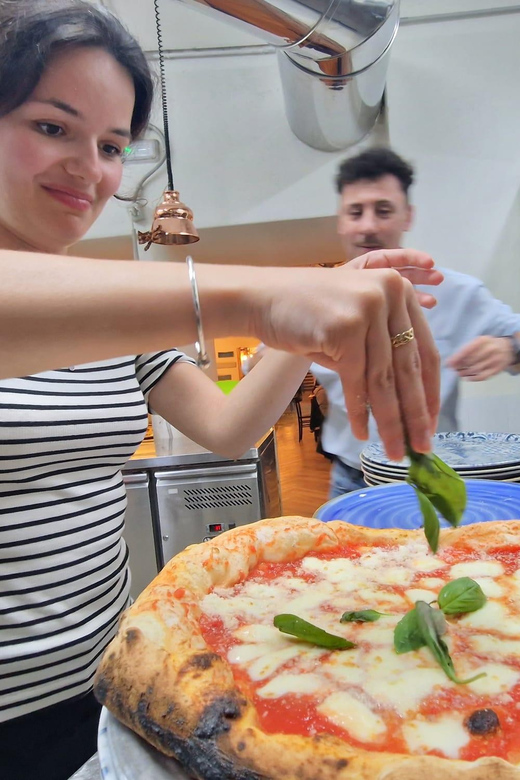
- 4) Toppings: basil leaves and buffalo mozzarella (plus your own style)
- 5) Wood-fired oven: bake your pizza like a local
- The meal side: starters, drinks, and the full pizza experience
- English instruction and the guide team: what that means for you
- Who this works best for (and who should skip)
- The one realistic drawback: it’s not a waste-free world
- Price and value: is $58 a good deal?
- Practical tips to get the best results
- Should you book this Naples pizza-making class?
- FAQ
- How long is the Naples pizza-making class?
- What’s included in the price?
- Where do I meet the pizzaiolo?
- Is hotel pickup included?
- What language is the instruction in?
- Can I pay later?
- Is free cancellation available?
- Is it suitable for gluten intolerance?
- Is it suitable for lactose intolerance?
Key takeaways before you book
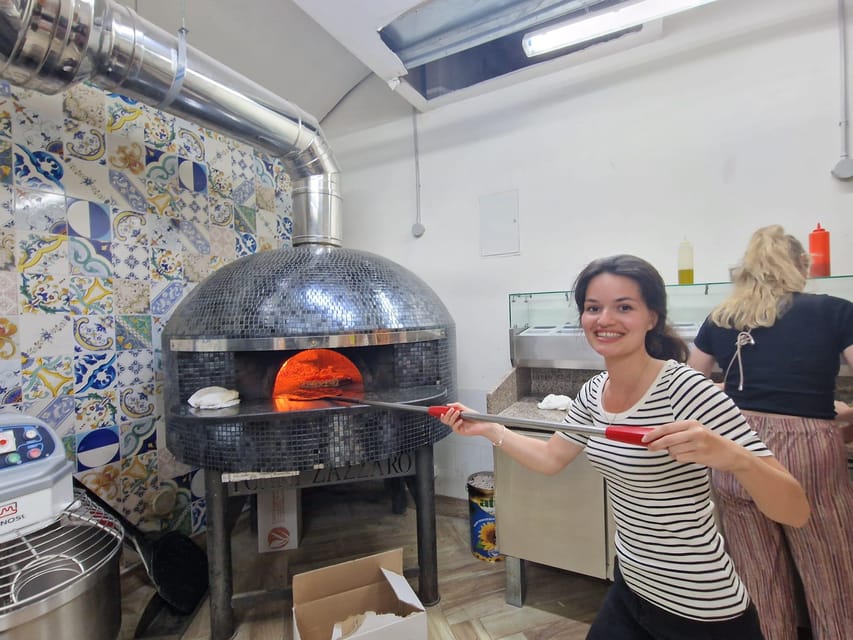
- Gusto Marigliano Pizzeria is the meeting point, so build in a few minutes to find the entrance if the exterior looks like it’s under construction.
- Neapolitan technique gets real emphasis: kneading, proofing, then stretching and shaping into thin-crust form.
- Wood-fired oven baking is part of the lesson, not just the grand finale.
- You eat what you make, with a local starter and a drink (wine, beer, or soft drink), plus pizza-friendly add-ons.
- English instruction is supported by the team, and you may meet different guides by name such as Alessandro, Antonio, Rafael, Martina, Enrico, or Raphael.
What this Naples pizza class is really about
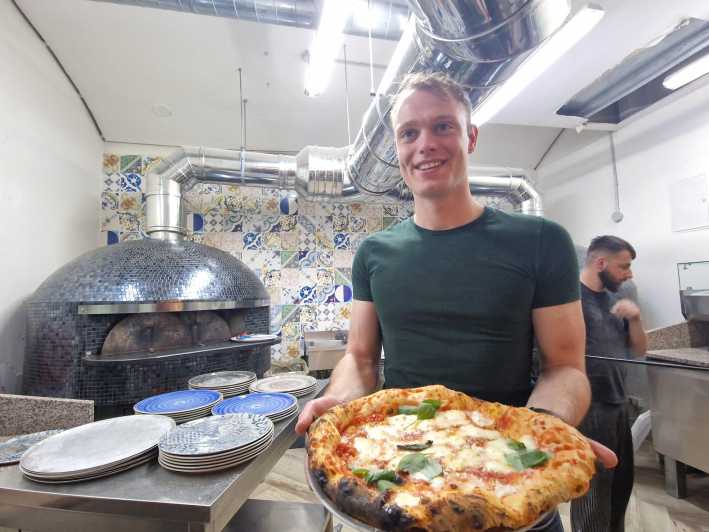
This isn’t a sit-and-watch cooking show. It’s a kitchen workout with payoff: you learn the steps behind Neapolitan pizza dough and then you see how the final dough behaves in a wood-fired oven.
Neapolitan pizza lives or dies on dough handling. That means you’ll spend time on mixing and kneading, then proofing (the waiting period where dough develops flavor and elasticity). After that comes the signature move: stretching and shaping by hand so you get the thin crust feel without tearing the dough. Then it’s topped in the classic Naples style—think fresh basil leaves and buffalo mozzarella—before baking.
The “with a local pizzaiolo” part matters because pizza makers in Naples don’t treat pizza like a generic recipe. They treat it like a craft. You’ll feel that in how they correct your grip on the dough, how they talk about texture, and how they handle baking timing.
You can also read our reviews of more tours and experiences in Naples.

Where you meet: Gusto Marigliano Pizzeria (and what to look for)
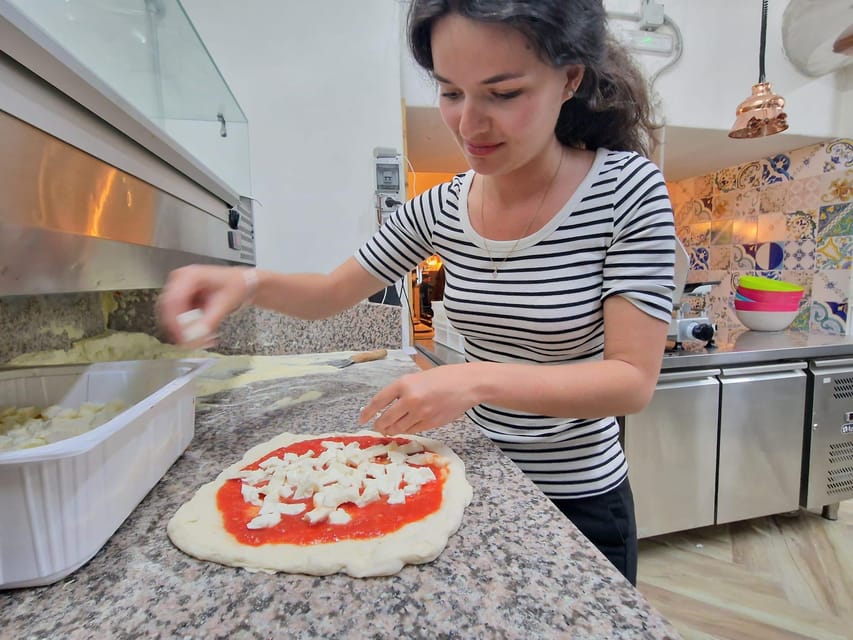
You meet your pizzaiolo at Gusto Marigliano Pizzeria. There’s no hotel pickup or drop-off, so you’ll want to arrive under your own steam.
A couple of practical notes from the experience itself:
- The pizzeria can be hard to spot from the street if the building exterior is under scaffolding, so don’t panic if the entrance looks odd.
- Once you’re inside, the tone shifts quickly from travel logistics to working pizza: the tools, apron, and kitchen flow are part of what makes it feel authentic.
If you like arriving early and getting your bearings, this is a good plan. You’ll have a smoother start, especially if you’re a first-timer with dough.
Step-by-step: what happens during the 2 hours
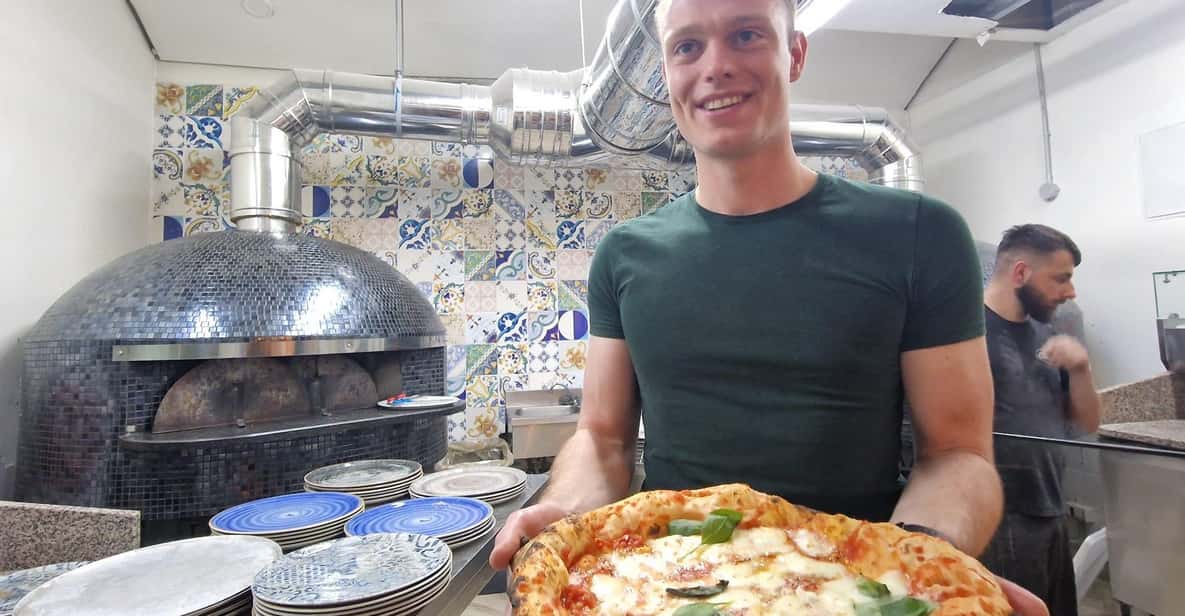
The class runs about 2 hours, and the pace is structured around how long dough and toppings need. Here’s the flow you should expect.
1) Dough basics: mixing and kneading skills
You start with the dough process. The goal is not just to make dough once; it’s to understand what the dough should feel like as you work it.
In practice, you’ll likely cover:
- how ingredients come together and what to look for in texture
- kneading techniques you can actually repeat later
- guidance on how to handle the dough without overworking it
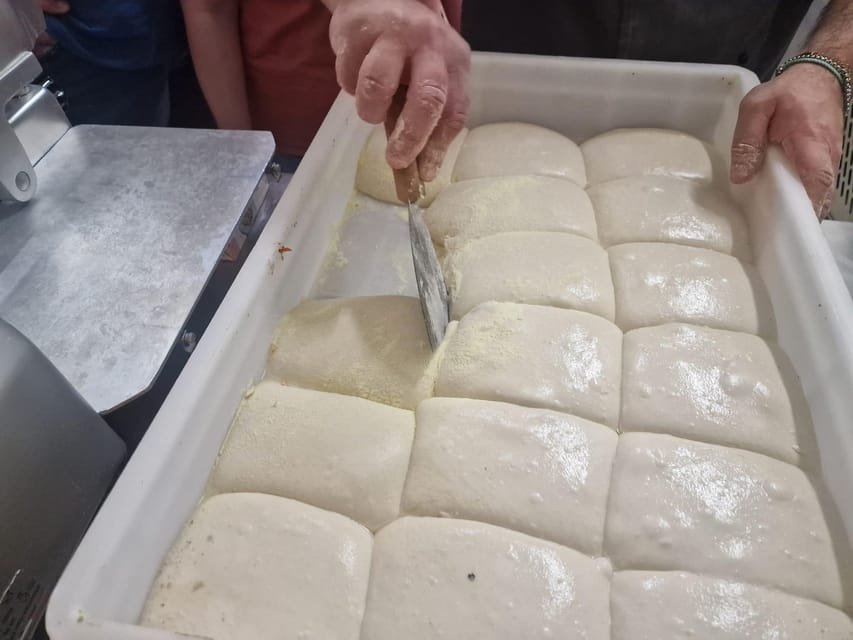
If you’ve read about Neapolitan pizza, you know rest time is crucial. One important detail you might encounter during class: the dough can be pre-rested before you use it. Still, you’ll learn the handling steps that matter, and the instructor team will show you what to look for as you work.
2) Proofing and timing: waiting without guessing
Proofing is where flavor and structure build. Even when the exact rest time has already happened, the instructor will help you understand why it matters so you can recreate it.
You’re not just waiting. You’re learning how the dough changes so you know when it’s ready for shaping. That’s the part that makes this class more valuable than a “mix ingredients and hope” approach.


3) Stretching and shaping: the Naples thin crust move
Then comes the signature: stretching and shaping the dough into Neapolitan thin-crust form.
This is where most people feel the difference between dough that’s properly prepared and dough that’s just rolled out. You’ll practice the stretching technique, and your pizzaiolo will likely help you with:
- how to move from thicker edge to thinner center
- avoiding tears
- keeping the crust light without losing structure
It’s a hands-on moment, and it’s also the moment you learn why Neapolitan pizza doesn’t look like typical flatbread.
4) Toppings: basil leaves and buffalo mozzarella (plus your own style)
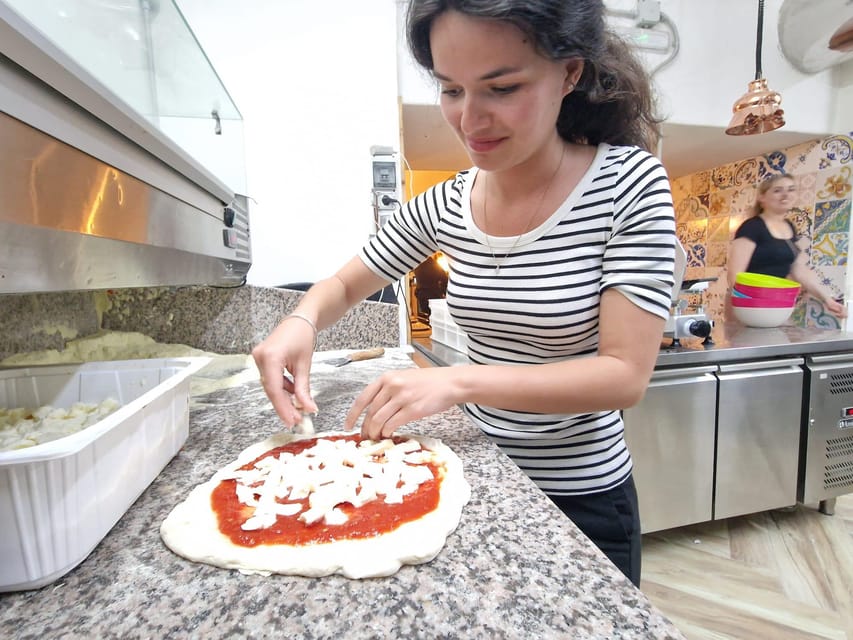
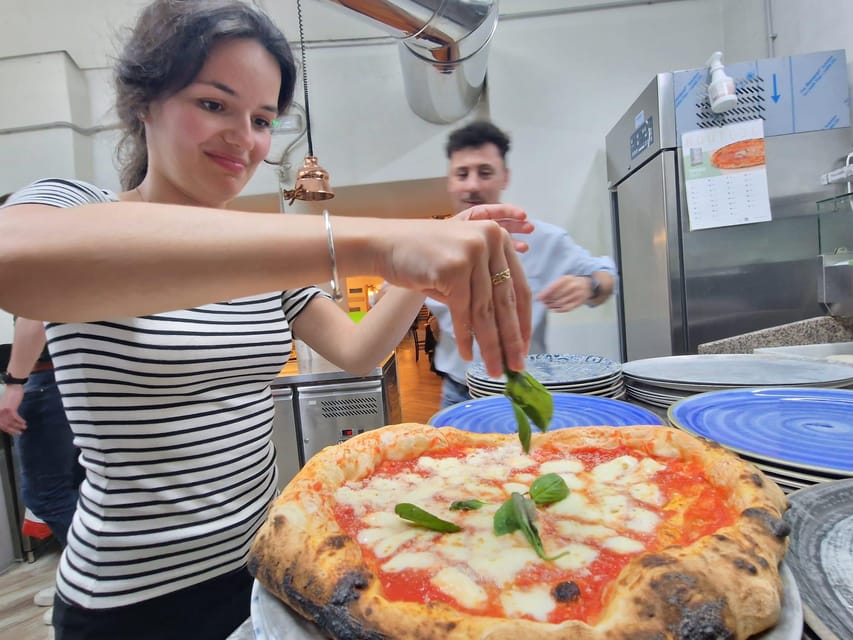
Toppings are part training, part creativity. You’ll cover key ingredients and traditional topping choices such as fresh basil leaves and buffalo mozzarella.
You also get to add your own touches. Some sessions lean into personalized pizza choices so you feel ownership before baking. And you usually get enough support that your pizza looks like pizza, not like dough art.
5) Wood-fired oven: bake your pizza like a local
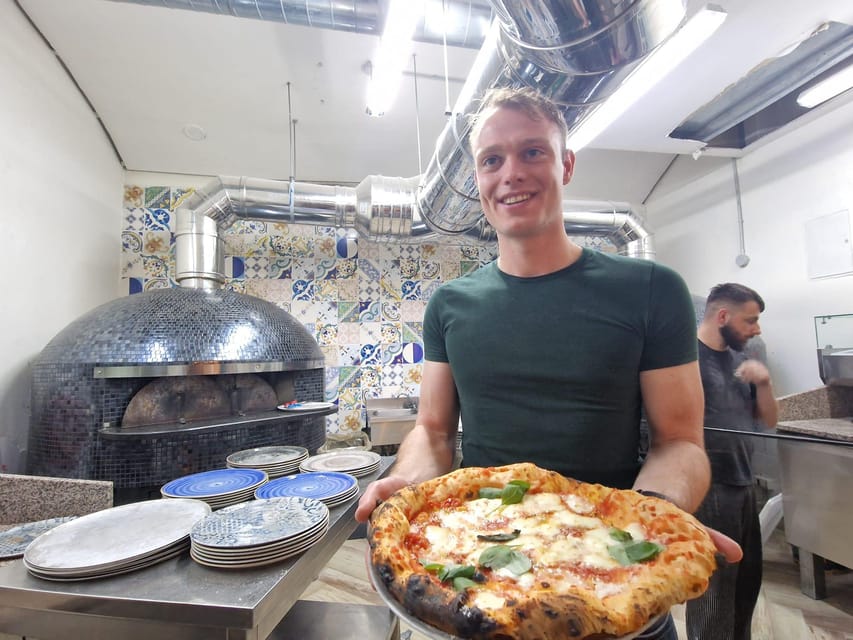
Once your pizza is ready, you bake it in a wood-fired oven with guidance from your pizzaiolo. This is where the craft becomes obvious.
You’ll see how quickly pizza cooks in a high-heat environment, and why dough handling affects the final result. If you’re the type who likes learning by seeing cause and effect, this part is satisfying.
The meal side: starters, drinks, and the full pizza experience
You don’t just snack on a slice. The class experience includes food as part of the event rhythm.
Included in the experience:
- a local starter
- a glass of wine, beer, or soft drink
- your Neapolitan pizza
- and you’ll receive a pizza-making certificate
In multiple sessions, people also mention dessert as part of the meal flow. So while dessert isn’t always front-and-center in the basic summary, in practice it often shows up as part of the full course feel.
Value note: at $58 per person, you’re paying for instruction, oven access, tools, ingredients, and a meal component. If you’ve paid for “just a cooking class” before, this feels closer to a structured dinner with real technique inside it.
English instruction and the guide team: what that means for you
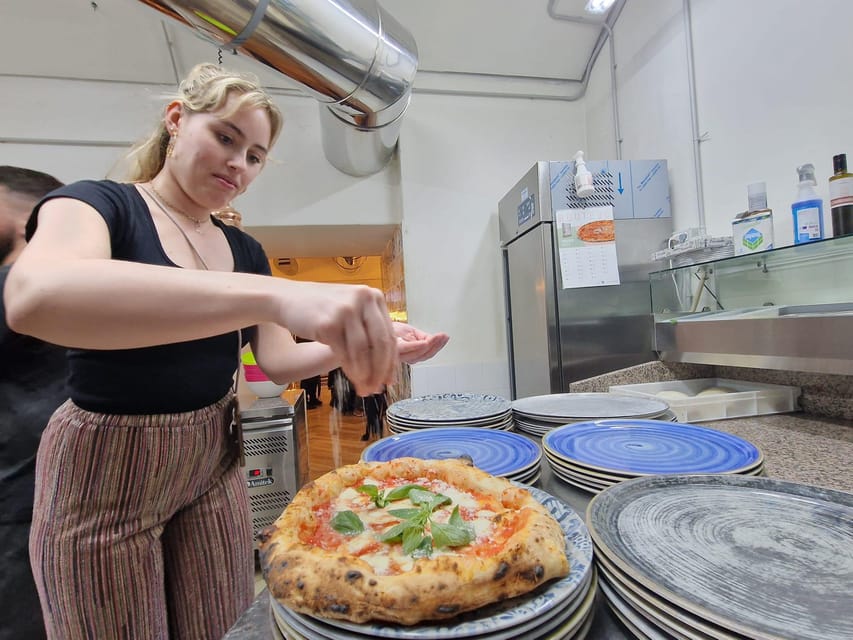
The class instruction is in English. On top of that, the team can include English-speaking guides and translators depending on the session.
From the experience names that come up in different runs, you might interact with people like Alessandro, Antonio, Rafael, Martina, Enrico, Raphael, or Daniella. The exact person depends on the date, but the teaching goal stays consistent: clear steps and patient correction.
For you, the key takeaway is simple: if you’re worried about language, this is built for it. You won’t be guessing what the pizzaiolo is saying while you’re holding dough.
Who this works best for (and who should skip)
This pizza class is a great fit if you:
- love Naples food culture and want technique, not just tasting
- want a hands-on activity you can remember for years
- are comfortable working with dough and heat
- want a social dinner-style experience in a real pizzeria setting
It’s not the right fit if:
- you have gluten intolerance
- you have lactose intolerance
If you’re gluten-free or lactose-free, you’ll probably want to look for a different kind of cooking class that explicitly supports your needs.
The one realistic drawback: it’s not a waste-free world
There’s a practical tension with any class where you make a complete pizza and then everyone eats at their own pace.
One downside you should keep in mind: there can be food left over at the end if people don’t finish. If you book, go in hungry and pace yourself. You’ll get more satisfaction, and you won’t be relying on leftovers doing the work.
Price and value: is $58 a good deal?
For Naples, $58 sounds like a “treat,” but it’s not just a ticket to taste pizza. You’re paying for:
- a 2-hour guided skill session with a local pizzaiolo
- apron and kitchen tools
- ingredients
- a starter plus your own pizza
- a drink option (wine, beer, or soft drink)
- and a certificate
If your goal is to leave with repeatable technique, the value makes more sense. You’re learning how dough behaves and how shaping changes the final bake. That’s hard to replicate if you just do a food tasting.
Practical tips to get the best results
A few smart moves will help you enjoy it more and take home better technique.
- Wear clothes you don’t mind getting dusted with flour. Apron helps, but dough work is messy by nature.
- Bring a curious mindset. Kneading and stretching are physical, and you’ll improve fast with corrections.
- Ask about texture. The quickest way to learn is to know what the instructor is watching for.
- Plan your dinner timing. This is a meal experience, so don’t schedule a heavy supper right afterward.
Should you book this Naples pizza-making class?
Yes, if you want an authentic Naples experience that focuses on pizza craft, not just eating. It’s especially worth it if you’re the type who learns best by doing: kneading, shaping, topping, then watching your own pizza bake in a wood-fired oven.
If you have lactose intolerance or gluten intolerance, skip it and look for a course designed around your dietary needs. And if you’re short on time, remember this is two hours in a working kitchen—arrive early enough to settle in and you’ll enjoy it more.
FAQ
How long is the Naples pizza-making class?
The experience lasts about 2 hours.
What’s included in the price?
It includes the pizza-making class, an instructor, apron and kitchen tools, ingredients, a local starter, and a glass of wine, beer, or a soft drink. You also receive a pizza-making certificate.
Where do I meet the pizzaiolo?
Meet at Gusto Marigliano Pizzeria.
Is hotel pickup included?
No. Hotel pickup and drop-off are not included.
What language is the instruction in?
The instructor is listed as English.
Can I pay later?
Yes, the experience offers reserve now & pay later.
Is free cancellation available?
Yes, you can cancel up to 24 hours in advance for a full refund.
Is it suitable for gluten intolerance?
No. It’s listed as not suitable for people with gluten intolerance.
Is it suitable for lactose intolerance?
No. It’s listed as not suitable for people with lactose intolerance.