REVIEW · NAPLES
Discover the Rione Sanità with Insolitaguida
Book on Viator →Operated by Insolitaguida - Naples city tours · Bookable on Viator
Forget the postcard Naples for a bit.
This Rione Sanità walk is a smart way to see Naples where people actually live, not just where buses drop you. You get an off-the-radar route with a guide who can explain the neighborhood’s layered history, starting with a coffee tasting at Porta San Gennaro. I particularly like the pacing and the sense that you’re in good hands, whether you choose a morning or afternoon departure.
What I love most is the human scale: this is the kind of tour where a small group turns questions into part of the experience. I’ve seen guides like Lucia, Lina, Maria, and Luigia bring stories alive through local details, including the folklore and superstition connected to the area’s cemetery tradition and Fontanelle Cemetery. The one catch is that it’s still a walking tour—expect time outdoors and plenty of street-level looking, so comfortable shoes help.
In This Review
- Key highlights worth showing up for
- A Naples neighborhood tour that skips the postcard route
- Coffee and first orientation at Porta San Gennaro
- Palazzo Dello Spagnolo: Neapolitan Baroque through real details
- Borgo dei Vergini: where Naples layers ancient and modern
- Fontanelle Cemetery and the superstition-and-folklore layer
- Palazzo Sanfelice: monumental, and best seen close up
- Tarallificio Poppella: a 1920s taste of Naples
- Ending at Santa Maria della Sanità: Renaissance-Baroque meets everyday life
- Price and timing: value for a short Naples window
- Who this tour suits best (and who might not)
- Should you book Rione Sanità with Insolitaguida?
- FAQ
- How long is the Rione Sanità tour?
- Is the tour offered in English?
- Can I choose a morning or afternoon departure?
- How big is the group?
- Where do I meet the guide, and where does the tour end?
- What’s included in the price?
- Do I need admission tickets for the stops?
- Are tips included?
- Can children join the tour?
- What is the cancellation policy?
Key highlights worth showing up for
- A morning or afternoon departure so you can fit it around Naples plans
- Small-group feel (up to 30) and the option for an intimate private tour
- Coffee to start at Porta San Gennaro, setting a relaxed tone fast
- Baroque architecture moments at palaces like Palazzo Dello Spagnolo and Palazzo Sanfelice
- Fontanelle Cemetery storytelling, including the neighborhood’s folk beliefs
- Food tastings at places like Tarallificio Poppella, born in Naples in 1920
A Naples neighborhood tour that skips the postcard route
Rione Sanità is the part of Naples you don’t stumble into by accident. It’s dense with history, but it doesn’t feel staged—this is a living neighborhood, with streets that keep their own rhythm.
With Insolitaguida, you’re not just “seeing sights.” You’re learning how the area’s past connects to what you notice today: the architecture, the religious/cemetery atmosphere, and the way traditions keep reappearing in Neapolitan culture.
And yes, I’ll say it plainly: this is a break from standing in the same crowded photo line. You’re walking with a plan, but you still get to look around like a real person.
You can also read our reviews of more tours and experiences in Naples.

Coffee and first orientation at Porta San Gennaro
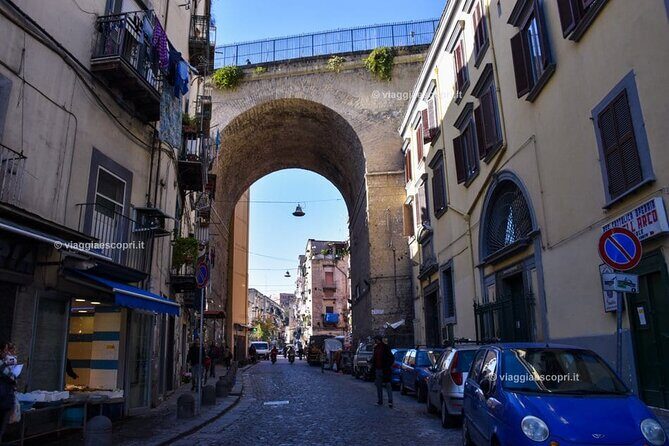
The tour starts at Via Porta San Gennaro, near Porta San Gennaro, with a coffee tasting. It’s a small touch, but it works—Naples can move fast, and this gives you a calm landing point.
Porta San Gennaro is also a handy place to get your bearings before you start wandering. Once you understand the basic “shape” of the neighborhood, the rest of the walk makes more sense.
The pace here is light, about 10 minutes at the first stop, so you won’t feel rushed right out of the gate. If you’re the type who likes to ask questions early, this start time is forgiving.
Palazzo Dello Spagnolo: Neapolitan Baroque through real details
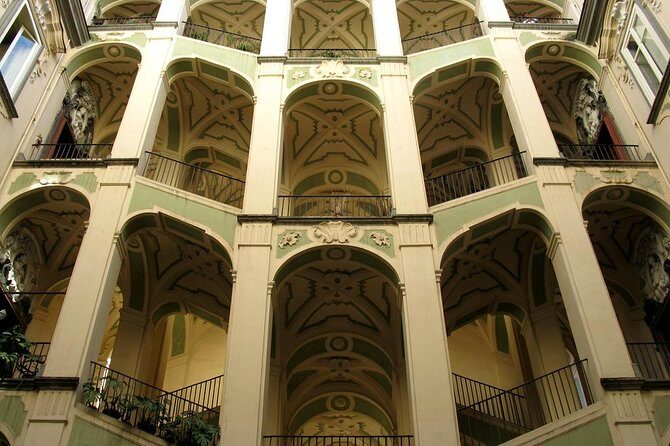
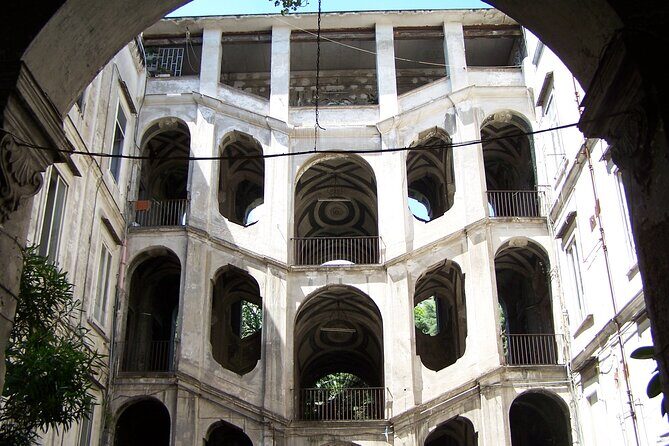
Next up is Palazzo Dello Spagnolo, an important example of Neapolitan Baroque civil architecture. The big story is the main double flight staircase, which you can think of as a showpiece that also functions as part of the interior façade.
This is the moment where the tour stops being only “pretty buildings” and starts being about why these spaces mattered. Baroque architecture in Naples isn’t just decoration—it’s design that communicates power, status, and identity, and your guide helps you see that.
A nice bonus is that you’ll also head toward a food market area afterward. That contrast helps: you go from stone grandeur to everyday Naples life in minutes.
You also get a practical advantage: the stops are set up so you don’t have to worry about paid admission for these specific points. It keeps your budget calmer and your time steadier.
Borgo dei Vergini: where Naples layers ancient and modern
Borgo dei Vergini is where the neighborhood history gets more personal. This part of the city reflects the evolution from ancient to modern Naples, and it carries a strong sacred and cemetery identity.
It’s closely linked to aristocratic and notable families, so you’re not just hearing general history—you’re getting the “who lived here” and “why this mattered” angle. The effect is that the streets feel less like a random maze and more like a timeline.
About 10 minutes here is enough to set the tone for the rest of the tour. If you love culture that’s tied to place—not just museum walls—this stop is a highlight.
Fontanelle Cemetery and the superstition-and-folklore layer
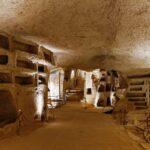
One of the strongest parts of the experience is the visit to Fontanelle Cemetery. This isn’t treated like a grim stop—it’s explained through the beliefs and folk traditions that grew around the place.
Your guide puts the story into context, including the syncretic practice connected to superstition and folk beliefs in Neapolitan tradition. In other words, you’re learning how people made meaning here, not just what the space looks like.
This is also where small-group dynamics matter. If you have questions—about how traditions mix, why rituals persist, or what different symbols might mean—you’ll get time to ask. In the reviews, guides earning praise for answering lots of questions is a recurring theme.
If you prefer your tours strictly factual and neutral, this might be the most “story-forward” part of the walk. If you like culture with human texture, you’ll likely find it memorable.

Palazzo Sanfelice: monumental, and best seen close up
After the cemetery-focused storytelling, the route returns to architecture with Palazzo Sanfelice. It’s a monumental palace in the Rione Sanità, and the point isn’t that you memorize dates—it’s that you learn how to look.
A quick stop here (again, about 10 minutes) is ideal if you’re trying to pack in a lot without turning the day into a museum sprint. You get a clear sense of why palaces like this mattered socially and visually.
I like palaces on a walking tour because you notice the “in-between” details. The street approach, the scale, and how the building sits in the neighborhood can tell you more than the building alone.
Tarallificio Poppella: a 1920s taste of Naples
Then it’s time for food. At Tarallificio Poppella, you get a food tasting at the historic Poppella pastry shop, which dates back to Naples in 1920.
Food tastings are a simple way to keep a history tour from becoming purely heady. You get a sensory bookmark—something you can remember later when you’re back in your hotel reviewing photos.
This stop is also practical: it’s short and focused, so you aren’t trapped waiting around. It fits the tour style well—walk, look, learn, taste, move on.
One thing I always recommend on food moments in Naples: don’t just eat and go. Pause for a second, ask the guide what to pay attention to, then take a second bite. You’ll get more out of it than rushing.
Ending at Santa Maria della Sanità: Renaissance-Baroque meets everyday life
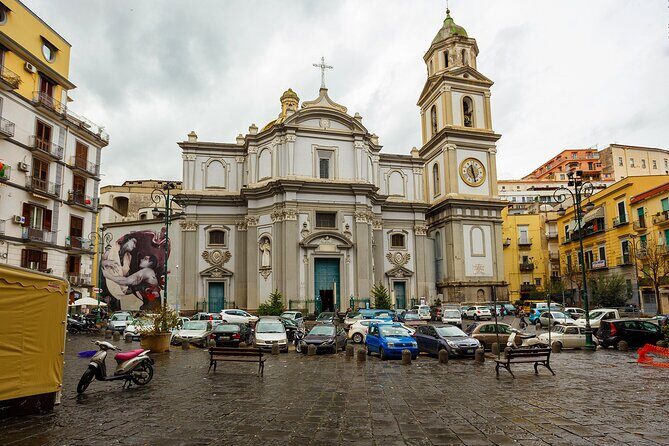
The tour ends at the Basilica di Santa Maria della Sanità in Piazza Sanità, 33. This is a satisfying finish because it brings architectural storytelling back to a recognizable civic/religious centerpiece.
The basilica is described with a Greek cross plan and an apsidal presbytery. The façade is set back from the road, so it’s not just a front door—it’s an architectural moment you approach deliberately.
You’ll also hear about the portal made in piperno, plus how this church is referenced as a point of contact between Renaissance and Baroque art and architecture in Naples. That kind of “why these styles are linked here” explanation is exactly what turns a church visit from sightseeing into understanding.
And since you finish inside the neighborhood rather than in a tourist square, it feels like a complete walk—not a stop-and-go checklist.
Price and timing: value for a short Naples window
The price is listed at $24.74 per person for around 2 hours (approx.). For Naples, that’s solid value when you consider you’re getting a guided route, architectural context, cemetery/foklore storytelling, and multiple tastings.
Here’s how I’d frame it: if you tried to replicate this alone, you’d spend time figuring out what matters and in what order. Even with a good map, the “meaning layer” is hard to recreate on your own.
You also get options that help you plan:
- You can choose a morning or afternoon departure time.
- The tour is offered in English.
- You’re capped at 30 travelers, and there’s an option for a more private feel.
A small note on timing: the stops are short, around 10 minutes each, so the tour is designed for momentum. If you’re the type who hates being moved along, you might feel the schedule more than someone who likes quick hits.
Who this tour suits best (and who might not)
This tour is a strong match for you if you want:
- A Naples neighborhood experience beyond the main streets
- Architecture explained in plain language, not just a list of facts
- Culture that includes the cemetery and folklore side of Neapolitan tradition
- A small group that lets you ask questions
It may not be the best fit if you’re looking for long museum time or a slower, sit-down pace at every single stop. This is a walking story, not a leisurely café tour with optional history.
Also, because it’s a walking format, you’ll get more from it if you’re comfortable spending two hours on city streets.
Should you book Rione Sanità with Insolitaguida?
If your Naples trip includes crowded “greatest hits” and you want one day—or one chunk of a day—to feel more local, I’d book it. The off-the-tourist-trail angle is real, but it’s not just about avoiding crowds. It’s about learning how Naples thinks, not only how Naples looks.
I’d especially recommend it if you care about how history connects to everyday life: palaces, markets, and the cemetery/foklore thread woven through Fontanelle Cemetery and the Sanità area.
One last practical tip: wear comfortable shoes and plan to go at the walking pace. When you do, this becomes one of those Naples experiences where the neighborhood stops feeling like a blur and starts feeling like a story you can actually retell.
FAQ
How long is the Rione Sanità tour?
It runs for about 2 hours (approx.).
Is the tour offered in English?
Yes, the guide service is offered in English.
Can I choose a morning or afternoon departure?
Yes. You can choose between morning or afternoon departure times.
How big is the group?
The experience has a maximum of 30 travelers.
Where do I meet the guide, and where does the tour end?
You start at Via Porta San Gennaro, 80138 Napoli NA, Italy. The tour ends at Basilica di Santa Maria della Sanità, Piazza Sanità 33, 80136 Napoli NA, Italy.
What’s included in the price?
The included portion is a 2-hour guide service.
Do I need admission tickets for the stops?
For the listed stops, the admission ticket is marked free.
Are tips included?
No. Tips are optional.
Can children join the tour?
Children must be accompanied by an adult.
What is the cancellation policy?
This experience is non-refundable and cannot be changed for any reason.