REVIEW · ST PETER S BASILICA
St. Peter’s Church Fast Track Private Tour With Dome Option
Book on GetYourGuide →Operated by Gaudium Travel · Bookable on GetYourGuide
Early access to St. Peter’s feels like a cheat code. This fast-track private tour gets you inside when the church is still waking up, then threads you through the most important sights without losing time to crowds. You’ll finish with the Vatican Grottoes under the basilica, plus a look at Bernini’s St. Peter’s Square.
I especially love two things: the way the guide ties the art to the people and rituals of the Vatican, and the focus on places most visitors skim. A highlight here is Marco’s kind of detail, like pointing out inscriptions and papal emblems you’d miss on your own, and then using that context to explain St. Peter’s Tomb and the Popes laid nearby.
One consideration: you still have to pass an airport-style security check, and St. Peter’s Basilica can close last-minute for religious ceremonies. Plan for strict bag limits and a short, efficient visit—this is 1.5 hours, not an all-day wandering day.
In This Review
- Key highlights you’ll care about
- Priority entrance at St. Peter’s Basilica: the best kind of Rome efficiency
- The Baldachin and St. Peter’s Tomb: what you’re really looking at
- Michelangelo’s Pietà and the Porta Santa: art with rules, not just beauty
- Vatican Grottoes with 80+ papal tombs: the quiet underworld
- St. Peter’s Square: Bernini’s design and the obelisk from 37 AD
- Price and value: is $340.49 worth it?
- Best fit: who should choose this fast-track private style
- Dome option: how to decide without getting surprised
- Should you book this St. Peter’s Fast Track Private Tour?
- FAQ
- How long is the St. Peter’s Basilica fast track private tour?
- Is the tour private, and is it guided in English?
- Where do we meet, and where does the tour end?
- What does the tour include?
- What’s not included in the price?
- Are there restrictions on what I can bring or wear?
- Is this tour refundable?
Key highlights you’ll care about
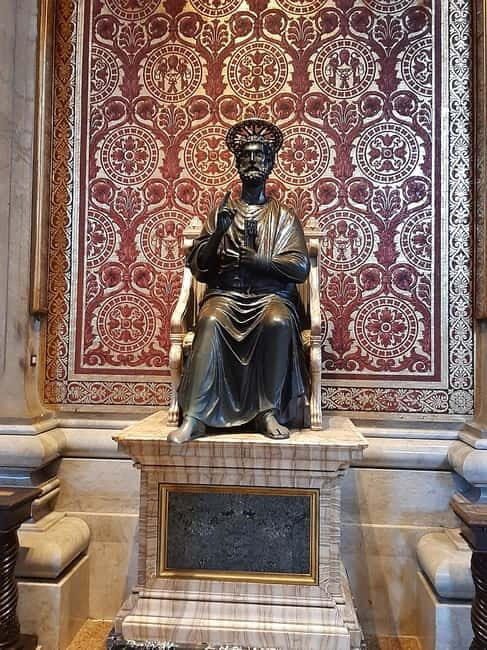
- Early morning entry that cuts waiting time and helps you see the basilica with breathing room
- Baldachin + St. Peter’s Tomb context, so you understand why the site matters to Catholics
- Michelangelo’s La Pietà explained in plain language, including the single-block marble story
- Porta Santa details, including that it opens only once every twenty-five years
- Vatican Grottoes with 80+ Papal Tombs, including chapels and tombs dating back to the 10th century
- St. Peter’s Square walk-through with Bernini’s colonnades, 140 saint statues, and the obelisk from 37 AD
Priority entrance at St. Peter’s Basilica: the best kind of Rome efficiency
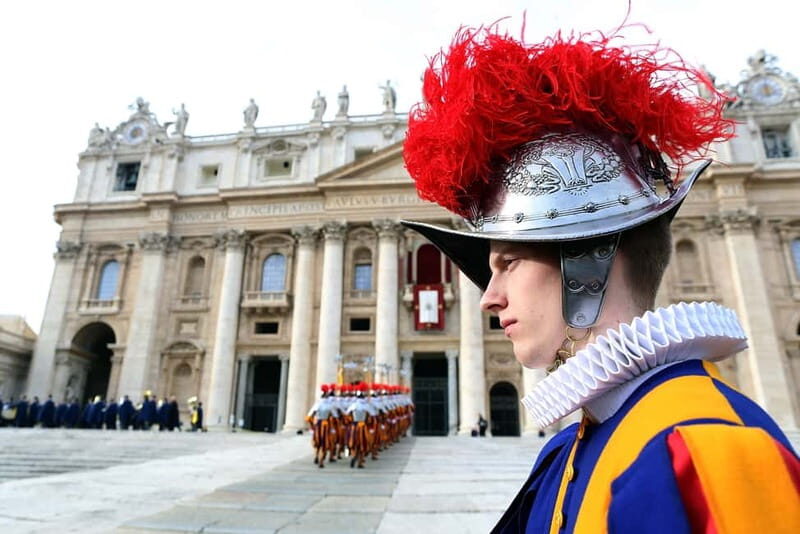
If you hate lining up, you’ll like this format. You get skip-the-line access through a separate entrance, and the tour starts early in the morning when you can actually take in the scale of the basilica without fighting crowds.
Timing matters here because St. Peter’s Basilica can handle up to 60,000 visitors, and the dome is a dominant part of Rome’s skyline. In other words: it’s famous, so it attracts everyone. Priority access turns that into a more civilized visit, where you can focus on what the guide is pointing out.
You meet at the tour office on Via Germanico 67, about a 10-minute walk from the basilica area. No transport is included, so you’ll want to plan your own way there and arrive a bit early to account for security.
One practical snag: before you enter, there’s an airport-style security check. You’ll need passport or ID, and liquids and sharp items aren’t allowed. Also, no luggage or large bags, and sleeveless shirts aren’t allowed. Bring a small day bag you can manage, and wear a shirt with sleeves just to avoid an awkward outfit rethink at the gate.
You can also read our reviews of more tours and experiences in St Peter S Basilica.
The Baldachin and St. Peter’s Tomb: what you’re really looking at
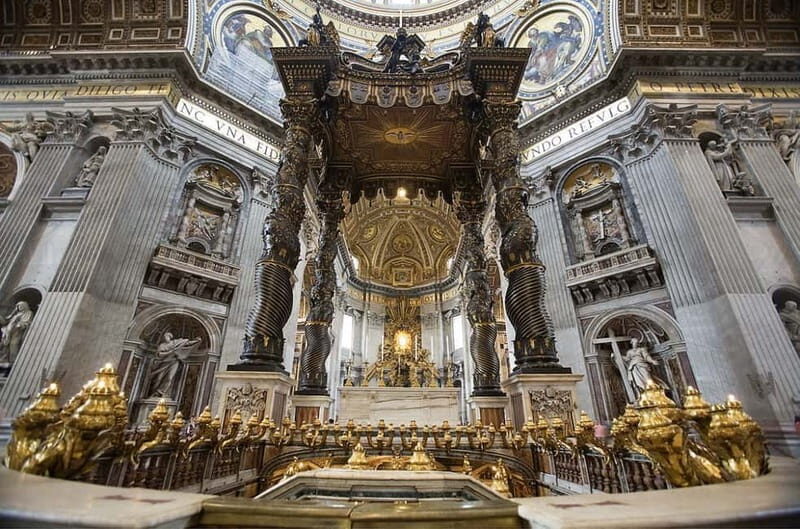
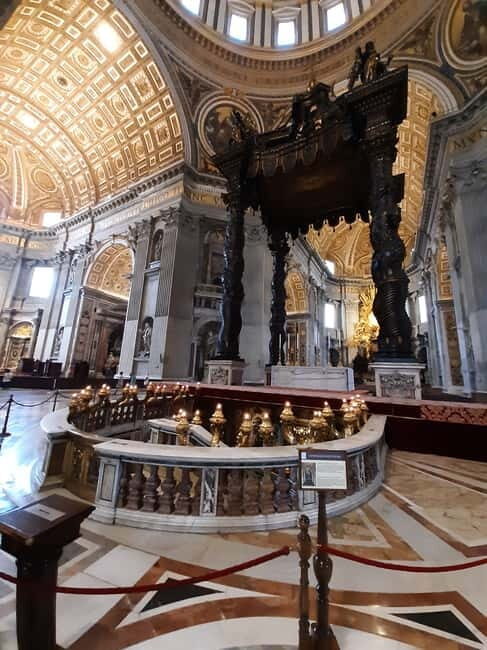
The heart of the basilica isn’t only the architecture—it’s the symbolism around the tomb area. After you enter, your guide directs you to Bernini’s Baldachin, the dramatic canopy positioned above St. Peter’s tomb.
That detail changes your visit. Without the context, you might treat the tomb area like another impressive stop. With a guide, it becomes the center of gravity for why so many Popes are laid to rest nearby, and why the necropolis beneath the basilica shows up in stories like this.
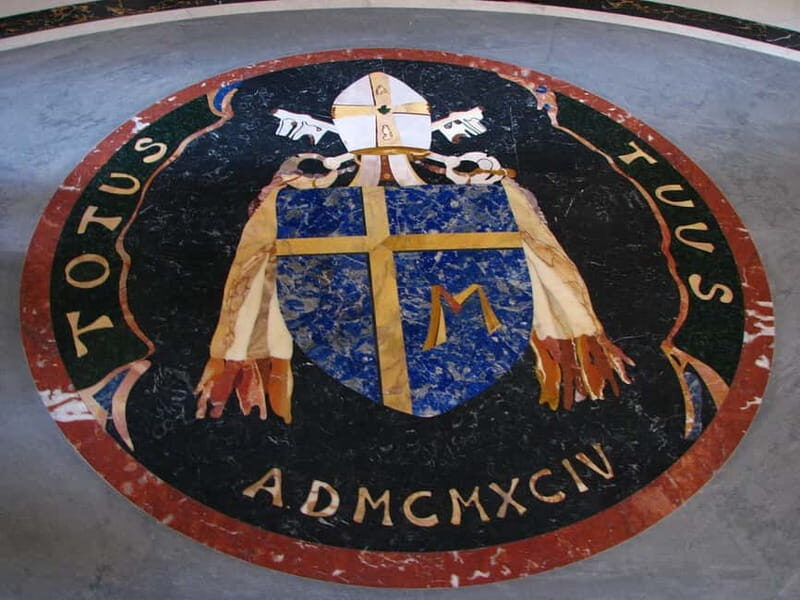
This is where a strong guide makes a difference. Marco, for example, has been singled out for pointing out inscriptions and papal emblems, then translating what they mean in a way that actually sticks. Those inscriptions aren’t just “decorations”—they’re part of the Vatican’s language for memory, authority, and continuity.
There’s also the angle of what’s sometimes accessible. The necropolis beneath the basilica is not always open, but when tours can include access, it’s part of why people book guided routes like this—because the explanations come with a sense of what you’re seeing and why it matters.
One more thing worth knowing: the basilica’s construction took a long time—about nearly 120 years—and that shows up in how different parts feel and look. A guide helps you read that timeline in real time, instead of trying to piece it together later.
Michelangelo’s Pietà and the Porta Santa: art with rules, not just beauty
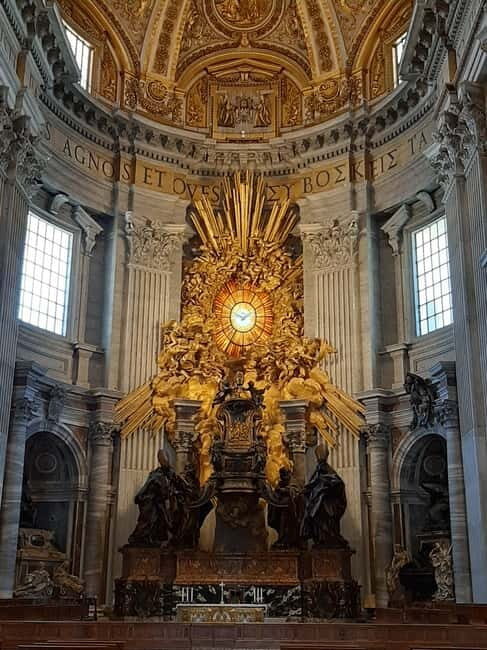
After the tomb story, you move to another must-see. You’ll visit Michelangelo’s Pietà, the famous sculpture that’s carved from a single block of marble. The guide explains where it came from too: it was commissioned by French Cardinal Jean de Billheres.
This matters because La Pietà isn’t just a pretty statue. You learn the backstory, so the emotions and craftsmanship land better. And if you’ve ever felt museum labels can be too technical, you’ll appreciate that this tour frames the details in a narrative—art tied to history, not art in isolation.
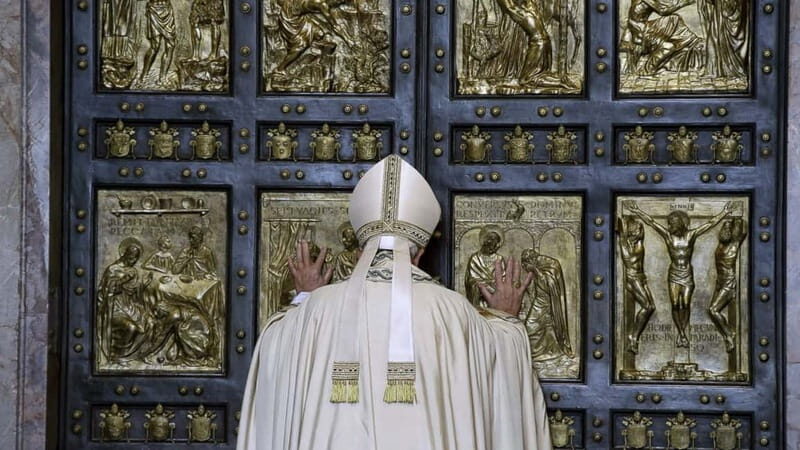
Then comes a moment that feels almost like a Vatican insider secret: the Porta Santa, the holy door on the right side. It’s only opened once every twenty-five years. Even if you’re not catching it in the act, understanding what it represents gives you a different lens while you’re standing in the basilica.
This part of the tour is also a good reality check for expectations. St. Peter’s can tempt you to sprint from sight to sight. With the Pietà and Porta Santa, the tour slows down enough to help you notice meaning—what you might otherwise miss when your brain is just trying to keep up.
Vatican Grottoes with 80+ papal tombs: the quiet underworld
The biggest “wait, we’re going there?” moment is the stop beneath the basilica: the Vatican Grottoes. These are located just under the Renaissance basilica and above Constantine’s 4th-century structure—so you’re literally standing between layers of Rome’s religious story.
The grottos are famous for tombs and chapels. You’ll see chapels dedicated to various saints, and you’ll also learn about the tombs of kings, queens, and Popes, with burial dates going back to the 10th century.
This is one of the best reasons to book a guided, fast-track option. You don’t just walk into a crypt and hope for the best. Your guide helps you connect what you’re seeing to the larger Catholic timeline and explains why this underground space exists and what it’s meant to preserve.
Why it’s valuable: most people associate St. Peter’s Basilica only with what’s above ground—the dome, the altar space, the grand interior. The grottos remind you that the Vatican’s power is also about memory and continuity. It’s history you can feel in a more personal way because it’s structured around individual lives and dedicated spaces.
And because you’re part of a private group on a scheduled route, you spend your energy on the sights—not on figuring out what’s open, where to go next, or how to make sense of it all quickly.
St. Peter’s Square: Bernini’s design and the obelisk from 37 AD
You don’t end inside a museum box. The tour finishes in St. Peter’s Square, the elliptical plaza designed in the mid-17th century by Gian Lorenzo Bernini.
This square is more than a photo op. The colonnades on either side symbolize welcoming arms, and the guide helps you notice how the design funnels your attention toward the basilica. When you understand that intention, the square feels less like a backdrop and more like part of the ritual geography of Vatican City.
The details are specific and fun: there are 140 statues of saints sculpted by Bernini and his team. You also see fountains and an Egyptian obelisk that was transported to Rome in 37 AD. Standing there with those facts in mind changes the vibe from sightseeing to understanding what you’re looking at.
If you like your tours to end with an “ahh, now I get it” moment, this square does the job. It gives you a big visual wrap-up after the tighter, more interpretive stops underground and inside the basilica.
Price and value: is $340.49 worth it?
The price here is $340.49 per person for about 1.5 hours. That’s not cheap, so you should judge value based on time, access, and what’s included—not just on the wow-factor.
What you get that justifies a premium:
- Early morning entrance and skip-the-line access through a separate entrance
- A live English guide for the route
- Guided coverage of the key interior highlights—St. Peter’s Tomb area, La Pietà, Porta Santa, then the Vatican Grottoes
- A clear finish in St. Peter’s Square
What you don’t get:
- Transport (you handle getting to Via Germanico 67)
- Gratuity for the guide
Here’s how I’d think about it for your trip. If you’re short on time, the big “money saver” is the reduced waiting and the smoother flow through the basilica. If you’re the type who reads inscriptions and wants meaning behind art, the guide earns their keep fast. If you just want general photos and don’t care about context, self-guided might feel cheaper. But it’s harder to reproduce the tomb and inscription explanations without a guide.
Also, dome access can be part of the overall experience because the tour offers a dome option. The exact details aren’t listed here, so check what your selected option includes. If the dome is on your must-do list, that can add extra value to this price.
Best fit: who should choose this fast-track private style
This tour fits best when you want three things at once: access, interpretation, and a tight route.
Choose it if:
- you want to see St. Peter’s Basilica early and reduce crowds the moment you arrive
- you care about Catholic art and symbols, not just architecture
- you prefer a private group pace where the guide can keep track of your questions
- you want the Vatican Grottoes experience without guessing your way through
It may not fit if you want long, slow wandering time. The full plan is only 1.5 hours, so the pace stays focused. You’ll see the key sights, but you won’t have hours to drift.
It can also be a mismatch if your day includes a lot of carry-on chaos. Security rules are strict: no large bags, no liquids, and no sharp items. Keep it simple.
Dome option: how to decide without getting surprised
The tour title includes a dome option, which suggests you can select a variation when booking. The details you provided here don’t spell out exactly how dome access works, what it includes, or whether it changes the time you spend.
So here’s the practical approach: decide based on your energy and your priorities. The basilica already includes major visual payoff with Bernini’s Baldachin, the La Pietà visit, and the grottos, so the dome is for people who want that extra height and skyline connection. If climbing steps or restricted timing is a concern for you, confirm the specifics before you pick the option.
Either way, the rest of the tour content stays centered on the Basilica interior and the Vatican Grottoes, with St. Peter’s Square as the finishing view.
Should you book this St. Peter’s Fast Track Private Tour?
I’d book it if your goal is to see the most meaningful parts of St. Peter’s Basilica and the Vatican grottos with a guide, while wasting as little time as possible. The combination of early access, a live English guide, and a route that hits the tomb area, Michelangelo’s Pietà, and the Vatican Grottoes is exactly what makes this kind of tour worth paying for.
It’s especially smart for first-timers who want the story, not just the sights. When a guide like Marco points out inscriptions and papal emblems, you start reading St. Peter’s like a document, not like a backdrop.
Skip it if you’re traveling light for security, dislike structured routes, or you want maximum free time inside the basilica. Also, if you’re sensitive to last-minute closures for religious ceremonies, know that the basilica can close and the operator offers alternative dates.
If you want a focused Vatican hit with less waiting and more meaning, this one is a solid choice.
FAQ
How long is the St. Peter’s Basilica fast track private tour?
The tour duration is 1.5 hours.
Is the tour private, and is it guided in English?
Yes. It’s a private group with a live English guide.
Where do we meet, and where does the tour end?
You meet at the office on Via Germanico 67. The activity ends back at the meeting point.
What does the tour include?
It includes early morning entrance in St. Peter’s Basilica and a guided tour.
What’s not included in the price?
Transport and gratuity for the guide are not included.
Are there restrictions on what I can bring or wear?
Yes. You’ll need passport or ID. You can’t bring luggage or large bags, and sleeveless shirts are not allowed. There’s also an airport-style security check with limits on liquids and sharp items.
Is this tour refundable?
This activity is non-refundable.