REVIEW · ROME
Rome: Domus Aurea Tour with Virtual Reality Experience
Book on GetYourGuide →Bookable on GetYourGuide
Nero’s palace comes alive in 3D. The Domus Aurea is one of Rome’s most unusual archaeological sites, and the tour format helps you decode what you’re seeing—especially the fresco-heavy rooms you’d miss if you just wandered in.
What I like most is the mix of real site access (East and the newly reopened West Wings) plus a 3D reconstruction that explains the palace’s scale and look when it was new.
You’ll get two big wins right away: newly reopened West Wing highlights and a clear story behind the art and its weird characters. The possible drawback is that the site has rules and movement limits—so if you struggle with walking, this may be the wrong stop for your trip.
In This Review
- Key highlights you should care about
- Where to start at Domus Aurea and how the skip-line really works
- The story opener: Nero as a person, not a cartoon villain
- Walking 30 frescoed halls: what you’re really looking at
- East Wing then West Wing: the difference you’ll notice fast
- The Octagonal Room and the palace’s special interior moments
- Nero’s crisis management and the Fire of 64 AD aftermath
- The seated 3D VR reconstruction: the moment it clicks
- Who this tour fits best (and who should skip it)
- Guides matter here: names that stood out and what they did right
- Price and value: what you’re paying for beyond the ticket
- Should you book the Domus Aurea with VR?
- FAQ
- How long is the Domus Aurea tour with the VR experience?
- Is the virtual reality reconstruction included?
- Where do I meet the guide?
- Is my GetYourGuide voucher the entry ticket?
- How much time should I expect between the meeting and entering the Domus?
- What language is the live guide tour?
- What should I bring?
- What items are not allowed?
- Is it suitable for wheelchair users or limited mobility?
- What is the cancellation policy?
- Is there free cancellation?
Key highlights you should care about
- East Wing plus newly reopened West Wing: a wider look than the usual “quick highlights.”
- Nero storytelling with myth-busting: you’ll separate the emperor from the Fire of 64 AD rumor mill.
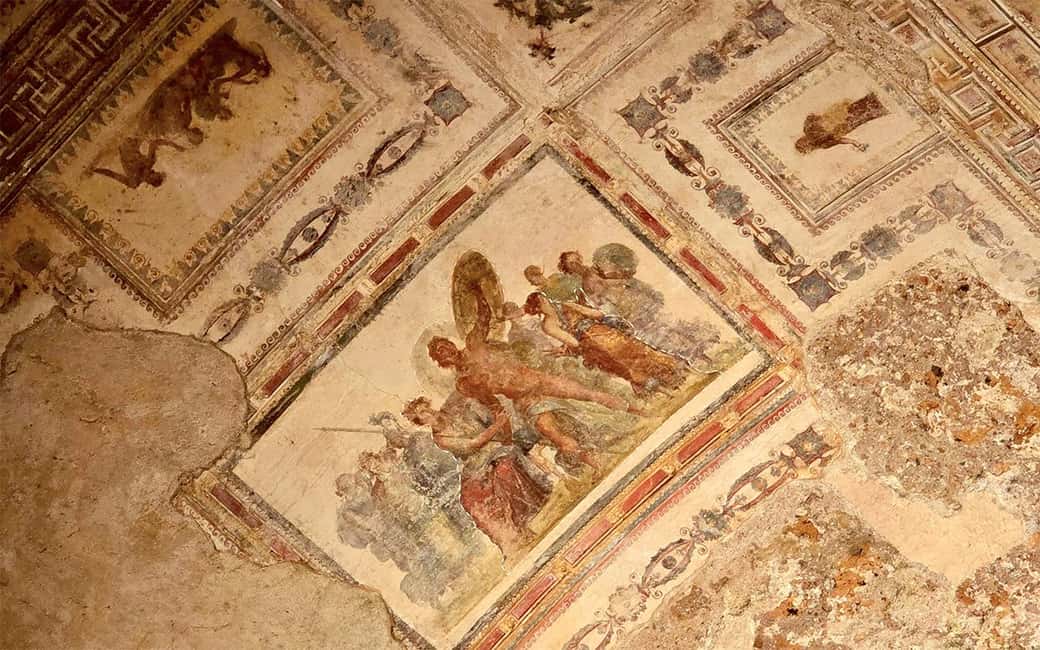
- 30 frescoed halls: lots of painted surfaces, not just a few showpieces.
- 3D VR Golden Palace reconstruction: you’ll see how the palace could have looked at its peak.
- Skip-the-line with your guide’s separate entrance: less time stuck at the gate.
- A tour built for clarity: guides explain construction tricks and Roman planning ideas, not just dates.
Where to start at Domus Aurea and how the skip-line really works
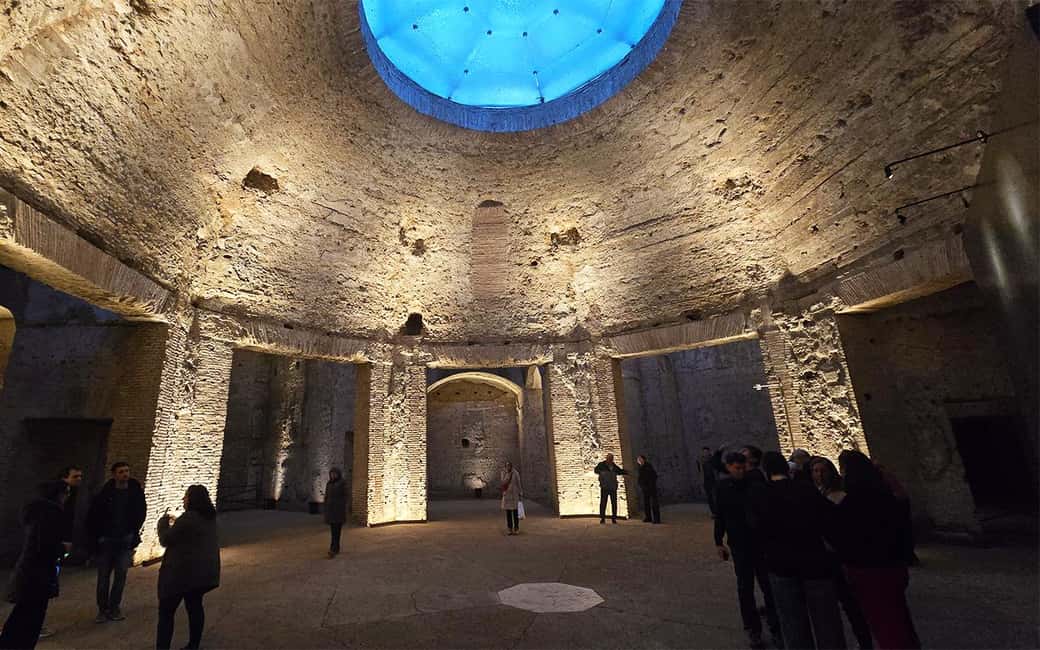
Plan for a bit of patience before you even step inside. Your voucher isn’t the entry ticket—your live guide carries what you need. Meet outside with an OPEN MIND TOURS sign, and then expect to enter at least 20 minutes after the scheduled guide talk time. That waiting window isn’t a problem once you treat it like part of the experience: it’s often where your orientation starts.
The big value of the “skip the line” promise is that you’re not trying to fight the clock while juggling tickets and instructions. You’ll use a separate entrance, and the guide leads you in. It’s a small thing, but in Rome, small things save your whole day.
Quick practical notes:
- Bring comfortable shoes. The Domus is not designed for leisurely sneaker sightseeing.
- Bring a jacket. Even in warm months, this kind of site can feel cooler than you expect.
- Leave the big stuff at home: no luggage or large bags, and no drones or professional cameras.
The story opener: Nero as a person, not a cartoon villain
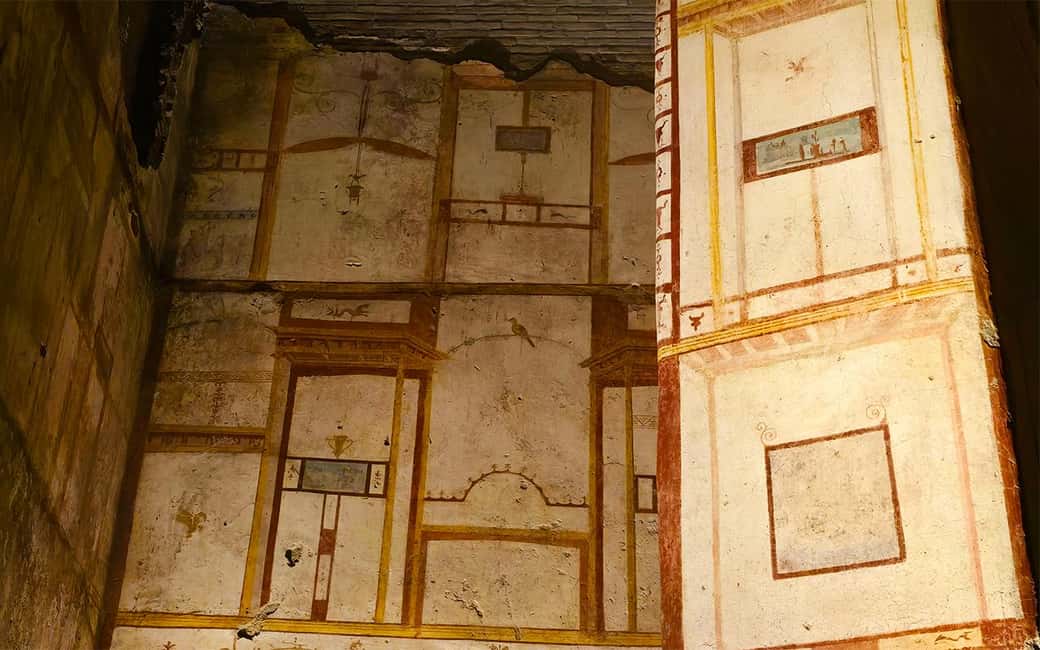
The best Rome guides do something hard: they turn a famous name into a real human with habits, tastes, and decisions you can understand. Here, the tour’s narrative is built around Nero’s personality and intellect—along with the political fallout after the Fire of 64 AD.
You’ll hear the core myth-busting point early: Nero wasn’t behind the disastrous fire of July 64 AD. The tour frames him as someone who was away from Rome at the time, including at his seaside villa. Then it flips the usual story. Instead of seeing Nero as purely irrational, you’ll get a more complicated picture: someone making choices, reacting to crisis, and still managing to look “out of touch” from the public’s point of view.
This matters because the Domus Aurea isn’t just a museum building. It’s a statement. The frescoes, the layout, and the surviving engineering details all make more sense when you know what kind of ruler Nero tried to be.
Walking 30 frescoed halls: what you’re really looking at
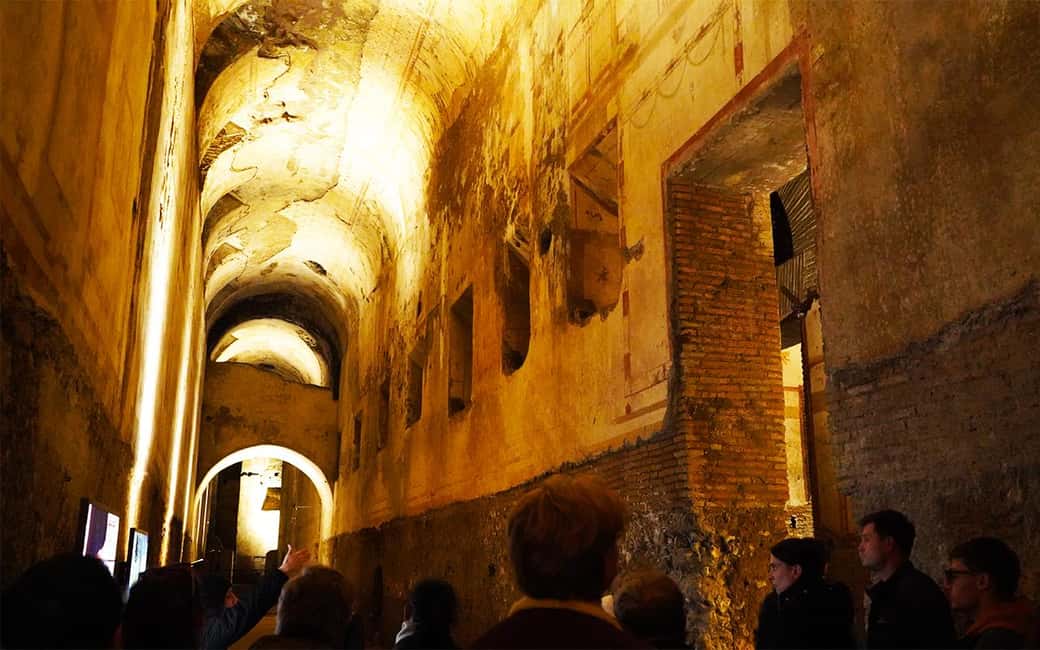
The heart of this visit is a guided walkthrough through the Domus Aurea’s 30 frescoed halls. That number sounds impressive on paper, but on site it becomes a sensory experience: long corridors, vaulted spaces, and painted figures that look both skillful and deliberately strange.
One reason this tour scores high is that it doesn’t treat the frescoes as wallpaper. You’ll be encouraged to connect the bizarre imagery to Nero’s reputation for eccentricity—without turning it into nonsense. The guide’s job is to help you read what the paintings are doing, not just label them.
Also, this is where you’ll notice why the Domus Aurea is called an archaeological site you can still feel. It’s not a stripped ruin. It’s a working window into how Romans built and decorated spaces meant for power and pleasure.
What I think you’ll appreciate: the pace is built to keep you oriented. The Domus is large and complex, and a good guide helps you understand why you’re walking where you’re walking.
East Wing then West Wing: the difference you’ll notice fast
You won’t just get one wing and a quick finish. The tour includes the East Wing and the recently reopened West Wing, which changes the whole feeling of the visit. The reopened areas add depth because they help you see the domus as a full complex, not a set of isolated rooms.
As you move through, you’ll be paying attention to:
- Vaulted rooms and long hallways (the geometry is part of the story)
- Frescoes that look restored rather than faded into mystery
- How light and architecture work together
The tour emphasizes that these spaces were once bathed in delicate beams of light—thanks to the combination of porticoes, fountains, and gardens. Even if you’re looking at the ruins today, it’s the right mental picture: this was a designed experience, not just a building.
If you’re a fan of Roman engineering, the Domus is the kind of place that rewards slow attention. You’ll hear about techniques and materials as part of the guide’s explanation, and it makes the construction feel more human. You start thinking in terms of labor, planning, and problem-solving—the stuff that built the Empire.
The Octagonal Room and the palace’s special interior moments
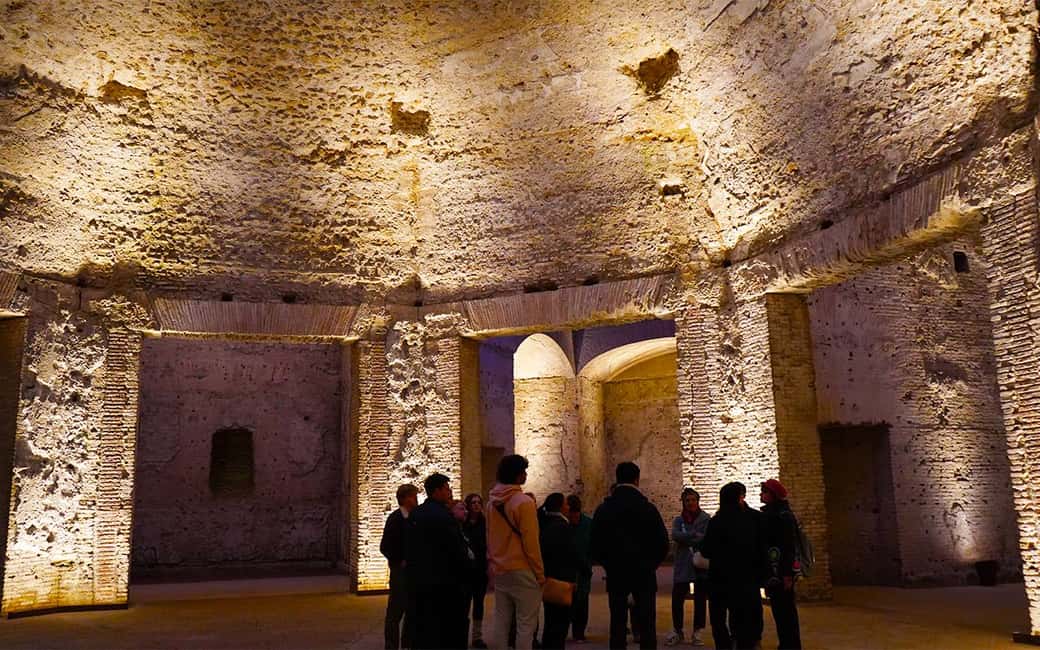
At some point, you’ll reach the Octagonal Room. The description includes the possibility of a rotating ceiling, and even if that detail is treated cautiously, the point stands: this is the kind of space that shows off control over structure and atmosphere.
Rooms like this are useful because they change your perspective. Instead of thinking only “what frescoes survived,” you start thinking “how did Nero want people to feel?” The Domus is about sensation—height, rhythm, art, and movement through space.
This is also where the guide’s explanations can make or break the experience. The tour’s best moments usually come when your guide ties architecture to the story: Nero expanding luxury while managing public unrest.
Nero’s crisis management and the Fire of 64 AD aftermath
The tour doesn’t stay in art-history mode. It gives you the political timeline that sits behind the palace.
Here’s the shape of the narrative you’ll hear:
- In the years after the Fire of 64 AD, the disaster is described as massive: it destroyed about two-thirds of the city and caused thousands of deaths in a population of around one million.
- Nero is said to take action afterward: opening his gardens to shelter people, distributing essential goods, lowering grain prices, and pushing urban planning ideas meant to prevent similar disasters.
- The palace expansion is also part of the story. The Domus Aurea grows from the destroyed areas on the Palatine Hill.
- His popularity collapses, and Nero takes his own life in June 68 AD.
You’ll also hear how the Domus Aurea’s story continues after Nero. Vespasian later builds the Colosseum in place of Nero’s lake—framing it as a public work and a political shift. Then, about 50 years later, Trajan buries the Golden House under a large bath complex. After that, the Domus falls into silence for nearly 1,500 years until Renaissance artists rediscover it in the 1500s.
That timeline isn’t just trivia. It explains why the Domus feels like both luxury and loss at the same time: the Empire’s priorities changed, and the palace didn’t survive as a functional residence.
The seated 3D VR reconstruction: the moment it clicks
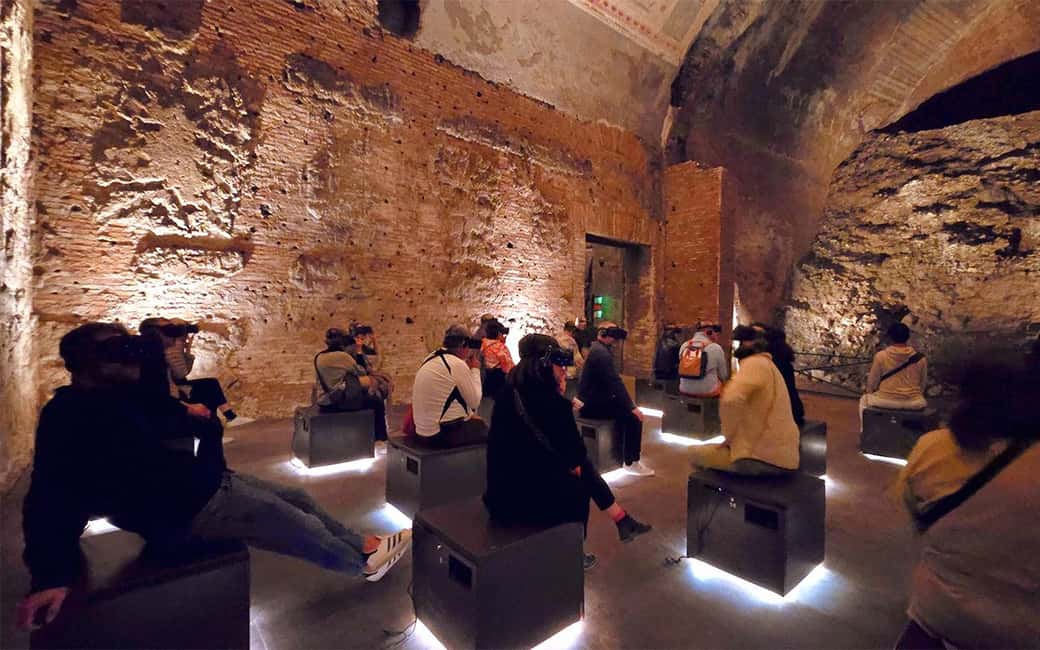
The peak of the tour is the 3D virtual reality reconstruction. This is the part you’ll want to treat like a guided film where you control your attention.
A practical tip from the experience: the VR segment happens while you’re seated, so don’t fix your eyes on one screen-only view. Look around in every direction. The point is to let your brain reconcile the rooms you walked through with the palace you couldn’t possibly picture from ruins alone.
The VR experience includes:
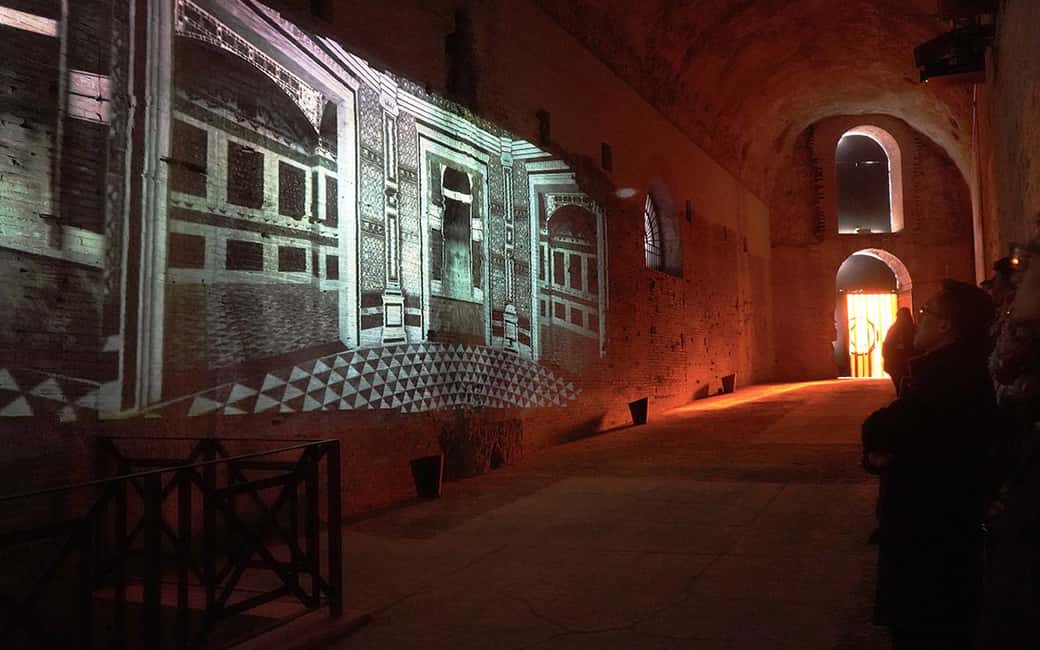
- A reconstruction of the halls at the palace’s peak
- The outside lavish portico of the palace
- A reminder that major parts were unfinished when Nero died
This is exactly why VR earns its place here. Without it, the Domus Aurea can feel like a beautiful but confusing patchwork. With it, the Domus becomes legible: you see scale, layout, and atmosphere—then you return to the physical site with better eyes.
If you’re the kind of traveler who likes art and architecture to mean something, not just be photographed, this VR moment is the tool that makes the whole tour stick.
Who this tour fits best (and who should skip it)
This is a strong pick if you want:
- A guided way into a complex, not-super-intuitive site
- A focused story about Nero that connects politics, construction, and art
- A VR element that actually teaches rather than just entertains
It’s also a good choice if you’re trying to escape Rome crowds. The Domus Aurea tends to feel calmer than the big-ticket giants, and that makes a fresco-heavy tour easier on your attention span.
However, don’t plan on bringing a wheelchair. The tour is listed as not suitable for people with mobility impairments and not for wheelchair users. Also, you’ll need to manage the site rules: no large bags, no tripods, no selfie sticks, no professional cameras, and no aerosols.
If you’re traveling with heavy gear or you prefer very slow sightseeing in tight spaces, this may be frustrating. For a fit walker who’s comfortable in cool indoor settings, it’s a satisfying format.
Guides matter here: names that stood out and what they did right
The quality of a Domus tour depends on narration. When the guide keeps you oriented, the site turns from “cool ruins” into “a story you can track.”
Across bookings, several names stood out:
- Linda for extensive, clear explanations of what you’re seeing
- Rosario for a sharp introduction to Nero’s place in Rome, with construction context before the internal tour
- Yev as a standout guide who packed in details from start to finish
- Alexei for enthusiastic Rome-to-Empire context before walking through Nero’s world
- Laura for explanations around discovery and excavation
You don’t need any particular guide name to enjoy the tour. But you should know what you’re aiming for: someone who explains how the Domus works, not just what it is.
If you’re sensitive to noise or group movement, try to position yourself where you can hear clearly. The space can limit who follows what, especially in busier moments.
Price and value: what you’re paying for beyond the ticket
No price is given here, so I can’t calculate a bargain. But I can tell you what this experience includes that you might not get from a plain entry visit:
- A live guide working through the site with context
- A longer guided walkthrough totaling about 105 minutes inside
- A 3D VR reconstruction that gives instant visual clarity
- Separate handling that supports skip-the-line entry via a separate entrance
That mix matters. Domus Aurea rewards guided storytelling because the site is unusual and the art is difficult to interpret on your own. Add the VR, and suddenly you’re not just reading labels—you’re seeing an imagined palace overlaying the ruins you walked through.
If you’re deciding between a shorter, self-guided plan and this one, the question is simple: do you want the Domus to make sense? If yes, this format is built for that.
Should you book the Domus Aurea with VR?
Book it if:
- You like your Rome tours story-driven, not just photo-driven
- You want East and newly reopened West Wings
- You’re curious about Nero beyond the usual headlines
- You want VR used as a teaching tool, not a gimmick
Skip or reconsider if:
- Walking is a challenge for you (this tour is not suitable for wheelchair users)
- You want total freedom to wander without guided structure
- You’re sensitive to rules around cameras, bags, and movement through indoor spaces
If you’re doing Rome in a tight schedule, this is also a smart “quality over quantity” stop. The Domus Aurea isn’t trying to be the next big crowd magnet. It’s offering something different—palace luxury, frescoed rooms, and a VR step that helps you understand how the place worked when it was alive.
FAQ
How long is the Domus Aurea tour with the VR experience?
The total experience lasts about 2 hours, with a guided tour section lasting 105 minutes.
Is the virtual reality reconstruction included?
Yes. The tour includes a 3D virtual reality reconstruction of the Golden Palace at its peak, plus an outside portico.
Where do I meet the guide?
Meet outside the Domus Aurea with an OPEN MIND TOURS sign. Your guide has the entry ticket.
Is my GetYourGuide voucher the entry ticket?
No. Your voucher is not the entry ticket. The guide carries the tickets.
How much time should I expect between the meeting and entering the Domus?
Entrance is at least 20 minutes after the scheduled guide presentation.
What language is the live guide tour?
The live guide is in English.
What should I bring?
Bring comfortable shoes and a jacket.
What items are not allowed?
Weapons or sharp objects, luggage or large bags, drones, pets (assistance dogs allowed), selfie sticks, professional cameras, tripods, sprays or aerosols, and glass objects.
Is it suitable for wheelchair users or limited mobility?
No. It is not suitable for people with mobility impairments, and it is not for wheelchair users.
What is the cancellation policy?
You can cancel up to 3 days in advance for a full refund.
Is there free cancellation?
Yes, free cancellation is offered up to 3 days before the tour start time.