REVIEW · POMPEI CAMPANIA
Pompeii: Skip-the-Line Private Tour with Archaeologist Guide
Book on GetYourGuide →Bookable on GetYourGuide
Pompeii feels close, even after 2,000 years.
What makes this private format stand out is the local archaeologist who helps you read the site like it was lived-in, not just admired. I also like the priority entrance to the ticket office, which saves the time you’d otherwise burn in lines. One thing to weigh: your visit ticket is not included, and on the first Sunday of each month free entry is possible but not guaranteed because tickets can’t be reserved ahead.
In 2.5 hours, you’ll cover the big public sights and the places that show daily life at ground level. And when the guided portion ends, you get freedom to keep wandering independently while the site is still fresh in your mind.
In This Review
- Key highlights you’ll feel on the day
- Pompeii, in 2.5 hours, without the ticket-office slog
- Finding your guide at the excavations entrance
- A local archaeologist guide turns stones into last-days details
- Public life you can map: amphitheater, gymnasium, baths, forum
- The amphitheater: entertainment and crowds
- The gymnasium: training and social time
- The baths: hygiene, relaxation, and routine
- The forum: civic life in one core
- Domus mosaics and frescoes: seeing household beauty and taste
- The brothel and the everyday shops you might recognize
- The ancient brothel: a hard but revealing stop
- Laundry, fast food, and a bakery: proof daily life had rhythm
- Priority entrance plus private pacing: how the group size helps
- Building your own route after the 2.5-hour tour
- What the tour includes, and what you must bring
- Price and value: $192.58 per group up to 20
- A note on access: wheelchair listing vs mobility cautions
- Should you book this Pompeii archaeologist tour?
- FAQ
- How long is the Pompeii skip-the-line private tour?
- Is the entrance ticket included in the price?
- What does skip-the-line mean here?
- How much does the tour cost?
- Where do we meet the guide?
- What languages are the live guides available in?
- Is this tour private?
- Is there time to explore on our own?
- What should I bring for the visit?
- Is entry free on the first Sunday of each month?
Key highlights you’ll feel on the day
- Priority entrance to the ticket office to reduce waiting before you even start
- Archaeologist-led, private group guidance that’s adaptable to your pace
- Must-see public buildings like the amphitheater, gymnasium, baths, and forum
- Domus mosaics and frescoes you can actually take time with
- A mix of serious sites and everyday details, including shops such as a bakery and laundry
- Freedom to explore after the tour so you can go back to what caught your eye
Pompeii, in 2.5 hours, without the ticket-office slog
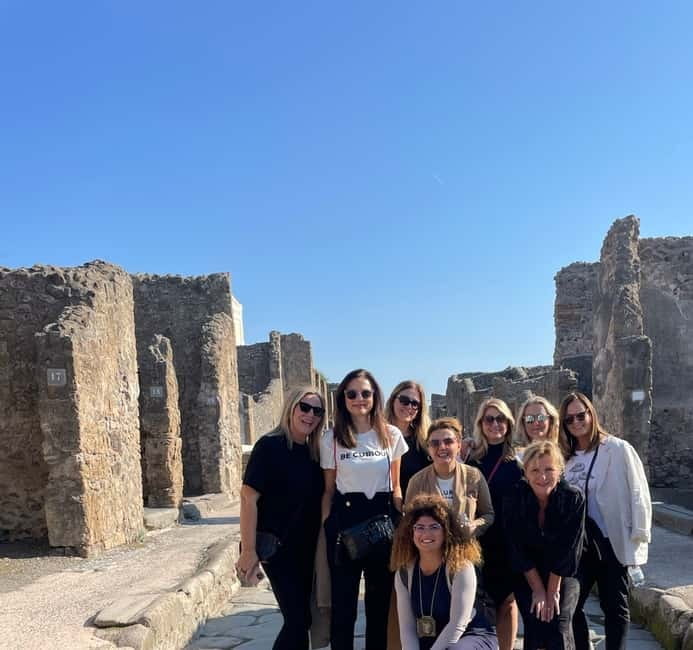
Pompeii is one of those places where time disappears fast. The quickest way to feel satisfied is to reduce friction at the start, and that’s exactly what the priority entrance is for: it helps you avoid long waits at the ticket office so you can begin the visit sooner.
This tour lasts 2.5 hours, which is a sweet spot for Pompeii. Long enough to see the main clusters of buildings, short enough that you don’t feel lost—or exhausted—before the best parts hit.
The practical note: the Pompeii entrance ticket is not included. So you’ll want to plan to buy it separately (and then use the priority entrance benefit on the day).
Finding your guide at the excavations entrance
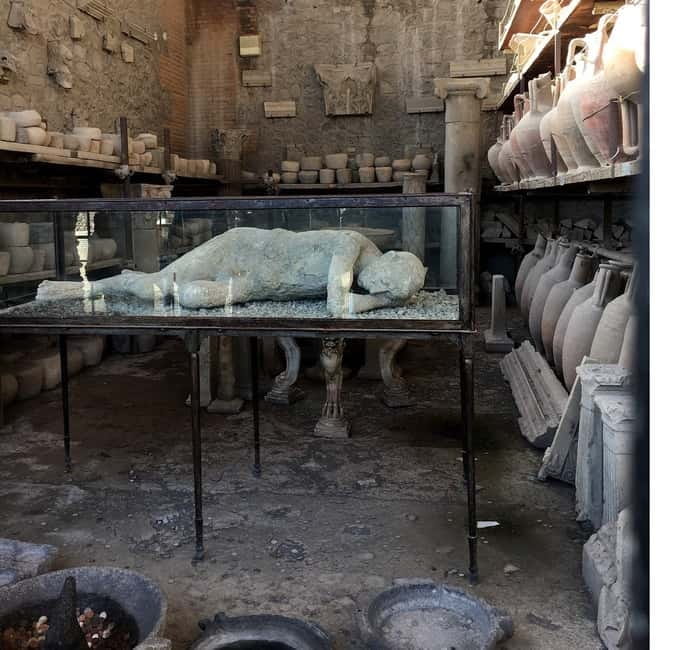
The meeting point is simple: your guide waits at the entrance to the excavations holding a sign with your names. The tour ends back at that same meeting point, so you’re not forced into a complicated end-of-day routing puzzle.
The tour is designed as a private group experience. Even though the price is listed per group up to 20, you’ll have the benefit of a guide who can keep the flow controlled, and—based on past feedback from groups—the guide can adjust to the group and help you avoid unnecessary crowding.
A small but meaningful tip: wear comfortable shoes and bring water. Pompeii rewards people who move calmly, and the site is easier to enjoy when you’re not thinking about blisters every ten minutes.
A local archaeologist guide turns stones into last-days details
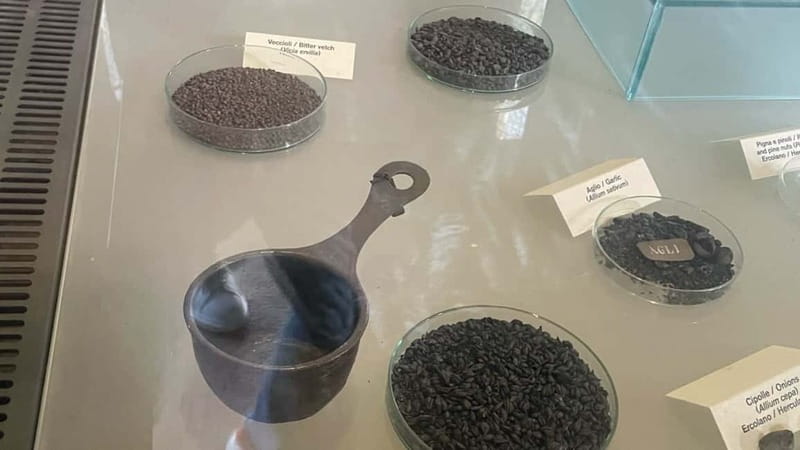
The biggest value here is the archaeologist lens. Pompeii isn’t just ruins; it’s a snapshot of ordinary life stopped mid-routine. This guide’s approach focuses on helping you retrace the last hours of the city and understand how the buildings worked for real people.
You’ll get more than descriptions. The archaeologist specifically studies buildings and uses that knowledge to explain how different spaces functioned in Roman daily life—public spaces for everyone, private spaces for household routines, and business areas where people bought and sold what they needed.
Also, this is offered in English, French, and Italian. That matters because a site like Pompeii is full of small clues, and you’ll want a guide who can explain them clearly in the language your group understands best.
Public life you can map: amphitheater, gymnasium, baths, forum
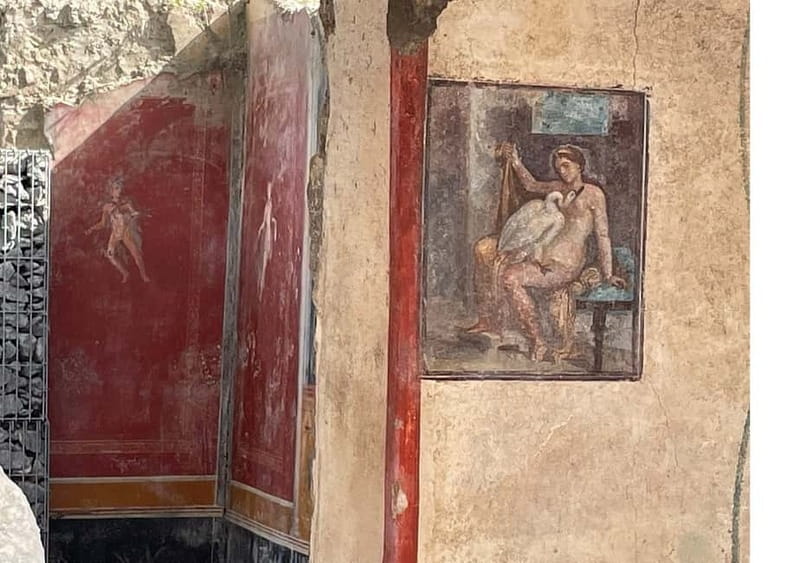
If you want Pompeii to make sense, you need a backbone. This tour builds that backbone by prioritizing the public buildings—places Romans gathered, trained, debated, bathed, and watched events.
The amphitheater: entertainment and crowds
You’ll see the amphitheater, which helps explain why Pompeii wasn’t quiet, even for an ancient city. This is where public entertainment happened, and the structure gives you a sense of movement: where people entered, how they faced the space, and how crowds would have been managed.
A helpful way to look at it is to think beyond the building. Ask yourself what kind of excitement or routine brought people there, then notice how that idea matches the rest of the tour.
The gymnasium: training and social time
The gymnasium connects exercise with community. In Roman life, training wasn’t only about bodies; it was also about social rhythm and status. Seeing this building early helps you understand that Pompeii wasn’t only about homes—it was also about daily habits shared in public.
The baths: hygiene, relaxation, and routine
The baths are another key stop because they show an everyday Roman routine at city scale. You’ll be able to picture how time was spent, not just how the architecture looked.
If you like learning how people actually used a space, baths are one of the most effective Pompeii stops. The layout alone makes it easier to imagine circulation and daily flow.
The forum: civic life in one core
The forum ties the city’s social energy together. This is the area that helps you connect public decisions, commerce, and community life into one central hub. It’s also a great place to pause mentally: by now, you’ve seen enough of Pompeii’s public buildings to start linking them.
Domus mosaics and frescoes: seeing household beauty and taste
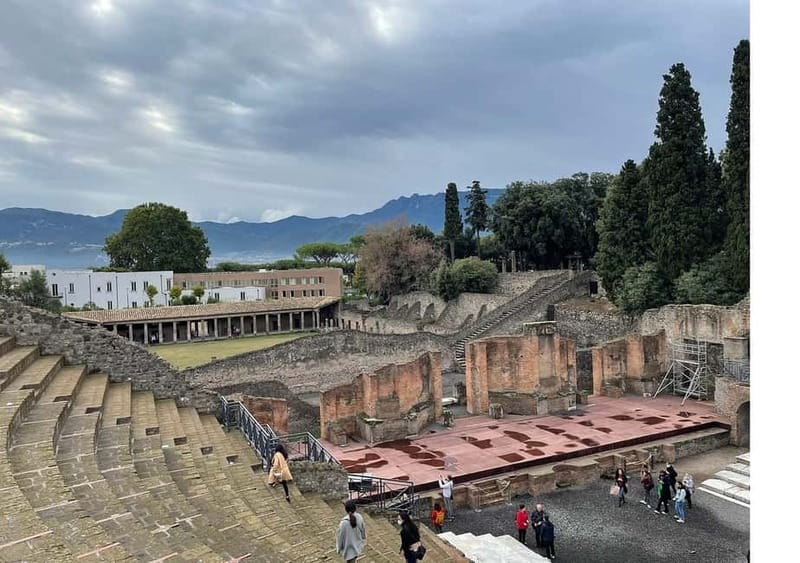
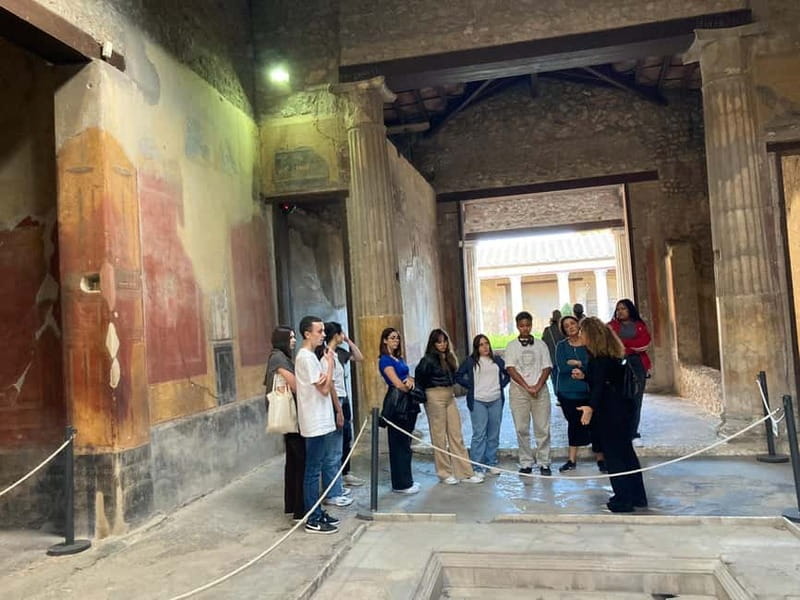
After you get the civic framework, the tour shifts into private spaces. The focus here is the ancient domus—Roman homes—where you’ll encounter mosaics and frescoes.
This is where Pompeii can feel almost personal. The guide highlights original mosaics and frescoes, and that changes how you look at the rest of the site. Once you see the care put into household decoration, it’s harder to treat Pompeii as just a “layout of ruins.”
A smart strategy at the domus stops: don’t rush your eyes across everything. Look at a small area, then step back to see how the artwork would have interacted with daily movement through rooms. That’s when the buildings start to feel lived-in, not displayed.
The brothel and the everyday shops you might recognize
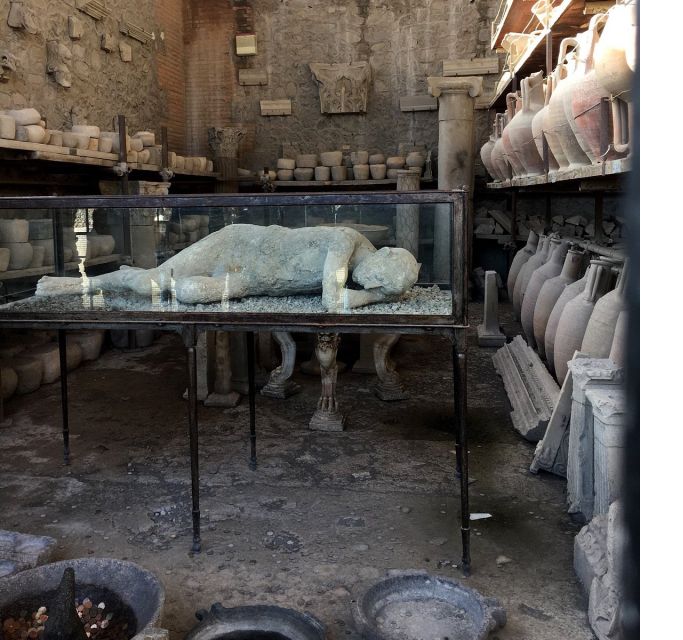
Some tours stick to the major monuments and skip the messier reality. This one includes the ancient brothel (sometimes overlooked, but very much part of how the city functioned), plus everyday commercial details like laundry, fast food, and a bakery.
The ancient brothel: a hard but revealing stop
Seeing the brothel helps you understand Pompeii as a complete city, not a curated postcard. The point isn’t shock. It’s context: this was where certain kinds of services and social dynamics played out.
If you prefer “lighter” stops, it can still be worth visiting—because it changes your understanding of what the city offered, who used different spaces, and how economic life worked alongside public monuments.
Laundry, fast food, and a bakery: proof daily life had rhythm
The tour also points out ancient shops with surprising modern familiarity. When you see references to laundry, fast food, or a bakery, you realize that daily needs—cleaning clothes, getting food fast, buying essentials—aren’t really as ancient as they look.
This part is especially good for people who like practical connections. It’s not about clever trivia. It’s about seeing the city as a system: work, service, and consumption happening at street level.
Priority entrance plus private pacing: how the group size helps
The listing frames this as a private group experience, which means the guide can manage the tempo. Even if your group is up to 20, you’re still working with a dedicated archaeologist guide rather than getting pulled along with a huge crowd.
That pacing matters in Pompeii. The site can feel overwhelming because there’s always another wall, another doorway, another corner. A guide who helps you keep moving between key clusters—and who can adjust to the group—keeps the experience from turning into a race.
One practical expectation: you’ll get the best value if you accept the pace the guide sets. If you try to run ahead constantly, you’ll miss explanations that connect the buildings to Roman daily life.
Building your own route after the 2.5-hour tour
One of the underrated benefits here is what happens after the guided portion. After the tour ends, you’re free to explore the archaeological site independently.
Use that freedom smartly:
- Go back to the buildings you found most interesting and spend extra time where your questions linger.
- If something surprised you—like the mosaics, the brothel context, or the shop details—track down nearby areas while your understanding is still fresh.
- Keep moving at a comfortable pace and keep water in mind.
A tour like this is most satisfying when you treat it as your orientation and interpretation first, and your “wandering time” second. By the time you’re on your own, you’re not just looking—you’re recognizing.
What the tour includes, and what you must bring
Included in the experience:
- Guided tour with an archaeologist
- Priority entrance to the ticket office
- Time to explore the archaeological site independently after the tour
Not included:
- Entrance ticket
What you should bring:
- Comfortable shoes
- Sun hat
- Water
That packing list is basic, but it’s exactly what matters at Pompeii. The terrain and sun can turn a short wait into a long slog, and you want energy for the buildings that hit hardest—like the mosaics, frescoes, and public spaces.
Price and value: $192.58 per group up to 20
The price is listed as $192.58 per group up to 20 for a 2.5-hour private tour. That sounds like a lot until you think about what you’re buying: an archaeologist guide, a smoother start via priority ticket office entrance, and a structure that keeps you from guessing your way through Pompeii.
Here’s how to judge the value for your group:
- If you’re going as a small or mid-size group, you get the benefit of private attention and guided interpretation without needing to hire separate guides.
- If you care about understanding the city’s layout and Roman daily life, the archaeologist component is the main cost driver—and it’s also the part that makes Pompeii more than scenery.
- If your group plans to spend time afterward independently, that combo matters. You’re not paying only for the walking—you’re paying for the meaning you carry into your self-guided time.
If you’re a solo traveler, the “per group up to 20” pricing can still be a good deal if you’re comfortable joining a group arrangement. If you prefer a very intimate one-on-one feel, you may want to check how the provider manages group size in practice.
A note on access: wheelchair listing vs mobility cautions
The activity is listed as wheelchair accessible, but it’s also marked as not suitable for people with mobility impairments. That’s a contradiction you should take seriously.
My advice: if mobility is a factor for anyone in your group, contact the provider in advance. Ask what parts of Pompeii you’ll actually be able to cover during the 2.5 hours, and whether you can adjust the route to avoid hard-to-navigate areas.
Should you book this Pompeii archaeologist tour?
Book it if you want Pompeii to feel understandable fast. The guide’s focus on how Romans lived—in public spaces like the amphitheater and forum, and in private domus rooms with mosaics and frescoes—turns the site into a coherent story. Add the priority ticket office entrance, and you’re spending your time on learning instead of waiting.
Skip it (or ask more questions first) if you’re on a tight budget or you want a very free-form, no-structure stroll. Also pause to verify access needs, since the listing has mixed signals about mobility impairments.
FAQ
How long is the Pompeii skip-the-line private tour?
The tour duration is listed as 2.5 hours.
Is the entrance ticket included in the price?
No. The entrance ticket is not included.
What does skip-the-line mean here?
It means you get priority entrance to the ticket office to help you avoid long waits before entering.
How much does the tour cost?
The price is listed as $192.58 per group (up to 20 people).
Where do we meet the guide?
The guide waits at the entrance to the excavations with a sign displaying the clients’ names.
What languages are the live guides available in?
The tour is offered with a live guide in English, French, and Italian.
Is this tour private?
Yes. It’s described as a private group.
Is there time to explore on our own?
Yes. After the guided portion, you have freedom to explore the archaeological site independently.
What should I bring for the visit?
You should bring comfortable shoes, a sun hat, and water.
Is entry free on the first Sunday of each month?
Entrance is free on the first Sunday of each month, but tickets can’t be reserved ahead of time, so entry is not guaranteed.