REVIEW · NAPLES
Pompeii & Herculaneum Group Tour with tickets
Book on GetYourGuide →Bookable on GetYourGuide
Pompeii and Herculaneum in one day is a lot.
What makes this trip work is the mix of guided Pompeii and self-paced Herculaneum, plus the fact that you’re not stuck figuring out transport. I like that Pompeii gets about two hours with a real guide showing daily life details, not just big landmarks. I also like that Herculaneum is designed to be slow and readable, since the preserved mud and volcanic cover make the town feel close-up. One drawback to plan for: the switch from bus to guides (and then to audio) can feel a little hands-off, and the English delivery may be harder to catch depending on accent.
You start with a bus pickup in Naples, then spend your morning in Pompeii and your afternoon in Herculaneum. I think the two-site pairing is the point: Pompeii gives you the scale and layout, while Herculaneum shows more “normal life” preserved in place. If you’re hoping for a fully guided experience at both sites in every language, double-check how guides vs. audio are handled for your group size.
This tour is a good fit if you enjoy walking ruins with structure, and you want both major UNESCO sites without the stress of coordinating buses, tickets, and meeting points. It isn’t a great fit if you have mobility limits or use a wheelchair, since it’s not suitable for that.
In This Review
- Key highlights worth your attention
- Naples to Pompeii and Herculaneum: the day’s rhythm
- Entering Pompeii with a live guide (and what to hunt for)
- The lunch break: fuel up, then reset your pace
- Herculaneum with audio: why the second site feels sharper
- Price and value: what $175.59 includes (and why it’s fair)
- Group size, languages, and guide clarity in the real world
- Practical tips: how to make Pompeii and Herculaneum easier
- Should you book this Pompeii & Herculaneum group tour?
- FAQ
- How long is the Pompeii and Herculaneum group tour?
- Where do you get picked up in Naples?
- Is lunch included?
- Do you get a guide at Pompeii?
- What do you do in Herculaneum?
- Is this tour suitable for wheelchair users?
Key highlights worth your attention
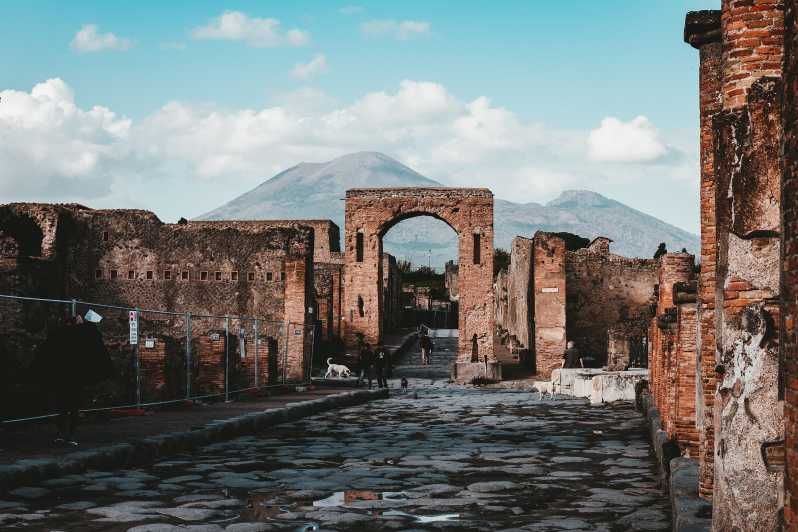
- Two hours guided in Pompeii so you know what you’re looking at, not just where to stand for photos
- Audio-guided walk in Herculaneum where the preservation helps you connect street-level details
- Hotel-area pickup in Naples from multiple meeting options, then a modern coach to the ruins
- Entrance tickets for both sites plus lunch included in the day
- Group-size dependent guide in Pompeii with audio support if a live guide isn’t available
Naples to Pompeii and Herculaneum: the day’s rhythm
The schedule is built around a straightforward flow: pickup in Naples, coach ride to Pompeii, guided time there, lunch break, then head to Herculaneum for the afternoon ruins walk.
The total duration is about 8 hours, and starting times vary based on availability. A tour assistant is on the bus during the Pompeii portion, which helps with the handoffs. I like that because it keeps you from feeling totally dropped once you arrive—though, yes, you should still expect a quick shift from bus to local guide instructions.
This kind of full-day ruins outing rewards one thing more than anything: shoes. Even if you’re only walking “some,” Pompeii and Herculaneum are spread out, and you’ll spend real time on uneven stone and packed paths. Wear comfortable footwear and plan for sun.
Entering Pompeii with a live guide (and what to hunt for)
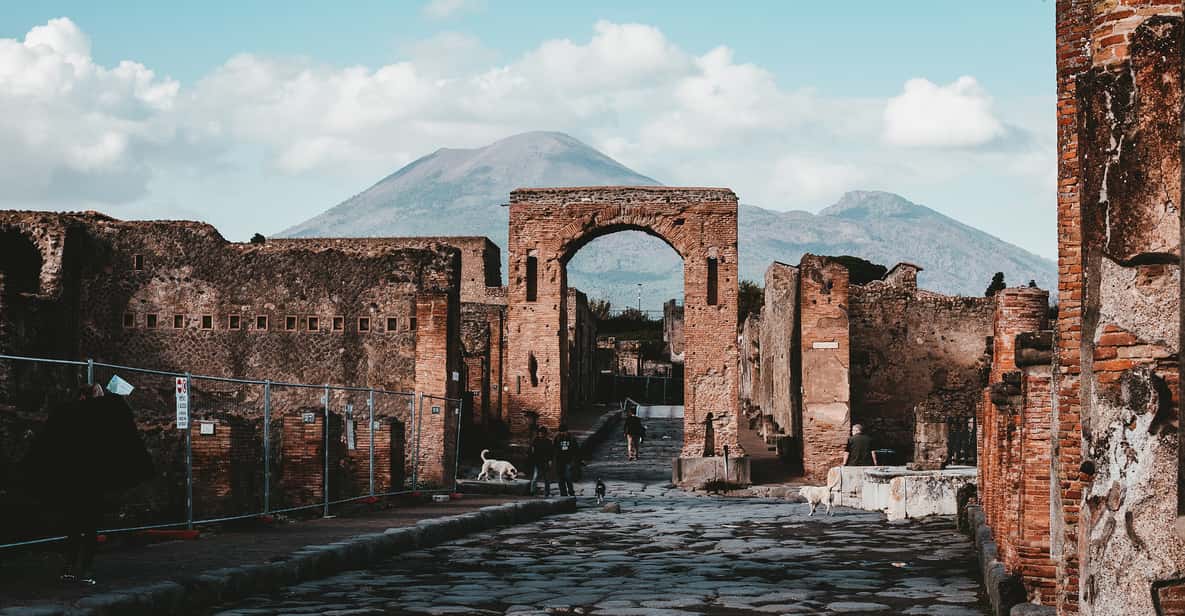
Pompeii is where most people start imagining ancient life—then you realize you need context to read what you’re seeing. That’s why the guided time matters. You’ll get about 2 hours with a guide in Pompeii (during high season with at least 6 participants per language). If the live guide isn’t available for your group, you’ll still have audio guide support.
During that guided window, you’ll visit several high-interest areas:
- the large theater, which helps you picture how public events worked
- the necropolis, where burial practices are part of the story
- the thermal baths, which show how people structured leisure and hygiene
- parts of houses owned by the wealthiest residents, where you can compare everyday spaces vs. elite design
I like how this tour doesn’t treat Pompeii as a checklist. The guide focuses on traditions and daily life, so the ruins become readable. You’re not just seeing columns and wall shadows. You’re learning what kinds of spaces people used and why.
A small reality check: two hours in Pompeii is tight. You’ll see major areas, but you won’t have time to wander endlessly down side streets. If you want a slower, deeper explore, you might prefer a longer Pompeii-only day. For most people, though, this gives you a smart “greatest hits” view with enough context to make it stick.
The lunch break: fuel up, then reset your pace
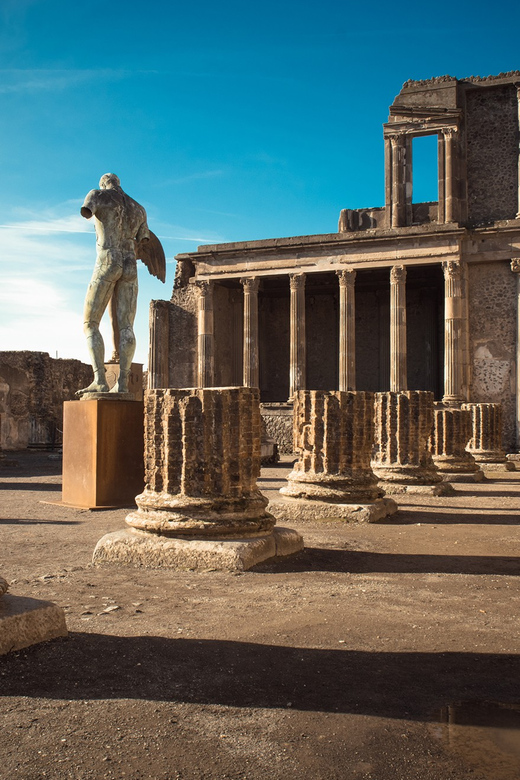
Lunch comes after Pompeii, with about 1 hour allotted. Lunch is included, and drinks are not. That’s a normal setup, but it matters: if you’re sensitive to heat, bring a game plan for water (and watch for any extra costs at lunch if you order more than you need).
The most important thing about this break is psychological. Pompeii’s ruins can feel intense—busy, wide, and occasionally confusing if you don’t have a guide framework. When you finish the guided part, your brain wants to rest. Use the hour to:
- eat something filling but not heavy
- use the bathroom and regroup
- put on sunscreen if you didn’t earlier
Then you’re ready for Herculaneum, where the experience shifts from “big city” energy to something more street-level and preserved.
Herculaneum with audio: why the second site feels sharper
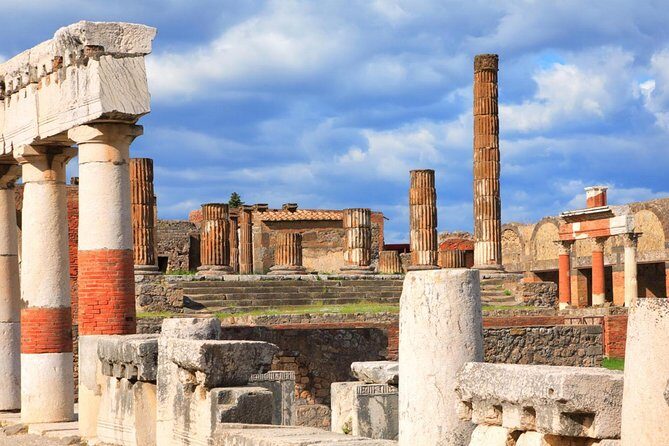
If Pompeii is the dramatic spread, Herculaneum is the detail. You’ll spend about 1.5 hours at Herculaneum using audio guides for your walking tour.
Here’s why that works so well: Herculaneum was covered by mud and volcanic debris, and that protection preserved structures and artifacts in a way that makes daily life easier to visualize. In practice, that means you can walk and feel like you’re moving through a town that got frozen mid-day.
I like that the tour doesn’t overcomplicate this part. You’re not constantly looking for the next leader cue. Instead, you can move at your pace and let the audio explain what you’re seeing. For many people, that makes the afternoon feel more personal than rushed.
There’s still one consideration. Audio guides are great, but you’re dealing with sound quality and walking noise. If you’re easily distracted, you might want to pause at key spots so you don’t miss the “why this matters” part of the narration.
Price and value: what $175.59 includes (and why it’s fair)
At $175.59 per person, this tour isn’t cheap. But when you look at what’s bundled, the value starts to make sense.
Your day includes:
- Modern coach transportation for the trip
- Comment on board during the bus portion
- Entrance tickets to Pompeii and Herculaneum
- Guide in Pompeii in high season when minimum group conditions are met (or audio if not)
- Audio walking tour in Herculaneum
- Lunch (drinks not included)
For a Naples day trip, entrance fees plus transportation alone can add up quickly. The real added value is time and structure: you spend the day at the sites instead of planning logistics. You also get a curated flow—Pompeii first (for broad understanding), then Herculaneum second (for more intimate context).
If you’re the type who hates ticket queues, enjoys having a plan, and wants both sites in one shot, this price is easier to justify. If you’re the type who wants to linger for hours in every courtyard and shop around for extra stops, you may want a more flexible option. For a single-day window, this is priced like a “complete package.”
Group size, languages, and guide clarity in the real world
This is where the trip can feel smooth—or a little annoying—depending on your preferences.
The live guide in Pompeii is available in English, Italian, or Spanish, but it depends on minimum numbers: it’s provided in high season when at least 6 participants are reached per language. If that minimum isn’t met, you’ll be provided with an audio guide instead.
From what I’d watch for, there are two practical angles:
- Handoff timing: you move from bus to guide sessions to audio walking. That can be well run, but still expect a quick transition moment.
- English accents: some people may find parts of the English delivery harder to catch, which can mean you miss small details.
So my advice is simple: pick the language you feel most comfortable processing while walking. If you’re strong in English but tired and hot, you might still want an audio backup mentally—slow down at key moments so you can hear the explanation.
Also, the tour is not suitable for wheelchair users or people with mobility impairments. This matters because Pompeii and Herculaneum both involve uneven terrain and a lot of walking.
Practical tips: how to make Pompeii and Herculaneum easier
Here’s what I’d do to reduce friction and get more from the day.
Wear
- comfortable shoes with solid grip
- a sun hat
- sunscreen (you’ll want it)
Bring
- water if you can, since drinks at lunch are not included
- a light layer if you get chilly on the coach ride back
- something to protect your eyes and neck in strong sun
During the visits
- don’t try to photograph everything. Pick a few places to really look at.
- if you’re using audio in Herculaneum, step aside when the narration matters most, then continue.
One last tip: keep your pace consistent. If you sprint ahead of the group for photos in Pompeii, the guided context can stop making sense. Stay close enough to get the explanation, then you can “break away” for a moment—without losing the thread.
Should you book this Pompeii & Herculaneum group tour?
Book it if you want a one-day plan that covers both UNESCO sites, includes tickets and lunch, and gives you real guidance in Pompeii plus audio walking in Herculaneum. It’s especially worth it if you’re starting from Naples and don’t want to manage transport and entry coordination yourself.
Skip it (or consider another style of tour) if you need full accessibility, have limited walking tolerance, or you strongly prefer a long, slow exploration with less structure. Two hours in Pompeii and 1.5 in Herculaneum isn’t enough for endless roaming, so this is best for people who like a guided overview and then focused self-walking.
If you do book, do it with the right mindset: think of it as an informed route through two different ways of seeing the same tragedy—Pompeii for the city’s public and private spaces, Herculaneum for how daily life stayed readable in the debris.
FAQ
How long is the Pompeii and Herculaneum group tour?
The tour duration is 8 hours. Starting times vary, so you’ll need to check availability for the departure you want.
Where do you get picked up in Naples?
Pickup is available from selected meeting points in Naples, including options such as Hotel NH Napoli Panorama, Terminus, UNAHOTELS Napoli, Hotel Naples, Bar Picnic, and Grand Hotel Saint Lucia.
Is lunch included?
Yes. Lunch is included with about 1 hour set aside. Drinks at lunch are not included.
Do you get a guide at Pompeii?
Yes, but it depends on group size. A live guide in Pompeii is available in high season when at least 6 participants are reached per language. If not, you’ll receive an audio guide for Pompeii.
What do you do in Herculaneum?
You’ll explore the ruins at Herculaneum on a walking tour using audio guides for about 1.5 hours.
Is this tour suitable for wheelchair users?
No. The tour is listed as not suitable for people with mobility impairments and not suitable for wheelchair users.