REVIEW · NAPLES
Hypogeum of the Crystallines Standard Visit
Book on GetYourGuide →Bookable on GetYourGuide
Two thousand-plus years under your feet. The Hypogeum of the Crystallines takes you 12 meters down into Neapolis, an ancient Greek streetscape with painted tombs—plus a standout Medusa carving. It’s a compact visit, but it hits a lot of meaning in a short time.
I love the preservation. The carved and painted details in the underground chambers still feel sharp, like someone cared for them yesterday. I also like how much the guide ties art to story, from the 1889 discovery by Baron Giovanni di Donato to the living history of Rione Sanità.
One possible drawback: the site has architectural barriers. It’s not laid out for every body, so check ahead if you have mobility needs.
In This Review
- Key Highlights You’ll Actually Care About
- 12 Meters Down: What the Hypogeum Visit Feels Like
- Walking Neapolis’ Ancient Road and Meeting the 4th-Century Tombs
- Frescoes, Myths, and the Medusa You’ll Want to Revisit
- Greek Origins and Roman Additions in One Underground World
- The 1889 Discovery Story and What It Explains About the Site
- Rione Sanità’s History: More Than a Backdrop
- Price and Timing: Value at $11 for a 25-Minute Underground Stop
- Small Group, Multiple Languages, and How to Prepare
- Who Should Book This (and Who Might Skip)
- Should You Book the Hypogeum of the Crystallines?
- FAQ
- How long is the standard visit?
- Where is the Hypogeum of the Crystallines located?
- How much does it cost?
- Is there a skip-the-line option?
- What group size should I expect?
- What languages are available?
- Are kids allowed?
- Is the site accessible for visitors with disabilities?
Key Highlights You’ll Actually Care About
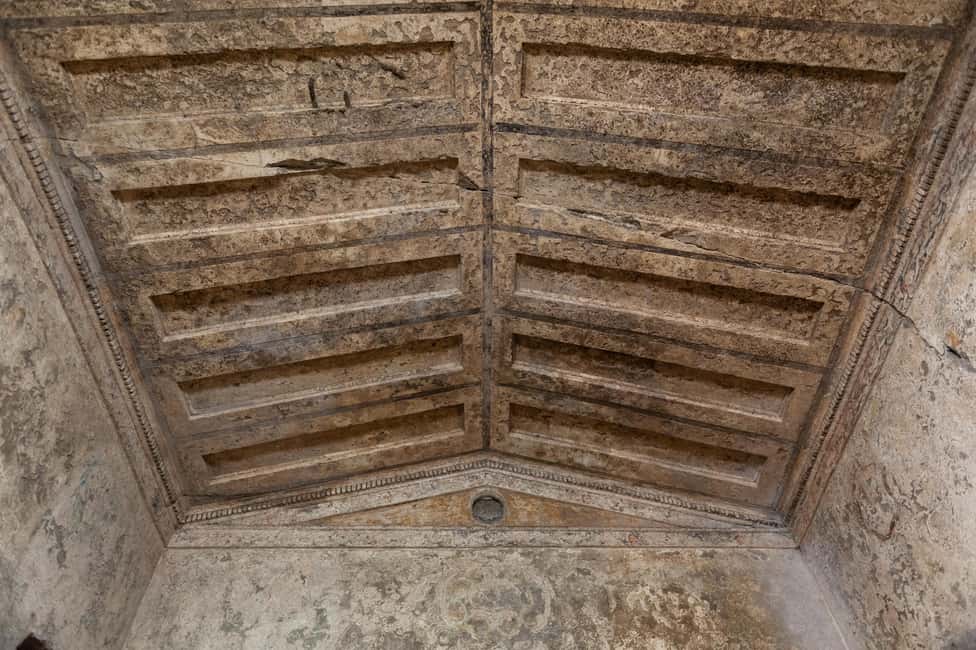
- Greek-painted Neapolis street: walk the ancient road feel-to-feet.
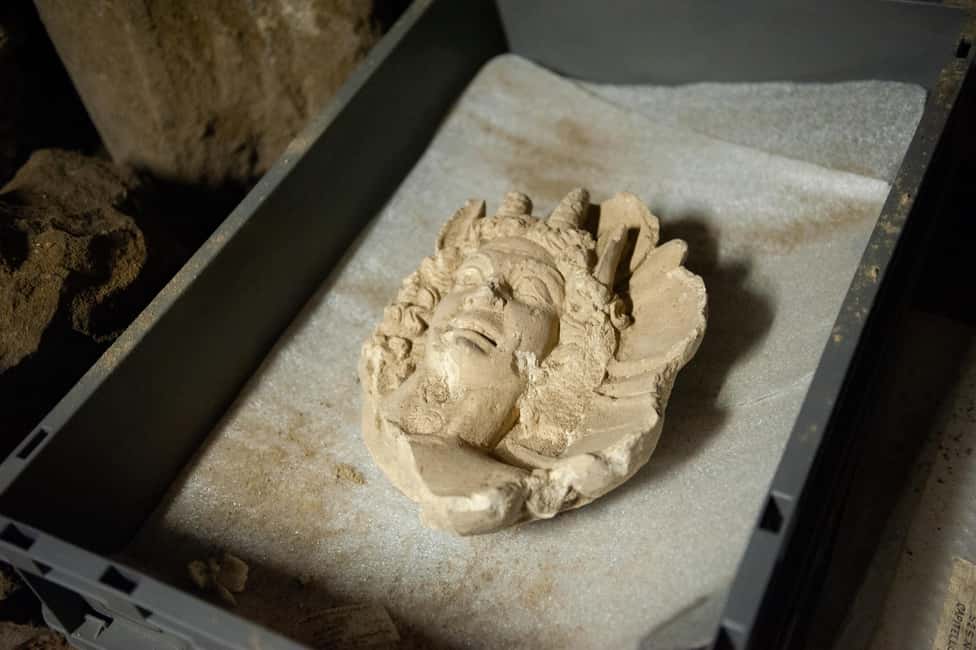
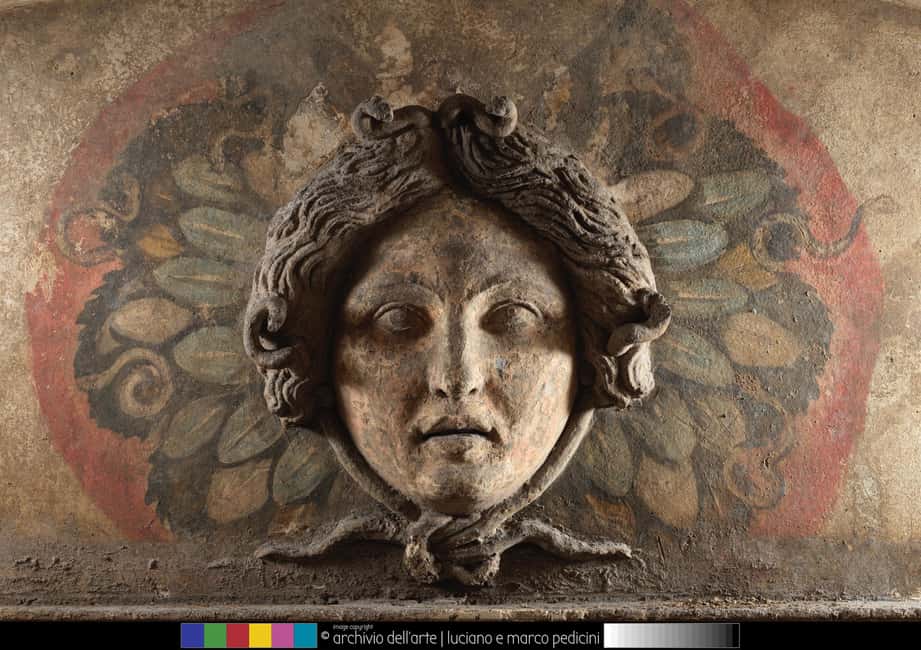
- Medusa you can see close up: carved and painted by the ancient Greeks.
- Four Hellenistic tombs: beautifully carved and painted, still well preserved.
- 12-meter descent underground: a real change in atmosphere, fast.
- Virtual reconstruction video: helps you picture how the place once looked.
12 Meters Down: What the Hypogeum Visit Feels Like
This isn’t a museum stop where you mostly read plaques. You descend into a real underground space that was built to last, and the air changes right away. In about 25 minutes (the standard visit length), you’ll go from street-level Naples energy to something quieter and older.
You’ll start with a welcome from a Rione Sanità guide, and that matters here. The Hypogeum of the Crystallines works best when someone frames what you’re seeing: why this space existed, what the images mean, and how the site was later rediscovered.
Also, keep expectations realistic. The visit is short, and you’re going to want to pay attention the moment you step inside. If you’re the type who reads every label for 45 minutes, you might feel rushed. If you like guided storytelling and close viewing, it’s a good fit.
Walking Neapolis’ Ancient Road and Meeting the 4th-Century Tombs
The heart of the experience is the walk through the underground Neapolis. You’re not just looking at isolated objects—you’re moving along what feels like the original street level. That “walk the road” part is huge for understanding the place as a lived environment, not only a tomb site.
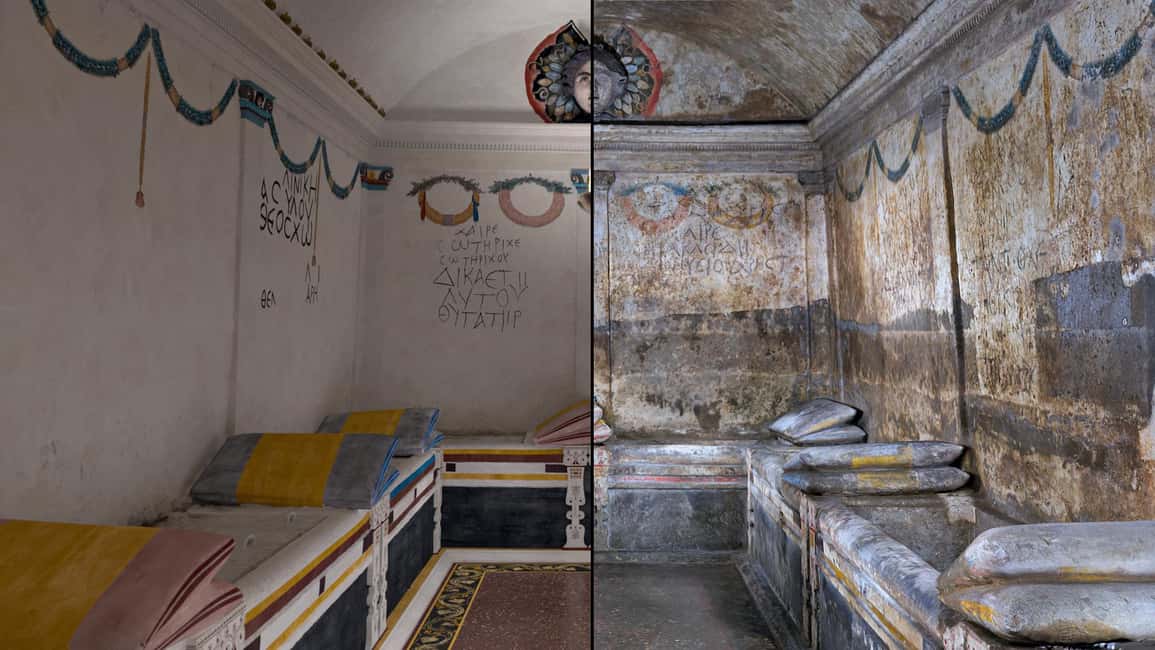
Then come the four Hellenistic tombs. They’re described as carved and painted, and the key word for you as a visitor is still. The site is praised for how well preserved it is, and you’ll feel that when you see the architecture and decoration holding up. It’s the kind of preservation that makes the past look like it’s staying put, instead of fading into guesswork.
The tombs sit within an underground setting where details that might be hard to spot elsewhere become the main event. You’ll spend your time looking at how ancient artisans used space—angles, surfaces, and color—to create meaning around life and death.
Frescoes, Myths, and the Medusa You’ll Want to Revisit
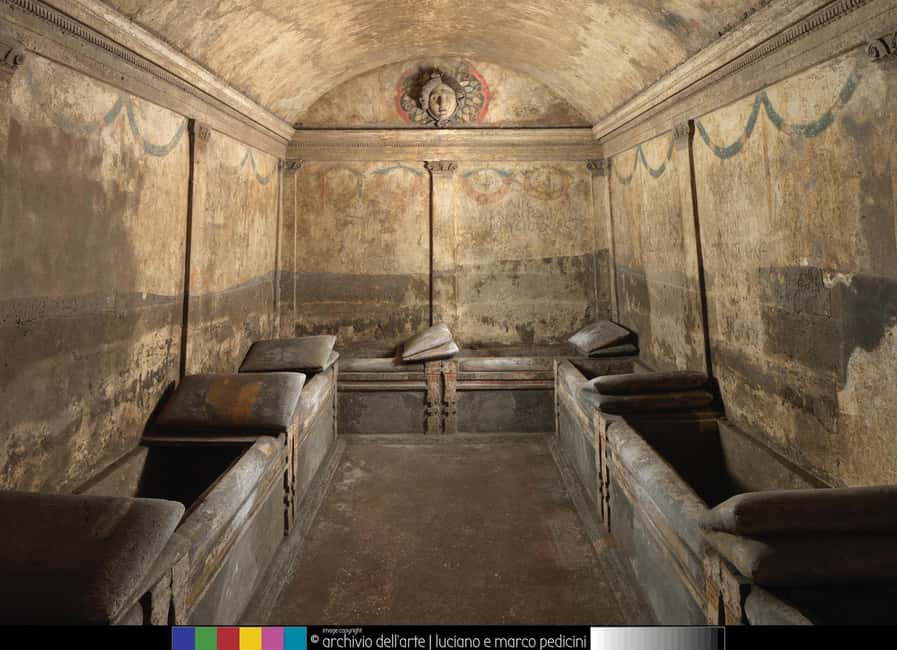
The experience leans heavily on frescoes, myths, and symbolism. You’ll get to see wonderful details of the frescoes and architecture, with stories woven into what you’re viewing. That’s not fluff. In places like this, the images are often doing two jobs: decoration and communication.
And then there’s the Medusa.
This Hypogeum has a Medusa carved and painted by the ancient Greeks, and it’s called a precious unicum. Translation: it’s one of a kind in the context of what’s out there to see. If you like myth-based art, you’ll probably find yourself slowing down around that section. It’s the kind of artwork that makes you notice the craftsmanship first—then the symbolism.
You’ll also hear about myths and legends connected to the site. The guide’s job is to help you connect the imagery to the ideas people had back then: family bonds, memory, and the way communities thought about death.
Practical tip: don’t try to take in everything at once. Pick one area to focus on per stop—fresco details in one chamber, carved architecture in another. In a short tour, that approach will make the whole visit feel longer.
Greek Origins and Roman Additions in One Underground World
One of the most interesting aspects is the fusion of styles. You’ll see how Greek origins meet Roman artistic additions—a mix that makes sense when you remember Naples and the surrounding region weren’t isolated. Cultures layered, adapted, and left marks.
This is where the site becomes more than “pretty art underground.” It becomes a snapshot of cultural contact. The Greeks bring their myth and design language, and later Roman influence adds another layer to the visual storytelling. It’s like reading the same message across time, with different handwriting.
For you, the payoff is a clearer mental model of why the Hypogeum looks the way it does. Instead of thinking of it as purely Greek or purely Roman, you’ll see it as a place where artistic ideas traveled and changed.
The 1889 Discovery Story and What It Explains About the Site
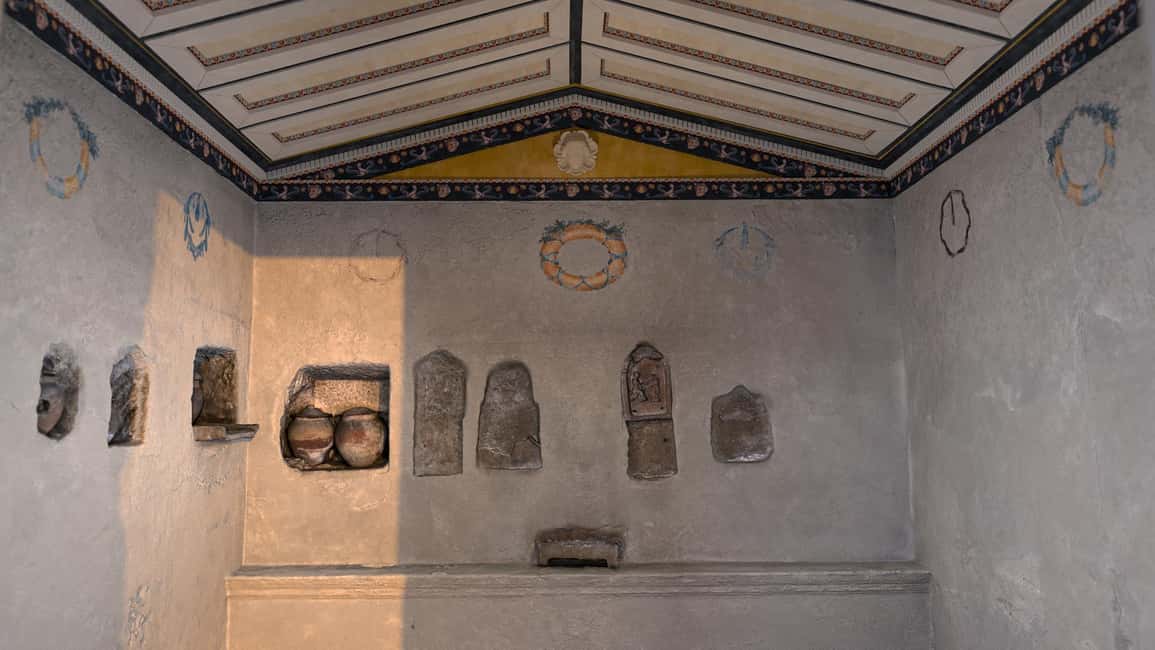
The Hypogeum of the Crystallines didn’t become famous because it was advertised. It came to light by chance in 1889, tied to Baron Giovanni di Donato. That discovery story matters because it explains why the site feels both accidental and carefully preserved at the same time.
Why does that help your visit? Because it shifts your thinking from a modern viewpoint to a “how did we even get here?” viewpoint. You’re standing in an underground complex that was hidden until it wasn’t, and then later treated as something worth understanding and protecting.
That context also makes the virtual reconstruction video more useful. You’ll see a video that gives you a virtual look at the site, helping you connect the chambers and pathways with how the place may have functioned visually and spatially when it was in use.
Rione Sanità’s History: More Than a Backdrop
This tour doesn’t treat the Hypogeum as a standalone attraction. You also learn about the powerful history of the Rione Sanità and the process of sociocultural redevelopment.
In plain terms, that means the site isn’t just about archaeology; it’s also about the neighborhood around it—how places like this get protected, valued, and integrated into community life. You’ll hear the story of redevelopment, which can help you understand why visiting isn’t only a passive activity.
You might notice how the guide’s tone and pacing keeps bringing you back to people. Even though you’re underground looking at tombs, the conversation stays human: family, friendship, and care, along with the universal themes of life and death.
Price and Timing: Value at $11 for a 25-Minute Underground Stop
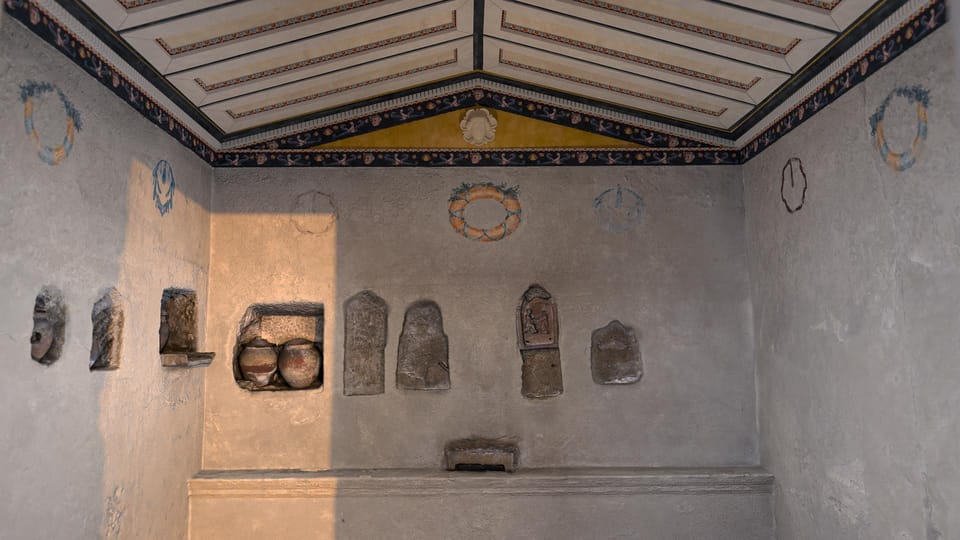
At $11 per person, the Hypogeum of the Crystallines is priced like a short, focused excursion—not a half-day commitment. And honestly, that works in its favor. If you have limited time in Naples, 25 minutes can be enough to make a big impression, especially with a guide who explains what you’re seeing.
You’re also getting multiple things layered into the visit:
- a guided welcome by a Rione Sanità guide
- walking the ancient road of Neapolis
- viewing four carved and painted Hellenistic tombs
- seeing the carved and painted Medusa
- a virtual reconstruction video
So the cost isn’t just for “entry.” You’re paying for interpretation, movement through the space, and access to details you could easily miss on your own.
The main trade-off is simple: it’s not a slow, linger-and-sketch experience. If you want lots of unstructured time, this may feel too short. If you want a well-directed hit of art, myth, and archaeology in one go, it’s strong value.
Small Group, Multiple Languages, and How to Prepare
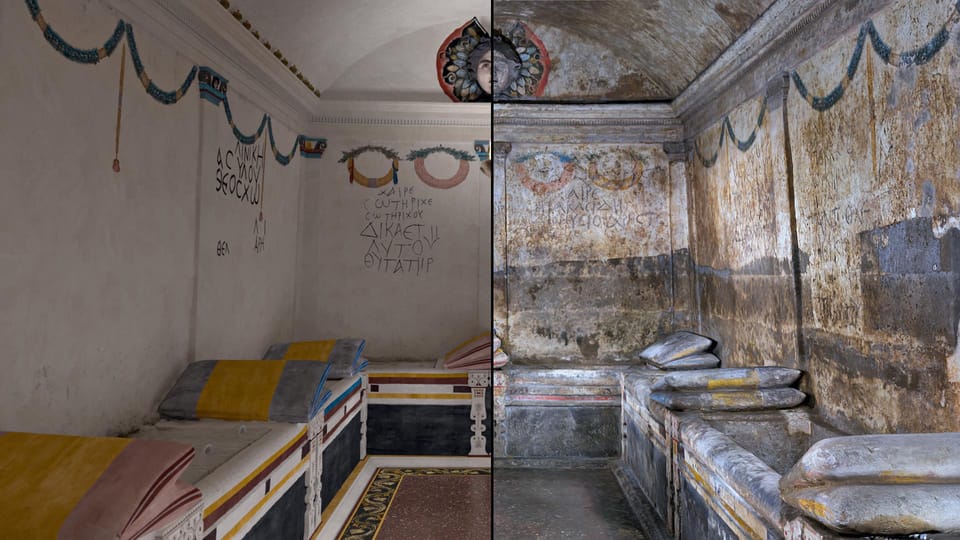
This is a small-group visit, limited to 10 participants. That size makes a difference underground. You’re less likely to get stuck behind a crowd, and questions feel more possible during the walk-through.
Guides host in Italian, English, Spanish, and French, which is great if you’re traveling with anyone who needs a specific language. The site is also set up for a guided flow, with the guide leading you to the key visuals rather than letting you wander freely.
What to bring and how to prepare:
- Wear shoes with good grip. You’re walking in a historical, underground environment.
- If you get uncomfortable in enclosed spaces, think carefully. You’re going down 12 meters.
- Bring your curiosity. This isn’t a place where you only need to know dates; you need to let the images and stories do work for you.
Also, it helps to remember the themes the site emphasizes: love, family, friendship, and the way ancient people used art to handle the reality of death. That lens makes the frescoes feel less like decoration and more like a message.
Who Should Book This (and Who Might Skip)
This visit is a strong match if you:
- love Greek myth and symbolic art, especially when it’s tied to specific places
- enjoy archaeology that still feels “alive” through color and preservation
- want a short Naples experience that doesn’t require a full day
You might want to think twice if:
- you need step-free access; the site has architectural barriers due to its historical nature
- you want a long, self-paced visit with lots of free time
Kids note: children 8 to 12 are free, and children under 8 are not permitted. So it’s not a casual family drop-in for very young kids.
Should You Book the Hypogeum of the Crystallines?
If you’re in Naples and you want something that feels different from the usual surface sights, I’d book it. The combination of a guided descent, walk-through ancient Neapolis street space, and the Greek-painted Medusa is a rare package. Plus, the site is known for being well preserved, which is exactly what you want when art is the main attraction.
If you’re short on time, this is one of the best ways to spend it. If you have mobility concerns, plan ahead and contact the provider to ask about access for your situation.
FAQ
How long is the standard visit?
The standard visit is about 25 minutes. Starting times depend on availability.
Where is the Hypogeum of the Crystallines located?
It’s in Campania, Italy, in the Naples area.
How much does it cost?
The price listed is $11 per person.
Is there a skip-the-line option?
Yes, you get skip the ticket line.
What group size should I expect?
It’s a small group, limited to 10 participants.
What languages are available?
The guide/host languages include Italian, English, Spanish, and French.
Are kids allowed?
Children aged 8 to 12 are free. Children under 8 are not permitted.
Is the site accessible for visitors with disabilities?
The Hypogeum has architectural barriers because it’s a historical underground site. If you have a disability, contact the operator before your visit to assess access possibilities.