REVIEW · ARCHAEOLOGICAL SITE OF HERCULANEUM
Herculaneum: Tickets & Tour with a Local Archaeologist
Book on GetYourGuide →Operated by Grand Tour Experience · Bookable on GetYourGuide
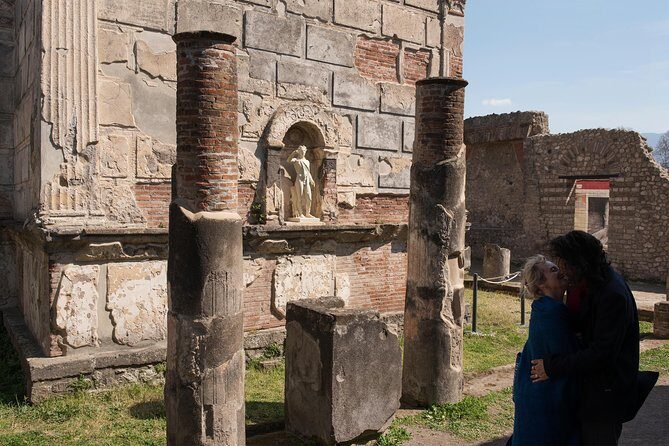
Herculaneum feels like history paused. After Vesuvius buried this Roman seaside town in 79 AD, the conditions preserved wood, furniture, and even human remains in places where you usually only see stone. I love the skip-the-line access, because it means you start moving through the site fast instead of waiting at the ticket queue.
What really makes this tour worth it is the licensed expert archaeologist leading you room by room. When you reach the places like the House of Skeletons, you don’t just look at bones—you get the story of what you’re seeing and why those details matter.
One thing to consider: it’s a 2-hour walk on a real archaeological site, with stairs and uneven paths. It’s not suitable for wheelchair users, so plan for a steady pace and solid walking shoes.
In This Review
- Key highlights at a glance
- Why Herculaneum hits harder than Pompeii
- Skip-the-line access: what you gain in real time
- The meeting point and how the 2-hour route works
- Casa dei Cervi: art, status, and everyday living
- Casa di Nettuno ed Anfitrite: ocean gods in a household setting
- Sacellum of The Augustales: small religious space, big social structure
- House of Skeletons: the most sobering part of the walk
- Casa dell’Albergo and the surrounding streets: seeing the town’s rhythm
- Public baths and water systems: the engineering you can actually feel
- How guides shape the experience (examples of styles to look for)
- Value check: is $58 worth it for Herculaneum?
- Who should book this tour?
- Should you book this Herculaneum archaeologist tour?
- FAQ
- How long is the Herculaneum tickets & tour with a local archaeologist?
- Where do I meet for the tour?
- What does the tour cost?
- Does this tour include skip-the-line entrance?
- Is there a live guide, and what languages are available?
- What’s included in the ticket price?
- What should I bring?
- Is the tour wheelchair accessible?
Key highlights at a glance
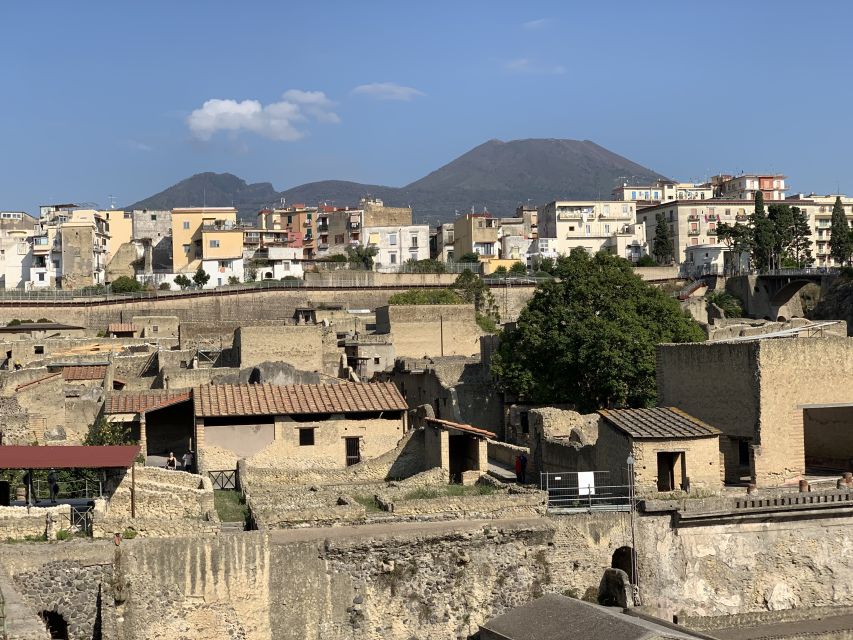
- Skip-the-line tickets at Biglietteria Ercolano so you can get inside without delay
- A licensed guide (live tour) with options in Spanish, English, Italian, and French
- House frescoes and mosaics in exceptional preservation—not just stone walls
- The House of Skeletons and other human details that change how you feel about the eruption
- Headsets if the group gets larger (useful for crisp explanations)
- A tight route in about 2 hours that still covers the core of the town
Why Herculaneum hits harder than Pompeii
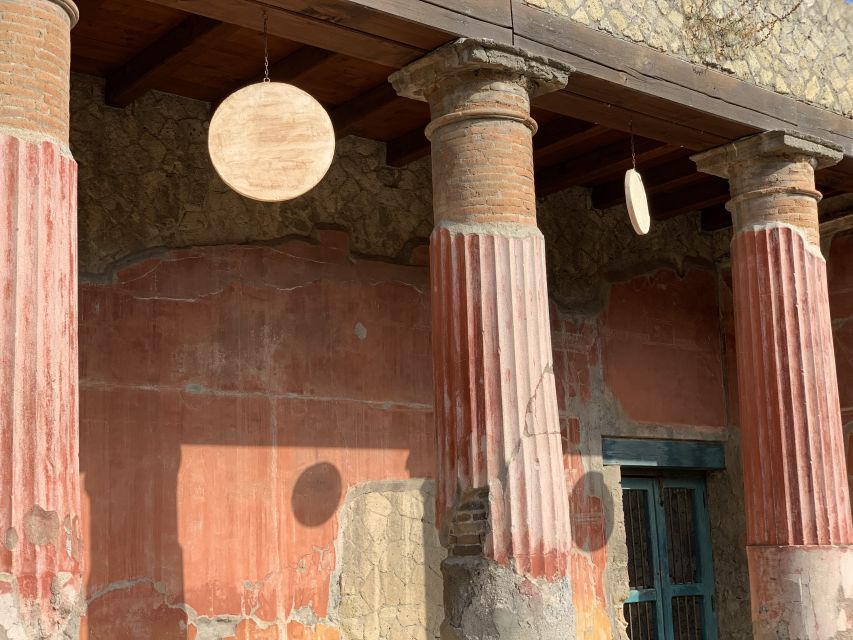
If you’re choosing between ruins, Herculaneum gives you something Pompeii can’t: a sense of daily life that survived. Pompeii is famous for drama, but Herculaneum is famous for still feeling domestic and personal. Because the town was buried under volcanic material, many areas kept more of their original context—wooden elements, plaster surfaces, and the visual punch of frescoes and mosaics.
That’s the big idea behind this tour. You’re not strolling through random fragments. You’re walking a Roman town that was interrupted mid-life—public streets, homes, and bath space—then preserved like it was frozen.
I also like the emotional balance this kind of guided visit can strike. You’ll see stunning art and clever engineering, then you’ll hit the haunting parts, including the skeletons. With an expert guide, those moments don’t turn into a weird photo-op. They’re framed as evidence, not spectacle.
Skip-the-line access: what you gain in real time
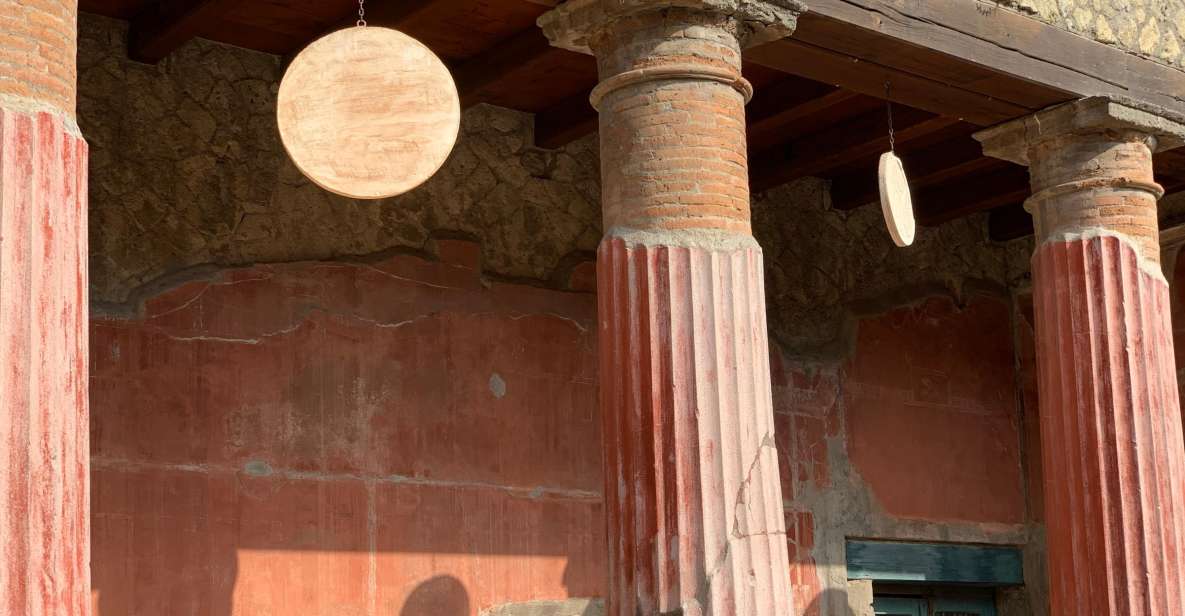
This tour includes skip-the-line entrance tickets, and that matters more than it sounds. Herculaneum can feel crowded around arrival times, and a 2-hour tour doesn’t give you much buffer. When you shave off waiting, you protect the time you actually want: the guided stops.
The other practical win is flow. Instead of spending your first minutes figuring out where to stand and what to do next, you start the guided route—hands-on, stop-by-stop. You also get headset support if the group grows larger (headsets are included when the group exceeds 11), which helps you catch the explanations even if you’re standing farther back.
If you’re the kind of visitor who likes to ask questions, the pacing is friendly. Several guides referenced in this experience are praised for making complex archaeology understandable in plain language—so you don’t feel lost, even when the site details get technical.
The meeting point and how the 2-hour route works
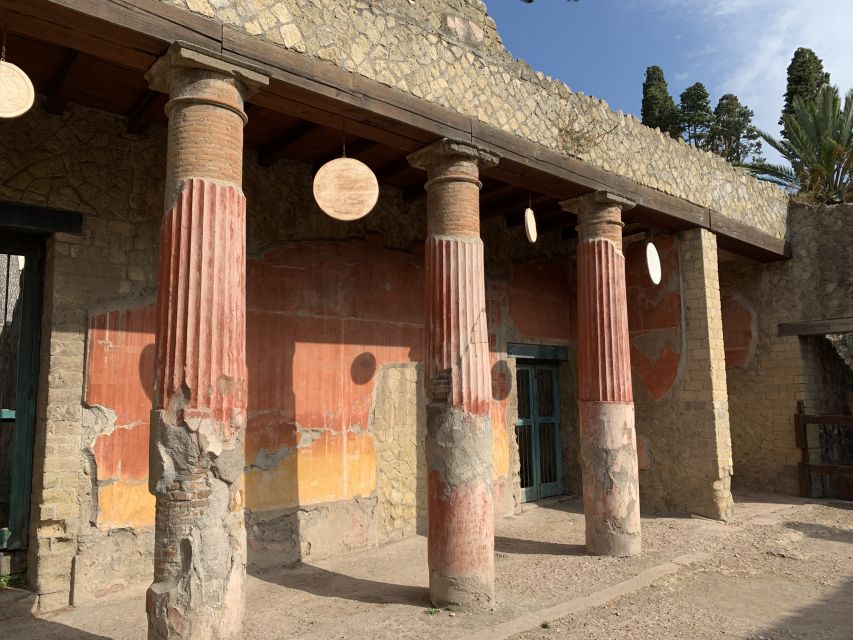
You meet at Biglietteria Ercolano, the ticket office area. Plan to arrive 10 minutes early so you can check in smoothly and start with the whole group.
In a 2-hour format, the tour’s structure matters. This isn’t “see everything at a slow museum pace.” It’s a curated walk through the town’s most meaningful areas. That’s a good match for people who:
- want a guided overview fast,
- are pairing Herculaneum with other sites,
- or don’t want to spend half a day just figuring out what you’re looking at.
Also, bring water and an ID or passport. It’s a small checklist, but it keeps the tour from turning into an end-of-trip problem.
Casa dei Cervi: art, status, and everyday living
One of the first stops is Casa dei Cervi (House of the Deer). Even if you’ve never studied Roman domestic life, this house works as a teaching tool. The Romans weren’t building homes only to sleep in. Their houses were statement pieces—places where visitors, business, and social life met.
In Herculaneum, the reason the house feels so vivid is the preservation. You’re more likely to see the kind of interior wall decoration that makes Roman daily life feel real: rooms where artwork and architecture still look like they did thousands of years ago, not like vague silhouettes.
What to watch for with a guide:
- how the layout connects rooms and movement,
- how decorative themes (like the deer imagery) signal taste and identity,
- and what “house life” likely meant before the eruption ended it.
A drawback of any house visit is pacing. With only 2 hours, you won’t linger for an hour in one room. But that can be a plus: you’ll build context from multiple houses, then you’ll start recognizing patterns.
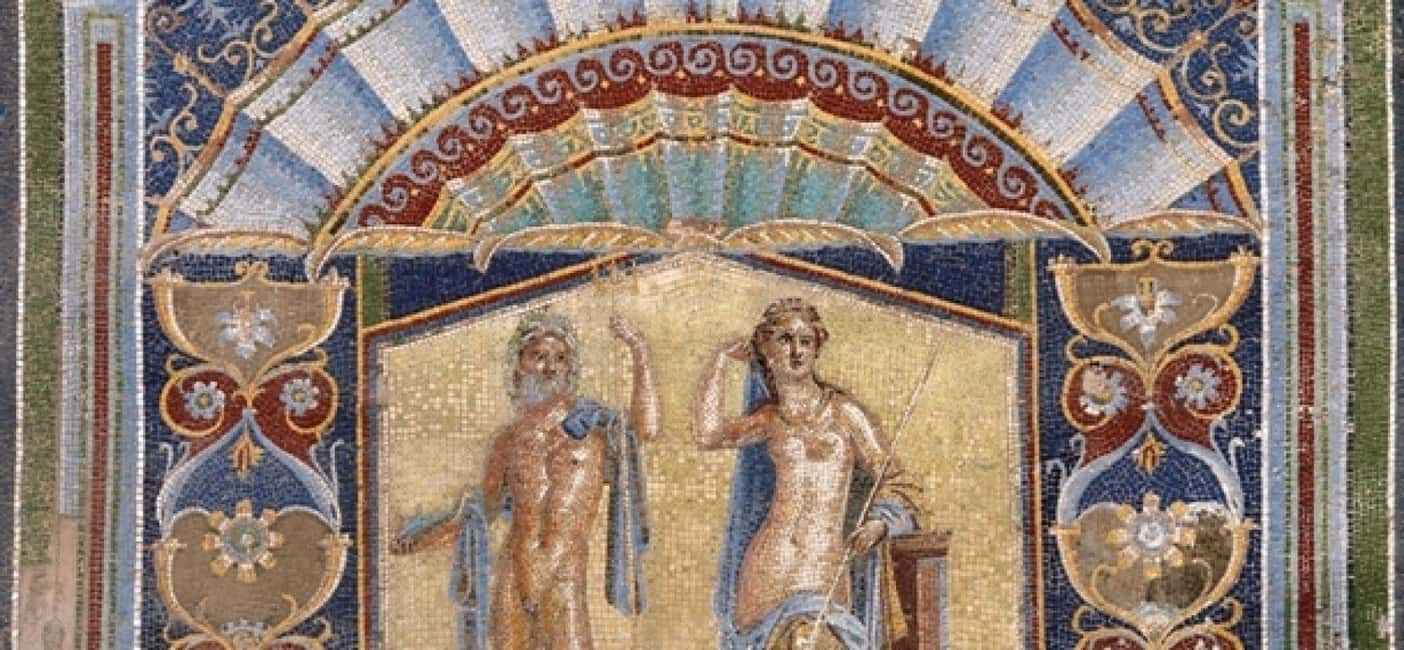
Casa di Nettuno ed Anfitrite: ocean gods in a household setting
Next up is Casa di Nettuno ed Anfitrite. This is where Roman mythology shows up in a place that feels surprisingly intimate. Neptune and Amphitrite are the ocean-related deities, and Roman art often used myth as a way to reinforce ideas about power, protection, and culture.
In Herculaneum, these kinds of themes land differently than you might expect. Because the rooms and surfaces are preserved, you can actually see how the art was meant to be experienced—at human eye level, inside a house, not behind a glass barrier.
With a guide, you’ll also get practical interpretive help: what elements to connect to Roman life, what details might look decorative but also have meaning, and why a fresco or mosaic style matters for understanding the site.
If you’re someone who loves “how do we know this?” archaeology, this stop is a good place to ask questions. Your guide can often turn a “pretty picture” into evidence for how the space was used.
Sacellum of The Augustales: small religious space, big social structure
Then you’ll visit the Sacellum of The Augustales. Even though it’s described as a sacellum (a small shrine-like space), it helps you see how public and private life overlapped in Roman towns.
This is the kind of stop that can feel abstract if you tour it alone. You might notice an architectural feature and move on. With an expert, you’ll understand the role that religious spaces played in community identity and local organization.
Here’s what I like about including a stop like this inside a short 2-hour tour: it breaks the “only houses” rhythm. You get a step toward the town’s structure—how people organized roles, beliefs, and civic identity in everyday places.
House of Skeletons: the most sobering part of the walk
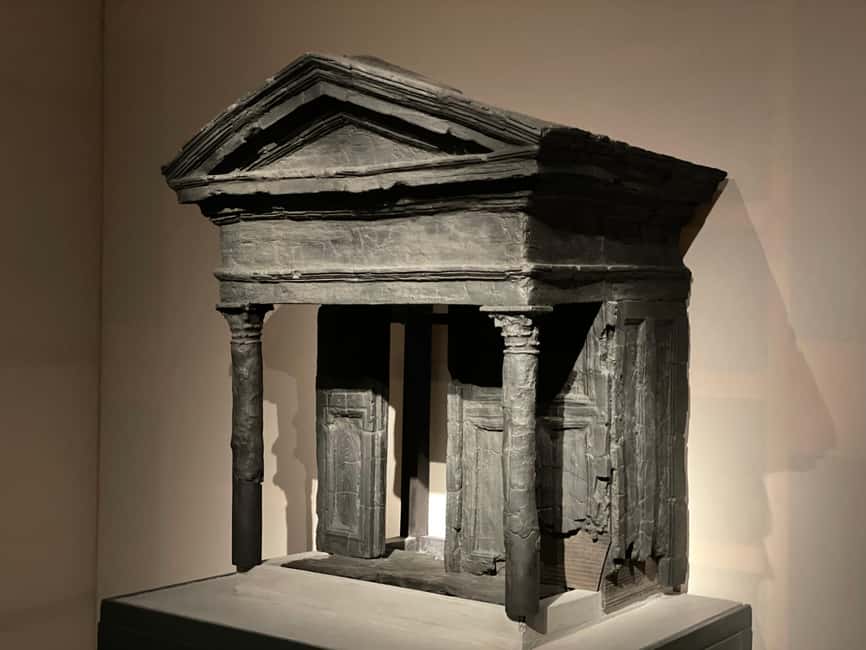
One of the tour’s most powerful stops is the House of Skeletons. This is where Herculaneum’s preservation becomes more than a technical marvel—it becomes human evidence.
You’ll see remains where people were found, and your guide explains what you’re looking at and why it was preserved. Some guides are especially noted for guiding this moment with care, helping you understand the contrast between the horror of sudden death and the ordinary presence of daily life in the surrounding town.
Tip for visiting this part well: slow down on purpose. Don’t rush for photos. Even if you’re curious, treat this like a memorial moment. A strong guide will keep the tone grounded while still explaining the archaeology.
From a practical standpoint, this stop can also change how you interpret everything else. After you’ve absorbed what happened here, the houses, streets, and bath areas feel less like “cool ruins” and more like a community interrupted.
Casa dell’Albergo and the surrounding streets: seeing the town’s rhythm
After the more dramatic stop, the tour continues through Casa dell’Albergo, Herculaneum and then into the broader archaeological area. This is where the experience becomes a walk through a town, not just a sequence of interiors.
Roman streets in Herculaneum help you understand scale. You can feel the difference between a private home and a public-facing space. You also begin to imagine how people moved through the town—where they might pause, how they’d meet, where commerce would happen.
In this phase of the tour, I’d focus on two things:
- Street-level clues: doorways, thresholds, and how buildings sit next to the path.
- Transitions: how the experience shifts from one type of building to another.
This is also where you benefit most from hearing the guide’s explanations in context. Archaeology can feel like disconnected facts, but when a guide ties the houses back to daily movement, it starts to feel like a real place.
Public baths and water systems: the engineering you can actually feel
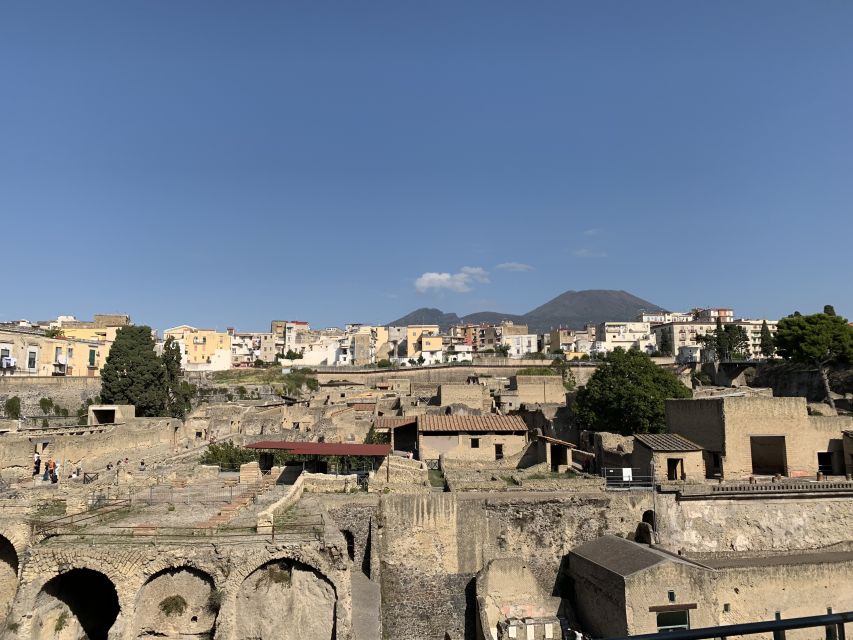
Herculaneum’s public areas bring out something many people don’t expect: Roman engineering in daily life. The tour experience includes stops tied to public baths and the ancient water systems that served them.
This is one reason I recommend this tour even if you’ve toured other Roman ruins. Baths aren’t just “a room.” They’re a social machine. When you understand how water reached and circulated through a site like this, the town’s sophistication becomes obvious.
What to look for with your guide:
- how water is managed across spaces,
- how bath areas relate to nearby movement and access,
- and how these systems support daily routines.
If you like history that connects to the body—warmth, water, routine—this is the part that clicks. It turns the eruption story into a story about ordinary habits that got cut short.
How guides shape the experience (examples of styles to look for)
The experience is led by a licensed expert, and the difference shows up quickly. Several guide names are associated with this tour, and the common thread is clear storytelling: guides who explain what you’re seeing, keep it understandable, and answer questions.
For example, guides named like Enrica, Carlo, Giovanni, Livio, Ornella, and Mio are described as friendly, engaging, and able to tailor attention. Others are praised for deep academic training, including a PhD-trained archaeologist named Raffaele and a guide referenced as Dr Rafaelle Romano. One guide in particular was noted for exceptional English and a sense of humor, which can matter when you want the day to feel human, not like a lecture.
One more practical point: if you’re worried about hearing, the tour’s inclusion of headsets for larger groups helps. Still, plan to use good listening habits—stand where you can hear, and don’t be afraid to ask for repetition.
Value check: is $58 worth it for Herculaneum?
At $58 per person for a 2-hour guided visit with skip-the-line entry, the value comes down to one question: do you want interpretation?
If you’re visiting Herculaneum alone with a guidebook, you can still enjoy the preservation. But you’ll likely miss how the details connect—why a particular mosaic matters, what a domestic layout implies, or how the eruption evidence changes the meaning of each space. This tour is designed for you if you want answers in the moment.
You also get three pieces that directly support value:
- Skip-the-line access so you don’t waste precious time,
- a licensed guide instead of an audio-only format,
- and headsets when the group is larger.
Two hours also makes sense. This site is intense. A guided route that hits major stops without dragging you through every corner can be a smart use of time, especially if you’re pairing Herculaneum with other Vesuvius-area visits.
Who should book this tour?
This experience is a strong fit if you:
- want the best interpretation of a short Herculaneum visit,
- are drawn to preserved interiors like frescoes and mosaics,
- like asking questions and hearing how archaeology is read on-site,
- and want a tour that explains the human side, including the remains.
It’s probably not your best choice if you:
- can’t manage stairs or uneven surfaces,
- need a wheelchair-friendly route (the tour states it isn’t suitable for wheelchair users),
- or you prefer long independent wandering instead of a guided route.
Should you book this Herculaneum archaeologist tour?
Yes, you should book it if your goal is to understand Herculaneum, not just photograph it. The skip-the-line start plus the licensed archaeologist format is the difference between seeing preserved rooms and actually understanding what they represent.
I’d especially book if you’re planning to visit Pompeii too. Herculaneum changes the whole story. Pompeii often feels like a dramatic snapshot; Herculaneum feels like a room you can still picture people living in.
Only pass if mobility is a concern for you. Otherwise, arrive ready to walk, listen carefully, and let the site’s details build into a town you can picture—not just ruins you can identify.
FAQ
How long is the Herculaneum tickets & tour with a local archaeologist?
The tour lasts 2 hours.
Where do I meet for the tour?
You meet at the Biglietteria Ercolano ticket office. Arrive 10 minutes before the tour starts.
What does the tour cost?
The price is listed as $58 per person.
Does this tour include skip-the-line entrance?
Yes. Skip-the-line entrance tickets are included.
Is there a live guide, and what languages are available?
Yes, there is a live tour guide. Languages offered are Spanish, English, Italian, and French.
What’s included in the ticket price?
Included are the guided tour with a licensed guide, skip-the-line entrance tickets, and headsets if the group exceeds 11 people.
What should I bring?
Bring your passport or ID card and water.
Is the tour wheelchair accessible?
No. It is not suitable for wheelchair users, and electric wheelchairs are not allowed.