REVIEW · NAPLES
Herculaneum – Small Group Tour
Book on Viator →Operated by Pompeiify · Bookable on Viator
Herculaneum feels personal fast. This small-group tour gives you a 2-hour run through the most important ruins, from private homes to public space, so you can actually connect the dots instead of just walking around. I like that it hits the big highlights without dragging, and I especially like the emphasis on everyday life details you’d miss on your own. One heads-up: admission tickets are not included, so you’ll need to budget for that extra entry fee.
You’re not stuck reading vague stone. With a licensed guide from Regione Campania, you get a clear explanation of what you’re seeing—how the city worked, what the earthquake/volcanic tragedy changed, and how Herculaneum differs from Pompeii. The pacing also works well for a hot site: the format is short, the group stays small (up to 15), and the guide can shape the walk to keep everyone moving.
If your schedule is tight, you can pick a morning or afternoon departure, and you’ll receive a mobile ticket. It’s also near public transportation, which helps if you’re using Naples area transit. The only real drawback to plan for is comfort: parts of the park have limited shelter, so bring sun protection and plan for heat.
In This Review
- Key things to know before you go
- Why Herculaneum makes sense when you only have a short window
- Entering Parco Acheologico di Ercolano: the 2-hour game plan
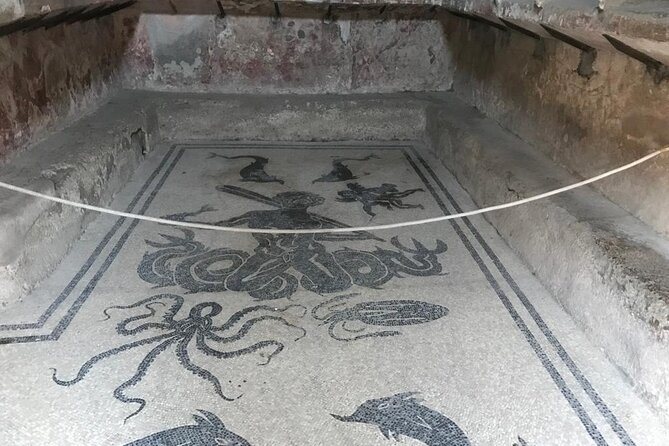
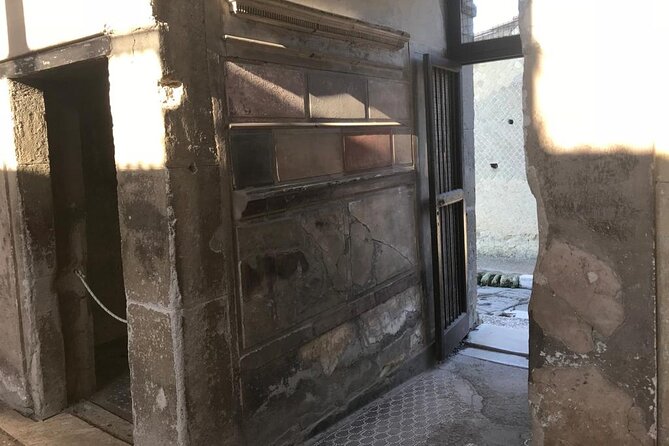
- Private houses tour: Deer, Wooden Partition, Neptune and Amphitrite
- Shops, baths, and the main street: seeing the city work
- The seafront visit: skeleton shelters and a preserved wooden boat
- Small-group interaction: how you’ll actually use it
- Timing and morning vs afternoon: picking the better slot
- Price and value: what $50.81 buys you here
- What to do after the guided part: turn it into a half-day win
- Tips to make your tour smoother and more rewarding
- Should you book this Herculaneum small-group tour?
- FAQ
- How long is the Herculaneum small-group tour?
- What’s the meeting language for the tour?
- Is the admission ticket included?
- How many people are in the group?
- Do I get a mobile ticket?
- Can I choose a morning or afternoon time?
- Is there a requirement for a minimum number of travelers?
- What happens after I book?
- Is there free cancellation?
- Is the tour near public transportation?
Key things to know before you go
- Focused highlights in 2 hours: you see the main private houses, public areas, and seafront features without feeling rushed.
- A real guide, not a slideshow: the tour is led by a licensed guide from Regione Campania who explains the layout and significance.
- English-language, small-group feel: max 15 travelers, so questions stay practical and you get attention when you need it.
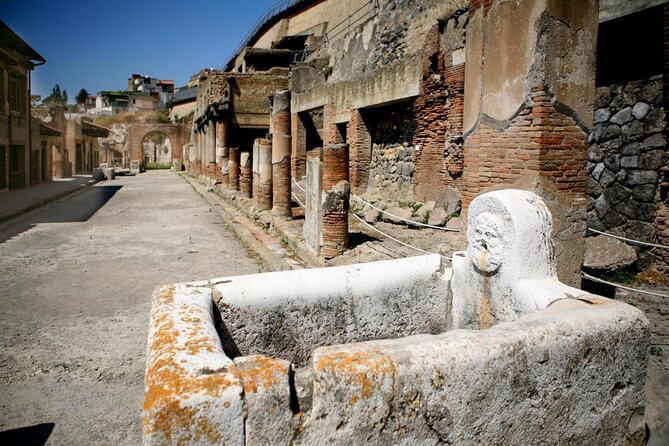
- Herculaneum’s “at street level” details: houses, typical shops, baths, main street, and public buildings—so daily life comes through.
- The seafront has unforgettable details: you’ll visit the ancient beach area, including the sheltering bodies and a preserved wooden boat.
- Admission is separate: the guided time is included, but the site ticket is not, so don’t forget to factor it in.
Why Herculaneum makes sense when you only have a short window
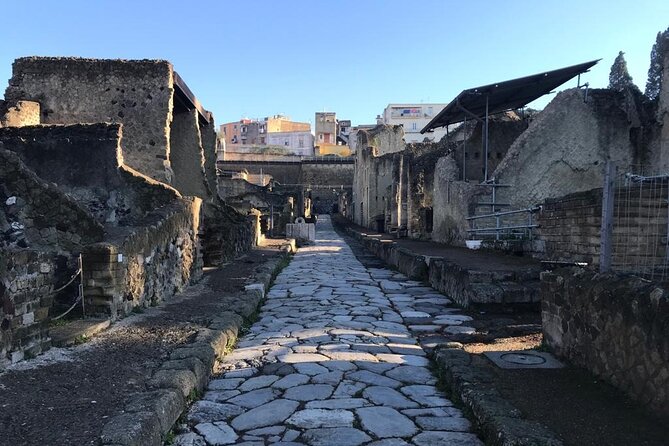
Herculaneum is the kind of place where scale helps. This tour is built around that: you get a high-impact overview rather than trying to do everything top to bottom. In two hours, you’ll cover the standout private homes, major public spaces, and the seafront remains—enough to leave with a mental map.
What makes this place click is the way it connects art and architecture to daily habits. Herculaneum isn’t just about big monuments. You’re looking at household spaces, shop fronts, and public bathing—things that show how people actually lived. A good guide turns those fragments into a story: how the city functioned, what was preserved, and what changed during the 79 AD eruption.
Another plus: the tour format is friendly to questions. With a maximum of 15 travelers, you’re not stuck at the back or waiting for a guide to finish a sentence before you can ask. That matters at a site where there aren’t always clear labels pointing out what you’re looking at.
Entering Parco Acheologico di Ercolano: the 2-hour game plan
Your tour stop is Parco Acheologico di Ercolano, and the guided time is about 2 hours. You’ll move through the most prominent zones of the park, designed so you don’t spend your limited time wandering without context.
Expect the guide to guide your eyes. Instead of treating the site like a checklist, the explanation helps you recognize patterns: how homes were organized, what kinds of public buildings were placed where, and why the seafront area carries such emotional weight.
A practical detail: the admission ticket is not included, but the guide visit is. So you’ll want to make sure you’ve sorted your entry before you start thinking about “where can we go first?” I’d also plan a little buffer for checking in and getting settled—because once the tour starts, it stays focused.
Private houses tour: Deer, Wooden Partition, Neptune and Amphitrite
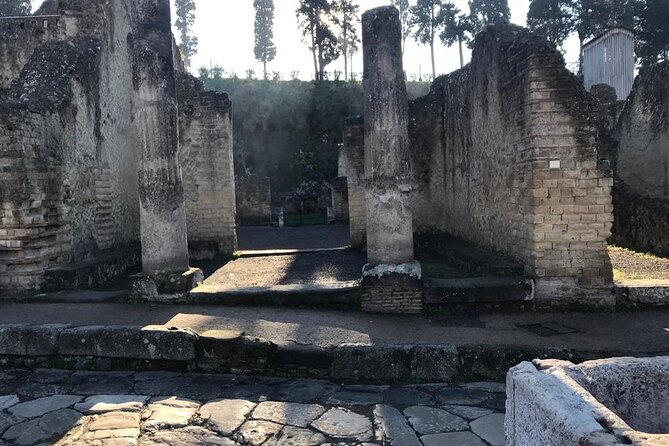
The heart of this guided route is the private-house circuit. You’ll visit major domestic areas, including named highlights such as the House of the Deer, the House of the Wooden Partition, the House of Neptune and Amphitrite, and the House of the Bicentenary.
Why these houses matter for a first visit: each one helps you understand how status and household design worked. Private homes weren’t just living spaces; they were stages. Even in preserved ruins, you can see where people hosted guests, where daily routines unfolded, and how decorative choices were used to communicate taste and position.
Also, these names aren’t random. They point you toward distinctive features—so the guide can connect a specific element (layout, room function, or a recognizable motif) to the bigger picture of Roman life. If you’ve been to Pompeii, this is especially useful. The guide can help you compare the two cities in a grounded way: same era, different urban choices, and different outcomes from the eruption.
Shops, baths, and the main street: seeing the city work
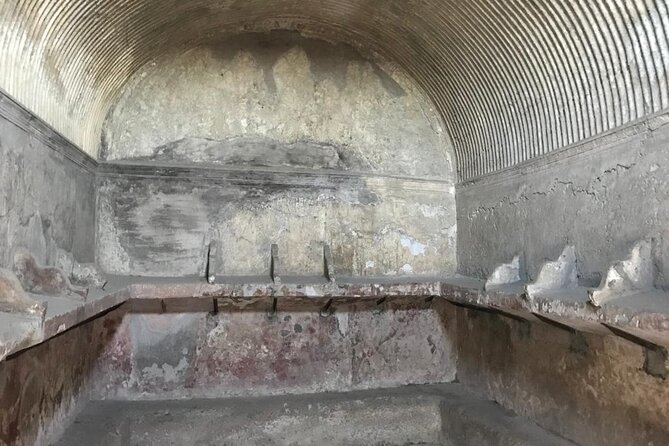
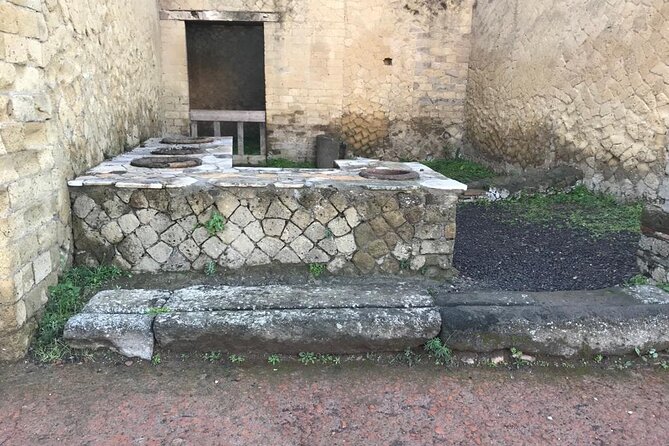
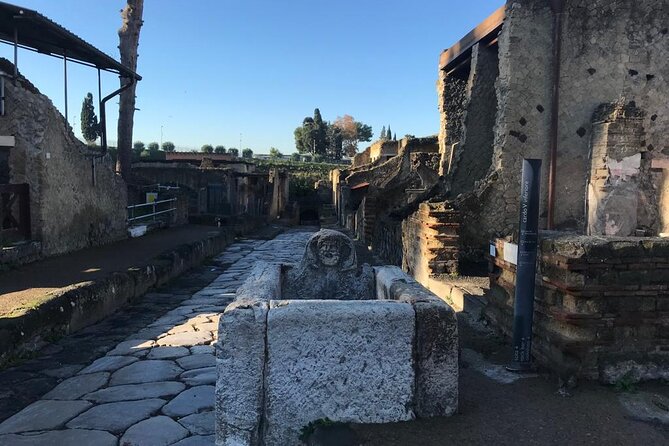
After the major houses, the tour shifts into the street-level rhythm of Herculaneum. You’ll see typical Roman shops, the public baths, and the main street along with significant public buildings.
This is where the tour feels most practical. You start to picture movement: who went where, why people gathered, and how public space shaped daily routines. Baths are a strong anchor because they show communal habits—socializing, hygiene, and time spent outside the home.
The shops add another layer. Even without modern storefront signage, you can understand what commerce meant in that neighborhood. When the guide explains the setup, those spaces stop being “rooms in ruins” and start becoming “places where transactions happened.”
One more reality check: the park doesn’t always give you enough labels to fully interpret every building. That’s exactly why a guide helps. With someone pointing out what you’re looking at and telling you why it matters, you get more from the same walls.
The seafront visit: skeleton shelters and a preserved wooden boat
The tour includes the ancient beach area with powerful remains along the seafront, including the skeletons of people taking shelter and a wooden boat still perfectly preserved on the beach itself.
This stop is the emotional core of many visits to Herculaneum. It’s not just a visual detail; it forces you to imagine what seconds and minutes might have looked like when people ran out of options. A good guide doesn’t sensationalize it. Instead, it gives you historical grounding: what this coastal area represented and why the preservation here feels so striking.
The preserved wooden boat also adds something hopeful for your imagination. You’re not only seeing loss—you’re seeing physical evidence of ordinary life. The combination makes the seafront stop memorable in a way that ruins alone can’t always do.
Small-group interaction: how you’ll actually use it
Max 15 travelers is a meaningful number at a place like this. It tends to keep the group tight enough that you can hear explanations without craning your neck, and it usually means you can ask questions without feeling like you’re interrupting.
This tour’s interaction also helps with pacing. Even in hot weather, a good guide can keep the group moving while managing comfort—some routes include more shade when possible, and the guide can slow down when questions come up. One of the most common praises for this kind of tour is that it stays engaging without being overwhelming. That balance matters because you’re learning history while also trying to stay focused on the physical space.
If you’re traveling with teens, you’ll probably appreciate the structure. Short segments plus clear talk tracks about what you’re seeing tend to hold attention better than a long unbroken lecture.
Timing and morning vs afternoon: picking the better slot
You can choose a morning or afternoon tour. From a practical point of view, your best choice comes down to heat and energy. This is an outdoor archaeological park, and several visitors note it can be extremely hot.
If you’re sensitive to heat, the morning option often feels smarter, even if the afternoons work for your itinerary. Either way, plan for sun and stamina. Wear shoes you can walk in comfortably, and bring a hat.
If you’re traveling in summer or late summer, I’d take weather seriously. One recurring theme in feedback is the lack of shade in some areas. Even with a guide who tries to keep you comfortable, you’ll still want to protect yourself.
Price and value: what $50.81 buys you here
At about $50.81 per person, you’re paying for a guided, small-group walkthrough timed to fit your day. The key detail for value is what’s included: the guided visit with a licensed guide. The site admission ticket is not included, so your total cost will depend on the current ticket price at the park.
That separation matters because it changes how you plan budgeting. Still, the pricing can feel fair if you consider what you’re buying: context and interpretation. Herculaneum can be confusing without labels. When you remove the guesswork—who lived here, how rooms worked, what public buildings suggest about community—you’re getting more than just access.
Also, the duration is about 2 hours. That’s a sweet spot for first-timers who want meaningful coverage but don’t want to burn half a day. And with a max group size of 15, you’re more likely to get personal attention than on a massive coach tour.
What to do after the guided part: turn it into a half-day win
The tour ends after about two hours, but your day doesn’t have to. Many visitors like using the guided time to get their bearings, then lingering to look more closely at what resonated most.
A smart strategy: note one or two features the guide highlighted most strongly—perhaps a specific house detail, a bath area, or the seafront moment. Then, after the guide finishes, you can re-walk those zones with a clearer mental framework.
If you want extra value from your entry ticket, consider setting aside time to check the museum displays on site. One review mentions taking extra time for the museum and original pieces, which can deepen your understanding of what you just saw in the ruins.
Tips to make your tour smoother and more rewarding
Here’s what I’d do to get the best possible experience from this exact format:
- Bring a hat and sunscreen, especially if you’re going in the hotter months. Even with shade when available, the park isn’t consistently sheltered.
- Wear comfortable shoes. You’ll be walking through uneven outdoor surfaces.
- Expect to learn fast. This is a “most important highlights” style tour, so try to keep questions for moments when you’re standing in front of the relevant area.
- If you’re planning to also visit Pompeii, ask your guide for the comparison angle. The eruption impact and differences between the two cities is a common theme, and it helps your brain file the information.
- If you have mobility needs, mention them ahead of time. Guides often adjust how the group moves, and you’ll be more comfortable if you’re proactive.
Should you book this Herculaneum small-group tour?
Yes, if you want the smartest use of limited time. This is a good fit when you care about understanding what you’re seeing, not just checking boxes. The two-hour structure, the small-group size, and the licensed guide format all point to a “high value per hour” kind of visit.
Book it especially if:
- you’re visiting Herculaneum as part of a Naples or Amalfi Coast plan and want a focused outing
- you like asking questions and getting explanations tied to specific buildings
- you want the main private houses and seafront details without spending the whole day
Skip it or look for another option if:
- you prefer unguided wandering and already know what you’re looking at (because the park can be hard to read without interpretation)
- you’re not interested in the emotional seafront stop, where the preserved remains make a strong impression
FAQ
How long is the Herculaneum small-group tour?
It lasts about 2 hours.
What’s the meeting language for the tour?
The tour is offered in English.
Is the admission ticket included?
No. Admission tickets are not included, so you’ll need to purchase entry separately.
How many people are in the group?
The tour has a maximum of 15 travelers.
Do I get a mobile ticket?
Yes. The tour includes a mobile ticket.
Can I choose a morning or afternoon time?
Yes. You can choose a morning or afternoon tour to fit your schedule.
Is there a requirement for a minimum number of travelers?
Yes. The experience requires a minimum number of travelers. If it’s canceled because the minimum isn’t met, you’ll be offered a different date/experience or a full refund.
What happens after I book?
You’ll receive confirmation at the time of booking.
Is there free cancellation?
Yes. You can cancel up to 24 hours in advance for a full refund. If you cancel less than 24 hours before the start time, the amount you paid will not be refunded.
Is the tour near public transportation?
Yes, it’s near public transportation.