REVIEW · POMPEI CAMPANIA
From Naples: Pompeii Wheelchair-accessible with a Guide
Book on GetYourGuide →Bookable on GetYourGuide
Wheelchair access makes Pompeii possible. This private tour is designed for reduced mobility, taking you from Naples to the site with a ramp-equipped vehicle and an in-excavation route that aims to remove barriers. I like that you start at Pompeii Entrance with tickets in hand, so you’re not stuck sorting paperwork. I also like the way the guide turns ruins into real Roman life stories, including clear, patient explanations from guides like Jasmine, who adjusted to your needs. One thing to consider: Pompeii’s ground can still be hilly and uneven, so even on the accessible path you may need help for certain spots.
The key idea here is not just seeing Pompeii, but doing it with enough support to make the day actually work. You’ll ride in a vehicle that’s set up to load a wheelchair with help from the driver, then follow an itinerary that uses ramps and paved sections where possible. A drawback to plan for is that access is good, not perfect; some areas may call for short standing or walking moments, depending on your chair and route.
In This Review
- Key things you’ll care about
- From Naples to Pompeii with a ramp van that actually helps
- Meeting at the Pompeii Entrance and getting in fast
- The accessible route inside Pompeii: ramps, paved paths, and real-world limits
- What you’ll actually see and how the timing works
- Why the guide makes Pompeii click (and keeps it doable)
- Price and value: what $88 buys you (and what it saves)
- The practicalities that can make or break your day
- Which option fits best: private car, guide-only, or full accessible transfer
- Who this Pompeii tour is best for
- Should you book? My practical take
- FAQ
- Is this Pompeii tour wheelchair accessible?
- Where do we meet the guide?
- Does the tour include pickup from Naples?
- Is this tour private?
- How do you handle access inside Pompeii?
- How long does the tour take?
- Do wheelchair users get free admission?
- What information do you need after booking?
- What languages are available for the guide?
- What should I bring, and what can’t I bring?
Key things you’ll care about
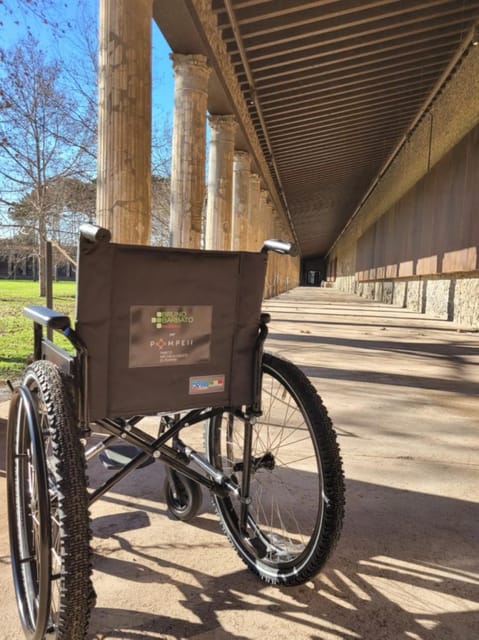
- Ramp van from Naples with driver assistance getting you in and out
- Tickets handled at the Pompeii Entrance, plus a separate entrance for less waiting
- Accessible route inside Pompeii with ramps and paved paths, not just a quick drive-by
- Professional guide storytelling that keeps you oriented and helps you spot the highlights
- Moderate bumps and slopes mean you should plan for a more “rough pavement” day, not a flat stroll
From Naples to Pompeii with a ramp van that actually helps
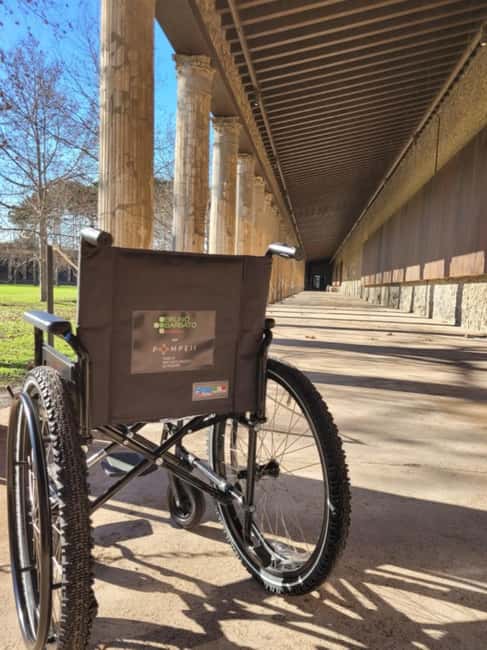
Pompeii is one of those places that sounds simple until you picture the steps, curbs, and uneven stone underfoot. That’s why this tour’s starting point matters: you’re not arriving on your own and hoping you can manage the site. Instead, you’re met with wheelchair-friendly transport, which changes the whole rhythm of the day.
If you choose the pickup option, you can be collected from your hotel, the cruise terminal, a train station, or the airport in Naples. The van is set up to make boarding easier, with a built-in ramp and staff support from the driver. The vehicle is also limited in capacity (it fits four passengers plus one person in a wheelchair), so it stays focused on the people who need it—rather than cramming everyone into a big coach.
Plan your morning with the understanding that this is a guided, structured experience. That’s good: it means you’ll spend less time figuring things out and more time actually seeing Pompeii. The trade-off is that you’ll follow the route and timing set by your guide and vehicle schedule, rather than roaming freely at your own pace.
Meeting at the Pompeii Entrance and getting in fast
Your guide meets you at the Pompeii Entrance area (the Pompeii Anfiteatro entrance is specifically referenced). The nice part is that you get tickets with your guide rather than searching for the right booth after you arrive. That reduces stress when you’re tired, traveling with equipment, or dealing with crowds.
This tour also includes a way to skip the line through a separate entrance. That’s not just a convenience—at Pompeii, time matters because the site is large, and you’ll be on foot (or chair) longer than you expect.
One practical detail: Pompeii ticketing requires personal data. You’ll need to provide all traveler names and their dates of birth for the entrance tickets. After booking, the operator may also ask for wheelchair size and needs so the route and vehicle help can be matched to your setup. If you want a smooth day, send that information promptly.
The accessible route inside Pompeii: ramps, paved paths, and real-world limits

Once you’re inside, the tour focuses on an accessible itinerary with ramps designed to handle architectural barriers. You’ll also be routed along paths that are paved where possible. This is the big advantage over trying to DIY Pompeii with a wheelchair: you’re using the site’s accessibility options in a planned way, not experimenting on your own.
Here’s the realistic part. Pompeii is famous for being well-preserved, but it’s also famous for being outdoors on ancient stone. Even when the route is wheelchair-accessible, you should expect moderate bumps and slopes. One useful tip from the field: if you use a chair add-on or setup that helps with small obstacles, it can make the ride more comfortable over uneven sections.
Also, accessibility can vary by what’s open and how the accessible route is currently handled. The tour is designed for reduced mobility, but your guide may need to adapt if you reach areas where standing or short walking is sometimes required. That doesn’t mean the tour won’t work—it means you’ll want to bring your “plan B” mindset, like being ready to transfer or do short assisted steps if your route requires it.
If you have an all-terrain wheelchair, that’s recommended in the tour notes. The operator specifically suggests chairs with rugged wheels because Pompeii’s terrain can be steep and uneven. Even if your chair is already good on rough sidewalks, this is where you’ll feel the difference.
What you’ll actually see and how the timing works
The overall tour is about 3 to 4 hours, and the guided part inside Pompeii is roughly around 3 hours, with some space built in for a bit of freedom. The format usually goes like this: you meet your guide, you enter with tickets sorted, and then you follow a planned route through key highlights.
One of the best values of a guided tour is that you don’t have to guess what you’re looking at. Pompeii has streets, doorways, and building remnants—but without context, it’s easy to wander and miss what makes each area special. A professional guide keeps you oriented and gives clear explanations as you go.
A standout perk is that you may be able to reach sections where excavation is ongoing. That’s meaningful because it shifts Pompeii from “a finished museum” to “a working archaeological site.” Even if the exact stop depends on access and conditions that day, the approach is to show you Pompeii as active research, not only past disaster.
You’ll likely cover enough ground that you come away with a sense of everyday Roman life: the layout of neighborhoods, how people moved around, and what different spaces suggest about work, home life, and public activity. Your guide’s job is to connect those dots without turning it into a lecture that ignores your physical needs.
Why the guide makes Pompeii click (and keeps it doable)
For many people, the hard part of Pompeii isn’t the walking. It’s the overwhelm. You arrive, you see a huge site, and you can’t tell what matters most. With a guide, that problem shrinks fast.
The tour is built for a private group, so your guide can set a realistic pace. In practice, that means fewer rushed decisions at the curb, more time to reposition, and more patience when loading or maneuvering is involved.
From what’s shared in the experience notes and guide feedback, some guides are especially attentive to the needs of wheelchair users. When the guide is sensitive to your limitations, the tour becomes less about “getting through the site” and more about understanding what you’re seeing. It’s also easier to ask quick questions—like what you should focus on right now—without feeling like you’re slowing down a large group.
If you want the tour to work best for you, communicate early about what feels hardest: long distances, slopes, small bumps, or the number of transfers. The operator notes that they want detailed wheelchair information after booking. Use that chance. The clearer you are, the better the route decisions and on-the-day adjustments can be.
Price and value: what $88 buys you (and what it saves)
At $88 per person, the price looks straightforward until you break down what’s included. You’re paying for more than a guide. You’re also getting tickets and Pompeii fees, plus a private transfer with a wheelchair-accessible vehicle and ramp.
That matters because a day at Pompeii can turn expensive fast if you start adding ticket hassle, taxi costs, and accessibility support on the fly. Here, those pieces are bundled into one plan, which reduces stress and makes budgeting easier.
There’s also a specific value benefit for wheelchair users: wheelchair users and their personal assistant may receive free admission with proof of identification from their home country. The tour includes Pompeii fees under that structure, so you’re not guessing how to handle admission arrangements. Bring the ID documents you need.
Is it the cheapest way to see Pompeii? No. But it’s often the best value if you want a guided experience that’s structured for accessibility and doesn’t force you to solve logistics mid-day.
The practicalities that can make or break your day
This tour includes pickup (if selected), a private guide, and a vehicle setup designed for access. What can trip people up are the small rules and the items you forget until you’re at the entrance.
For what to bring, the tour asks for passport or an ID card, plus practical sun items like sunglasses and a hat. For a site like Pompeii, heat and brightness can matter a lot, especially if you’re pausing often or using more of your energy for positioning.
There are also restrictions: no smoking in the vehicle, and no alcohol or drugs. Bags are not allowed, and food and drinks aren’t allowed in the vehicle. That might sound minor, but it can affect how you pack for a day outside. If you rely on snacks for medication timing or need water, plan around what’s permitted for the overall site and how your guide suggests handling breaks.
Also remember: the tour requires names and dates of birth for ticketing. If you book for multiple people and one detail is wrong, you can create unnecessary delays at the entrance. Double-check before you finalize the information.
Which option fits best: private car, guide-only, or full accessible transfer
This experience offers a few ways to match how you want the day to run.
- Private tour with a private car and guide: you meet at the Pompeii Amphitheater entrance.
- Private tour with only a guide: also meeting at the Pompeii Amphitheater entrance.
- The accessible format you’re reviewing includes wheelchair-accessible vehicle support and pickup when selected from Naples.
If you already have a way to get to Pompeii that works for your chair and you want to minimize time in transit, the guide-only option can be a good fit. If logistics are the bigger hurdle for you, the accessible transfer version makes a lot more sense because it handles boarding, ramp access, and the start-to-finish structure.
Either way, keep your expectations aligned: even with ramps and paved accessible paths, Pompeii will still feel like Pompeii. It’s outside, it’s historical stone, and it can be steep.
Who this Pompeii tour is best for
This tour is a strong match if you want:
- Wheelchair-accessible route planning rather than trial-and-error
- A private guide who can set a pace that respects your mobility
- A visit that focuses on highlights and context, not just getting to the biggest sights
- A structured Pompeii day that includes tickets and entry support
It may be less ideal if you expect a perfectly flat, fully step-free experience with no short transfers or possible standing needs. The site is not designed as modern accessibility. This tour aims to make it workable, and it can be, but you should plan for real terrain.
If you’re someone who can handle short periods of standing or assisted movement, you’ll likely get the most out of it. If you need continuous chair-only movement with no exceptions, ask very clearly about your specific route needs before booking.
Should you book? My practical take
Book this tour if your top priority is doing Pompeii with real support: ramp access, tickets handled, and a guide who keeps you from getting lost in the scale of the site. The price reflects that the hard parts—access, entry, and navigation—are built into the plan.
Skip or consider another format if you can’t handle uneven outdoor terrain at all, or if your day would fall apart with even short transfers or moments where your chair can’t roll perfectly. In those cases, you’ll want to be extra specific with your accessibility needs and confirm how your route can be adjusted.
If you get the right match, Pompeii stops being a stressful “bucket list mission” and becomes what it should be: a clear, guided look at everyday life in a Roman city that literally froze in time.
FAQ
Is this Pompeii tour wheelchair accessible?
Yes. The tour uses an accessible route inside the excavations with ramps and paved paths where possible, and it includes a wheelchair-accessible vehicle with a ramp.
Where do we meet the guide?
Meet your guide and get your tickets at the Pompeii Entrance (Pompeii Anfiteatro entrance is referenced).
Does the tour include pickup from Naples?
Pickup is optional. If you select the pickup option, the driver can collect you from your hotel, cruise terminal, train station, or airport in Naples.
Is this tour private?
Yes. It’s described as a private group, with the vehicle also sized for a small group (4 passengers plus 1 wheelchair).
How do you handle access inside Pompeii?
You follow a wheelchair-accessible itinerary using ramps to overcome architectural barriers. The tour route includes paved paths, but the terrain is still steep and uneven in places.
How long does the tour take?
The total experience is about 3 to 4 hours, with a guided visit inside Pompeii lasting around 3 hours and some additional free time.
Do wheelchair users get free admission?
Pompeii fees are included, with free admission for wheelchair users and their personal assistant with proof of identification from their home country.
What information do you need after booking?
You’ll need to provide the names of all travelers and their dates of birth for the entrance tickets. You should also provide details about your wheelchair size and needs so the experience can be customized.
What languages are available for the guide?
The guide language options include English, Spanish, Italian, French, and German.
What should I bring, and what can’t I bring?
Bring your passport or ID card, plus sunglasses and a hat. In the vehicle, smoking is not allowed, alcohol and drugs are not allowed, and bags and food/drinks in the vehicle are not allowed.